Incoterms® 2020 groups its 11 rules into two families: seven that work for any mode of transport, EXW, FCA, CPT, CIP, DAP, DPU, and DDP, and four restricted to sea and inland waterway transport only, FAS, FOB, CFR, and CIF. Every rule answers the same three questions differently: who arranges and pays for carriage, who insures the goods, and at what point risk of loss or damage passes from seller to buyer.

This Incoterms chart lays out all 11 rules side by side, explains the E, F, C, and D groupings that determine how cost and risk are split, and points to dedicated guides on the four rules that account for most of the volume search and the most common disputes: DAP, CPT, DDP, and the sea-only FAS and FOB pair.

CAPTAIN CONTROL TOWER

Quantify your exposure in 20 minutes

Our trade strategists run your last 90 days of entries through Captain to surface refund eligibility, Section 232 traps and PNTR risk.

EXPLORE CAPTAIN

All 11 Incoterms® 2020 Rules in One Table

The International Chamber of Commerce publishes Incoterms® 2020 as the current, authoritative version of the rules, effective since January 1, 2020. The table below lists all 11, grouped by mode, with who arranges carriage, who is obligated to insure, and where risk transfers to the buyer.

Two columns matter more than the others for a shipper trying to avoid a dispute: ‘who arranges carriage’ tells you who is contractually paying the freight bill, and ‘risk transfers to buyer’ tells you who eats a loss in transit. As the CPT and CFR rows show, those two columns do not always point to the same party or the same location, and assuming they do is the single most common misreading of this chart.

Incoterms® 2020 rules: mode, carriage, insurance, and risk transfer
Rule Mode Who Arranges Carriage Who Insures Risk Transfers to Buyer
EXW Any mode Buyer Not required by the rule At seller's premises, goods placed at buyer's disposal, not unloaded, not cleared for export
FCA Any mode Buyer Not required by the rule When goods are handed to the carrier nominated by the buyer at the named place
CPT Any mode Seller, to named place Not required by the rule When goods are handed to the first carrier at origin
CIP Any mode Seller, to named place Seller, all-risk cover (Institute Cargo Clauses A) When goods are handed to the first carrier at origin
DAP Any mode Seller, to named place Not required by the rule At the named place, on the arriving means of transport, ready for unloading
DPU Any mode Seller, to named place Not required by the rule At the named place, after the seller has unloaded the goods
DDP Any mode Seller, to named place Not required by the rule At the named place, cleared for import, ready for unloading
FAS Sea/inland waterway only Buyer Not required by the rule When goods are placed alongside the vessel at the named port of shipment
FOB Sea/inland waterway only Buyer Not required by the rule When goods are placed on board the vessel at the named port of shipment
CFR Sea/inland waterway only Seller, to named port Not required by the rule When goods are placed on board the vessel at the port of shipment
CIF Sea/inland waterway only Seller, to named port Seller, minimum cover (Institute Cargo Clauses C) When goods are placed on board the vessel at the port of shipment

Rules for Any Mode of Transport

Seven rules work for any mode, or a combination of modes: truck, rail, air, ocean, or multimodal. EXW, Ex Works, is the seller’s minimum obligation: the seller makes the goods available at its own premises, not loaded, not cleared for export, and the buyer bears essentially all cost and risk from that point forward, including the export declaration, which is often impractical for a buyer to complete since it is not the exporter of record.

FCA, Free Carrier, has the seller deliver by handing the goods to a carrier the buyer nominates, at a named place that can be the seller’s own premises or elsewhere. Risk transfers at that handover. Incoterms® 2020 added a specific mechanism to FCA allowing the buyer to instruct its carrier to issue the seller a bill of lading with an on-board notation, which solves a long-standing problem for sellers shipping under a letter of credit that requires proof the goods are loaded.

DAP and DPU are the two ‘delivered’ rules that stop short of import clearance: the seller carries cost and risk to the named place, and the buyer clears the goods for import. DPU is the only Incoterms® 2020 rule requiring the seller to unload the goods at destination; DAP does not. CPT and CIP split cost and risk differently, with the seller paying carriage to the named destination while risk passes to the buyer much earlier, at the first carrier. CIP adds a seller insurance obligation at the all-risk Institute Cargo Clauses (A) level; CPT carries none.

DDP, Delivered Duty Paid, is the seller’s maximum obligation: the seller delivers the goods cleared for import, duty paid, ready for unloading at the named place. The DAP vs DDP comparison covers why that shift makes the seller the importer of record, or requires it to arrange one, which is rarely simple for a seller with no legal presence in the destination country.

None of the seven any-mode rules require unloading by the seller except DPU, and none require export or import clearance from the buyer except EXW on the export side and DDP on the import side. Every other combination leaves export clearance with the seller and import clearance with the buyer, which is worth memorizing on its own since it holds true across CPT, CIP, DAP, FCA, FAS, FOB, CFR, and CIF without exception.

Rules for Sea and Inland Waterway Transport Only

Four rules are written specifically for cargo that moves by sea or inland waterway and are not valid for air, rail, or road-only shipments. FAS and FOB transfer risk before the main ocean carriage even begins, alongside the vessel for FAS and once loaded on board for FOB, with the buyer arranging and paying for the ocean freight itself.

CFR and CIF mirror CPT and CIP but for sea freight specifically: the seller pays freight to the named port of destination, yet risk still transfers when the goods are on board the vessel at the port of shipment, the same point as FOB. CIF layers on a seller insurance obligation at the Institute Cargo Clauses (C) minimum-cover level, the lowest tier available and notably less protective than CIP’s all-risk requirement.

The ICC’s own guidance in the Incoterms® 2020 introduction is direct about when these four rules stop making sense: for containerized cargo, which typically changes hands at an inland container terminal rather than crossing a ship’s rail, FCA, CPT, or CIP are the better fit. FAS, FOB, CFR, and CIF remain correct for cargo that genuinely loads directly onto a vessel, bulk commodities, break-bulk, and similar trades.

How to Read Cost and Risk Across the E, F, C, and D Families

The 11 rules sort into four letter families, and once the family is understood, the cost and risk allocation for any individual rule becomes predictable. EXW is the sole ‘E’ rule: minimum seller obligation, everything falls to the buyer. The ‘F’ rules, FCA, FAS, and FOB, have the buyer arrange and pay for main carriage, with the seller simply delivering to the buyer’s carrier or vessel; risk transfers at that same delivery point.

The ‘C’ rules, CPT, CIP, CFR, and CIF, are where cost and risk genuinely diverge: the seller pays for carriage to a named destination but risk transfers to the buyer much earlier, at origin. This is the family most often misread, because ‘seller pays freight to X’ sounds like ‘seller is responsible until X,’ and under a ‘C’ rule it is not. The ‘D’ rules, DAP, DPU, and DDP, are the mirror image: the seller carries both cost and risk all the way to the named place, with DDP adding import clearance and duty on top.

Choosing the Right Rule for a Given Shipment

Mode of transport is the first filter: if the shipment is not moving exclusively by sea or inland waterway, FAS, FOB, CFR, and CIF are not available, full stop, regardless of what a template contract says. The second filter is who has the local knowledge and standing to clear customs at each end. Export clearance sits with the seller under every rule except EXW; import clearance sits with the buyer under every rule except DDP.

Beyond that, the decision is largely commercial: how much of the transit risk each party is willing to carry, and how much insurance cost either side wants baked into the price. A trade advisory review before the contract is signed, not after the shipment is en route, is the point where an incorrectly chosen Incoterm is cheapest to fix, and it is a service a licensed customs brokerage can provide alongside the entry filing itself.

Common Incoterms Mistakes That Cost Shippers Money

The most frequent error is using a sea-only rule, usually FOB, for cargo that is not actually loaded directly onto a vessel by the seller, which creates a risk-transfer point that does not match how the cargo physically moves. The second is treating Incoterms as if they answer questions they were never designed to answer: an Incoterm allocates cost and risk between buyer and seller, it does not determine the customs value duty is assessed on, and it does not determine the tariff classification of the goods, which is governed separately by the General Rules of Interpretation applied to the Harmonized Tariff Schedule.

The third is leaving the named place vague, a city instead of an address, which turns a routine risk-transfer question into a dispute the moment cargo is damaged. And the fourth, the one with the highest financial exposure, is a foreign seller agreeing to DDP into the United States without first confirming it can actually act as, or arrange, an importer of record, a question answered in full where DAP and DDP are compared directly, before the contract is signed rather than after the shipment is stuck at the port.

Tariff Response Unit

Audit your derivative HTS exposure

Our brokers will review your top 50 derivative HTS lines and flag Section 232 valuation risk before CBP does.

Frequently Asked Questions

What are the 11 Incoterms 2020 rules?

EXW, FCA, CPT, CIP, DAP, DPU, and DDP apply to any mode of transport. FAS, FOB, CFR, and CIF apply only to sea and inland waterway transport. Together these 11 rules are the current Incoterms® 2020 rules published by the International Chamber of Commerce, effective since January 1, 2020.

What changed between Incoterms 2010 and Incoterms 2020?

The most cited changes are the renaming of Delivered at Terminal (DAT) to Delivered at Place Unloaded (DPU), a new option under FCA allowing an on-board bill of lading notation for letter-of-credit transactions, and an increase in CIP’s minimum insurance requirement from Institute Cargo Clauses (C) to the higher all-risk Institute Cargo Clauses (A).

Which Incoterms apply only to ocean freight?

FAS, FOB, CFR, and CIF apply only to sea and inland waterway transport. Using any of them for an air, rail, or road-only shipment misapplies the rule; FAS and FOB specifically are written around a vessel loading point that does not exist for those other modes.

Who is responsible for insurance under Incoterms 2020?

Only two of the 11 rules obligate a party to insure the goods: CIF, which requires the seller to buy minimum cover under Institute Cargo Clauses (C), and CIP, which requires the seller to buy all-risk cover under Institute Cargo Clauses (A). Every other rule leaves insurance to the parties’ own commercial judgment.

What is the safest Incoterm for a first-time importer?

There is no universally safest rule, but a first-time importer is generally better served by a rule that leaves carriage arrangements with an experienced seller, such as DAP or CPT, while confirming its own customs bond and importer number are in place well before the goods depart, since import clearance remains the buyer’s job under both.

Do Incoterms determine who pays customs duty?

Indirectly, by determining who is the importer of record, but Incoterms do not set the duty rate or the customs value themselves. Under DAP, CPT, and the sea-only rules, the buyer pays import duty; under DDP, the seller does. The dutiable value is a separate calculation governed by customs valuation rules, not by the Incoterm.

The difference between DAP and DDP is who clears the goods for import and who pays the duty. Under DAP the buyer does both; under DDP Incoterms 2020, the seller does, which makes the seller the importer of record, or forces it to arrange one, at the destination. That single reversal is the most consequential decision in an international sale contract, and it is also the most frequently mishandled, especially when the seller has no legal presence in the destination country.

This guide compares DAP and DDP directly, on cost, risk, and customs responsibility, and explains why a foreign seller agreeing to DDP into the United States without a resident agent, a customs bond, and a broker relationship already in place is taking on a liability most sale contracts never spell out.

CAPTAIN CONTROL TOWER

Quantify your exposure in 20 minutes

Our trade strategists run your last 90 days of entries through Captain to surface refund eligibility, Section 232 traps and PNTR risk.

EXPLORE CAPTAIN

DAP and DDP Side by Side

DAP and DDP are both ‘D’ rules under Incoterms® 2020: in both, the seller arranges and pays for carriage all the way to the named place of destination and carries the risk of loss or damage until the goods arrive there. Neither requires the seller to unload the goods, that obligation belongs to DPU alone. Where DAP and DDP diverge is entirely about import: DAP delivers the goods not cleared for import, and DDP delivers them cleared, duty paid.

That means the DAP delivered price on an invoice is not comparable to a DDP price from a different quote without adjustment. A DAP number excludes duty, import taxes, and clearance fees; a DDP number includes them. Comparing the two headline figures without normalizing for that gap is a common and costly mistake in supplier negotiations.

DAP vs DDP: who does what
Responsibility DAP DDP
Carriage to named place Seller Seller
Risk in transit Seller, until named place Seller, until named place
Unloading at destination Buyer Buyer (unless separately agreed)
Export customs clearance Seller Seller
Import customs clearance Buyer Seller
Import duty and taxes Buyer Seller
Importer of record Buyer, or a party it designates Seller, or a party it arranges to act on its behalf

Who Becomes the Importer of Record Under Each Rule

Under DAP, the buyer clears the goods for import and is the importer of record, or designates a party that is. That is the normal posture for an importer with an existing importer number and customs bond, and it is the more common arrangement in US import trade because the buyer is typically the resident party with standing to import.

Under DDP, the seller is contractually obligated to deliver the goods cleared for import, which means the seller must either become the importer of record itself or arrange for a party legally able to act as one on its behalf. A foreign manufacturer selling DDP into the United States cannot simply hand a customs broker a shipment and expect the broker to absorb that role; a broker files entries as an agent, it does not become the importer of record merely by being retained.

This is also why a sale contract that just says ‘DDP‘ without naming who specifically will act as importer of record is incomplete. If the seller has not identified that party by name before the goods ship, whether itself under a bond it has arranged, an affiliated US entity, or a trading company the buyer proposes, the shipment can arrive with no one legally positioned to make entry, which stalls the cargo at the exact moment the buyer expected delivery.

Why DDP Is Risky for a Foreign Seller Without a US Presence

US customs regulations set specific conditions on a foreign, nonresident entity that wants to enter merchandise for consumption in its own name. Under 19 CFR 141.18, a nonresident corporation may not enter merchandise unless it has a resident agent in the state where the port of entry is located, authorized to accept service of process, and files a basic importation bond issued by a resident corporate surety. Neither of those exists automatically; both have to be arranged in advance, and neither is something a foreign seller’s freight forwarder sets up as a matter of course.

Beyond the bond and resident-agent requirements, a DDP seller has to fund duty and taxes out of pocket before it can invoice or collect from the buyer, which creates a real working-capital exposure on top of the compliance burden. If the declared customs value is disputed or an entry is reviewed after the fact, it is the seller, not the buyer, who is on the hook for any additional duty assessed, since the seller is the importer of record.

There is also a recordkeeping obligation that survives long after the shipment clears. An importer of record has to retain entry documentation and be able to respond to a CBP request for information under 19 U.S.C. 1484’s reasonable-care standard. A foreign seller with no US operations and no ongoing US recordkeeping practice is agreeing to an obligation it is rarely set up to meet on a one-off transaction, which is a further reason DDP tends to work best as a standing program with dedicated infrastructure rather than a term applied shipment by shipment.

None of this makes DDP unusable. It makes DDP a rule that should not be agreed to casually. A seller quoting DDP into the United States needs the resident agent, the bond, and a working relationship with a licensed customs brokerage confirmed before the contract is signed, not discovered as a problem once the vessel is already at sea.

What DAP Requires From the Buyer Instead

DAP shifts that entire burden to the buyer. The buyer needs its own importer number, generally a customs bond for formal entry, and, for regulated commodities, any applicable import license before the goods land, or the shipment cannot be entered and risks becoming general order cargo. The full DAP explainer covers what happens on that timeline in detail, including the point at which unentered cargo is treated as unclaimed.

For a buyer that already imports regularly, this is a non-issue, the infrastructure already exists. For a first-time buyer, it is the exact same compliance gap DDP creates for a first-time foreign seller, just on the other side of the transaction. Neither rule eliminates the need for someone to have standing to import; they only decide which party that someone is.

That symmetry is worth sitting with before a negotiation, because it explains why sellers push for DDP and buyers push for DAP: each side would rather the other absorb the compliance burden. A supplier that insists on DDP without being able to show a working US import setup is, in practice, asking the buyer to trust that a resident agent and bond will materialize by the time the vessel arrives, which is not a risk worth taking on a shipment of any real value.

Choosing Between DAP and DDP for a Given Shipment

DAP is generally the safer default when the seller has no US presence, since it avoids putting import compliance obligations on a party that is not equipped to satisfy them. DDP makes sense when the buyer explicitly wants a landed, duty-paid price with no customs involvement of its own, common in retail and e-commerce fulfillment arrangements, but only if the seller has already built the resident-agent and bond infrastructure DDP requires, or is working through an import/export partner that has.

Either way, the decision belongs in trade compliance management planning before the purchase order is issued, not in a shipping instructions email after the goods are already booked. Getting the Incoterm wrong on a single shipment is an inconvenience; making it standard practice across a supplier base is a recurring compliance exposure that eventually surfaces during a customs review.

Tariff Response Unit

Audit your derivative HTS exposure

Our brokers will review your top 50 derivative HTS lines and flag Section 232 valuation risk before CBP does.

Frequently Asked Questions

What's the difference between DAP and DDP?

Under DAP the buyer clears the goods for import and pays duty; under DDP the seller does both and delivers the goods already cleared for import, duty paid. Both rules put carriage cost and transit risk on the seller up to the named place of destination; only import responsibility differs.

Who is the importer of record under DDP?

The seller, or a party the seller arranges to act as importer of record on its behalf. A customs broker retained by the seller files the entry as an agent but does not automatically become the importer of record itself; that role, and its liability, stays with the seller or its designated importer.

Can a foreign seller use DDP to ship into the United States?

Yes, but only if it satisfies 19 CFR 141.18: a resident agent in the state of the port of entry authorized to accept service of process, and a basic importation bond issued by a resident corporate surety. Without both in place before the shipment arrives, the seller cannot enter the goods in its own name.

Which Incoterm is safer for a first-time importer, DAP or DDP?

DAP is generally simpler for a first-time buyer that already has, or can quickly obtain, a customs bond and importer number, since it keeps carriage and transit risk with an experienced seller. DDP shifts the same compliance burden onto the seller, which is riskier when the seller has no presence in the destination country.

Does DDP require the seller to unload the goods at destination?

No. DDP delivers the goods cleared for import, ready for unloading, on the arriving means of transport, the same delivery standard as DAP. Unloading is the buyer’s job under both rules unless the parties separately agree otherwise. Only DPU obligates the seller to unload.

What happens if a DDP seller doesn't have a US customs bond?

The entry cannot be filed in the seller’s name as importer of record, and the shipment cannot lawfully be delivered duty paid as promised. In practice this forces a last-minute renegotiation, often shifting the shipment to DAP terms with the buyer clearing instead, which undercuts the entire point of quoting DDP in the first place.

CPT, Carriage Paid To, is the Incoterms® 2020 rule where the seller pays freight all the way to a named destination, but risk of loss or damage transfers to the buyer the moment the goods are handed to the first carrier at origin. The cost point and the risk point are not the same place, and that split is exactly what trips up buyers who assume CPT works like DAP, where cost and risk both run to the destination together.

This guide walks through where CPT delivery and risk transfer actually occur, works a concrete example so the split is unambiguous, and compares CPT to its insured sibling CIP and to the sea-only rules that share the same cost logic. CPT applies to any mode of transport, not sea freight alone, which is itself a common point of confusion.

CAPTAIN CONTROL TOWER

Quantify your exposure in 20 minutes

Our trade strategists run your last 90 days of entries through Captain to surface refund eligibility, Section 232 traps and PNTR risk.

EXPLORE CAPTAIN

What CPT Incoterms Mean and Where They Apply

CPT Incoterms require the seller to contract and pay for carriage of the goods to a named place of destination. That is the extent of the seller’s cost obligation. CPT is one of the seven Incoterms® 2020 rules for any mode of transport, so it works equally for a truckload move, an air shipment, or a full multimodal ocean-to-inland routing, unlike FAS and FOB, which are restricted to sea and inland waterway transport only.

CPT sits in the ‘C’ family of Incoterms rules alongside CIP, CFR, and CIF. The defining feature of every ‘C’ rule is the same: the seller pays for carriage to a named destination, but the seller’s risk ends much earlier, at origin, not at that destination. That is a deliberate design choice in the rules, not an inconsistency, and it exists because the seller cannot control what happens to the cargo once it leaves its custody, even though it is still paying the freight bill.

The named place of destination has to be stated precisely, and for good reason: it fixes exactly how far the seller’s cost obligation runs, even though it has no bearing on where risk transfers. A contract that just says ‘CPT USA’ or ‘CPT Midwest’ leaves the freight cost boundary open to argument the moment accessorial charges, demurrage, or a last-mile drayage bill show up on an invoice neither party expected to pay. Naming a specific facility, port, or rail ramp closes that gap before it becomes a dispute.

Why CPT Risk Transfers at Origin, Not at the Destination

Under CPT the seller delivers, and risk passes to the buyer, when the goods are handed over to the carrier contracted by the seller, or to the first carrier if more than one carrier is used for the carriage. A carrier here is any party that undertakes carriage: a trucking company, an airline, an ocean carrier, a railway, or a freight forwarder acting as carrier.

That means the buyer carries the risk of loss or damage for the entire main transport leg, even though the seller is the one paying for it. If the goods are damaged mid-ocean or mid-flight, the loss is the buyer’s problem contractually, and the buyer’s cargo insurance, not the seller’s, is what should respond, because CPT carries no insurance obligation for either party.

This is the point that catches people off guard. A buyer who reads ‘seller pays carriage to Chicago’ and assumes the seller is also on the hook if the cargo is lost somewhere over the Pacific has misread the rule. Cost and risk are two separate questions under every ‘C’ rule, and CPT answers them differently.

A Worked Example: CPT Named Place of Destination

Take a shipment sold CPT Chicago, with the seller located in Vietnam. The seller books and pays an ocean carrier to move the container from the origin port to a rail ramp in Chicago, plus the inland rail leg to get it there. The seller’s cost obligation runs all the way to that named place, Chicago.

Risk, however, transferred back at the origin port the moment the container was handed to the first carrier, the ocean line. If the container is damaged during the trans-Pacific voyage, the buyer bears that loss even though the seller is still contractually paying for the voyage and the inland rail move that follows. If the seller had instead sold the same shipment DAP Chicago, the seller would have carried both the cost and the risk for that same voyage, because DAP is a ‘D’ rule, not a ‘C’ rule.

That comparison is the cleanest way to see what CPT actually buys the buyer: a lower risk-adjusted price than DAP in most negotiations, since the seller is not pricing in transit risk it does not carry, but a real obligation for the buyer to insure the goods for the ocean leg if it wants that risk covered.

The freight the seller pays under ‘carriage’ typically includes the main transport leg and the origin and destination charges bundled into the carrier’s own tariff, terminal handling, documentation fees the carrier itself charges, and any transshipment cost. It does not automatically include destination charges billed separately by a third party, such as a bonded cartage fee or a customs exam fee, unless the contract of carriage the seller booked happens to cover them. Buyers who assume ‘carriage paid’ means every destination charge is covered are frequently surprised by a drayage or exam invoice that CPT never obligated the seller to pay.

CPT vs FOB and CFR: Same Split, Different Mode

CPT’s cost-risk split is not unique to CPT. FOB and CFR, the sea-only rules, use the same underlying logic, risk transfers early, at or before loading on the vessel, regardless of who is paying for the ocean freight afterward. CFR is functionally CPT’s sea-only cousin: the seller pays freight to the named port of destination, but risk transfers when the goods are on board the vessel at the port of shipment, not when they arrive.

The practical reason to choose CPT over CFR, or over FOB, comes down to mode and cargo type. Containerized cargo that moves through an inland terminal before ever reaching a vessel does not have a clean ‘on board’ moment the way break-bulk or bulk cargo does, which is why CPT, along with FCA and CIP, is generally the better fit for containerized and multimodal freight, while the sea-only rules remain suited to cargo that genuinely loads directly onto a vessel at a port.

CPT vs CIP: When You Need Insurance Too

CIP, Carriage and Insurance Paid To, is CPT with one addition: the seller must also procure cargo insurance for the buyer’s benefit. Under Incoterms® 2020 the minimum insurance requirement for CIP was raised to Institute Cargo Clauses (A), all-risk cover, up from the lower Clause C minimum cover that applied under the 2010 rules. CPT itself carries no insurance obligation at all.

The choice between the two comes down to who is better positioned to buy the coverage. A buyer with an existing open cargo policy often prefers CPT and insures the shipment itself. A buyer without one, or a seller that wants to guarantee a baseline of protection changes hands with the goods, will negotiate CIP instead, understanding that the seller’s insurance cost gets built into the price either way.

Who Handles Export Clearance and Import Duty Under CPT

The seller handles export clearance under CPT: export licenses, export declarations, and any export duties or fees. The buyer handles import clearance at the named destination: import customs entry, duty, taxes, and, where applicable, an import license for the specific commodity. That split does not change based on where risk transfers; it runs on its own track.

It is worth being explicit that CPT never makes the seller the importer of record. Even though the seller is paying to move the goods all the way to the named place, and even though that place might sit deep inside the buyer’s own country, the seller has no import compliance obligation under CPT beyond providing the documents and information the buyer’s broker needs to file the entry. Confusing ‘seller pays the freight’ with ‘seller is responsible for import’ is a recurring and avoidable error in CPT contracts.

Because the buyer is the one filing the import entry, the buyer needs a customs bond and an importer number in place before the shipment lands, the same requirement that applies under DAP and every other rule that leaves import clearance with the buyer. A licensed customs brokerage that has actually filed entries, not just advised on them, is the fastest way to confirm that requirement is met before the goods are en route rather than after they arrive and the clock on the clearance process starts running.

For shippers weighing CPT against the full set of Incoterms® 2020 rules, the Incoterms 2020 chart lays out how CPT, DAP, and the other rules compare on carriage, insurance, and risk transfer side by side, and strong trade compliance management practices make the choice between them a formality rather than a source of disputes at the port.

Tariff Response Unit

Audit your derivative HTS exposure

Our brokers will review your top 50 derivative HTS lines and flag Section 232 valuation risk before CBP does.

Frequently Asked Questions

What does CPT mean in Incoterms?

CPT means Carriage Paid To. Under CPT Incoterms the seller contracts and pays for carriage of the goods to a named place of destination, but risk of loss or damage transfers to the buyer earlier, when the goods are handed to the first carrier at origin.

When does risk transfer to the buyer under CPT?

Risk transfers when the seller hands the goods over to the carrier it has contracted, or to the first carrier where multiple carriers are used, at or near the point of origin. This happens well before the goods reach the named destination the seller is paying freight to.

Who pays for insurance under CPT?

Neither party is obligated to insure the goods under CPT. If the buyer wants coverage for the transit risk it carries once the goods leave the seller’s custody, the buyer needs to arrange its own cargo insurance. A seller that wants to guarantee insurance is in place should sell CIP instead.

What's the difference between CPT and CIP?

CIP is CPT plus a seller obligation to procure cargo insurance for the buyer’s benefit. Under Incoterms® 2020, CIP requires all-risk cover under Institute Cargo Clauses (A); CPT carries no insurance requirement at all, so the buyer is left to arrange its own coverage if it wants any.

What's the difference between CPT and DAP?

CPT is a ‘C’ rule: the seller pays carriage to the named destination but risk transfers to the buyer at origin. DAP is a ‘D’ rule: the seller pays carriage and carries the risk all the way to the named destination. The cost obligation can look similar on paper; the risk allocation is fundamentally different.

Does CPT apply only to ocean freight?

No. CPT applies to any mode of transport, including air, road, rail, and multimodal shipments. The sea-only equivalent with the same cost-risk split is CFR, which can only be used for sea or inland waterway transport.

FAS and FOB are the two Incoterms® 2020 rules built specifically for sea and inland waterway transport, and neither one is valid for air, rail, or road-only shipments. Under FAS, Free Alongside Ship, the seller delivers by placing the goods alongside the vessel at the named port of shipment; under FOB, Free on Board, delivery happens once the goods are actually loaded on board that vessel. Both transfer risk to the buyer before the main ocean voyage begins, which is a different logic from CPT or CIF, where the seller keeps paying for carriage well past the point risk has already passed.

This guide sets FAS and FOB terms Incoterms rules side by side, works through where risk transfers under each, and clarifies the mode restriction that gets ignored more often than any other rule in the Incoterms® 2020 set.

CAPTAIN CONTROL TOWER

Quantify your exposure in 20 minutes

Our trade strategists run your last 90 days of entries through Captain to surface refund eligibility, Section 232 traps and PNTR risk.

EXPLORE CAPTAIN

FAS and FOB Apply Only to Sea and Inland Waterway Transport

FAS and FOB are two of the four Incoterms® 2020 rules restricted to sea and inland waterway transport, alongside CFR and CIF. That restriction is not a technicality: both rules are built around a vessel-loading moment that simply does not exist for an air shipment, a rail move, or a truckload delivery, so using FOB on a bill for an air freight shipment does not just misname the term, it describes a delivery event that never happens.

This is the opposite scope from DAP and CPT, which work for any mode of transport specifically because they do not depend on a vessel. Anyone shipping by air or truck should be reaching for FCA, CPT, CIP, DAP, DPU, or DDP, never FAS or FOB, regardless of what a legacy contract template defaults to.

The distinction shows up constantly in freight forwarding paperwork that was copied from a prior deal without checking whether the mode still matches. A shipper that moved from ocean to air freight for a time-sensitive order, but left FOB terms on the purchase order, has created a contract that describes a delivery event, loading on board a vessel, that is never going to happen on that shipment. When a dispute arises over damage or a missed deadline, there is no vessel-loading moment to point to, and the parties are left arguing over what the term was supposed to mean instead of what it actually says.

FAS: Free Alongside Ship, Delivery Before Loading

Under FAS, the seller delivers when the goods are placed alongside the vessel nominated by the buyer at the named port of shipment, on the quay or in a barge, whichever the port uses. Risk of loss or damage transfers to the buyer at that point, before the goods are ever loaded onto the ship.

From there, the buyer takes over: the buyer arranges and pays for loading the goods onto the vessel, the ocean freight itself, cargo insurance if it wants any, and customs clearance and duty at the destination. The seller’s job ends at the quay, which makes FAS a comparatively rare choice outside of specific commodity trades, bulk and break-bulk cargo where the seller has direct quay access and the buyer’s own vessel or charter is doing the loading.

FOB: Free on Board, Delivery Once Cargo Is Loaded

FOB moves the delivery point one step further than FAS: the seller delivers, and risk transfers, once the goods are placed on board the vessel nominated by the buyer at the named port of shipment. The seller is responsible for getting the cargo alongside and loaded; the buyer is responsible for everything from that point on, the ocean freight, insurance if desired, and import clearance and duty at destination.

Current Incoterms wording fixes the risk point at ‘on board,’ not at some earlier or vaguer marker. That precision replaced older language tied to the ship’s rail, a standard abandoned because it produced disputes over a moment, cargo swinging in mid-air on a crane, that was nearly impossible to pin down after the fact. ‘On board’ is unambiguous: the goods are physically on the vessel or they are not.

FOB also remains the most misused Incoterm in ordinary commercial speech, where ‘FOB’ gets used loosely to mean almost any origin-pricing arrangement, FOB factory, FOB warehouse, FOB origin. None of those are the Incoterms® 2020 rule. Under the actual ICC definition, FOB only ever means on board a vessel at a named seaport, and using the abbreviation for a domestic truck shipment or a factory pickup, while common in casual purchasing language, is not the Incoterms rule and will not be interpreted as one if a dispute over risk or cost ever reaches a court or arbitrator applying the ICC rules by name.

Why FOB Still Gets Confused With CFR and CIF

FOB, CFR, and CIF all use the same risk-transfer point, on board the vessel at the port of shipment, and that is exactly where the confusion starts. Because CFR and CIF have the seller paying for freight, and CIF has the seller paying for insurance too, buyers frequently assume the seller must also be carrying the risk for that same voyage. It is not. Under CFR and CIF the seller pays the freight bill, and where applicable the insurance premium, but risk passed to the buyer back at the load port, identically to FOB.

The pattern is the same one CPT buyers run into on the any-mode side of the rules: paying for carriage and carrying the risk of that carriage are two separate questions, and the ‘C’ rules, CFR and CIF, consistently answer them differently. FAS and FOB, the ‘F’ rules, avoid that confusion entirely by having the buyer pay for and arrange the ocean freight itself, which is one reason they read as simpler even though the underlying risk logic across all four sea rules is closely related.

Who Handles Export and Import Formalities Under FAS and FOB

The seller handles export clearance under both FAS and FOB, export declarations, licenses, and any export duties. The buyer handles import clearance at destination: entry filing, import duty, taxes, and any required import license. That split does not shift based on the risk-transfer point; export sits with the seller and import sits with the buyer under nearly every Incoterms® 2020 rule, FAS and FOB included.

Because the buyer is filing the import entry, the same practical requirement applies here as under any other buyer-clears rule: a customs bond and importer number need to be in place before the vessel arrives, or the cargo cannot be entered on schedule. A licensed customs brokerage confirming that groundwork ahead of departure, and walking a buyer through the clearance process before the ship is even loaded, is what keeps an FAS or FOB shipment moving instead of sitting at the terminal.

When to Use FAS or FOB Instead of an Any-Mode Rule

The FAS terms Incoterms rule, and FOB alongside it, still make sense for cargo that genuinely loads directly onto a vessel at a port: bulk commodities, break-bulk, project cargo, and similar trades where a clean ‘alongside’ or ‘on board’ moment actually exists. For that category of freight they remain the standard, and rewriting the contract around an any-mode rule would add complexity without adding clarity.

For containerized cargo, the calculus is different. A container typically moves to an inland terminal and sits there for days before it is ever loaded onto a vessel, which means the FOB delivery point does not line up with where the seller actually hands the goods off. The ICC’s own guidance in the Incoterms® 2020 introduction is explicit that FCA, along with CPT and CIP, is the better fit for containerized freight, precisely to avoid a mismatch between the contract’s risk point and the shipment’s actual physical handoff. Shippers weighing FAS or FOB against those alternatives can compare all 11 rules in the Incoterms 2020 chart, and confirm trade compliance readiness with an import/export partner before locking in the term.

Tariff Response Unit

Audit your derivative HTS exposure

Our brokers will review your top 50 derivative HTS lines and flag Section 232 valuation risk before CBP does.

Frequently Asked Questions

What does FAS mean in Incoterms?

FAS means Free Alongside Ship. Under this Incoterms® 2020 rule the seller delivers, and risk transfers to the buyer, once the goods are placed alongside the vessel nominated by the buyer at the named port of shipment, before the cargo is loaded on board.

What is the difference between FAS and FOB?

FAS transfers risk when the goods are alongside the vessel, before loading. FOB transfers risk once the goods are actually on board the vessel. Under FAS the buyer arranges and pays for loading; under FOB the seller is responsible for getting the cargo loaded before delivery is complete.

Do FAS and FOB apply to air or truck shipments?

No. FAS and FOB are restricted to sea and inland waterway transport only, along with CFR and CIF. For air, rail, or road-only shipments, the applicable Incoterms® 2020 rules are FCA, CPT, CIP, DAP, DPU, or DDP, all of which work for any mode of transport.

Who pays for insurance under FOB?

Neither party is required to insure the goods under FOB. Since risk passes to the buyer once the goods are on board, the buyer typically arranges its own cargo insurance for the ocean voyage if it wants coverage. A seller that wants to guarantee insurance is in place would need to negotiate CIF instead.

Why does the ICC recommend FCA over FOB for container shipments?

Because containerized cargo usually changes hands at an inland terminal well before it reaches the vessel, so the FOB risk point, on board the ship, does not match where the seller actually delivers the goods. The Incoterms® 2020 introduction recommends FCA, CPT, or CIP for container freight and reserves FOB, FAS, CFR, and CIF for cargo that loads directly onto a vessel.

What's the difference between FOB and CIF risk transfer?

There is no difference in where risk transfers, both FOB and CIF transfer risk when the goods are on board the vessel at the port of shipment. The difference is cost: under CIF the seller also pays the ocean freight to the named destination port and buys minimum cargo insurance, obligations FOB does not carry.

DAP, Delivered at Place, is one of the seven Incoterms® 2020 rules that work for any mode of transport. Under DAP the seller delivers once the goods are placed at the buyer’s disposal on the arriving means of transport, ready for unloading, at the named destination; the seller carries the cost and risk of getting the goods there, but the buyer is left holding import customs clearance, duties, and unloading. That one allocation, import formalities sit with the buyer, is the detail most freight-marketing explainers skip past, and it is the detail that actually determines whether a shipment clears on schedule.

This guide covers where risk transfers under DAP Incoterms, who ends up as the importer of record, what happens when a buyer has no customs bond or import license on file, and how DAP compares to its two closest relatives, DPU and DDP. It is written from the seat of a licensed customs house broker who files the entries against these rules, not from a generic freight-marketing summary.

CAPTAIN CONTROL TOWER

Quantify your exposure in 20 minutes

Our trade strategists run your last 90 days of entries through Captain to surface refund eligibility, Section 232 traps and PNTR risk.

EXPLORE CAPTAIN

What DAP Means Under Incoterms® 2020

DAP belongs to the Incoterms® 2020 rules that apply to any mode of transport, alongside EXW, FCA, CPT, CIP, DPU, and DDP. That distinguishes it from the sea-and-inland-waterway-only rules, FAS and FOB, which cannot be used correctly for an air shipment or a full truckload move even though shippers try it constantly.

DAP is also a ‘D’ rule, meaning the seller bears both the cost of carriage and the risk of loss or damage all the way to the named destination. That is a materially heavier obligation than the ‘C’ rules, where the seller pays for carriage but risk passes to the buyer much earlier. CPT and the other ‘C’ rules split cost and risk that way; DAP does not. Under DAP the seller is on the hook for both cost and risk until the goods reach the named place.

The named place has to be specific enough that both parties can point to the exact spot where delivery happens, a street address, a named terminal, a specific yard, not just a city. A vague named place is the single most common drafting error in a DAP contract and it produces genuine disputes over where risk actually transferred when something goes wrong in transit.

Where and When Risk Passes From Seller to Buyer

Under DAP the seller has delivered, and risk has passed, the moment the goods are placed at the buyer’s disposal on the arriving means of transport, ready for unloading, at the named place of destination. The goods do not need to be unloaded. They only need to be ready for the buyer to unload them.

Until that point the seller carries the risk of loss or damage through every leg of the move: export haulage, ocean or air carriage, transshipment, inland trucking to the final destination. If the cargo is damaged in a port terminal two days before arrival at the named place, that loss falls on the seller, not the buyer, because delivery has not yet occurred.

The ‘ready for unloading’ standard is precise for a reason: it is what separates DAP from DPU. DAP stops one step short of unloading. If the parties actually want the seller to unload the goods, and to carry the risk of that unloading operation, the correct rule is DPU, not DAP with extra language bolted on.

Incoterms® 2020 rules generally do not obligate either party to buy cargo insurance; DAP is no exception. The seller carries the risk of physical loss or damage until delivery, but that is not the same as being contractually required to insure against it. In practice most sellers insure a DAP shipment anyway, since an uninsured loss in transit falls on their own balance sheet, but the decision, and the cost, sits outside the Incoterm itself and belongs in the sale contract or the seller’s standing cargo policy.

Who Pays Duty and Who Is the Importer of Record Under DAP

The buyer pays import duty under DAP. The seller’s obligation ends at delivery to the named place; everything downstream of that, import customs clearance, duty and tax payment, and unloading, is the buyer’s responsibility. In US Customs and Border Protection practice, the buyer is the party who must appear as the importer of record on the entry, whether that is the buyer itself or a party the buyer designates.

Duty owed is calculated as a percentage of the declared customs value, not the DAP delivered price on the commercial invoice. The two numbers are related but not identical once freight, insurance, and certain other charges are added back or excluded under the valuation rules, which is one more reason the buyer’s customs broker, not the seller, needs to be doing that math.

Here is the operational consequence almost nobody covering DAP actually explains: a buyer needs an importer number, and for a formal entry, generally a customs bond, before the shipment lands. If neither is in place when the goods arrive, the entry cannot be filed. Under 19 CFR 4.37, merchandise must be entered within 15 calendar days of landing or it becomes general order cargo, moved into a bonded general-order warehouse at the importer’s expense while duties and storage charges keep accruing. Left unclaimed for 6 months, it is treated as abandoned under 19 CFR Part 127 and can be sold at public auction.

That timeline is exactly why the choice between DAP and DDP matters more than the Incoterm label suggests, and it is where a licensed customs brokerage earns its fee before the ship even docks, not after. CargoTrans has filed entries at ports across the country since 1989, and the recurring pattern is the same: the shipment itself is rarely the problem, the buyer’s missing bond or import license is. Confirming that paperwork is in place, and walking a first-time importer through the customs clearance process before cargo departs, prevents almost every DAP entry delay we see.

DAP vs DDP: The Difference That Trips Up Most Shippers

Under DAP, the buyer clears the goods for import and pays duty. Under DDP, the seller does both: the seller clears the goods for import, pays the duty, and delivers them ready for unloading at the named place, cleared. That single reversal changes who has to act as the importer of record, and for a seller with no legal presence in the destination country, becoming the importer of record is rarely simple.

The full DAP vs DDP comparison covers why DDP is often impractical for a foreign seller without a US presence, including the resident-agent and bond requirements a nonresident corporation has to satisfy to enter merchandise for consumption in its own name. The short version: DAP quotes a lower landed price because duty is excluded, and it puts the compliance burden on the party that actually has standing to import.

DAP vs DPU: Does the Seller Have to Unload the Goods?

DAP and DPU are nearly identical rules with one difference: unloading. Under DAP, the seller delivers the goods on the arriving means of transport, ready for unloading, and the buyer unloads them. Under DPU, Delivered at Place Unloaded, the seller must also unload the goods at the named place before delivery is considered complete, which also means the seller carries the risk of that unloading operation.

DPU is the only Incoterms® 2020 rule that requires the seller to unload the goods. It replaced Delivered at Terminal from the 2010 rules and dropped the word ‘terminal’ specifically so the named place could be anywhere the parties agree, a warehouse, a job site, a distribution center, not only a port or rail terminal.

Which rule fits depends entirely on who has the equipment and the local knowledge to unload safely at the named place. A buyer receiving heavy machinery at a facility without a forklift or dock has a real reason to negotiate DPU instead of DAP; a buyer with its own receiving operation usually prefers DAP, since it avoids making the seller responsible for an unloading process it does not control.

When DAP Makes Sense and When It Doesn't

DAP works well when the buyer is an experienced importer with an existing bond, an importer number, and a broker relationship already in place, and simply wants the seller to manage transportation risk up to the door. It also works cleanly for any mode of transport, which makes it a reasonable substitute for the sea-only FAS and FOB rules on an air or multimodal shipment where those rules cannot legally apply.

It is also worth stating what DAP is not. It is not a customs-cleared price, so a buyer comparing a DAP quote to a DDP quote from a different supplier is not comparing like for like until duty, taxes, and clearance fees are added to the DAP figure. And it is not EXW with extra steps: under EXW the buyer arranges and pays for every leg, including export haulage from the seller’s own premises, while DAP keeps the entire outbound and international leg on the seller’s side of the ledger.

DAP is a poor fit when the buyer is a first-time importer, when the commodity requires an import license or permit the buyer has not yet secured, or when the parties have not confirmed who is actually going to unload the cargo at a destination without dock access. In all three cases, the fix is not to abandon DAP reflexively, it is to confirm the buyer’s trade compliance readiness before the goods leave origin, which is a cheaper conversation to have on day one than after a shipment sits in general order.

For a full side-by-side of all 11 Incoterms® 2020 rules, including where CPT, DAP, DPU, and DDP diverge on cost and risk, see the Incoterms 2020 chart.

Tariff Response Unit

Audit your derivative HTS exposure

Our brokers will review your top 50 derivative HTS lines and flag Section 232 valuation risk before CBP does.

Frequently Asked Questions

What is DAP in Incoterms?

DAP, Delivered at Place, is an Incoterms® 2020 rule for any mode of transport under which the seller delivers when the goods are placed at the buyer’s disposal on the arriving means of transport, ready for unloading, at the named destination. The seller bears the cost and risk of transport to that point; the buyer handles unloading, import customs clearance, and duty payment.

What's the difference between DAP and DDP?

Under DAP the buyer clears the goods for import and pays duty; under DDP the seller does both and delivers the goods already cleared for import. That shift makes DDP difficult for a seller with no legal presence in the destination country, since it has to act as, or arrange, the importer of record.

Who pays duty on DAP?

The buyer pays import duty, taxes, and clearance costs under DAP. The seller’s responsibility ends at delivery to the named place, ready for unloading; the buyer must be the importer of record or designate one, and generally needs an importer number and, for formal entry, a customs bond in place before the goods arrive.

What is the difference between DAP and DPU Incoterms?

Unloading. Under DAP the seller delivers the goods on the arriving means of transport, ready for unloading, and the buyer unloads them. Under DPU, Delivered at Place Unloaded, the seller must unload the goods at the named place as part of delivery. DPU is the only Incoterms® 2020 rule that puts the unloading obligation on the seller.

What happens if a DAP buyer doesn't have a customs bond when the shipment arrives?

The entry cannot be filed. Under 19 CFR 4.37, cargo not entered within 15 calendar days of landing becomes general order merchandise, moved to a bonded warehouse at the importer’s expense while storage and duty charges continue to accrue. If it remains unclaimed for 6 months it can be treated as abandoned under 19 CFR Part 127 and sold at auction.

Does DAP work for air freight, or only ocean shipments?

DAP applies to any mode of transport, including air, rail, road, and multimodal moves, not just ocean freight. That is a key difference from the sea-only FAS and FOB rules, which are restricted to sea and inland waterway transport.

A frozen seafood container that cleared routinely in 2025 can sit on a CBP hold in 2026 even though the supplier, the species and the fishing method never changed. The reason is the MMPA seafood import rule that took effect on January 1, 2026. NOAA Fisheries published its comparability findings at 90 FR 42395 on September 2, 2025, denied findings for a long list of foreign fisheries, and from the first day of 2026 fish and fish products from those fisheries may not enter the United States.

The ban itself is not what catches most importers. What catches them is the second layer: any product harvested by the same nation and entered under an HTS code that NOAA lists for a banned fishery must travel with a Certification of Admissibility, signed by an official of the harvesting or exporting nation and tied to that single shipment. Importers who assume the rule only touches the named fishery discover the problem at the port. This guide explains how the prohibitions work, what the certificate has to do, how the Seafood Import Monitoring Program layers on top, and what the entry file needs before the vessel sails.

CAPTAIN CONTROL TOWER

Quantify your exposure in 20 minutes

Our trade strategists run your last 90 days of entries through Captain to surface refund eligibility, Section 232 traps and PNTR risk.

EXPLORE CAPTAIN

Comparability Findings and the Denied Fisheries List

The import provisions of the Marine Mammal Protection Act require foreign fisheries that export to the United States to hold a comparability finding from NOAA Fisheries. In plain terms, the exporting nation has to show that its regulatory program for marine mammal bycatch in that fishery is comparable in effectiveness to the US program. NOAA evaluates each fishery separately, so a single country can have some fisheries approved and others denied.

The 2025 determination at 90 FR 42395 is the first time this framework has turned into an actual border control on this scale. NMFS evaluated about 2,500 fisheries in 135 nations and denied findings for at least one fishery in 46 of them. The practical point for an importer is not the headline count. It is that a denial attaches to a fishery, which is defined by country, gear type, target species and area, while CBP enforces at the level of country and HTS code, and those two ways of describing the same fish do not line up neatly.

That mismatch is the reason the certificate regime exists. CBP cannot tell from a tariff line whether a carton of tuna loins came from an approved longline fishery or a denied gillnet fishery in the same country. The Certification of Admissibility closes that gap by putting the exporting government on record, shipment by shipment, that the product did not come from the banned fishery.

What Changed on January 1, 2026

Before 2026 the comparability process ran mostly in the background. Nations submitted applications, NOAA reviewed them, and apart from the Upper Gulf of California restrictions on Mexican fisheries, importers could buy from any fishery that was otherwise admissible. Since January 1, 2026 the result of that review is enforced at entry. Fish and fish products from a fishery with a denied comparability finding are prohibited, and no certificate, bond or post-entry correction makes a prohibited product admissible.

Two categories now exist for every seafood line an importer brings in. The first is product that comes from a denied fishery: it cannot enter. The second is product that comes from an approved fishery but shares its country and HTS code with a denied one: it can enter, but only with a Certification of Admissibility. Everything outside those two categories clears under the ordinary seafood rules. The compliance work is in sorting each purchase order into the right category before it ships, because the sorting is much harder to do once the container is sitting at the terminal.

The rule is also not frozen. NOAA published an advance notice of proposed rulemaking at 91 FR 47798, with comments due September 28, 2026. An advance notice changes nothing at the border today, but it signals that the framework is under review, and importers with exposure to affected countries should follow what comes out of it rather than treat the current list as permanent.

The list also moves between rulemakings. NMFS issued new comparability findings in 2026 for fisheries in New Zealand, New Caledonia, Grenada, Ireland, Suriname and for swimming crab from Vietnam, Indonesia, Sri Lanka and the Philippines, so screening has to run against NOAA’s current list, not the September 2025 notice alone.

How an MMPA seafood import line is treated at entry since January 1, 2026
Situation Admissible? What the entry needs
Fish from a fishery with a denied comparability finding No Nothing cures it; the product is prohibited
Fish from an approved fishery, same country and HTS code as a denied fishery Yes, conditionally Certification of Admissibility for that shipment, uploaded to DIS
Fish from a country and HTS code with no denied fishery Yes Ordinary seafood entry requirements
Any of the above in a SIMP species group Depends on row above SIMP harvest and landing data plus an IFTP

How the Certification of Admissibility Works

The Certification of Admissibility, usually shortened to COA, has three features that shape how importers have to manage it. It is signed by an authorized official of the harvesting or exporting nation, not by the exporter or the processor. It is specific to one shipment, so a certificate cannot be reused across bookings or issued once for a season. And it is filed by uploading it to CBP’s Document Imaging System (DIS) as part of the entry, which is how CBP and NOAA see it before release. CBP set out the filing mechanics in CSMS #67590021. The importer of record must also sign the final certification and submit it through DIS within 24 hours after release, if that was not done before release.

Each of those features moves work upstream. Because a government official has to sign, the supplier cannot produce the certificate on demand at the last minute; the request has to go through whatever channel the exporting nation uses, on that nation’s timeline. Because the certificate is shipment-specific, the details on it have to match the commercial invoice and the entry. Because it goes through DIS, the broker needs a legible copy in hand before the entry is transmitted, not a promise that the original is in the courier pouch.

The most common failure is not a fraudulent certificate. It is a missing one on a product the importer never realized was affected, because the buyer checked the fishery against the denied list, found it approved, and stopped there. An approved fishery is exactly the case where the COA is needed if another fishery in the same country, under the same HTS code, was denied.

Why a shared HTS code pulls in approved product

HTS codes for fish are built around species and product form, fresh, frozen, fillets, prepared or preserved, not around the gear that caught the fish. A single subheading for a frozen species can cover product from several fisheries in the same country. When one of them is denied, every entry under that country and subheading has to prove it is not from the denied one. That is why accurate HTS classification is the starting point for MMPA screening: a wrong subheading can either create a certificate requirement that did not exist or hide one that did.

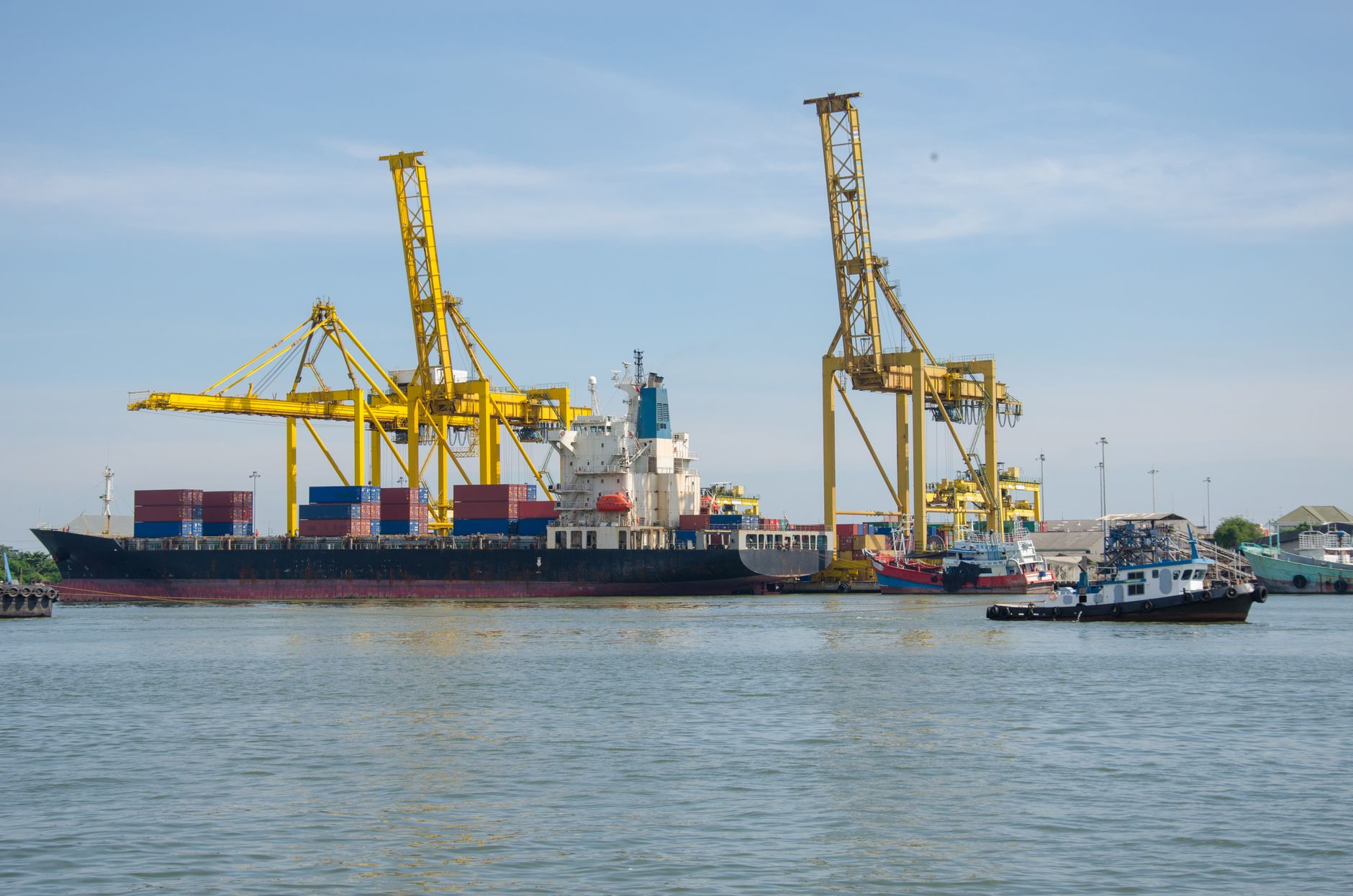
Cargo ship berthed under gantry cranes at an industrial port
Seafood entries under an affected country and HTS code need the COA uploaded before release, not after arrival.

Screening Every Seafood Line Against the Denied List

The screening that works is done per SKU, not per supplier. For each item, the importer needs the country of harvest, the species, the gear type and the fishing area from the supplier, and the HTS code from the classification record. Those facts are then matched twice: once against the denied fisheries to rule out prohibited product, and once against the country and HTS combinations that carry a certificate requirement.

The output should be a simple status on the item master: prohibited, COA required, or clear. Buyers see it before a purchase order is placed, logistics sees it before a booking is confirmed, and the broker sees it before the entry is prepared. An item that changes supplier, gear type or processing country goes back through the screen, because any of those changes can move it between categories.

Supplier declarations matter here, but they are an input, not a defense. The legal consequence of a prohibited entry falls on the importer of record, and the importer is expected to know what it is buying. Build the screening into the same trade compliance management program that already handles other agency requirements, so MMPA status is reviewed on the same cycle as classification and origin rather than as a one-off exercise done in January.

  • Collect country of harvest, species, gear type and fishing area for every seafood SKU.
  • Confirm the HTS code at the 10-digit level before screening.
  • Match against denied fisheries first, then against country and HTS combinations that trigger a COA.
  • Record the result on the item master and re-screen whenever supplier, gear or processing country changes.

The SIMP Overlay on the Same Entry

The MMPA rules sit on top of the Seafood Import Monitoring Program, which has not changed in 2025 or 2026. SIMP covers 13 species groups and requires the importer of record to hold an International Fisheries Trade Permit (IFTP) and to report harvest and landing data at entry, with the supporting chain-of-custody records kept available for audit.

The two programs ask different questions. SIMP asks where and how the fish was harvested and whether the importer can trace it; the MMPA rules ask whether the fishery it came from is allowed to export to the United States at all. The data overlap, since both depend on species, area and gear, which is an argument for collecting it once and using it for both. A SIMP filing does not substitute for a COA, and a COA does not satisfy SIMP.

Importers who already run clean SIMP files have most of the information needed for MMPA screening. Importers who only file SIMP data because the broker asks for it at entry usually do not, and they are the ones most likely to be surprised by a certificate requirement.

Entry Data and Documents Your Broker Needs Before Arrival

A seafood entry in an affected country and HTS combination now depends on documents that originate with a foreign government, which means the broker’s cut-off has to move earlier. The file should be complete before the vessel sails or the flight departs, not when the arrival notice comes in.

The minimum set is the commercial invoice and packing list with species and product form, the confirmed HTS code, the MMPA screening status for each line, the Certification of Admissibility where required, and the SIMP data and IFTP number where the species group is covered. Where FDA requirements also apply, those run in parallel and are not affected by the MMPA rules. A licensed customs brokerage team handling the entry uploads the COA through DIS, checks that it matches the invoice line by line, and flags discrepancies before transmission, when the supplier can still correct them.

Discrepancies on the entry itself flow into the CBP Form 7501, and a mismatch between the summary and the certificate is the kind of inconsistency that turns a document review into a hold. Getting the description, quantity and HTS code aligned across invoice, certificate and entry summary is routine work, but it has to be done every time because each certificate covers only one shipment.

When a Seafood Shipment Is Held for a Missing COA

A hold on an MMPA seafood import line usually means one of three things: the certificate was required and not filed, it was filed but does not match the entry, or the product appears to come from a denied fishery. The first two are documentation problems that can often be fixed if the exporting government issues or corrects the certificate. The third is a prohibition, and the realistic options narrow to export or destruction under CBP supervision.

Time matters in every case because the product is perishable and storage charges accumulate. The response should start the day the hold is posted: confirm what CBP or NOAA is asking for, contact the supplier to start the government certificate process, and assess whether the product can be re-exported to another market if the certificate cannot be obtained. Terminal storage and reefer plug-in charges keep running while the certificate is sourced, so the decision to wait for a corrected COA or to re-export should be made on numbers, not hope.

The pattern across these cases is that the problem was visible before the shipment left. A certificate requirement is determined by country and HTS code, both of which are known at the purchase order stage. Treating MMPA status the way importers already treat other restricted imports, as a pre-shipment gate rather than a post-arrival surprise, removes most of the exposure.

What Large Seafood Importers Should Do Now

Start with a full screen of the current seafood catalog against the denied fisheries and the certificate-triggering country and HTS combinations. For each supplier in an affected country, confirm who in the exporting government issues the certificate and how long it takes, and write that lead time into the booking calendar.

Next, align the broker’s document cut-off with the certificate process, and make sure the COA, SIMP data and invoice are reconciled before the entry is filed. Finally, assign someone to follow the rulemaking that the July 2026 advance notice opened (comments closed September 28, 2026), because changes to the findings or the certificate process will change which lines need attention.

Importers moving product for retail and foodservice programs can see how these controls fit alongside the rest of their inbound flow on our food and beverage logistics page, and the customs compliance platform keeps item-level status such as MMPA screening visible to buyers and logistics teams before a purchase order turns into a booking.

Tariff Response Unit

Audit your derivative HTS exposure

Our brokers will review your top 50 derivative HTS lines and flag Section 232 valuation risk before CBP does.

Frequently Asked Questions

What is the MMPA seafood import ban?

Since January 1, 2026, fish and fish products from foreign fisheries that NOAA Fisheries denied a comparability finding under the Marine Mammal Protection Act may not enter the United States. The findings were published at 90 FR 42395 on September 2, 2025.

What is a Certification of Admissibility for seafood?

It is a form completed and signed by an authorized official of the harvesting or exporting nation, stating that a specific shipment did not come from a banned fishery. It is required when a product falls under a country and HTS code linked to a denied fishery, covers one shipment only, and is uploaded to CBP’s Document Imaging System (code NMF23) before release. The importer of record must also sign the final certification and submit it through DIS within 24 hours after release.

My supplier's fishery was approved. Do I still need a COA?

Possibly. If another fishery in the same country was denied and your product falls under the same HTS code, the certificate is required even though your fishery is approved. That is the most common reason approved product gets held.

Does SIMP compliance cover the MMPA requirements?

No. SIMP requires an International Fisheries Trade Permit and harvest and landing data for 13 species groups. The MMPA rules decide whether the fishery may export to the United States at all. The data overlap, but one filing does not satisfy the other.

Can a prohibited seafood shipment be cleared by filing a certificate later?

Not if the product came from a denied fishery. A prohibited product cannot be made admissible with a certificate or a bond. Where the problem is a missing or mismatched COA on otherwise admissible product, a corrected certificate from the exporting government may resolve the hold.

Is the MMPA import rule going to change?

NOAA published an advance notice of proposed rulemaking at 91 FR 47798 with comments due September 28, 2026. It does not change current requirements, but it opens the framework to revision, so the list of affected fisheries and the certificate process should be reviewed as that rulemaking develops.

An FDA hold is not a single event. It is a sequence with its own documents, its own clocks and, at the end, a statutory deadline that neither FDA nor the importer can extend. Most of the money lost on FDA-regulated shipments is lost in the gaps of that sequence: a respond-by date that passed while the file sat in someone’s inbox, goods moved to a warehouse and then demanded back, or a refused lot that was still sitting at the pier on day 91.

This guide follows an entry from the first automated screen to FDA detention, reconditioning, refusal and the CBP redelivery liability behind it, then covers detention without physical examination and how a firm gets itself removed from an Import Alert. It does not cover how to file the underlying FDA data; it starts at the point where FDA has the entry and has not released it. Requirements checked against 21 CFR 1.94 to 1.99, 19 CFR 141.113, section 801 of the FD&C Act and FDA’s import process pages as of September 23, 2026.

CAPTAIN CONTROL TOWER

Quantify your exposure in 20 minutes

Our trade strategists run your last 90 days of entries through Captain to surface refund eligibility, Section 232 traps and PNTR risk.

EXPLORE CAPTAIN

From May Proceed to Notice of FDA Action: How an Entry Moves

Every FDA-regulated line starts in the same place. The broker transmits the FDA PGA message set in ACE under the CBP entry number, and FDA’s automated screening scores it. That screening tool, PREDICT, is being integrated into SERIO+, FDA’s System for Entry Review and Import Operations, which FDA planned for full implementation in March 2026. In FDA’s words, products transmitted with complete, accurate and valid data may receive a lower risk score and may be eligible for release without further review. That release is a May Proceed, and FDA is explicit that it does not preclude future FDA action.

Lines that do not clear automatically go to people. Since August 4, 2025, manual entry review is handled centrally under the FDA ImportShield Program rather than port by port. An entry is routed there when it scores higher risk, carries incomplete data, appears subject to detention without physical examination, or is targeted for exam or sampling. From that point the entry can take one of several paths, and each one produces a status in ACE and, for the consequential ones, a Notice of FDA Action.

No statute or regulation sets a time limit on FDA’s admissibility review. FDA says so directly on its examination page, and commits only to acting as quickly as possible. That is why the importer’s own speed at each step matters more than any service-level promise from FDA.

FDA entry review stages and what each one asks of the importer
Stage What triggers it What the importer does
May Proceed Automated screening in SERIO+ finds complete, valid data and a lower risk score Nothing at this stage, but FDA can still act later
Documents Required Manual reviewer needs proof of what the line declares Upload to ITACS: BOL or AWB, invoice, PO, labels, CoA, manufacturer proof, intended use statement
Field exam, label exam or sample Reviewer targets the line for physical examination or collection Keep the goods available; a sample produces a Notice of Sampling
Detained Goods appear violative, fall under an Import Alert, or compliance cannot be verified Respond by the date on the Notice of Detention and Hearing
Refused FDA's final decision after the hearing opportunity Export or destroy under supervision within 90 days of the refusal notice

The Documents Stage Is Where Most Holds Get Longer

A Documents Required status is a request, not an accusation. FDA’s preferred channel is ITACS, and the documents it asks for are ordinary commercial records: bill of lading or air waybill, commercial invoice, purchase order, labels, certificates of analysis, proof of who manufactured the goods, and a statement of intended use. FDA states no fixed deadline for this step and warns only that failing to provide documents timely may result in a delay.

That open-endedness cuts against the importer. Demurrage and storage keep running while a request sits unanswered, and those charges fall on the importer, not on FDA or CBP. The same-day upload is the one lever the importer controls completely.

If the reviewer is not satisfied by paper, the next step is a field exam, a label exam or sample collection. A sample triggers a Notice of FDA Action in the form of a Notice of Sampling. Goods that have already left the port under conditional release are exposed at this stage, because FDA can have CBP demand their return for examination, a point covered in the redelivery section below. Companies that import under several FDA product areas usually centralise this document flow inside their trade compliance management programme rather than rebuilding the file entry by entry.

Detention Without Physical Examination and How Import Alerts Work

A detention is FDA’s formal statement that the goods appear not to be admissible. The legal test is the appearance standard in section 801(a) of the FD&C Act: an article is refused if it appears, from examination of samples or otherwise, to be adulterated, misbranded, an unapproved new drug, manufactured under insanitary conditions, or forbidden or restricted in sale in the country where it was produced or from which it was exported. FDA does not have to prove a violation to detain. It has to see the appearance of one, and the burden shifts to the importer to overcome it.

The “or otherwise” in that wording is what makes detention without physical examination possible. When FDA places a firm or a product on an Import Alert, shipments matching the alert can be detained on the basis of that record, without anyone opening a carton. Import Alerts carry lists: a red list and a yellow list identify firms or products subject to DWPE, and a green list identifies firms exempt from it. A shipment from a red-listed firm is detained on arrival, and the importer must overcome the appearance of a violation for every shipment, one entry at a time.

Detention can also follow from an inability to verify compliance. FDA’s entry review page gives the example of a drug product whose declared manufacturer cannot be found in FDA’s drug registration database. For medical devices, the same pattern applies when the manufacturer’s registration or listing data transmitted at entry does not match FDA records; the device-side obligations of the party bringing goods in are covered on our FDA initial importer page.

The practical consequence is that the Import Alert check belongs before the purchase order, not after arrival. A supplier on a red list turns every shipment into a detention case, and no quality of entry data changes that.

  • Red list: firms or products subject to DWPE under the alert
  • Yellow list: also subject to DWPE under the alert
  • Green list: firms or products exempt from DWPE under that alert
  • When to check: before the purchase order, by screening each supplier and product against active Import Alerts

Answering the Notice of Detention and Hearing

The detained status arrives as a Notice of FDA Action marked Detained, which is the Notice of Detention and Hearing. Under 21 CFR 1.94, the owner or consignee is entitled to written or electronic notice and an opportunity to present oral or written testimony before FDA makes a final decision.

The clock on that opportunity is short. FDA’s Regulatory Procedures Manual sets 10 business days to respond, and the notice usually prints a respond-by date 20 calendar days from the detention date. An extension is possible only if it is requested before that date and with a reasonable basis. A request made the day after has nothing to extend.

The response itself should address the specific charge on the notice, not the product in general. For a sampling-based detention, the usual evidence is private laboratory analysis under FDA’s Compliance Policy Guide Sec. 150.200, known as a PLAP. For a labeling charge, it is the corrected label and the reasoning for why the article is not misbranded. For a registration or listing charge, it is proof that the firm is registered and the product listed as declared. The response goes in with the documents, not as a narrative promising them later.

Many detained entries are released under bond pending FDA’s decision under section 801(b), which means the goods may physically sit in the importer’s facility while the hearing runs. That does not make them released in the admissibility sense. The bond terms, and the difference between a single-entry and continuous bond, decide how much exposure the importer carries if FDA ultimately refuses.

Importer representative handing entry documents to a warehouse worker beside a shipping container
The respond-by date on a Notice of Detention and Hearing can be extended only if the request comes before it.

Reconditioning Under Form FDA 766

When a violation can be fixed, the owner or consignee can apply to recondition the goods on Form FDA 766. Under 21 CFR 1.95 the application has to describe the method in detail and name the time and place where the work will happen and when it will be finished. FDA’s reconditioning guidance also asks for a copy of the new label when the fix is relabeling.

Approval comes with a bond. Section 801(b) requires one, and under 21 CFR 1.97 it must include a condition for redelivery of the goods. The importer also pays for FDA’s supervision under 21 CFR 1.99: the supervisor’s time is charged at 267% of the GS-11 step 4 hourly rate and an analyst’s at 267% of GS-12 step 4, with a one-hour minimum, plus travel and per diem.

FDA does not treat 766 applications as open-ended. A second application needs meaningful changes from the first, a third is generally not granted, and reconditioning is not available at all where the charge is an unapproved new drug. The result does not have to be all or nothing: FDA can release part of a lot and refuse the rest, which matters on mixed shipments where only some SKUs carry the defective label or failed the lab test.

Cost planning should include the time the goods wait. Storage during a hold, whether at the pier or in a customs bonded warehouse, is for the importer’s account.

Shipment paperwork and pen on a clipboard resting on a carton marked fragile
A Form FDA 766 application must set out the method, time, place and any replacement labels before work starts.

Refusal, the 90-Day Clock and Redelivery Liability

A refusal is FDA’s final decision on admissibility. There is no appeal unless FDA issued it in error. The refused goods must be exported or destroyed under CBP and FDA supervision within 90 days of the notice of refusal, and that deadline comes from the statute itself, section 801(a) of the FD&C Act at 21 U.S.C. 381(a), not from a CBP regulation. FDA states it has no authority to grant extensions; any question about additional time goes to CBP.

Section 801(a) also lets FDA destroy refused drugs, devices and tobacco products valued at $2,500 or less without giving the owner an opportunity to export them. In practice this falls mainly on international mail shipments.

The larger financial exposure sits on the CBP side. Under 19 CFR 141.113(c), the release of FDA-regulated goods is conditional. The conditional period ends at the earliest of an FDA refusal, an FDA May Proceed, or 30 days after release, and FDA can extend it by issuing a notice of sampling or detention within those 30 days. If FDA refuses, CBP issues a redelivery notice within 30 days of the refusal. Failing to redeliver means liquidated damages equal to three times the value of the merchandise, unless the port director required a bond at domestic value under 19 CFR 12.3(b). Where the liquidated damages arise under the section 801(b) bond, CBP can cancel or reduce them only with the full agreement of the FDA division director (21 CFR 1.97(b)).

This is where distributed goods become a problem. An importer who sold the lot during the conditional period cannot redeliver it, and the claim lands on the bond. Holding FDA-regulated goods until the status is final is the only way to remove that risk entirely, and the refusal itself should be read alongside the broader rules on prohibited and restricted imports when deciding whether export or destruction is the cheaper exit.

  • Respond to a detention: 10 business days under the RPM, usually printed as 20 calendar days
  • Conditional release period: ends at refusal, May Proceed or 30 days after release, unless FDA extends it within those 30 days
  • CBP redelivery notice: within 30 days of the FDA refusal
  • Export or destruction: within 90 days of the notice of refusal, extendable only through CBP
  • Failure to redeliver: liquidated damages of three times the merchandise value

Getting a Firm Removed From an Import Alert

Detention without physical examination does not end by itself. A firm on a red or yellow list stays there until FDA grants a petition for removal, and every shipment until then carries the burden of overcoming the appearance of a violation. FDA’s governing policy is RPM 9-8.

A petition has to show that the problem behind the listing was investigated and fixed, not just that recent shipments passed. FDA asks for the root cause, the corrective and preventive actions taken, and evidence that they work. FDA’s own examples of that evidence are five clean shipments and a third-party audit. Petitions go to ImportAlerts2@fda.hhs.gov unless the specific alert’s guidance names another route.

The clean shipment record is built during the detention period itself, one shipment at a time, each released only after the importer overcomes the appearance of a violation, often with private laboratory results under PLAP. That makes consistent, documented entry handling part of the removal strategy rather than a separate task. Food importers carrying a firm on an alert usually coordinate this across supplier, lab and broker, and the same discipline applies to any food and beverage importer whose supplier appears on an alert.

Cutting Hold Time Before the Next Entry

FDA’s own guidance points to data quality as the main lever. Complete and valid ACE data is what earns a lower risk score and a possible automated release. In practice that means the correct FDA product code, the affirmations of compliance the commodity requires, and registration identifiers that match FDA’s records: DEV, DFE and LST for devices, the manufacturer’s food facility registration for food, and the FSVP importer’s identifier on each food line.

Three checks belong before booking rather than after arrival: the supplier’s registration status for the current cycle, the supplier and product against active Import Alerts, and whether labeling meets the part of 21 CFR that applies to the commodity. Each one removes a detention charge before it can be written.

Food importers with a qualifying history can also apply to VQIP, the Voluntary Qualified Importer Program, under which FDA will expedite entry for covered foods and limit exams to specific circumstances. Eligibility requires a three-year import history, facility certification by accredited third-party certifiers, FSVP compliance and a clean compliance record. The Notice of Intent window runs January 1 to September 1, and the FY2027 user fee is $9,994 for benefits from October 1, 2026 to September 30, 2027.

Once a hold starts, the work is tracking dates: the respond-by date, the 30-day conditional release window and the 90-day export or destruction deadline. A customs brokerage team that files the FDA data can also run those clocks, upload to ITACS the same day, coordinate PLAP sampling and 766 bonds, and deal with CBP on redelivery.

Tariff Response Unit

Audit your derivative HTS exposure

Our brokers will review your top 50 derivative HTS lines and flag Section 232 valuation risk before CBP does.

Frequently Asked Questions

What does May Proceed mean on an FDA entry?

It means FDA released the line for entry after automated or manual review. FDA states that May Proceed does not preclude future FDA action if a problem appears later.

How long do I have to respond to an FDA detention?

FDA’s Regulatory Procedures Manual sets 10 business days, and the Notice of Detention and Hearing usually shows a respond-by date 20 calendar days from detention. Extensions must be requested before that date, with a reasonable basis.

Can I appeal an FDA import refusal?

No. A refusal is FDA’s final decision unless FDA issued it in error. The goods must be exported or destroyed under supervision within 90 days of the refusal notice.

Can FDA extend the 90-day export or destruction deadline?

No. The 90 days come from section 801(a) of the FD&C Act, and FDA states it has no authority to extend them. Requests for additional time go to CBP.

What happens if refused goods were already sold and cannot be redelivered?

Under 19 CFR 141.113, failure to redeliver on CBP’s demand leads to liquidated damages equal to three times the value of the merchandise, unless a domestic-value bond was required. Where the claim arises under the section 801(b) bond, CBP can mitigate only with the FDA division director’s full agreement.

How does a company get removed from an FDA Import Alert?

By petition under RPM 9-8, showing the root cause, corrective and preventive actions, and evidence such as clean shipments or a third-party audit. Petitions go to ImportAlerts2@fda.hhs.gov unless the alert specifies otherwise.

Who pays for FDA supervision of reconditioning?

The importer, at 267% of the GS-11 step 4 hourly rate for a supervisor or GS-12 step 4 for an analyst, with a one-hour minimum plus travel and per diem, under 21 CFR 1.99.

A UV-C phone sanitizer, a room air purifier sold as “kills 99.9% of viruses” and a plug-in ultrasonic rodent repeller have something in common that most of their importers do not know: each one is a pesticide device under FIFRA, and each one needs an EPA filing before the container reaches a US port. None of them needs an EPA product registration. That distinction is where the confusion starts, because “not registered” is routinely read as “not regulated”.

Under 40 CFR 152.500 a pesticide device is exempt from product registration but remains subject to establishment registration, labeling rules and the import provisions of FIFRA section 17(c). In practice that means three things have to be right before arrival: the producing plant must hold an EPA establishment number that appears on the label, the label and the marketing claims must match what the product actually is, and the importer must submit a Notice of Arrival on EPA Form 3540-1. This guide covers each requirement, the product types that trigger it and what happens at the border when one is missing. Rules checked against the eCFR and EPA guidance as of September 2026.

CAPTAIN CONTROL TOWER

Quantify your exposure in 20 minutes

Our trade strategists run your last 90 days of entries through Captain to surface refund eligibility, Section 232 traps and PNTR risk.

EXPLORE CAPTAIN

What Makes a Product a Pesticide Device Under FIFRA

FIFRA splits the regulated universe into two groups. A pesticide is a substance or mixture that prevents, destroys, repels or mitigates a pest. A device is an instrument or contrivance that does the same job by physical or mechanical means, without a substance doing the work. The dividing line is the mode of action, not the product category, so two air purifiers that look identical on a shelf can land on different sides of it.

The trigger is the pest claim. A UV-C lamp sold to dry a nail polish is a lamp; the same lamp sold to sanitize a toothbrush against bacteria is a pesticide device. An air filter sold to capture dust is outside FIFRA; the same filter sold as removing or inactivating viruses is a device. If the product incorporates a substance that it releases to do the killing, such as silver ions from a silver electrode, it is a pesticide rather than a device and needs full product registration before it can be sold or distributed. EPA still classifies some equipment that makes an agent on site, such as ozone generators, as devices, so each product has to be checked on its own.

For importers this matters because the classification is driven by copy the supplier or the brand wrote, often without regulatory input. The HTS code on the entry does not change with the claim, which is why HTS classification alone never flags the requirement. EPA reads the label, the packaging, the insert and the online listing, and any of them can create a pest claim.

How FIFRA treats common product claims
Product and claim FIFRA status What is required at import
UV-C wand or box, claims to kill germs on surfaces Pesticide device EPA Est. No. on label, compliant label, Notice of Arrival
Air purifier with HEPA or UV stage, claims to kill or inactivate viruses Pesticide device EPA Est. No. on label, compliant label, Notice of Arrival
Ultrasonic or electromagnetic rodent or insect repeller Pesticide device EPA Est. No. on label, compliant label, Notice of Arrival
Product that releases a substance to kill or repel pests Pesticide EPA product registration plus Notice of Arrival
Treated article, claim limited to protecting the article itself Exempt treated article No FIFRA filing if the exemption conditions are met
Same air purifier sold only for dust and pollen Not a pesticide device No FIFRA filing

UV-C Sterilizers, Air Purifiers and Ultrasonic Repellers

Three product families generate most of the device shipments that importers get wrong, and each has a different failure pattern.

UV-C sterilizers cover phone and toothbrush sanitizers, handheld wands, cabinet sterilizers for salons and kitchens, and UV modules sold for HVAC ducts. The category grew fast, much of it through marketplace sellers sourcing directly from factories that have never exported a regulated product to the US. The typical gap is a label with no EPA Est. No. and marketing copy promising pathogen kill rates that the brand cannot substantiate.

Air purifiers are the trickiest group because the same model is often sold with and without germ claims depending on the retailer. An importer can bring in a clean, dust-only SKU for one customer and a “virus-killing” version for another, and only the second one needs EPA paperwork. HVAC indoor air quality components carrying antimicrobial claims fall into the same logic.

Ultrasonic and electromagnetic pest repellers are devices by definition, since repelling pests is the only thing they claim to do. These shipments are frequently declared as small electronics with no FIFRA flag at all, which is how they end up detained after arrival rather than screened before it.

Compliance team reviewing product labeling and marketing claims at laptops
The pest claim on the label, packaging or product listing decides whether a device needs EPA paperwork.

Establishment Registration and the EPA Est. No. on the Label

A device does not get an EPA registration number, but the plant that produces it must be registered with EPA as a pesticide-producing establishment, and the resulting EPA Est. No. has to appear on the label or the immediate container. For imported devices the establishment is the foreign factory. If the factory has never registered, the importer cannot fix the problem at the port: the number does not exist and the label cannot be corrected in a bonded warehouse without EPA agreeing to the route.

The verification step belongs before the purchase order, not after the booking. Ask the supplier for the Est. No., check that it corresponds to the plant that actually makes the goods rather than a trading company or a sister factory, and confirm the number printed on the artwork matches. Contract manufacturers that move production between plants create silent mismatches that only surface when EPA compares the label to the filing.

Labeling is the second half of the obligation. Device labels must not carry claims that are false or misleading, and a label that overstates what the device does makes the product misbranded under FIFRA. Efficacy percentages, claims about named viruses and “safe” or “non-toxic” language are the phrases that draw attention. A claims review of the label, the packaging and the listing copy is the cheapest control in the whole process, because every downstream filing repeats what the label says.

Notice of Arrival Timing and ACE Filing

19 CFR 12.112 requires the importer to submit a Notice of Arrival of Pesticides and Devices on EPA Form 3540-1 before the shipment arrives in the United States. EPA reviews the notice and indicates how the shipment is to be handled, and CBP will not release the goods without that determination. Filing at arrival, or after the goods are already at the terminal, means the shipment waits while EPA works through the notice.

Since the 2016 rule at 81 FR 67143, the NOA can be transmitted electronically through ACE as part of the entry rather than on paper. According to the CBP implementation guidance for the EPA pesticide message set, devices use program code PS2, while PS1 and PS3 cover pesticides, and an image of the label is uploaded to the Document Imaging System under tag EPA04. EPA still accepts paper NOAs by email under a temporary process and has said it will give at least seven days’ notice before ending it. It encourages electronic filing in ACE, so check the current EPA instructions for your port of entry.

The practical sequence for a licensed customs brokerage handling a device shipment looks like this: confirm the product is a device and not a pesticide, verify the Est. No. against the producing plant, obtain the final label image, transmit the NOA data with the entry before arrival, and hold the release until EPA’s determination posts. Each of those steps depends on the supplier sending documents early, which is why the timing problem is usually a purchasing problem.

  • Product identity: brand, model and a description that matches the label.
  • Producing establishment: the EPA Est. No. of the plant that made the goods.
  • Label image: the final artwork as it appears on the product or package.
  • Shipment data: quantity, port of entry and expected arrival date.
  • Importer data: the importer of record and a contact who can answer EPA questions.

Treated Articles and When the Exemption Fails

Many consumer goods contain an antimicrobial agent: cutting boards, textiles, phone cases, shower curtains, keyboard covers. These are treated articles, and 40 CFR 152.25(a) exempts them from FIFRA when two conditions are met. The substance used to treat the article must itself be registered for that use, and the claim must be limited to protecting the article itself, for example resisting odor-causing bacteria or mildew on the product.

EPA’s position, set out in PRN 2000-1, is that the exemption disappears the moment the claim reaches beyond the article to the user or the environment. “Protects you from germs”, “kills bacteria on contact” and “antiviral” are public-health claims, and a treated cutting board or face covering making them is a pesticide that needs registration. Importers of treated goods therefore face the same claims-review discipline as device importers, even though their products never get a Notice of Arrival when the copy stays within the exemption.

This exemption is often confused with the chemical reporting that applies to some imported articles under other statutes. That is a separate question with separate certifications, and it should not be answered from the FIFRA analysis.

Detentions, Refusals and Redelivery

When a device arrives without a Notice of Arrival, without an Est. No. on the label or with claims EPA considers misbranding, FIFRA section 17(c) allows the shipment to be refused admission. EPA communicates its decision on the notice, and CBP acts on it. A refusal can lead to a demand for redelivery of goods already conditionally released, followed by re-export or destruction under CBP supervision. Goods sitting under detention continue to incur storage and demurrage while the importer works the problem.

Some problems can be corrected, some cannot. A missing notice filed late can often be resolved, at the cost of delay. A label error may be correctable if EPA agrees to relabeling under an approved arrangement. A plant with no establishment registration, or a product that is actually an unregistered pesticide, usually leaves re-export or destruction as the only exits. The importer carries the outcome, which is why restricted imports of this kind should be screened at the product development stage.

Response speed matters more than eloquence. An importer who can produce the establishment record, the final label and a corrected claims set within days has options. One who has to start chasing a factory in another time zone after the refusal notice arrives usually does not. A non-resident importer faces the same exposure with less local capacity to respond, so the documentation file needs to exist before the first shipment.

Building a Device Screening Step Into the Import Process

EPA did not change the device rules in 2025 or 2026. The requirement has been stable for years, and what changed is the volume of products carrying germ-kill and pest claims, most of them sourced from factories unfamiliar with FIFRA. That makes this a process gap rather than a regulatory surprise, and it can be closed with a short, repeatable screen.

Put the screen where new SKUs are approved. Every new product with a pest, germ, virus, bacteria, mold or insect claim gets flagged, the claim gets reviewed, the mode of action gets confirmed as physical or chemical, and the Est. No. gets verified before the first order ships. The result feeds the entry: the broker knows in advance which lines need an NOA, and the label image is already on file. Many of the same product lines also carry consumer product safety obligations, which the CPSC compliance guide covers separately.

The screen also belongs in the trade compliance management program as a standing control, alongside US import licenses and permits held by other agencies. EPA filings are data elements on the entry, so errors show up on the same CBP Form 7501 review that catches classification and valuation mistakes, and they should be audited with the same frequency.

Tariff Response Unit

Audit your derivative HTS exposure

Our brokers will review your top 50 derivative HTS lines and flag Section 232 valuation risk before CBP does.

Frequently Asked Questions

Does a pesticide device need EPA registration?

No product registration is required for a device under 40 CFR 152.500. The device is still subject to establishment registration, so the producing plant must have an EPA Est. No. shown on the label, and it remains subject to FIFRA labeling rules and the import requirements of FIFRA section 17(c).

When must the EPA Notice of Arrival be filed?

Before the shipment arrives in the United States. 19 CFR 12.112 requires the importer to submit EPA Form 3540-1, or the equivalent electronic data in ACE, ahead of arrival so EPA can review it and CBP can act on the determination.

Is an air purifier a pesticide device?

Only if it makes a pest claim, such as killing or inactivating viruses, bacteria or mold, and does so by physical means. A purifier sold for dust and pollen is outside FIFRA. One that incorporates a substance and releases it to kill microorganisms, such as a silver-ion unit, is a pesticide, not a device, and needs product registration.

What ACE program code applies to pesticide devices?

CBP implementation guidance lists PS2 for devices and PS1 and PS3 for pesticides, with the label image uploaded to the Document Imaging System under tag EPA04. Check the current CBP guidance for your port before relying on paper filing.

Are antimicrobial treated articles exempt from EPA rules?

Only when the antimicrobial substance is registered for that use and the claim is limited to protecting the article itself. Under 40 CFR 152.25(a) and PRN 2000-1, any public-health claim aimed at the user, such as protecting against germs, removes the exemption.

What happens if a device arrives without an EPA Est. No.?

EPA can recommend refusal of admission under FIFRA section 17(c). Depending on the problem, the importer may be able to correct it, or may be required to re-export or destroy the goods under CBP supervision. A plant that has never registered cannot be fixed at the port.

A Canada non resident importer can become the importer of record for shipments entering the United States without opening a US office, a US subsidiary, or holding US citizenship, provided it has a US customs bond and a valid CBP importer number. The same non-resident importer, or NRI, structure is open to any foreign company, not only Canadian ones, and CBP’s own C-TPAT program formally recognizes it: eligibility for the importer category is defined as being an active US importer or non-resident Canadian importer.

This guide walks a foreign company, Canadian or otherwise, through what it actually needs to import into the US as the importer of record, where a physical US address is and isn’t required, and the mistakes that cause NRI shipments to stall at the border.

CAPTAIN CONTROL TOWER

Quantify your exposure in 20 minutes

Our trade strategists run your last 90 days of entries through Captain to surface refund eligibility, Section 232 traps and PNTR risk.

EXPLORE CAPTAIN

What a Non-Resident Importer Is

Under 19 U.S.C. 1484, an entry can be made by the owner, the purchaser, or a licensed customs broker appointed by one of them, and nothing in that statute requires the owner or purchaser to be a US resident or a US-incorporated company. A foreign company can be the importer of record on its own US-bound shipments, taking on the same duty and compliance obligations a domestic importer carries.

The question comes up most often from Canadian companies for a practical reason: instead of selling to a US buyer and leaving import clearance to them, a Canadian exporter can control its own customs clearance process, set its own delivered pricing, and manage duty exposure directly, rather than handing that leverage to the customer on the other side of the border.

The same structure applies to a European, Asian, or Latin American exporter selling directly to US customers; nothing about the non-resident importer mechanism is Canada-specific. Canada dominates the search volume around this question simply because cross-border shipping volume between the two countries is high and the trip is short enough that a Canadian company can plausibly manage US customs obligations itself rather than depending on a US-based buyer or distributor to do it.

Can a Canada Non Resident Importer Ship Directly Into the US?

Yes. A Canada non resident importer files entries the same way a US-based importer does, through a licensed broker acting on its behalf, and is bound by the same reasonable-care obligations under 19 U.S.C. 1484. What differs is the paperwork needed to establish its identity with CBP in the first place, since it typically has no IRS tax filing history to draw on.

None of the merchandise itself is treated differently because the importer is foreign. Classification, valuation, and admissibility rules apply exactly as they would to a domestic importer’s shipment; the differences described in this guide are entirely about how the importer establishes and documents its identity, its bond, and its authorized agent with CBP before that first entry is filed.

Getting a US Importer of Record Number Without a US Business

Every importer needs an Importer of Record number to file entries, and that number is normally an IRS-issued Employer Identification Number for a company, or a Social Security Number for an individual. A foreign company that has neither uses CBP Form 5106, the Create/Update Importer Identity Form, checking the box requesting a CBP-assigned number instead. CBP then issues that number and it is used on every future transaction requiring one.

This is a one-time setup step, not a recurring filing. Once CBP has issued the number, it functions on every subsequent entry summary exactly the way an EIN or SSN would. A licensed customs brokerage that regularly works with foreign importers can usually walk a new NRI through this setup before its first shipment leaves the origin country.

The US Customs Bond Every NRI Needs

A non-resident importer needs a US customs bond the same way any importer of a formal entry does, underwritten by a surety listed on Treasury Department Circular 570. A foreign company shipping once or occasionally can use a single entry bond; one planning a regular US import program is generally better served by a continuous bond covering every entry for a year.

There is no separate, lighter bonding standard for non-resident importers. CBP’s C-TPAT eligibility criteria make that point explicitly for the importer category, requiring a valid continuous import bond registered with CBP whether the applicant is a US importer or a non-resident Canadian importer.

Do You Need a US Address or a Resident Agent?

Being the importer of record does not itself require a physical US office or place of business; that is the entire point of the non-resident importer structure. What it does require, if the foreign company grants a customs power of attorney to its broker, is a resident agent: under 19 CFR 141.36, a power of attorney executed by a nonresident principal is only accepted if the designated agent is a US resident authorized to accept service of process against that nonresident.

In practice this resident-agent condition is satisfied through the broker relationship itself, not a separate physical office lease. It is worth confirming explicitly with your broker rather than assuming a courier address or a freight forwarder’s warehouse automatically qualifies.

DDP Sellers Are Already Acting Like Non-Resident Importers

A foreign seller who quotes Delivered Duty Paid (DDP) terms is contractually taking on the buyer’s import clearance and duty payment obligations in the destination country, which functionally makes that seller a non-resident importer whether or not it ever registered as one. The obligations described above, an importer number, a bond, and an authorized agent, do not disappear because the term of sale was chosen for pricing reasons rather than a deliberate import strategy.

The risk shows up at the worst possible time: a DDP shipment arrives with no importer number and no bond in place, and it sits at the port while the seller scrambles to set up exactly the paperwork this guide describes, on a deadline it does not control. A seller quoting DDP into the US regularly is better off setting up the entry summary filing relationship in advance rather than treating each shipment as a one-off.

Common Mistakes and Building Trusted-Importer Status

The recurring failure pattern is sequencing: a foreign company arranges the sale and the shipment before arranging the importer number, the bond, and the power of attorney, then treats the resulting hold at the border as a carrier or broker problem rather than a paperwork gap it created. Confusing “no US office required” with “no US paperwork required” is the single most common version of this mistake.

A second, quieter mistake is treating the first successful entry as proof the program is set up correctly. A single shipment can clear on a single entry bond and a hastily assembled importer number and still leave real trade compliance management gaps in recordkeeping, classification consistency, and valuation documentation unaddressed until CBP asks for them on the fifth or fifteenth entry instead of the first.

For a non-resident importer with an established, recurring US program, C-TPAT certification is available on the same terms as a domestic importer, provided it has been actively importing for the past 12 months, holds a valid continuous bond, and operates a staffed business office in the United States or Canada. That status brings fewer exams and faster release, and it signals to CBP, and to US customers, that the import program is run properly rather than assembled shipment by shipment.

Tariff Response Unit

Audit your derivative HTS exposure

Our brokers will review your top 50 derivative HTS lines and flag Section 232 valuation risk before CBP does.

Frequently Asked Questions

Can a Canadian company be the importer of record for US shipments?

Yes. CBP’s own C-TPAT eligibility criteria explicitly recognize a non-resident Canadian importer alongside a US importer, and 19 U.S.C. 1484 does not require the owner or purchaser making entry to be a US resident or US-incorporated.

Does a non-resident importer need a US address?

No physical US office is required to serve as importer of record. What is required is a US customs bond, a CBP importer number, and, if a power of attorney is granted to a broker, a US resident agent authorized to accept service of process under 19 CFR 141.36.

How does a non-resident importer get a US importer number?

By filing CBP Form 5106, the Create/Update Importer Identity Form, and requesting a CBP-assigned number in place of an EIN or Social Security Number, which the foreign company typically does not have.

Does a non-resident importer need a US customs bond?

Yes, on the same terms as any importer of a formal entry: a single entry bond for an occasional shipment, or a continuous bond for a regular import program, underwritten by a Treasury-listed surety.

What's the risk of selling DDP into the US without registering as an importer?

The shipment can arrive with no importer number and no bond in place, holding it at the port while the seller sets up the paperwork under time pressure. A foreign seller quoting DDP regularly should arrange its importer number, bond, and power of attorney before the first shipment ships, not after.

Is C-TPAT certification available to a non-resident importer?

Yes. CBP’s importer eligibility criteria for C-TPAT name active US importers and non-resident Canadian importers together, provided the applicant has imported within the past 12 months, holds a valid continuous bond, and operates a staffed business office in the United States or Canada.

A customs power of attorney is the legal document that lets a customs broker file entries, sign declarations, and transact customs business on an importer’s behalf, and under 19 CFR 141.46 a licensed broker cannot legally transact that business without a valid one on file. CBP’s own document for it is Customs Form 5291, though 19 CFR 141.32 also accepts an equivalent general or limited power of attorney as long as it is executed the same way.

This guide covers who has to grant one, what changes for a corporation, a partnership, or a foreign principal, how long it stays in force, and how to revoke it, plus where it fits alongside the customs bond and entry summary CargoTrans collects before filing a client’s first entry.

CAPTAIN CONTROL TOWER

Quantify your exposure in 20 minutes

Our trade strategists run your last 90 days of entries through Captain to surface refund eligibility, Section 232 traps and PNTR risk.

EXPLORE CAPTAIN

What a Customs Power of Attorney Authorizes

Under 19 CFR 141.31, a power of attorney may be executed to authorize an agent or attorney to transact a specified part, or all, of the customs business of the principal granting it. That scope can be narrow, limited to a single shipment or entry type, or broad enough to cover every transaction a broker handles for that importer going forward.

The regulation sets a few hard limits. A power of attorney cannot be granted to a minor. It also draws a distinction between a resident principal, generally a US-incorporated company or a partnership with resident partners, and a nonresident principal, a distinction that drives separate requirements covered further down.

In practice, the scope named on the document matters as much as the fact that one exists. A POA can cover routine entry filing, or it can be extended to protests, drawback claims, and other customs business, and a broker generally works from the authority actually granted rather than assuming a signature covers whatever comes up later. Reviewing that scope periodically, particularly as an importer’s product mix or import volume changes, is worth doing rather than assuming the original grant still matches what the broker is now handling.

CBP Form 5291: The Standard Document

19 CFR 141.32 sets out the form. CBP Form 5291 is the standard document used to grant power of attorney to transact customs business, and it can be issued as unlimited, covering all customs business, or limited to specific transactions. Where an importer or broker uses a substitute document instead of Form 5291 itself, the regulation requires that it be executed in the same manner and contain equivalent authorizing language.

In practice, this is the document CargoTrans asks every new client to sign before any entry summary is filed on their behalf. It names the broker as agent, states the scope of what the broker is authorized to do, and is signed by someone with authority to bind the importer.

Why a Broker Cannot File Without One

19 CFR 141.46 requires a customhouse broker to obtain a valid power of attorney before transacting customs business in the name of a principal. The document does not have to be filed with CBP itself; instead, the broker retains it in its own records and must produce it for CBP or Treasury representatives on request, consistent with the recordkeeping obligations that come with a broker’s licensed customs brokerage status under 19 CFR Part 111.

That requirement is not a formality. An entry filed without a valid power of attorney on file is filed without authority, which exposes both the broker and the importer, so a missing or expired POA stops a filing exactly the way a missing bond does.

Corporate POAs: When an Officer's Signature Is Enough

For a resident corporation, a power of attorney is not required at all if the person signing customs documents is known to CBP to be the president, vice president, treasurer, or secretary of that corporation. Where a power of attorney is used anyway, or is required because the signer does not hold one of those titles, it must be executed by a person duly authorized to do so on the corporation’s behalf.

A nonresident corporation faces an added step. If it has not qualified to conduct business under state law in the state where its agent is empowered to act, the power of attorney has to be supported by documentation establishing the signer’s authority to execute it for the corporation, since CBP has no independent way to verify who can bind a foreign company.

That extra documentation is usually a certified corporate resolution or an equivalent record naming the signer and confirming they are authorized to grant the power of attorney on the company’s behalf. It is a small step to prepare in advance and a slow one to assemble under pressure once a shipment is already sitting at the port waiting on paperwork.

Partnerships, Nonresidents, and Foreign Corporations

A power of attorney issued by a partnership is limited to a maximum of two years from the date it is executed, under 19 CFR 141.34; every other kind of principal, individual or corporation, can grant one for an unlimited period. That two-year clock is worth tracking separately if a partnership is one of the entities on file.

A nonresident principal faces a distinct condition. Under 19 CFR 141.36, a power of attorney executed by a nonresident will not be accepted unless the designated agent is a US resident and is authorized to accept service of process against that nonresident. That resident-agent requirement is central to how a non-resident importer structures its US import program, and it is usually satisfied through the broker relationship itself rather than a separate arrangement.

How Long a POA Lasts, and How to Revoke One

Outside the two-year partnership limit, a customs power of attorney has no built-in expiration date. It stays in force until it is affirmatively revoked, which is why importers rarely think about it again after the initial paperwork, even as brokers, ports, and shipment volumes change over the years.

Revocation itself is simple by design. 19 CFR 141.35 makes any power of attorney subject to revocation at any time by written notice given to, and received by, CBP, either at the port of entry or electronically. There is no requirement to wait for a renewal date or coordinate the timing with an active shipment.

Switching brokers is the most common reason a POA gets revoked in practice, and it is worth doing deliberately: revoke the old grant in writing and execute a new Form 5291 for the incoming broker at the same time, rather than leaving both technically valid at once. An importer with entries in flight during a broker transition should confirm which broker of record is authorized before the next filing goes out, not after.

Onboarding: What CargoTrans Collects Before the First Entry

In practice, the power of attorney is one of three things a broker needs on file before touching an entry: the POA itself, proof of an active importer number, and confirmation of the customs bond covering the shipment. Collecting all three before the goods arrive, rather than scrambling once they’re at the port, is what keeps a first-time importer’s entry moving on schedule.

For importers building toward C-TPAT certification or a formal trade compliance management program, a clean, current power of attorney on file with a single broker of record is also part of the documented control environment CBP expects to see, not just a filing prerequisite.

Tariff Response Unit

Audit your derivative HTS exposure

Our brokers will review your top 50 derivative HTS lines and flag Section 232 valuation risk before CBP does.

Frequently Asked Questions

What is a customs power of attorney?

It is the document that authorizes a customs broker to transact customs business, including filing entries, on an importer’s behalf. CBP’s standard form for it is Customs Form 5291, and a broker cannot legally file an entry for an importer without a valid one on file, per 19 CFR 141.46.

What CBP form is used for a customs power of attorney?

Customs Form 5291, under 19 CFR 141.32. An equivalent general or limited power of attorney is also acceptable as long as it is executed in the same manner and contains the same authorizing language.

How long does a customs power of attorney last?

For most principals it lasts until affirmatively revoked, with no built-in expiration. The one exception is a power of attorney issued by a partnership, which is limited to a maximum of two years from execution under 19 CFR 141.34.

Can a broker file an entry without a power of attorney on file?

No. 19 CFR 141.46 requires a customs broker to obtain a valid power of attorney before transacting customs business in the name of a principal, which includes filing an entry summary on the importer’s behalf.

Does a foreign company need a different power of attorney?

Yes. Under 19 CFR 141.36, a power of attorney executed by a nonresident principal is only accepted if the designated agent is a US resident authorized to accept service of process against that nonresident, a requirement that shapes how a non-resident importer sets up its US filings.

How do I revoke a customs power of attorney?

By written notice given to, and received by, CBP, either at the port of entry or electronically, under 19 CFR 141.35. It can be revoked at any time and does not require waiting for a renewal or expiration date.

Does switching customs brokers require a new power of attorney?

Yes. Each broker of record needs its own valid power of attorney on file before it can transact business for the importer, so a broker transition should include revoking the old grant in writing and executing a new CBP Form 5291 for the incoming broker rather than leaving the prior authorization outstanding.