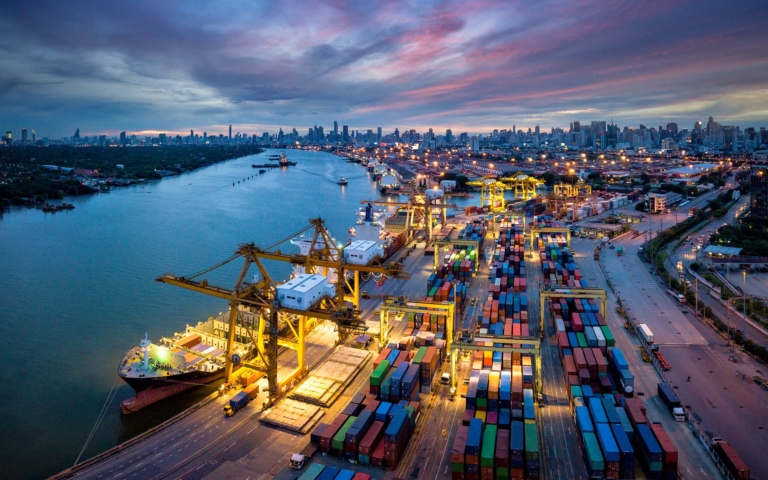
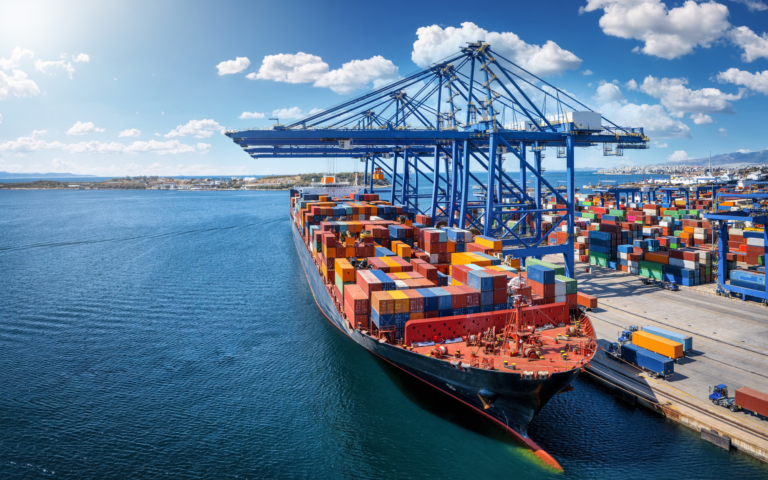
We combine ocean, rail, and over-the-road into a single planned move, so a shipment changes mode without changing owners —
one routing, one liability, one point of contact from origin factory to final door.
What Does Multimodal Transportation Actually Mean?
Multimodal transportation moves one shipment across two or more modes, trucks, trains, ships, and planes, under a single contract and a single liability, so the cargo changes vehicle at the port or ramp without changing who is responsible for it.
The value is not any one leg; it is the design that stitches them together. We decide where ocean hands to rail, where rail hands to a trailer, and who owns the cargo at every seam, coordinated with your licensed customs brokerage entry.
This is a planning and coordination discipline, much of it domestic logistics once the box lands and rolls inland, that sits above the individual modes detailed across our international freight forwarding and domestic freight transportation pages, not a replacement for them.
2-4
Modes per move
10-30%
Cost vs single-mode
24h
Response time
Free Routing Review
Talk to a Routing Strategist
Quick 30-min look at your lanes and mode mix. No obligation.
We reply within 1 business day · Your data stays private.
Why Choose CargoTrans for Multimodal Transportation?
We design the whole route before the first booking, so mode handoffs are engineered seams, not last-minute scrambles when a container hits the ramp.
One through bill of lading means liability never splits mid-move, so a cargo claim has one owner instead of a fight between three separate carriers.
When a lane breaks, we handle the delay by rerouting the box to a faster mode on the existing contract, protecting your delivery date instead of renegotiating from scratch.
Because we control every leg, the routing is optimized on total door-to-door cost and transit, not on whichever single mode a broker happens to sell.
Our Process
How Our Multimodal Transportation Routing Works
01
Lane and Requirement Mapping
Capture your origins, destinations, transit targets, and cost ceilings.
02
Mode-Mix Design
Model route options and pick the mode blend per lane.
03
Single-Contract Setup
Issue one through bill of lading covering every leg.
04
Execution and Handoffs
Coordinate each mode transfer so the box never idles.
05
Monitor and Mode-Shift
Watch for disruption and reroute to hold the commitment.
The cheapest lane is rarely one mode end to end. With the right blend of ocean, rail, and road under one contract, you cut cost and days without adding handoff risk.
CargoTrans designs the route and owns every seam in it.
Free 30-minute routing review with a multimodal strategist
No-obligation cost and transit comparison across mode options
One through bill of lading covering every leg of the move
A CargoTrans multimodal strategist will map your lanes and compare mode-mix options.
Protected by reCAPTCHA. We respond within 1 business day. No spam, ever.
Control Tower
Multimodal Transportation on One Live Timeline
Our Control Tower stitches each leg of a multimodal move into a single timeline, so an ocean sailing, a rail ramp, and a final trailer delivery all post to the same shipment record, with security handling, tracking, and monitoring across every leg and supply chain risk management flagging the legs most likely to slip.
Predictive ETAs and exception alerts flag a slipping leg early, which is exactly when a mode shift still works, letting your team protect the delivery date with data instead of guessing, backed by our supply chain technology and visibility service.
A single through bill of lading and one coordinated document set mean your entry, valuation, and origin records stay consistent no matter how many times the cargo changes vehicle.
When the box crosses a border mid-route, our brokers align the customs entry with the physical move, so a multimodal shipment does not create gaps in your reasonable care file.
What is multimodal transportation and how is it different from intermodal?
Multimodal transportation moves a shipment across two or more modes, such as water, rail, and road, under a single contract and a single carrier's liability, with one bill of lading covering the entire journey. Intermodal describes the physical technique of moving a standardized container between modes without unloading the goods inside, but it usually involves separate contracts and separate liability for each leg. The practical distinction matters when something goes wrong: under a multimodal contract, one party owns the whole move and any cargo claim, so you have a single accountable point rather than three carriers pointing at each other. CargoTrans structures moves multimodally by default, using intermodal equipment where it makes sense, so you get the cost benefit of containerized transfers with the accountability of one contract from origin to final door.
When does combining modes actually save money versus using one mode?
Blending modes pays off when a single mode is either too slow or too expensive for the whole distance. A common pattern moves an import container by water to the coast, then by rail across the long domestic middle, then by trailer for the final delivery. Rail is far cheaper than road over long distances but cannot reach your door, so the trailer covers the last leg. The savings come from using each mode only where it is strongest and handing off cleanly in between. For long inland moves, a water-plus-rail-plus-road blend typically runs 10 to 30 percent below an all-road alternative while adding only a couple of days. The design work is deciding exactly where each handoff happens, because a poorly placed transfer can erase the savings in dwell and repositioning costs.
What does moving under a single bill of lading actually protect me from?
A single through bill of lading means one carrier of record is legally responsible for the cargo across every leg, so liability never splits at the seams where modes change. Without it, you sign separate contracts for each leg, and when cargo is damaged in transit you have to prove which carrier had custody at the moment of loss, which is exactly when records get thin. Carriers on separate contracts routinely deny claims by arguing the damage happened on someone else's leg. Under one through bill, that fight disappears: you file one claim with one party, and the sorting out between underlying carriers is their problem, not yours. It also means one insurance conversation, one set of terms, and one place to look when you need to know who owes you. That accountability is a large part of why multimodal contracting exists.
How do you decide the right mix of modes for my lane?
We start from your requirements, not from a mode we want to sell. For each lane we capture the origin, the final destination, the transit time you actually need, the cost ceiling, and the cargo characteristics like weight, temperature, and value. Then we model route options: which port or ramp to enter, where the long-haul rail leg begins and ends, and where a trailer takes over for delivery. We weigh transit against inventory carrying cost, because two saved days can be worth more than a small rate difference on high-value goods, or worthless on a slow-moving commodity. The output is a routing designed around your economics, with the handoff points chosen to minimize dwell. Because we run the review before booking, the plan is engineered rather than assembled reactively, and we can compare several blends side by side before you commit.
How does intermodal rail compare to moving freight straight over the road?
Rail wins on cost and on emissions over long inland distances, while road wins on speed, flexibility, and reach. Container-on-rail, whether on a flatcar or doublestacked, can carry a box across the country for meaningfully less than a driver running the same distance, and it is far more fuel efficient per unit. The tradeoffs are that rail runs on fixed ramps and schedules, adds a day or two, and still needs a trailer for the first and last mile between the ramp and your door. Over-the-road makes sense when the distance is shorter, the delivery window is tight, or the destination is far from any ramp. In a multimodal design we usually put the long middle leg on rail and reserve road for the ends, capturing most of the rail savings without sacrificing the door-to-door reach only a trailer provides.
What happens when a port is congested or a lane gets disrupted?
This is where multimodal contracting earns its keep. Because one team owns the whole move and watches every leg through our Control Tower, we see a slipping ETA or a port backing up early, while there is still time to act. When a lane breaks, we can shift the box to a faster mode or reroute it through a different gateway without writing a new contract or renegotiating liability from scratch. For a shipment that has to make a date, that might mean pulling it off the water leg's inland rail plan and putting it on an expedited road move, or diverting to a less congested port. The alternative, discovering the delay at delivery under a stack of single-leg contracts, leaves you with no leverage and no clean way to recover. Planned mode flexibility turns disruption from a crisis into a routing decision.
Can you shift a shipment to a faster mode mid-route if it falls behind?
Yes, and the ability to do it cleanly is a core reason to contract multimodally in the first place. When a shipment is at risk of missing its commitment, we can escalate it to a quicker mode for the remaining distance, most often by lifting an urgent box onto an expedited leg for the final stretch rather than letting it ride the slower planned route. Because the whole move sits under one contract with us, that shift does not require a new agreement, a new liability negotiation, or a scramble to find capacity from a carrier you have no relationship with. We weigh the added cost of the faster leg against the cost of a late delivery, present the option with real numbers, and execute the reroute if you approve. The earlier our monitoring catches the slip, the more recovery options remain open.
Is multimodal the right fit for smaller shipments, or only full containers?
Both work, though the design differs. Full containers are the classic multimodal case, since a sealed box transfers between water, rail, and road without ever being unpacked, which keeps handling low and accountability clean. Smaller shipments can also move multimodally, but they usually involve a stop where goods are grouped with other freight before the long-haul leg and separated afterward, which adds handling and a bit of transit. The economics still favor blending modes on longer lanes, but the crossover point where it beats a single mode is different, and the handoff design has to account for the extra touches. During the routing review we look at your shipment sizes and frequency and tell you honestly where a multimodal blend helps and where a simpler single-mode plan is genuinely the better call for that lane.
How does billing and coordination work across so many carriers?
You deal with one team, one contract, one status feed, and one invoice, regardless of how many underlying carriers touch the box. That is the whole point of buying the move as a service rather than assembling it yourself. Behind the scenes we source and coordinate the water carrier, the rail provider, the equipment, and the road legs, manage the appointments and handoffs at each seam, and reconcile all of their charges into a single bill to you. Your team tracks the shipment on one timeline through our Control Tower instead of logging into several carrier portals and stitching the story together. If a charge needs disputing or a leg needs rebooking, one point of contact handles it. Bundling the coordination and the paperwork is exactly what removes the administrative drag that makes shippers avoid multi-leg routings in the first place.
How is a multimodal move priced compared to booking each leg separately?
You get one all-in rate for the door-to-door move rather than a stack of separate invoices you have to assemble and reconcile. Behind that number we source and negotiate each leg, the water carrier, the rail provider, the equipment, and the road delivery, then bundle them into a single price with one margin instead of a markup stacked at every handoff. Because we design the route before booking, we place each leg where it is cheapest for the required transit, which is usually why the blended rate beats piecing the legs together yourself. You also avoid the hidden costs of self-managing seams: repositioning fees, equipment gaps, and dwell that pile up when nobody owns the whole plan. We show the cost of the mode mix so you can compare it against a single-mode alternative.
How long does door-to-door transit take on a typical multimodal lane?
It depends on the lane, but a representative import from Asia to the US interior runs in the mid-twenties of days door to door: roughly a couple of weeks on the water, several days on the long inland rail leg, and a day or two on the trailer at each end for the first and final mile. A pure road move on the domestic side would shave a day or two off the middle but cost significantly more. We publish the planned transit for your specific lane during the routing review and track the live number against it, so you plan inventory around a measured figure rather than a brochure estimate. Peak-season congestion and port dwell are the usual variables, which is why we watch each leg and reroute when a date is genuinely at risk.
What actually happens at the port or ramp when the cargo changes mode?
The handoff is the part that makes or breaks a multimodal move, so we engineer it rather than hope it lines up. At the port we coordinate the pickup, source the chassis and equipment, and schedule the appointment so the box moves off the terminal before dwell and per-diem clocks run up. At the rail ramp we book the container onto the flatcar, manage the ramp-in and ramp-out timing, and line up the trailer for the leg beyond the ramp. Each seam has a defined owner and a scheduled window, so the container is not sitting idle waiting for a missing appointment or a piece of equipment. Because one team controls both sides of every transfer, the box keeps moving instead of stalling in the gap between two carriers who never talk to each other.
How is this different from booking my international and domestic legs separately?
Booking the legs separately means you hold the seams. You sign one contract for the overseas move, another for the inland leg, and a third for delivery, and you are the one reconciling the timing, the liability, and the paperwork where they meet. If the water leg lands late, the inland booking you made weeks ago may no longer fit, and no single carrier owns the miss. Multimodal contracting collapses that into one routing, one liability, and one point of contact, coordinated with your customs entry so the border crossing does not open a gap. Our international and domestic pages detail the individual legs; this service is the design layer that connects them into one accountable move, so the handoffs are planned rather than improvised after something has already slipped.
What documents cover a multimodal shipment from origin to door?
The anchor document is the single through bill of lading, which names one carrier of record responsible for the cargo across every leg, so liability does not fragment at each mode change. Around it travels one coordinated set: the commercial invoice and packing list for valuation and contents, the customs entry and any origin certificates for the border crossing, and the delivery paperwork confirming receipt at the door. Keeping these consistent across the whole move matters, because a valuation or origin detail that drifts between legs is exactly what creates a gap in your reasonable care file. We manage that one document set centrally and post it to the shipment record, so your entry, your valuation, and your proof of delivery all reference the same move rather than three disconnected bookings.