

An FDA hold is not a single event. It is a sequence with its own documents, its own clocks and, at the end, a statutory deadline that neither FDA nor the importer can extend. Most of the money lost on FDA-regulated shipments is lost in the gaps of that sequence: a respond-by date that passed while the file sat in someone’s inbox, goods moved to a warehouse and then demanded back, or a refused lot that was still sitting at the pier on day 91.
This guide follows an entry from the first automated screen to FDA detention, reconditioning, refusal and the CBP redelivery liability behind it, then covers detention without physical examination and how a firm gets itself removed from an Import Alert. It does not cover how to file the underlying FDA data; it starts at the point where FDA has the entry and has not released it. Requirements checked against 21 CFR 1.94 to 1.99, 19 CFR 141.113, section 801 of the FD&C Act and FDA’s import process pages as of September 23, 2026.
Quantify your exposure in 20 minutes
Our trade strategists run your last 90 days of entries through Captain to surface refund eligibility, Section 232 traps and PNTR risk.
From May Proceed to Notice of FDA Action: How an Entry Moves
Every FDA-regulated line starts in the same place. The broker transmits the FDA PGA message set in ACE under the CBP entry number, and FDA’s automated screening scores it. That screening tool, PREDICT, is being integrated into SERIO+, FDA’s System for Entry Review and Import Operations, which FDA planned for full implementation in March 2026. In FDA’s words, products transmitted with complete, accurate and valid data may receive a lower risk score and may be eligible for release without further review. That release is a May Proceed, and FDA is explicit that it does not preclude future FDA action.
Lines that do not clear automatically go to people. Since August 4, 2025, manual entry review is handled centrally under the FDA ImportShield Program rather than port by port. An entry is routed there when it scores higher risk, carries incomplete data, appears subject to detention without physical examination, or is targeted for exam or sampling. From that point the entry can take one of several paths, and each one produces a status in ACE and, for the consequential ones, a Notice of FDA Action.
No statute or regulation sets a time limit on FDA’s admissibility review. FDA says so directly on its examination page, and commits only to acting as quickly as possible. That is why the importer’s own speed at each step matters more than any service-level promise from FDA.
| Stage | What triggers it | What the importer does |
|---|---|---|
| May Proceed | Automated screening in SERIO+ finds complete, valid data and a lower risk score | Nothing at this stage, but FDA can still act later |
| Documents Required | Manual reviewer needs proof of what the line declares | Upload to ITACS: BOL or AWB, invoice, PO, labels, CoA, manufacturer proof, intended use statement |
| Field exam, label exam or sample | Reviewer targets the line for physical examination or collection | Keep the goods available; a sample produces a Notice of Sampling |
| Detained | Goods appear violative, fall under an Import Alert, or compliance cannot be verified | Respond by the date on the Notice of Detention and Hearing |
| Refused | FDA's final decision after the hearing opportunity | Export or destroy under supervision within 90 days of the refusal notice |
The Documents Stage Is Where Most Holds Get Longer
A Documents Required status is a request, not an accusation. FDA’s preferred channel is ITACS, and the documents it asks for are ordinary commercial records: bill of lading or air waybill, commercial invoice, purchase order, labels, certificates of analysis, proof of who manufactured the goods, and a statement of intended use. FDA states no fixed deadline for this step and warns only that failing to provide documents timely may result in a delay.
That open-endedness cuts against the importer. Demurrage and storage keep running while a request sits unanswered, and those charges fall on the importer, not on FDA or CBP. The same-day upload is the one lever the importer controls completely.
If the reviewer is not satisfied by paper, the next step is a field exam, a label exam or sample collection. A sample triggers a Notice of FDA Action in the form of a Notice of Sampling. Goods that have already left the port under conditional release are exposed at this stage, because FDA can have CBP demand their return for examination, a point covered in the redelivery section below. Companies that import under several FDA product areas usually centralise this document flow inside their trade compliance management programme rather than rebuilding the file entry by entry.
Detention Without Physical Examination and How Import Alerts Work
A detention is FDA’s formal statement that the goods appear not to be admissible. The legal test is the appearance standard in section 801(a) of the FD&C Act: an article is refused if it appears, from examination of samples or otherwise, to be adulterated, misbranded, an unapproved new drug, manufactured under insanitary conditions, or forbidden or restricted in sale in the country where it was produced or from which it was exported. FDA does not have to prove a violation to detain. It has to see the appearance of one, and the burden shifts to the importer to overcome it.
The “or otherwise” in that wording is what makes detention without physical examination possible. When FDA places a firm or a product on an Import Alert, shipments matching the alert can be detained on the basis of that record, without anyone opening a carton. Import Alerts carry lists: a red list and a yellow list identify firms or products subject to DWPE, and a green list identifies firms exempt from it. A shipment from a red-listed firm is detained on arrival, and the importer must overcome the appearance of a violation for every shipment, one entry at a time.
Detention can also follow from an inability to verify compliance. FDA’s entry review page gives the example of a drug product whose declared manufacturer cannot be found in FDA’s drug registration database. For medical devices, the same pattern applies when the manufacturer’s registration or listing data transmitted at entry does not match FDA records; the device-side obligations of the party bringing goods in are covered on our FDA initial importer page.
The practical consequence is that the Import Alert check belongs before the purchase order, not after arrival. A supplier on a red list turns every shipment into a detention case, and no quality of entry data changes that.
- Red list: firms or products subject to DWPE under the alert
- Yellow list: also subject to DWPE under the alert
- Green list: firms or products exempt from DWPE under that alert
- When to check: before the purchase order, by screening each supplier and product against active Import Alerts
Answering the Notice of Detention and Hearing
The detained status arrives as a Notice of FDA Action marked Detained, which is the Notice of Detention and Hearing. Under 21 CFR 1.94, the owner or consignee is entitled to written or electronic notice and an opportunity to present oral or written testimony before FDA makes a final decision.
The clock on that opportunity is short. FDA’s Regulatory Procedures Manual sets 10 business days to respond, and the notice usually prints a respond-by date 20 calendar days from the detention date. An extension is possible only if it is requested before that date and with a reasonable basis. A request made the day after has nothing to extend.
The response itself should address the specific charge on the notice, not the product in general. For a sampling-based detention, the usual evidence is private laboratory analysis under FDA’s Compliance Policy Guide Sec. 150.200, known as a PLAP. For a labeling charge, it is the corrected label and the reasoning for why the article is not misbranded. For a registration or listing charge, it is proof that the firm is registered and the product listed as declared. The response goes in with the documents, not as a narrative promising them later.
Many detained entries are released under bond pending FDA’s decision under section 801(b), which means the goods may physically sit in the importer’s facility while the hearing runs. That does not make them released in the admissibility sense. The bond terms, and the difference between a single-entry and continuous bond, decide how much exposure the importer carries if FDA ultimately refuses.

Reconditioning Under Form FDA 766
When a violation can be fixed, the owner or consignee can apply to recondition the goods on Form FDA 766. Under 21 CFR 1.95 the application has to describe the method in detail and name the time and place where the work will happen and when it will be finished. FDA’s reconditioning guidance also asks for a copy of the new label when the fix is relabeling.
Approval comes with a bond. Section 801(b) requires one, and under 21 CFR 1.97 it must include a condition for redelivery of the goods. The importer also pays for FDA’s supervision under 21 CFR 1.99: the supervisor’s time is charged at 267% of the GS-11 step 4 hourly rate and an analyst’s at 267% of GS-12 step 4, with a one-hour minimum, plus travel and per diem.
FDA does not treat 766 applications as open-ended. A second application needs meaningful changes from the first, a third is generally not granted, and reconditioning is not available at all where the charge is an unapproved new drug. The result does not have to be all or nothing: FDA can release part of a lot and refuse the rest, which matters on mixed shipments where only some SKUs carry the defective label or failed the lab test.
Cost planning should include the time the goods wait. Storage during a hold, whether at the pier or in a customs bonded warehouse, is for the importer’s account.
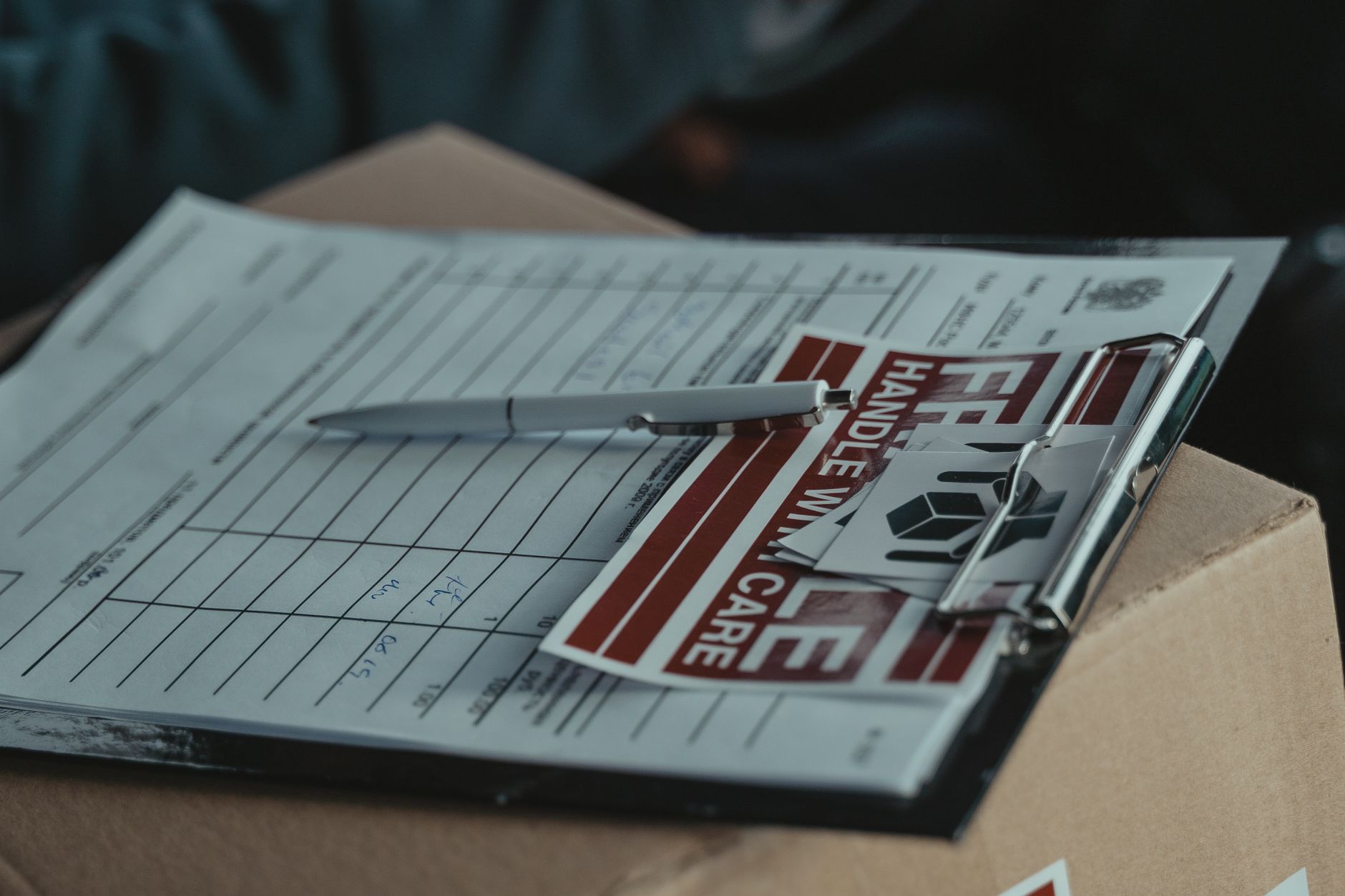
Refusal, the 90-Day Clock and Redelivery Liability
A refusal is FDA’s final decision on admissibility. There is no appeal unless FDA issued it in error. The refused goods must be exported or destroyed under CBP and FDA supervision within 90 days of the notice of refusal, and that deadline comes from the statute itself, section 801(a) of the FD&C Act at 21 U.S.C. 381(a), not from a CBP regulation. FDA states it has no authority to grant extensions; any question about additional time goes to CBP.
Section 801(a) also lets FDA destroy refused drugs, devices and tobacco products valued at $2,500 or less without giving the owner an opportunity to export them. In practice this falls mainly on international mail shipments.
The larger financial exposure sits on the CBP side. Under 19 CFR 141.113(c), the release of FDA-regulated goods is conditional. The conditional period ends at the earliest of an FDA refusal, an FDA May Proceed, or 30 days after release, and FDA can extend it by issuing a notice of sampling or detention within those 30 days. If FDA refuses, CBP issues a redelivery notice within 30 days of the refusal. Failing to redeliver means liquidated damages equal to three times the value of the merchandise, unless the port director required a bond at domestic value under 19 CFR 12.3(b). Where the liquidated damages arise under the section 801(b) bond, CBP can cancel or reduce them only with the full agreement of the FDA division director (21 CFR 1.97(b)).
This is where distributed goods become a problem. An importer who sold the lot during the conditional period cannot redeliver it, and the claim lands on the bond. Holding FDA-regulated goods until the status is final is the only way to remove that risk entirely, and the refusal itself should be read alongside the broader rules on prohibited and restricted imports when deciding whether export or destruction is the cheaper exit.
- Respond to a detention: 10 business days under the RPM, usually printed as 20 calendar days
- Conditional release period: ends at refusal, May Proceed or 30 days after release, unless FDA extends it within those 30 days
- CBP redelivery notice: within 30 days of the FDA refusal
- Export or destruction: within 90 days of the notice of refusal, extendable only through CBP
- Failure to redeliver: liquidated damages of three times the merchandise value
Getting a Firm Removed From an Import Alert
Detention without physical examination does not end by itself. A firm on a red or yellow list stays there until FDA grants a petition for removal, and every shipment until then carries the burden of overcoming the appearance of a violation. FDA’s governing policy is RPM 9-8.
A petition has to show that the problem behind the listing was investigated and fixed, not just that recent shipments passed. FDA asks for the root cause, the corrective and preventive actions taken, and evidence that they work. FDA’s own examples of that evidence are five clean shipments and a third-party audit. Petitions go to ImportAlerts2@fda.hhs.gov unless the specific alert’s guidance names another route.
The clean shipment record is built during the detention period itself, one shipment at a time, each released only after the importer overcomes the appearance of a violation, often with private laboratory results under PLAP. That makes consistent, documented entry handling part of the removal strategy rather than a separate task. Food importers carrying a firm on an alert usually coordinate this across supplier, lab and broker, and the same discipline applies to any food and beverage importer whose supplier appears on an alert.
Cutting Hold Time Before the Next Entry
FDA’s own guidance points to data quality as the main lever. Complete and valid ACE data is what earns a lower risk score and a possible automated release. In practice that means the correct FDA product code, the affirmations of compliance the commodity requires, and registration identifiers that match FDA’s records: DEV, DFE and LST for devices, the manufacturer’s food facility registration for food, and the FSVP importer’s identifier on each food line.
Three checks belong before booking rather than after arrival: the supplier’s registration status for the current cycle, the supplier and product against active Import Alerts, and whether labeling meets the part of 21 CFR that applies to the commodity. Each one removes a detention charge before it can be written.
Food importers with a qualifying history can also apply to VQIP, the Voluntary Qualified Importer Program, under which FDA will expedite entry for covered foods and limit exams to specific circumstances. Eligibility requires a three-year import history, facility certification by accredited third-party certifiers, FSVP compliance and a clean compliance record. The Notice of Intent window runs January 1 to September 1, and the FY2027 user fee is $9,994 for benefits from October 1, 2026 to September 30, 2027.
Once a hold starts, the work is tracking dates: the respond-by date, the 30-day conditional release window and the 90-day export or destruction deadline. A customs brokerage team that files the FDA data can also run those clocks, upload to ITACS the same day, coordinate PLAP sampling and 766 bonds, and deal with CBP on redelivery.
Frequently Asked Questions
What does May Proceed mean on an FDA entry?
It means FDA released the line for entry after automated or manual review. FDA states that May Proceed does not preclude future FDA action if a problem appears later.
How long do I have to respond to an FDA detention?
FDA’s Regulatory Procedures Manual sets 10 business days, and the Notice of Detention and Hearing usually shows a respond-by date 20 calendar days from detention. Extensions must be requested before that date, with a reasonable basis.
Can I appeal an FDA import refusal?
No. A refusal is FDA’s final decision unless FDA issued it in error. The goods must be exported or destroyed under supervision within 90 days of the refusal notice.
Can FDA extend the 90-day export or destruction deadline?
No. The 90 days come from section 801(a) of the FD&C Act, and FDA states it has no authority to extend them. Requests for additional time go to CBP.
What happens if refused goods were already sold and cannot be redelivered?
Under 19 CFR 141.113, failure to redeliver on CBP’s demand leads to liquidated damages equal to three times the value of the merchandise, unless a domestic-value bond was required. Where the claim arises under the section 801(b) bond, CBP can mitigate only with the FDA division director’s full agreement.
How does a company get removed from an FDA Import Alert?
By petition under RPM 9-8, showing the root cause, corrective and preventive actions, and evidence such as clean shipments or a third-party audit. Petitions go to ImportAlerts2@fda.hhs.gov unless the alert specifies otherwise.
Who pays for FDA supervision of reconditioning?
The importer, at 267% of the GS-11 step 4 hourly rate for a supervisor or GS-12 step 4 for an analyst, with a one-hour minimum plus travel and per diem, under 21 CFR 1.99.