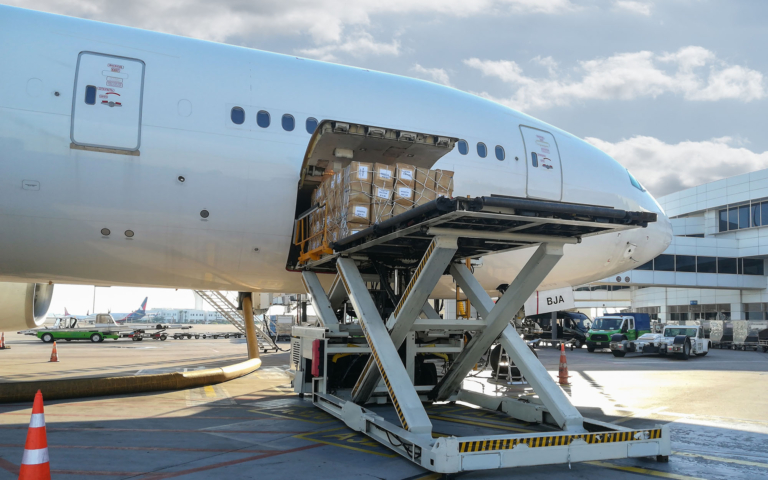
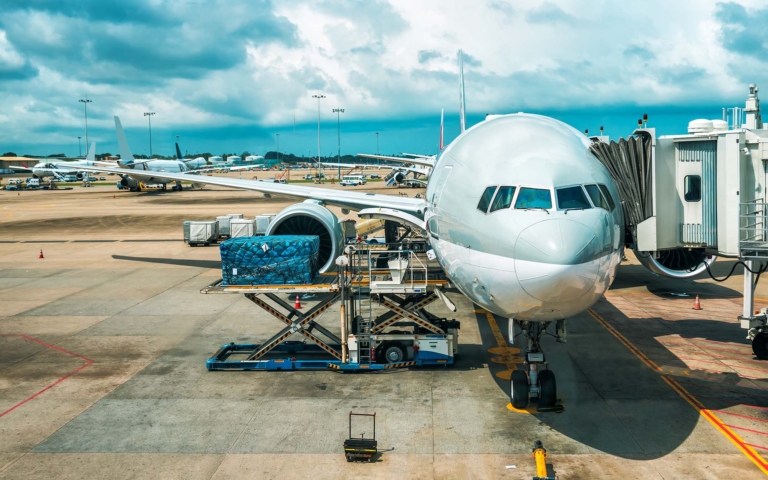
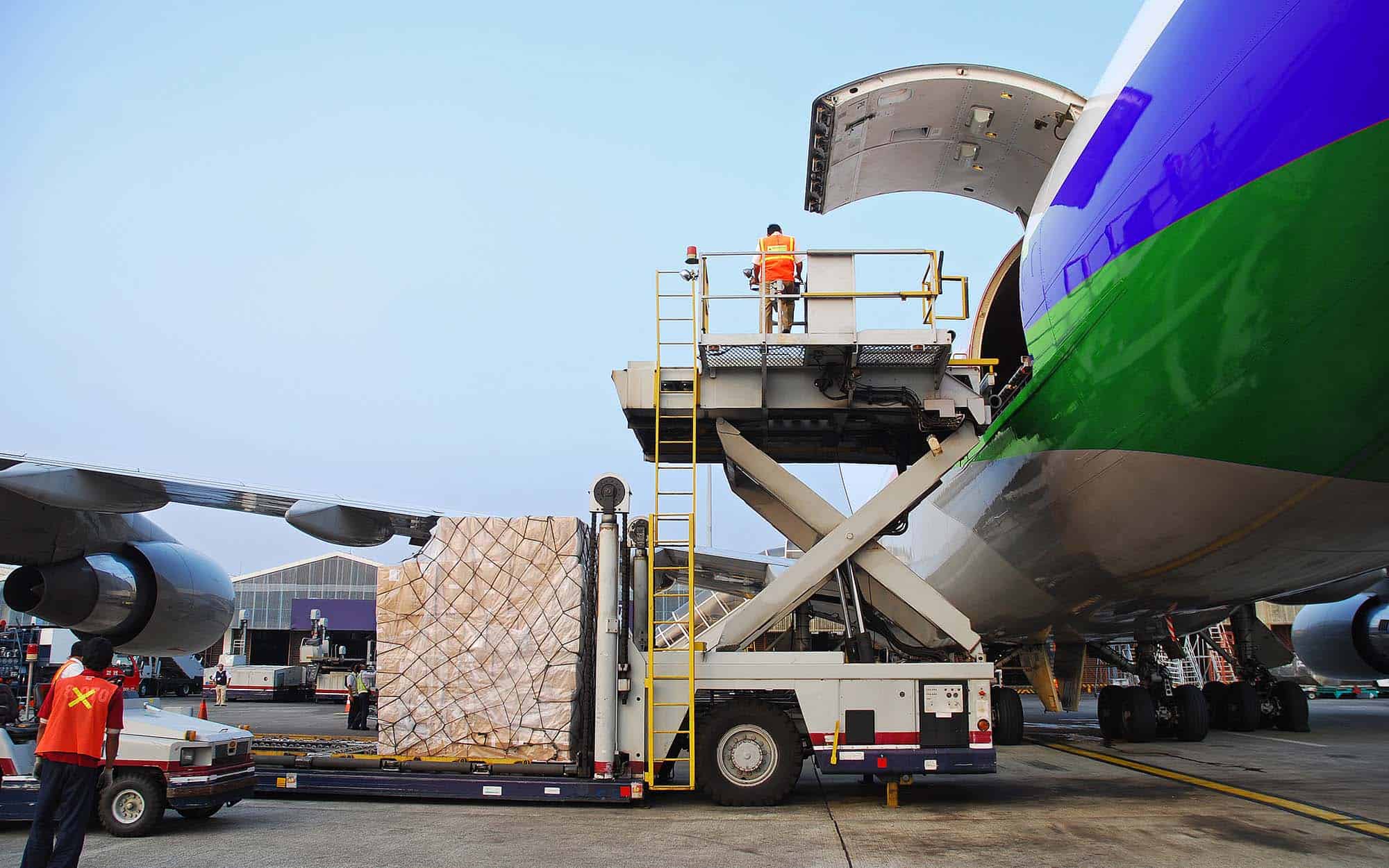
We book uplift on scheduled and charter capacity, price your cargo on chargeable weight, and run airport-to-door delivery so time-critical, high-value, and perishable shipments land on the date your customer committed to.
Air freight forwarding moves cargo by aircraft when transit time, product value, or perishability outweighs cost per kilo. It is the mode you reach for on launches, stockouts, spare parts, and anything that spoils.
The trade-off is simple: air costs several times more per kilo than ocean freight, but it delivers in days rather than weeks, freeing working capital tied up in transit and protecting revenue on time-sensitive purchase orders.
As your forwarder we compare carriers, book the uplift including charter lift for project cargo and oversized shipments, produce the air waybill, and coordinate the import and export documentation and final delivery, backing every move with the same visibility our international freight forwarding desk runs across all modes.
2–7d
Door-to-door
6:1
Volumetric divisor
24/7
AOG desk
Free Air Quote
Talk to an Air Freight Specialist
Quick 30-min call on your lanes and deadlines. No obligation.
We reply within 1 business day · Your data stays private.
Capabilities
Our Air Freight Forwarding Capabilities
Six service capabilities our air desk runs so urgent, hazardous, and cold-chain cargo moves on schedule and lands compliant.
01
Express Air Freight
Fastest scheduled uplift for launches, stockouts, and revenue-critical shipments that cannot wait.
Next-flight-out booking
Priority space on peak lanes
24/7 AOG response desk
Guaranteed-space service options
02
Deferred Air Freight
Economy air on a 4-to-7-day window when you need speed without express pricing.
Lower rate, longer window
Space-available routing
Ideal for planned replenishment
03
Chargeable Weight Optimization
We price against actual and volumetric weight, then repack to cut the billable figure.
Dimensional weight audits
Palletization and re-packing advice
Density-based routing
04
Dangerous Goods Air Cargo
IATA-certified handling for hazmat, lithium batteries, and regulated chemical shipments.
IATA DGR documentation
Proper packing and labeling
Carrier acceptance coordination
05
Temperature-Controlled Air
Validated cold-chain lanes for pharma, biologics, and perishable food and produce.
Active and passive cold packaging
Tarmac-to-cooler handling
Temperature excursion monitoring
06
Airport-to-Door Execution
Origin pickup, uplift, clearance, and final-mile delivery managed as one accountable move.
We hold priority space agreements on high-demand lanes, so your urgent uplift is not the first cargo bumped when a flight runs full during peak.
Our team audits chargeable weight before booking, repacking or re-palletizing where it pays, so you stop overpaying on air that ships dense volume inefficiently.
Certified dangerous-goods and cold-chain handling means hazmat and pharma clear carrier acceptance the first time, avoiding the rejections that cost you an entire flight.
Every uplift rides one milestone timeline from tender through delivery, so you intervene on a missed connection before it becomes a missed customer commitment.
Our Process
How Our Air Freight Process Works
01
Rate & Service Selection
Match your deadline and budget to express or deferred uplift.
02
Chargeable Weight Check
Measure actual and volumetric weight to confirm the billable figure.
03
Booking & Air Waybill
Reserve space and issue the air waybill and pre-alerts.
04
Uplift & Tracking
Monitor tender, departure, and connections against your delivery date.
05
Clearance & Final Mile
Coordinate customs release and last-mile delivery to the door.
Send us the origin, destination, dimensions, and the date it has to land, and we will quote express and deferred options with the chargeable weight and clearance built in.
Fast uplift, certified handling, one accountable timeline.
Free 30-minute call with an air freight specialist
Express and deferred quotes with chargeable weight included
Certified dangerous-goods and temperature-controlled handling
Airport-to-door execution on one milestone timeline
A CargoTrans specialist will review your lanes and deadlines and recommend the fastest defensible routing.
Protected by reCAPTCHA. We respond within 1 business day. No spam, ever.
Control Tower
Every uplift tracked from tender to door
Our Control Tower platform tracks each air move through tender, departure, transfer, arrival, and delivery, so a missed connection surfaces as an alert instead of a surprise when the cargo fails to show.
Predictive ETAs and exception flags let your team re-book onto the next flight or reroute through an alternate gateway with hard data, protecting the delivery date when a lane tightens or weather grounds capacity.
Dangerous-goods declarations, lithium-battery packing, and cold-chain documentation are prepared to IATA and destination requirements, so your shipment clears carrier acceptance without the rejection that forfeits a booked flight and a day of transit.
For regulated commodities we coordinate with your broker and our licensed customs brokerage team so entry data, permits, and prior notices are ready before the aircraft lands, keeping perishable and high-value cargo moving through release, and we can arrange airline and cargo insurance so a loss or damage in transit is covered.
Air freight wins whenever the cost of being late exceeds the premium on the rate. That covers product launches with a fixed on-shelf date, stockouts where lost sales dwarf the freight bill, spare parts that ground a production line, and perishables or pharma that degrade in transit. Ocean freight is cheaper per kilo and right for dense, non-urgent volume, but it runs weeks door to door versus days by air. High-value goods also carry less inventory on the water, freeing working capital. A practical test: if a two-to-four-week delay would cost more than several times your freight spend, fly it. We model both options on your actual lane so the delivered numbers, not a habit, decide.
What air freight service levels can I choose from?
Most forwarders offer a tiered menu, so your transit times range from expedited to consolidated depending on the tier you pick. Next-flight-out or express uses the first available departure and often includes guaranteed space, giving you the fastest, most reliable transit at the highest rate. Standard air moves on the carrier's normal schedule within roughly two to five days. Deferred or economy air trades speed for price, riding space-available capacity on a four-to-seven-day window, which suits planned replenishment rather than emergencies. For grounded aircraft or line-down situations, an AOG service prioritizes spare parts around the clock. We match the tier to your actual deadline instead of defaulting everyone to express, so you only pay for the speed the shipment genuinely needs.
How is chargeable weight calculated for air cargo?
Airlines bill on the greater of actual gross weight and volumetric, or dimensional, weight, because a light but bulky shipment consumes space a denser one would use. The standard formula divides the volume in cubic centimeters by 6000 to get kilograms, or divides cubic inches by 166 for pounds. Multiply length by width by height for each piece, apply the divisor, and compare that figure to the scale weight; the higher number is what you pay for. This is why packaging matters: trimming void space, nesting items, or re-palletizing can lower the volumetric figure and the bill. We audit dimensions before booking and advise on repacking when the density math favors it.
How long does international air freight take door to door?
Airport-to-airport flight time is only part of the clock. A typical international air move runs two to seven days door to door once you include origin pickup and screening, tender cutoffs, the flight and any transfers, customs release at destination, and final delivery. Express or next-flight-out routings compress that toward the low end, while deferred service and multi-leg transfers push it higher. Customs holds, security screening, and weather can add time on any lane. We quote a realistic door-to-door window rather than the optimistic flight time, then track the shipment against it and flag slippage early so you can act before the delivery date is at risk.
Can you ship dangerous goods and hazmat by air?
Yes, within the limits of the IATA Dangerous Goods Regulations, which govern what can fly, in what quantity, and how it must be packed, marked, and documented. Lithium batteries, aerosols, corrosives, flammable liquids, and many chemicals each fall into a hazard class with specific packing instructions and passenger-versus-cargo-aircraft restrictions. Getting the shipper's declaration, UN packaging, and labeling right is what keeps a shipment from being rejected at carrier acceptance, which forfeits the flight. Our IATA-certified staff prepare the declaration, confirm the packing instruction, and coordinate acceptance with the airline in advance, so regulated cargo clears the first time instead of sitting on the dock while paperwork is corrected.
How do you handle temperature-controlled and pharmaceutical air cargo?
Cold-chain air moves need the temperature held from origin cooler to destination cooler, not just in the air. Depending on the product and lane we use active containers with powered refrigeration or passive packaging with validated gel packs and insulation rated for the transit duration and ambient conditions. Pharma and biologics often require CEIV or GDP-aligned handling, tarmac protection during ramp transfers, and continuous temperature logging so any excursion is documented. We build the packaging to the specific temperature band, prioritize connections that limit tarmac dwell, and monitor the shipment end to end, so perishable food, produce, and medical cargo arrive within spec and with the data trail your quality team needs.
What is the difference between a master air waybill and a house air waybill?
A master air waybill is issued by the airline to the forwarder that booked the space and represents the carrier's contract of carriage for the physical move. A house air waybill is issued by the forwarder to the actual shipper and reflects your specific cargo, terms, and consignee. When a forwarder combines several shippers on one master, there is a single master air waybill to the airline and multiple house air waybills beneath it, one per shipper. The house document is usually what your bank references for payment terms and what governs your relationship with the forwarder. We explain which document controls release so cargo and title move in step at destination.
How does airport-to-door air freight delivery work?
Airport-to-door means we manage every leg, not just the flight. It starts with origin pickup and export screening, moves through tender to the airline and uplift, then arrival, customs release, and local final-mile delivery to your consignee. The alternative, airport-to-airport, leaves clearance and last-mile collection to you, which often stalls cargo at the destination terminal while accruing storage. We coordinate the origin cartage, prepare the air waybill and pre-alerts, hand entry data to the broker so release is ready on arrival, and dispatch local delivery, giving you one accountable party from the shipper's dock to your receiving door.
How can I reduce air freight costs without missing deadlines?
Several levers cut air spend without sacrificing the date. First, right-size the service tier: much cargo defaults to express when deferred air still meets the deadline at a lower rate. Second, attack chargeable weight by trimming packaging, nesting, and re-palletizing to lower the volumetric figure that often drives the bill. Third, consolidate multiple small shipments moving on the same lane into one booking to earn better break rates. Fourth, plan ahead where you can, since booked-in-advance space beats last-minute premiums. Finally, use split shipments, flying only the urgent tranche and moving the balance by sea. We run these trade-offs on your lanes and show the delivered cost of each option before you commit.
How much does air freight cost per kilogram?
Air rates are quoted per kilogram of chargeable weight, the greater of actual and volumetric weight, and they swing with lane, direction, and season. As a rough frame, express service on a busy long-haul lane can run several dollars per kilo, while deferred economy on the same lane costs meaningfully less. On top of the base rate you pay a fuel surcharge, a security surcharge, and terminal handling at each end, all of which move with the market. Heavier, denser shipments earn better break rates as weight climbs past 100, 300, and 500 kilograms. We quote the all-in delivered figure, including surcharges and handling, and we audit dimensions first so you are not paying volumetric weight on a shipment that could be repacked tighter.
How quickly can you book and uplift an urgent air shipment?
For a genuine emergency we work in hours, not days. On a next-flight-out or AOG booking, once we have the cargo details and the goods are ready and screened at origin, we can tender to the first available departure, which on major gateways may leave the same day or the next morning. The gating factors are export screening, any dangerous-goods paperwork, and available belly or freighter space on the lane. Our around-the-clock desk holds priority space on high-demand routes precisely so an urgent tender is not the first cargo bumped when a flight fills. Tell us the deadline and the origin readiness, and we will confirm the fastest realistic uplift and the cutoff you have to hit to make it.
What happens if my flight is cancelled or my cargo gets bumped?
Space on passenger and freighter aircraft is finite, so during peak periods or after a disruption cargo can be offloaded to make weight or rolled to a later flight. When that risk appears, our desk sees it before you do and acts on it. We rebook onto the next departure, reroute through an alternate gateway, or shift to a partner carrier on the same lane, choosing whichever protects your delivery date. Guaranteed-space and priority agreements on core routes reduce how often your cargo is the one bumped in the first place. If a delay is unavoidable, you hear it from us with a new plan attached, not as a silent gap in a tracking portal, so you can manage the downstream commitment with real information.
When is ocean freight a better choice than air freight?
Ocean freight wins whenever the cargo can wait and the volume is dense. Moving by water costs a fraction of the per-kilo air rate, so for heavy, bulky, non-urgent goods the savings dwarf the extra transit time. The trade-off is weeks rather than days door to door, plus more working capital tied up while the cargo is on the water. Air earns its premium only when the cost of being late, a stockout, a line-down part, a missed launch, exceeds that premium. A common middle path is splitting a purchase order: move the urgent tranche by air and send the balance by sea. We model both on your actual lane and show the delivered cost and date of each, so the numbers decide rather than a default habit.
What documents do I need for an international air shipment?
The core set is short but strict. Every air move needs a commercial invoice and packing list from the shipper and an air waybill issued by the carrier or forwarder, which is the contract of carriage and the tracking reference for the shipment. Depending on the goods you may also need a certificate of origin, an export license, and, for regulated cargo, a shipper's declaration for dangerous goods prepared to IATA rules. Batteries, aerosols, and many chemicals will not clear carrier acceptance without that declaration and the right packing and labeling. For U.S. exports the shipment data may also feed electronic export filing. We review the shipper's documents before tender, prepare the air waybill and pre-alert, and confirm every regulated item is documented so the cargo is not held at acceptance.