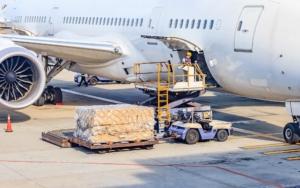

DAP, Delivered at Place, is one of the seven Incoterms® 2020 rules that work for any mode of transport. Under DAP the seller delivers once the goods are placed at the buyer’s disposal on the arriving means of transport, ready for unloading, at the named destination; the seller carries the cost and risk of getting the goods there, but the buyer is left holding import customs clearance, duties, and unloading. That one allocation, import formalities sit with the buyer, is the detail most freight-marketing explainers skip past, and it is the detail that actually determines whether a shipment clears on schedule.
This guide covers where risk transfers under DAP Incoterms, who ends up as the importer of record, what happens when a buyer has no customs bond or import license on file, and how DAP compares to its two closest relatives, DPU and DDP. It is written from the seat of a licensed customs house broker who files the entries against these rules, not from a generic freight-marketing summary.
Quantify your exposure in 20 minutes
Our trade strategists run your last 90 days of entries through Captain to surface refund eligibility, Section 232 traps and PNTR risk.
What DAP Means Under Incoterms® 2020
DAP belongs to the Incoterms® 2020 rules that apply to any mode of transport, alongside EXW, FCA, CPT, CIP, DPU, and DDP. That distinguishes it from the sea-and-inland-waterway-only rules, FAS and FOB, which cannot be used correctly for an air shipment or a full truckload move even though shippers try it constantly.
DAP is also a ‘D’ rule, meaning the seller bears both the cost of carriage and the risk of loss or damage all the way to the named destination. That is a materially heavier obligation than the ‘C’ rules, where the seller pays for carriage but risk passes to the buyer much earlier. CPT and the other ‘C’ rules split cost and risk that way; DAP does not. Under DAP the seller is on the hook for both cost and risk until the goods reach the named place.
The named place has to be specific enough that both parties can point to the exact spot where delivery happens, a street address, a named terminal, a specific yard, not just a city. A vague named place is the single most common drafting error in a DAP contract and it produces genuine disputes over where risk actually transferred when something goes wrong in transit.
Where and When Risk Passes From Seller to Buyer
Under DAP the seller has delivered, and risk has passed, the moment the goods are placed at the buyer’s disposal on the arriving means of transport, ready for unloading, at the named place of destination. The goods do not need to be unloaded. They only need to be ready for the buyer to unload them.
Until that point the seller carries the risk of loss or damage through every leg of the move: export haulage, ocean or air carriage, transshipment, inland trucking to the final destination. If the cargo is damaged in a port terminal two days before arrival at the named place, that loss falls on the seller, not the buyer, because delivery has not yet occurred.
The ‘ready for unloading’ standard is precise for a reason: it is what separates DAP from DPU. DAP stops one step short of unloading. If the parties actually want the seller to unload the goods, and to carry the risk of that unloading operation, the correct rule is DPU, not DAP with extra language bolted on.
Incoterms® 2020 rules generally do not obligate either party to buy cargo insurance; DAP is no exception. The seller carries the risk of physical loss or damage until delivery, but that is not the same as being contractually required to insure against it. In practice most sellers insure a DAP shipment anyway, since an uninsured loss in transit falls on their own balance sheet, but the decision, and the cost, sits outside the Incoterm itself and belongs in the sale contract or the seller’s standing cargo policy.
Who Pays Duty and Who Is the Importer of Record Under DAP
The buyer pays import duty under DAP. The seller’s obligation ends at delivery to the named place; everything downstream of that, import customs clearance, duty and tax payment, and unloading, is the buyer’s responsibility. In US Customs and Border Protection practice, the buyer is the party who must appear as the importer of record on the entry, whether that is the buyer itself or a party the buyer designates.
Duty owed is calculated as a percentage of the declared customs value, not the DAP delivered price on the commercial invoice. The two numbers are related but not identical once freight, insurance, and certain other charges are added back or excluded under the valuation rules, which is one more reason the buyer’s customs broker, not the seller, needs to be doing that math.
Here is the operational consequence almost nobody covering DAP actually explains: a buyer needs an importer number, and for a formal entry, generally a customs bond, before the shipment lands. If neither is in place when the goods arrive, the entry cannot be filed. Under 19 CFR 4.37, merchandise must be entered within 15 calendar days of landing or it becomes general order cargo, moved into a bonded general-order warehouse at the importer’s expense while duties and storage charges keep accruing. Left unclaimed for 6 months, it is treated as abandoned under 19 CFR Part 127 and can be sold at public auction.
That timeline is exactly why the choice between DAP and DDP matters more than the Incoterm label suggests, and it is where a licensed customs brokerage earns its fee before the ship even docks, not after. CargoTrans has filed entries at ports across the country since 1989, and the recurring pattern is the same: the shipment itself is rarely the problem, the buyer’s missing bond or import license is. Confirming that paperwork is in place, and walking a first-time importer through the customs clearance process before cargo departs, prevents almost every DAP entry delay we see.
DAP vs DDP: The Difference That Trips Up Most Shippers
Under DAP, the buyer clears the goods for import and pays duty. Under DDP, the seller does both: the seller clears the goods for import, pays the duty, and delivers them ready for unloading at the named place, cleared. That single reversal changes who has to act as the importer of record, and for a seller with no legal presence in the destination country, becoming the importer of record is rarely simple.
The full DAP vs DDP comparison covers why DDP is often impractical for a foreign seller without a US presence, including the resident-agent and bond requirements a nonresident corporation has to satisfy to enter merchandise for consumption in its own name. The short version: DAP quotes a lower landed price because duty is excluded, and it puts the compliance burden on the party that actually has standing to import.
DAP vs DPU: Does the Seller Have to Unload the Goods?
DAP and DPU are nearly identical rules with one difference: unloading. Under DAP, the seller delivers the goods on the arriving means of transport, ready for unloading, and the buyer unloads them. Under DPU, Delivered at Place Unloaded, the seller must also unload the goods at the named place before delivery is considered complete, which also means the seller carries the risk of that unloading operation.
DPU is the only Incoterms® 2020 rule that requires the seller to unload the goods. It replaced Delivered at Terminal from the 2010 rules and dropped the word ‘terminal’ specifically so the named place could be anywhere the parties agree, a warehouse, a job site, a distribution center, not only a port or rail terminal.
Which rule fits depends entirely on who has the equipment and the local knowledge to unload safely at the named place. A buyer receiving heavy machinery at a facility without a forklift or dock has a real reason to negotiate DPU instead of DAP; a buyer with its own receiving operation usually prefers DAP, since it avoids making the seller responsible for an unloading process it does not control.
When DAP Makes Sense and When It Doesn't
DAP works well when the buyer is an experienced importer with an existing bond, an importer number, and a broker relationship already in place, and simply wants the seller to manage transportation risk up to the door. It also works cleanly for any mode of transport, which makes it a reasonable substitute for the sea-only FAS and FOB rules on an air or multimodal shipment where those rules cannot legally apply.
It is also worth stating what DAP is not. It is not a customs-cleared price, so a buyer comparing a DAP quote to a DDP quote from a different supplier is not comparing like for like until duty, taxes, and clearance fees are added to the DAP figure. And it is not EXW with extra steps: under EXW the buyer arranges and pays for every leg, including export haulage from the seller’s own premises, while DAP keeps the entire outbound and international leg on the seller’s side of the ledger.
DAP is a poor fit when the buyer is a first-time importer, when the commodity requires an import license or permit the buyer has not yet secured, or when the parties have not confirmed who is actually going to unload the cargo at a destination without dock access. In all three cases, the fix is not to abandon DAP reflexively, it is to confirm the buyer’s trade compliance readiness before the goods leave origin, which is a cheaper conversation to have on day one than after a shipment sits in general order.
For a full side-by-side of all 11 Incoterms® 2020 rules, including where CPT, DAP, DPU, and DDP diverge on cost and risk, see the Incoterms 2020 chart.
Audit your derivative HTS exposure
Our brokers will review your top 50 derivative HTS lines and flag Section 232 valuation risk before CBP does.
Frequently Asked Questions
What is DAP in Incoterms?
DAP, Delivered at Place, is an Incoterms® 2020 rule for any mode of transport under which the seller delivers when the goods are placed at the buyer’s disposal on the arriving means of transport, ready for unloading, at the named destination. The seller bears the cost and risk of transport to that point; the buyer handles unloading, import customs clearance, and duty payment.
What's the difference between DAP and DDP?
Under DAP the buyer clears the goods for import and pays duty; under DDP the seller does both and delivers the goods already cleared for import. That shift makes DDP difficult for a seller with no legal presence in the destination country, since it has to act as, or arrange, the importer of record.
Who pays duty on DAP?
The buyer pays import duty, taxes, and clearance costs under DAP. The seller’s responsibility ends at delivery to the named place, ready for unloading; the buyer must be the importer of record or designate one, and generally needs an importer number and, for formal entry, a customs bond in place before the goods arrive.
What is the difference between DAP and DPU Incoterms?
Unloading. Under DAP the seller delivers the goods on the arriving means of transport, ready for unloading, and the buyer unloads them. Under DPU, Delivered at Place Unloaded, the seller must unload the goods at the named place as part of delivery. DPU is the only Incoterms® 2020 rule that puts the unloading obligation on the seller.
What happens if a DAP buyer doesn't have a customs bond when the shipment arrives?
The entry cannot be filed. Under 19 CFR 4.37, cargo not entered within 15 calendar days of landing becomes general order merchandise, moved to a bonded warehouse at the importer’s expense while storage and duty charges continue to accrue. If it remains unclaimed for 6 months it can be treated as abandoned under 19 CFR Part 127 and sold at auction.
Does DAP work for air freight, or only ocean shipments?
DAP applies to any mode of transport, including air, rail, road, and multimodal moves, not just ocean freight. That is a key difference from the sea-only FAS and FOB rules, which are restricted to sea and inland waterway transport.