If you import goods and later export them, or export products made from imported parts, CBP owes you most of that duty back. We find the claims, build them, and file them in ACE, and if we already clear your imports, it costs you less, because your entry data is already with us.
Duty drawback is a refund from U.S. Customs and Border Protection of up to 99% of the duties, certain taxes, and certain fees paid on imported goods that are later exported or destroyed. The authority is 19 U.S.C. 1313, the rules sit in 19 CFR Part 190, and every claim is filed electronically in ACE. You qualify if you import and export, whether you ship the same goods back out, export products made from imported inputs, or return merchandise that failed spec.
Most eligible companies never claim. The work is in the data: every export has to be matched to an import entry, the duty has to be apportioned line by line, and the claim has to hold up to CBP review years later. That is why drawback has always been a specialist service, and why it pays to run it with the licensed customs broker who already files your entries.
CargoTrans runs drawback as a managed service on top of our Captain platform, which matches imports to exports across your full history. Clients whose entries we already clear pay less, because the import side of every claim is already in our system.
99%
Of eligible duty refundable
5 yrs
Look-back from import
3
Drawback types we file
Free Assessment
Find Out What CBP Owes You
We review your import and export history and size the refund. No obligation.
We reply within 1 business day · Your data stays private.
What We Handle
Duty Drawback Services, From First Match to Refund
Six parts of the drawback program, each one run by our team so the only thing you handle is the refund.
01
Eligibility and Recovery Assessment
We size your recoverable duty before you commit to anything.
Five-year look-back on entries and exports
Refund estimate by drawback type
Section 301, 232, and MPF exposure mapped
Claim-by-claim priority by value and expiry
02
Unused Merchandise Drawback
Imported goods exported or destroyed without being used in the U.S.
Direct identification under 1313(j)(1)
Substitution by 8-digit HTS under 1313(j)(2)
MPF and HMF recovered where the rules allow
03
Manufacturing Drawback
Duty on imported materials used to make products you export.
Direct identification under 1313(a)
Substitution manufacturing under 1313(b)
Bills of materials and production records mapped
04
Rejected Merchandise Drawback
Goods that arrived defective, off spec, or shipped without consent.
Claims under 1313(c)
Return to vendor or witnessed destruction
Notice of intent filed on time
05
Claim Preparation and ACE Filing
Complete, validated claims filed electronically with CBP.
Line-level duty apportionment
Prior notice waivers and accelerated payment set up
Claims filed and tracked in ACE
06
Audit Defense and Recordkeeping
Records built to survive a CBP drawback review.
Import, export, and production proof linked per claim
We already file your import entries, so the entry summaries, duty lines, and HTS classifications a claim depends on are in our system from day one. That is why drawback costs our brokerage clients less than it costs through a standalone specialist.
Our Captain platform matches every export against your full import history instead of a manual sample, so small, repeat claims that are uneconomic to build by hand get recovered too.
We file as a licensed customs broker, so each claim is checked against 19 CFR Part 190 before it reaches CBP, not corrected after a rejection delays the refund.
We start with a free assessment of your recoverable duty, so you see the refund before you commit to anything.
Our Process
How Our Duty Drawback Process Works
01
Assess
Pull five years of entries and exports and size the refund.
02
Match
Link each export to its import entry, or substitute by HTS.
03
Set Up
Drawback bond, accelerated payment, and waivers in place.
A drawback specialist will review your import and export history and send you an estimate of your refund.
Protected by reCAPTCHA. We respond within 1 business day. No spam, ever.
Drawback Engine by Captain
Duty Drawback Software: The Captain Drawback Engine
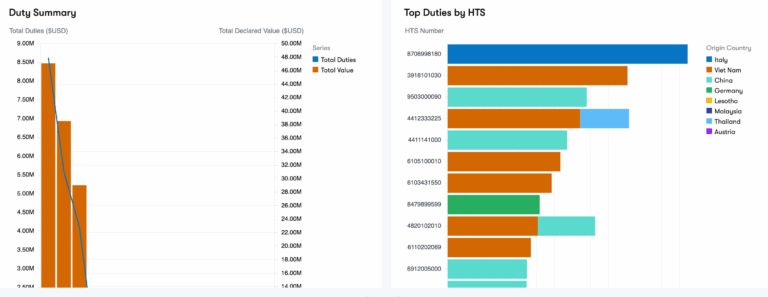
The Drawback Engine inside our Captain platform builds each claim from your own records instead of spreadsheets. It matches import entries to qualifying exports or destructions by direct identification or substitution, checks every filing window, calculates duty line by line, and keeps the import entry, proof of export and production records linked to each claim line. Our licensed brokers review every claim and file it in ACE, so you get the coverage of duty drawback software without licensing or running a tool yourself.
Duty drawback status tracking shows every claim from filed to liquidated to refunded in one view, including claims still pending liquidation, with recovered-to-date totals by drawback type that your finance team can forecast against. It replaces checking claim status entry by entry and chasing refund timing by email.
CBP can review a drawback claim long after the refund is paid. We keep the import entry, proof of export or destruction, and production records together for each claim, so a review is answered from a ready file instead of rebuilt under deadline.
Duty drawback is a refund from U.S. Customs and Border Protection of up to 99% of the duties, certain internal revenue taxes, and certain fees paid on imported merchandise that is later exported or destroyed. It exists so U.S. exporters are not taxed on goods that never stay in the U.S. market. The program is authorized by 19 U.S.C. 1313, governed by 19 CFR Part 190 since the Trade Facilitation and Trade Enforcement Act of 2015 modernized it, and every claim has been filed electronically in ACE since February 2019. CBP keeps 1% of the claimed amount, and the rest is refunded once the claim is liquidated.
Which companies qualify for duty drawback?
Any company that pays duty on imports and has related exports can qualify. The most common cases are distributors that re-export imported goods, manufacturers that export finished products made with imported parts or materials, and importers that return or destroy merchandise that arrived defective or off spec. You do not need to be the importer of record on every entry to claim, because import and export rights can be transferred with the right documentation. If you both import and export, a drawback assessment is worth running even if you have never filed a claim before.
What are the main types of duty drawback?
There are three main types. Unused merchandise drawback, under 19 U.S.C. 1313(j), covers goods exported or destroyed without being used in the U.S., and substitution lets you claim on commercially interchangeable goods with the same 8-digit HTS number. Manufacturing drawback, under 1313(a) and 1313(b), covers imported materials used to make exported products, either traced directly or substituted. Rejected merchandise drawback, under 1313(c), covers goods that did not conform to specifications or were shipped without the buyer's consent. Most clients qualify for more than one type, and we file all of them.
How far back can I claim duty drawback?
A drawback claim must be filed within five years of the date the merchandise was imported, and the export or destruction has to happen within that same window. So entries from the last five years may still qualify if the related exports also fall inside the window. The clock runs from the import date, which means the oldest entries in your history expire first. That is why we start every engagement with a five-year look-back: waiting even a few months can take the oldest duty permanently out of reach.
Can I claim drawback on goods that were destroyed instead of exported?
Yes. Unused merchandise and rejected merchandise can qualify when they are destroyed rather than exported, as long as the destruction happens under CBP rules. You file a notice of intent to destroy at least seven working days before the destruction, which gives CBP the chance to witness it, and you keep the certificate or other proof of destruction with the claim. The goods must be destroyed so they have no remaining commercial value. This is often the fastest route to recovery for expired, damaged, or obsolete stock that would cost more to ship back than it is worth, and we manage the notice and the proof so the claim is complete.
Are Section 301 and Section 232 tariffs eligible for drawback?
Yes. Section 301 duties on goods from China and Section 232 duties on steel, aluminum, and other covered products are eligible for drawback under the normal rules, and CBP requires the claim to report both the Chapter 99 number and the underlying HTS number. With the tariff increases of recent years, these duties often make up most of the refund for manufacturers and distributors. Antidumping and countervailing duties are not eligible, so we separate them from the claim at the entry line level.
What about IEEPA tariffs?
CBP allowed drawback on the IEEPA reciprocal tariffs while they were collected. After the Supreme Court ruled those tariffs unlawful, CBP stopped collecting them on February 24, 2026, and importers can now recover them through the separate process for IEEPA tariff refunds. The same dollar cannot be recovered twice, so we check every IEEPA line against both routes and put it in the one that pays you back fastest. Our guide to duty drawback vs. IEEPA refunds explains the difference.
Can I recover the Merchandise Processing Fee and Harbor Maintenance Fee?
Sometimes. The Merchandise Processing Fee and the Harbor Maintenance Tax can be recovered on unused merchandise drawback claims under 19 U.S.C. 1313(j), including substitution claims, but not on manufacturing or rejected merchandise claims. The MPF is charged on almost every formal entry, and the HMT on every ocean import, so for a company moving high volumes through U.S. seaports these fees add up across thousands of entry lines. Most in-house teams leave them out because they sit on separate lines of the entry summary. We pull them from each entry and include them wherever the claim type allows, so the refund covers fees as well as duty.
Is drawback allowed on exports to Canada and Mexico?
Yes, with limits. Under USMCA, drawback on exports to Canada and Mexico is restricted for most manufacturing and substitution claims: the refund is capped at the lower of the U.S. duty paid or the duty paid when the goods enter Canada or Mexico. Goods exported in the same condition they were imported are generally not subject to that cap. Because the rules change by claim type, we tag every export by destination and apply the right limit before filing, so a claim on North American exports is not overstated and rejected, and exports to other markets keep their full recovery.
How long does a drawback refund take, and how do I track claim status?
Without special privileges, CBP pays drawback after it liquidates the claim, and it must liquidate within one year of filing. With accelerated payment, which requires a bond covering the claimed amount, CBP can pay the estimated refund within weeks of filing, before liquidation. We set up accelerated payment and the waiver of prior notice where you qualify, so the refund reaches you as early as the rules allow and becomes a predictable cash flow rather than a once-in-a-while windfall. Claim status posts in ACE as CBP processes and liquidates each claim, and the Drawback Engine pulls it into one dashboard that shows every claim as filed, pending liquidation, liquidated or refunded, so you can check duty drawback status online without querying claims one by one.
What records do I need for a duty drawback claim?
You need the import entry summaries (CBP Form 7501) with their duty lines, proof of export such as bills of lading, air waybills, or electronic export information, or proof of destruction, and for manufacturing drawback, production records that show how imported materials went into exported products. Records must be kept for three years after the claim is liquidated. If we already file your entries, the import side is in our system, so the only thing we usually need from you is the export and production data.
Why is drawback cheaper when CargoTrans is my customs broker?
Most of the cost of a drawback claim is getting the data together: pulling entry summaries, cleaning HTS and duty lines, and matching them to exports. When we already clear your imports, that data is in our system for every entry we have filed, so the heaviest part of the work is already done. We pass that saving on through lower drawback pricing for our brokerage clients. It also works the other way: many companies start with drawback, see how clean their entry data becomes, and move their regular clearance to us.
How is duty drawback different from a Foreign-Trade Zone or first sale?
Drawback recovers duty you have already paid. A Foreign-Trade Zone defers or avoids duty on goods before they enter U.S. commerce, and first sale for export lowers the value that duty is charged on. They can work together, but each one fits a different import-to-export ratio and cash-flow need. An FTZ needs a site and ongoing zone procedures, first sale needs cooperation from your supplier chain, and drawback needs clean entry and export data. We look at your whole supply chain and recommend the combination that recovers or avoids the most duty for the least effort.
How is the duty drawback service priced?
The assessment is free. It tells you how much duty in your last five years is recoverable, which drawback types apply, and what the claims will take to build, so the fee is always measured against a real recovery figure. Pricing depends on claim volume, the drawback types involved, and how much of the data we already hold. Clients whose entries we already clear get a lower rate, because the import side of every claim is already in our system and the matching work is mostly done. We send a written quote with the assessment results, so you can decide with both numbers in front of you.