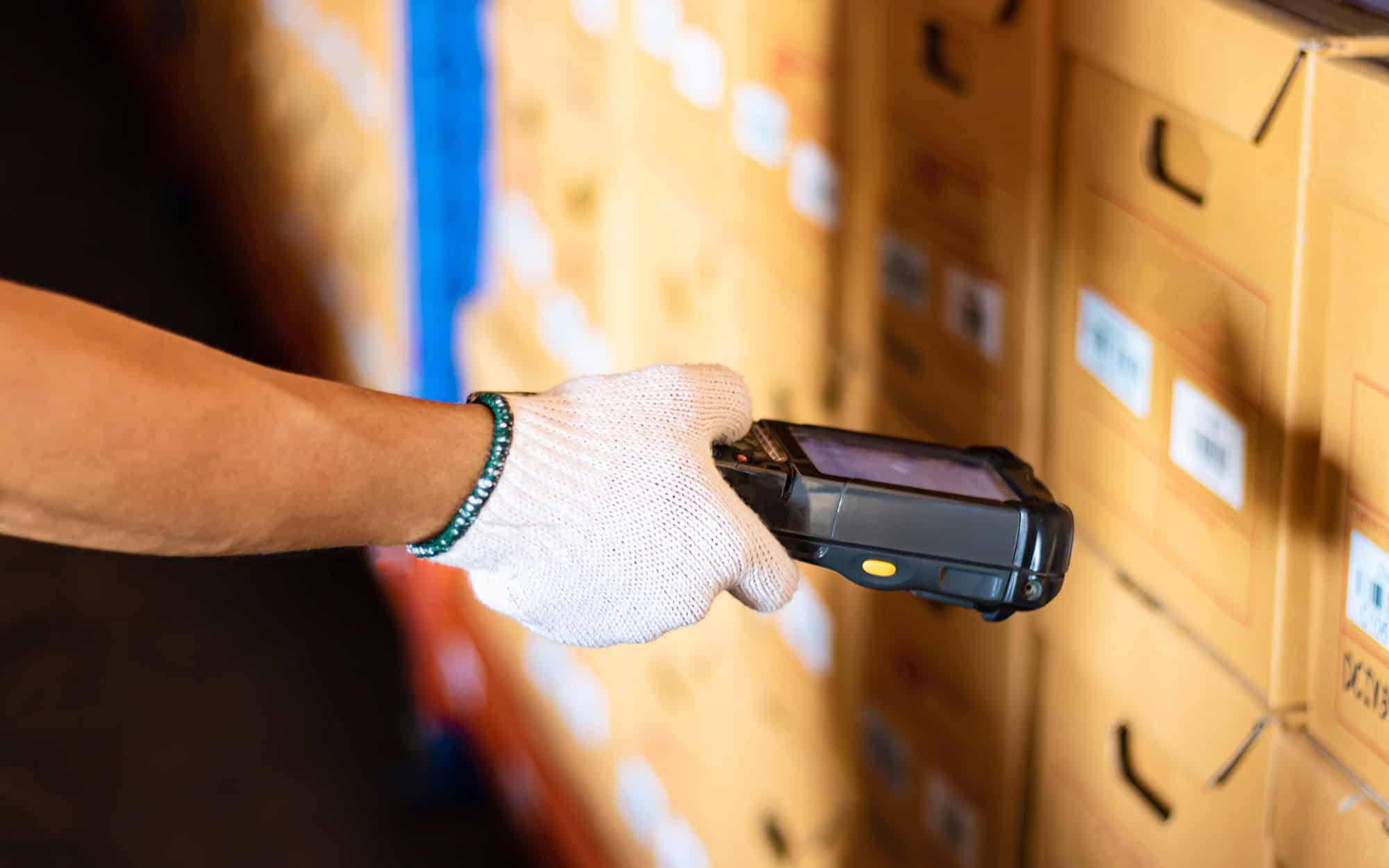
What is a 7501 form for customs purposes? It is the Entry Summary, the document that reports the value, classification, and duty computation for imported merchandise and triggers CBP’s assessment of the duties, taxes, and fees owed on that entry. Every formal entry needs one, filed within 10 working days of the merchandise’s release from CBP custody, with the estimated duties, taxes, and fees deposited at the same time.

This guide walks through what the form actually reports, block by block, in plain English: who has to file it, when it’s due, how MPF and HMF get computed on top of duty, and how the numbers it reports connect to liquidation months later. It also covers where the form fits alongside the customs bond and power of attorney a broker needs on file before it can touch an entry at all.

CAPTAIN CONTROL TOWER

Quantify your exposure in 20 minutes

Our trade strategists run your last 90 days of entries through Captain to surface refund eligibility, Section 232 traps and PNTR risk.

EXPLORE CAPTAIN

What CBP Form 7501 Is For

CBP uses Form 7501 to determine the appraisement, classification, and origin of imported merchandise, and to compute the duties, taxes, and fees due on it. It is a different document from the entry paperwork filed to get cargo released from CBP custody in the first place; the entry gets the goods off the port, the entry summary is what CBP actually uses to assess what’s owed and to compile official US import statistics.

That distinction matters operationally. A shipment can be released on an entry filing well before the entry summary and its duty payment are due, which is exactly why the two steps have separate deadlines inside the same customs clearance process.

For a shipment with more articles than fit on the base form, CBP Form 7501 comes with continuation sheets that repeat the commodity-line fields for additional entries, so a single entry summary can span several pages without changing anything about how it’s filed or when it’s due.

Who Files It, and When

Most entry summaries are filed by a licensed customs broker acting on the importer’s behalf, though an importer with the systems and expertise to do it can self-file. Either way, the filer must have the importer’s authorization on file, and for a broker that means a valid power of attorney; the filer of record is legally accountable for what the form reports.

CBP Form 7501 is generally due, along with the estimated duties, taxes, and fees it reports, within 10 working days of the merchandise’s release from CBP custody. Missing that window is a compliance problem in its own right, separate from whatever duty is ultimately owed. Our licensed customs brokerage team files entry summaries on this schedule as a matter of course for every client on file.

The Header Blocks: Entry Number, Entry Type, and Bond

The top of the form identifies the transaction. The entry number is an 11-digit alphanumeric identifier made up of a three-digit filer code assigned to the broker or importer, a seven-digit number unique to that filing, and a one-digit check digit computed from the preceding ten characters.

The Entry Type Code is a two-digit field where the first digit signals the general category of entry being filed, for example a consumption entry, an informal entry, or a warehouse entry, and the second digit refines that further. Nearby blocks record the summary date, the entry date, the surety number backing the transaction (or a code indicating none applies), and the bond type code, tying the filing directly back to the customs bond on file for that importer.

The Importer Number and Who's Accountable

The form also records the Importer of Record number, the identifier CBP uses to tie the entry to a specific importer for duty billing, compliance history, and statistics. That number is either the importer’s IRS-issued Employer Identification Number, a Social Security Number for an individual importer, or a CBP-assigned number for an importer that has neither, which is the usual case for a non-resident importer shipping into the US for the first time.

Whoever that number belongs to carries the legal weight of the filing. Under 19 U.S.C. 1484, the importer of record is required to make entry using reasonable care and to supply the information CBP needs to determine admissibility and assess duty, and that duty runs to the importer even when a broker prepares and files the paperwork.

The Commodity Lines: HTS Provisions and Duty Computation

Further down the form, each line item describes a specific article on the shipment and reports the HTS number that classifies it, the country of origin, the quantity, and the entered value. The duty rate attached to that HTS number, multiplied against the entered value, is what produces the duty amount owed on that line.

Getting the classification right on this section is what everything downstream depends on: the wrong HTS number produces the wrong duty rate, which produces the wrong amount deposited, which is exactly the kind of error CBP can catch and correct well after the goods have already cleared.

A single entry summary commonly carries several line items rather than one, particularly on a consolidated shipment covering more than one product or invoice. Each line is classified, valued, and duty-computed separately, so an entry summary for a mixed container can carry a dozen different HTS numbers and duty rates within a single filing, all of which have to reconcile back to the total duty deposited.

MPF and HMF: The Fees Stacked on Top of Duty

Two federal user fees ride alongside duty on most entry summaries. The Merchandise Processing Fee applies to formal entries at 0.3464% of the entered value, excluding freight and insurance, subject to a minimum and maximum that CBP adjusts periodically for inflation; for fiscal year 2026 that range runs from $33.58 to $651.50, effective October 1, 2025. Informal entries pay a smaller flat fee instead of the ad valorem calculation.

The Harbor Maintenance Fee applies only to cargo arriving by vessel, at 0.125% of the entered value, with no minimum or maximum cap. It does not apply to air, truck, or rail shipments. Both fees are computed and reported on the entry summary alongside duty, and both get deposited on the same 10-working-day schedule.

A manual, paper-filed entry summary also carries its own added surcharge on top of the standard MPF calculation, which is one more reason nearly every broker files electronically through CBP’s Automated Commercial Environment rather than on paper. None of these fees are optional or negotiable; they are statutory charges computed the same way for every filer submitting the same entry type.

Key CBP Form 7501 Blocks at a Glance
Block What It Captures
1 Entry number: 3-digit filer code + 7-digit unique number + 1 check digit
2 Entry Type Code: first digit signals consumption, informal, or warehouse entry
3, 7 Summary date and entry date
4, 5 Surety number and bond type code
23 Importer of Record number (EIN, SSN, or CBP-assigned number)
Commodity lines HTS number, country of origin, entered value, duty rate and amount

From Entry Summary to Liquidation

The duty, MPF, and HMF paid when Form 7501 is filed are a deposit of estimated amounts, not a final bill. CBP has up to one year from the date of entry to liquidate it under 19 U.S.C. 1504(a), the point at which the duty assessment becomes final, and CBP can extend that window where more time is needed to verify classification, value, or origin.

Between filing and liquidation, corrections can still be made. An importer who spots an error in entered value, classification, or a duty computation can generally file a post summary correction before liquidation, rather than waiting for a formal protest afterward. That window is also why accurate HTS classification on the front end, backed by a binding ruling where the code is genuinely in doubt, is worth more than fixing the number later.

Tariff Response Unit

Audit your derivative HTS exposure

Our brokers will review your top 50 derivative HTS lines and flag Section 232 valuation risk before CBP does.

Frequently Asked Questions

What is a 7501 form for customs?

It is the CBP Entry Summary, the document that reports the value, HTS classification, and country of origin of imported merchandise and computes the duties, taxes, and fees owed on it. It is filed separately from, and after, the paperwork used to release the cargo itself.

Who is required to file CBP Form 7501?

A licensed customs broker filing on the importer’s behalf, or the importer itself if it self-files. Either way, the filer needs the importer’s authorization, and a broker specifically needs a valid customs power of attorney on file before it can file the entry.

How long do you have to file an entry summary?

Form 7501 and the estimated duties, taxes, and fees it reports are generally due within 10 working days of the merchandise’s release from CBP custody.

What is the difference between the entry and the entry summary?

The entry is the filing used to release merchandise from CBP custody at the port. The entry summary, Form 7501, is the separate filing that reports classification, value, and origin and computes the duties, taxes, and fees actually owed.

What fees appear on Form 7501 besides duty?

The Merchandise Processing Fee, 0.3464% of entered value on formal entries with a periodically adjusted minimum and maximum, and the Harbor Maintenance Fee, 0.125% of entered value with no cap, which applies only to ocean cargo.

When does an entry summary become final?

At liquidation, which CBP generally completes within one year of the date of entry under 19 U.S.C. 1504(a), though CBP can extend that period. Liquidation is when the duty assessment becomes final rather than an estimate.

Can I fix a mistake on an entry summary after it's filed?

Yes, generally through a post summary correction filed before liquidation, which is faster and simpler than a formal protest filed after liquidation. Catching an error in classification, value, or duty computation early, before the entry liquidates, keeps the correction process straightforward.


Since 12:01 a.m. eastern time on July 24, 2026, goods that are products of 60 economies pay an additional Section 301 duty of 10% or 12.5% on top of the column 1 rate, unless an exemption heading applies. USTR imposed the action in a notice published on July 28, 2026 at 91 FR 47318. It had found on June 2, 2026 that 54 economies failed to impose and effectively enforce a prohibition on imports made with forced labor and 6 (Canada, Ecuador, the European Union, Indonesia, Mexico and Pakistan) failed to enforce one effectively.

The section 301 forced labor tariffs are not one rate. They are 65 Chapter 99 country headings, a combined-duty cap for five economies, a block of exemption headings from 9903.05.85 to 9903.06.21, and a stacking rule that reads cumulatively against most other additional duties. What follows covers the rates by economy, the cap mechanism, the exemptions that actually work, how the duty interacts with the legacy China lists, AD/CVD and Section 338, and the separate excess-capacity investigation still pending. Rates checked against the Federal Register and HTS Revision 19 as of September 23, 2026.

CAPTAIN CONTROL TOWER

Quantify your exposure in 20 minutes

Our trade strategists run your last 90 days of entries through Captain to surface refund eligibility, Section 232 traps and PNTR risk.

EXPLORE CAPTAIN

What the Forced Labor Action Covers and When It Started

The action rests on two dockets, USTR-2026-0265 and USTR-2026-0266. USTR initiated the investigations on March 12, 2026 (91 FR 12884), published actionability determinations and a proposed action on June 5, 2026 (91 FR 34272), received more than 1,600 comments and heard over 100 witnesses on July 7 to 9. A Presidential Memorandum of July 23, 2026 then directed the rates and the exemptions, and the duty took effect the next day.

Legally, the duty lives in a new U.S. note 52 to subchapter III of Chapter 99, with country headings 9903.05.20 to 9903.05.84 and exemption headings 9903.05.85 to 9903.06.21. The duty attaches to products of the listed economies, so the working question for every line is the same one that drives any country of origin determination, not where the goods were shipped from.

The duty applies to goods entered for consumption, or withdrawn from warehouse for consumption, on or after 12:01 a.m. ET on July 24, 2026. The in-transit relief under 9903.05.85 is narrow: goods must have been loaded onto a vessel at the port of loading and in transit on the final mode of transit before 12:01 a.m. ET on July 24, and entered or withdrawn before 12:01 a.m. ET on July 28, 2026. The text speaks only of a vessel, and none of the published guidance addresses air or land shipments, so do not assume they qualify. CBP set out the filing instructions in CSMS #69326983 on July 23, 2026.

Rates by Economy and the Chapter 99 Headings to Declare

Economies fall into four groups. Seventeen pay a flat additional 10%, thirty-eight pay a flat additional 12.5%, and five (the EU, Japan, South Korea, Switzerland and Taiwan) pay whatever tops the column 1 rate up to a fixed total. According to the notice, the 10% tier is for economies that have a forced-labor import ban, committed to one in an Agreement on Reciprocal Trade, or run a partial regime. Cambodia, Guatemala, Honduras, India, Sri Lanka and Trinidad and Tobago adopted bans, and Jordan made an Agreement on Reciprocal Trade commitment, after the June proposal.

The table lists each economy with the last two digits of its 9903.05 heading. The heading is declared alongside the Chapter 1 to 97 classification, which still carries the entered value, so a classification error flows straight into the wrong Chapter 99 treatment for the five capped economies.

Section 301 forced labor duty by economy, HTS Revision 19 (in force since September 15, 2026)
Treatment Economies (heading 9903.05.xx) Duty
Flat 10% (17 economies) Argentina (.22), Bangladesh (.26), Cambodia (.28), Canada (.29), Ecuador (.35), El Salvador (.37), Guatemala (.40), Honduras (.42), India (.44), Indonesia (.45), Jordan (.50), Malaysia (.54), Mexico (.55), Pakistan (.62), Sri Lanka (.72), Trinidad and Tobago (.78), United Kingdom (.81) +10% on top of column 1
Flat 12.5% (38 economies) Algeria (.20), Angola (.21), Australia (.23), The Bahamas (.24), Bahrain (.25), Brazil (.27), Chile (.30), China (.31), Colombia (.32), Costa Rica (.33), Dominican Republic (.34), Egypt (.36), Guyana (.41), Hong Kong, China (.43), Iraq (.46), Israel (.47), Kazakhstan (.51), Kuwait (.52), Libya (.53), Morocco (.56), New Zealand (.57), Nicaragua (.58), Nigeria (.59), Norway (.60), Oman (.61), Peru (.63), The Philippines (.64), Qatar (.65), Russia (.66), Saudi Arabia (.67), Singapore (.68), South Africa (.69), Thailand (.77), Türkiye (.79), United Arab Emirates (.80), Uruguay (.82), Venezuela (.83), Vietnam (.84) +12.5% on top of column 1
Capped at 10% total European Union: column 1 at or above 10% (.38), below 10% (.39). Taiwan: at or above 10% (.75), below 10% (.76) Zero if column 1 is 10% or more; otherwise tops up to 10% total
Capped at 12.5% total Japan (.48 / .49), South Korea (.70 / .71), Switzerland (.73 / .74) Zero if column 1 is 12.5% or more; otherwise tops up to 12.5% total
Stacked shipping containers at a port terminal awaiting customs entry
Each container's duty depends on the origin economy and its 9903.05 heading.

The Combined-Duty Cap for the EU, Japan, Korea, Switzerland and Taiwan

The Presidential Memorandum sets the rule in plain terms. For a product of the EU or Taiwan whose MFN tariff is below 10%, the Section 301 tariff is whatever makes the sum of the two equal 10%; where the MFN tariff is 10% or more, the Section 301 tariff is zero. Japan, Korea and Switzerland work the same way with a 12.5% ceiling. USTR describes the cap as consistent with the Agreements on Reciprocal Trade or similar arrangements with those partners.

Expressed as a formula, the Section 301 rate equals the cap minus the column 1 rate, never below zero, and the total duty equals the higher of the column 1 rate and the cap. A German good with a 2.5% MFN rate is declared under 9903.05.39 and pays 7.5% under Section 301, 10% in total. A Japanese good that is duty-free at column 1 pays the full 12.5%. A Swiss good with a 15% MFN rate goes under 9903.05.73 and pays no Section 301 duty at all, so its total stays at 15%. CBP confirmed the at-or-above and below split in CSMS #69326983.

Specific and compound rates need an extra step. Note 52(k) converts the column 1 duty into an ad valorem equivalent by dividing the duty payable by the customs value. The note’s own example is 50 cents per kilogram on 1 kilogram valued at $10, which is a 5% ad valorem equivalent; for an EU good that leaves a 5% Section 301 duty to reach the 10% total.

One point is open: note 52(k) adds a column 1-Special clause for South Korea only, and CBP has not said how KORUS-qualifying goods are measured against the cap. Get written confirmation before settling on a filing position.

Exemptions: USMCA, CAFTA-DR Textiles, Section 232 Goods and Chapter 98

Free trade agreements do not exempt goods by default. Note 52(a) keeps goods eligible for special tariff treatment under general note 3(c)(i) subject to the duty except as the note provides otherwise, so preference claims for Australia, Chile, Colombia, Peru or Korea reduce the column 1 duty but do not remove the forced labor duty. Only two agreement-based carve-outs exist.

USMCA is the first. Products of Canada entered free of duty under USMCA go under 9903.05.93 and products of Mexico under 9903.05.94, regardless of whether the S or S+ indicator appears. Non-qualifying Canadian and Mexican goods pay the 10%. The exemption therefore turns on a valid preference claim, which is a USMCA rules of origin question answered at the bill-of-materials level. CAFTA-DR is the second, and it is limited to textile and apparel goods of Costa Rica, the Dominican Republic, El Salvador, Guatemala, Honduras and Nicaragua entered free under the agreement (9903.05.95). El Salvador and Guatemala also have their own textile headings, and CBP allows a good that qualifies under more than one exemption to be entered under either. Non-originating apparel from those countries pays the full rate.

Section 232 goods are exempt through 9903.05.90. The list covers articles of aluminum, steel and copper and the derivative articles in 9903.82.02 and 9903.82.04 to .26, passenger vehicles and light trucks and their parts, wood products, medium and heavy-duty vehicles and buses and their parts, semiconductor articles under 9903.79.01, and, from July 31, 2026, patented pharmaceutical articles in 9903.04.60 to .66. A covered steel derivative therefore pays its sectoral rate under the steel and aluminum tariffs and not the forced labor rate on top.

Chapter 98 entries are exempt when properly claimed and accepted by CBP, with one important exception. Goods entered under 9802.00.40, 9802.00.50, 9802.00.60 or 9802.00.80 remain subject: the first three pay on the value of the repairs, alterations or processing performed abroad, and 9802.00.80 pays on the value of the assembled article less the cost or value of the US-origin components.

  • 9903.05.85: in-transit goods meeting the July 24 loading and July 28 entry deadlines.
  • 9903.05.86 and .87: a general list of HTS provisions plus 16 named articles, such as sowing seeds, açaí products and certain eucalyptus plywood.
  • 9903.05.88 and .89: civil aircraft and parts meeting general note 6, and articles for use in pharmaceutical applications in listed provisions.
  • 9903.05.91 and .92: humanitarian donations and informational materials. Personal-use goods in accompanied baggage are also outside the duty.
  • 9903.05.96 to 9903.06.21: country-specific lists for the UK, EU, Switzerland, Malaysia, Cambodia, Guatemala, El Salvador, Argentina, Bangladesh, Taiwan, Indonesia, Ecuador and Jordan. Check the tariff line against Annex II of the notice before filing.

How the Duty Stacks With China 301, AD/CVD and Section 338

Note 52(a) states that, except as provided in its own subdivisions, products subject to headings 9903.05.20 to 9903.05.84 are also subject to any additional duty provided for in subchapter III or subchapter IV of Chapter 99. That wording is the basis for every stacking question, and apart from AD/CVD, CBP has not yet published guidance on the specific combinations below.

Antidumping and countervailing duties stack without ambiguity. The note says covered products continue to be subject to antidumping, countervailing or other duties, taxes, fees, exactions and charges. A product inside an order pays the forced labor duty and its antidumping and countervailing duties as separate layers.

The legacy China lists sit in subchapter III as well, so on the note’s wording a Chinese good on Lists 1 to 4A would carry the 12.5% under 9903.05.31 in addition to its existing Section 301 tariffs. Brazil faces the same question, because a separate Brazil Section 301 action at 9903.05.01 (91 FR 45516, July 20, 2026) runs alongside the 12.5% under 9903.05.27. Section 338 on Canada, which added 50% under 9903.03.12 to .14 from 12:01 a.m. ET on August 22, 2026, is also in subchapter III, so a Canadian good on that list that does not enter duty-free under USMCA reads as subject to both. None of these combinations has been confirmed by CBP, and total-rate figures built on them should be treated as provisional until CBP confirms them.

CSMS #69326983 sets the reporting order: Chapter 98 where used, then Chapter 99 trade remedies with Section 301 first, then the Chapter 1 to 97 line carrying the entered value.

Drawback, FTZ Admission and the Absence of Exclusions

The duty is drawback eligible. CSMS #69567203 of August 18, 2026 states that 9903.05.01 and 9903.05.20 to 9903.05.84 are drawback eligible, correcting an August 12 ACE change to the FD07 edit that had wrongly blocked them. For importers that re-export, duty drawback is the main recovery route, and any claim blocked by that edit should be checked and resubmitted.

Foreign-trade zones do not defer the choice. Covered products admitted to a zone on or after the effective date may only be admitted in privileged foreign status under 19 CFR 146.41, unless they qualify for domestic status under 19 CFR 146.43. The duty is locked at admission, so a foreign-trade zone still helps with cash flow and with goods that are re-exported, but it cannot be used to wait for a lower rate.

There is no product exclusion process. USTR stated that an exclusion process lowering tariffs on additional products would be inconsistent with the President’s direction, and pointed to modification under Section 307 of the Trade Act (19 U.S.C. 2417) as the route for periodic review. Each economy’s action and each exemption is severable, so a court ruling against one would leave the others in force.

For Bangladesh, Cambodia, Indonesia and Malaysia, USTR said it would establish tariff-rate quotas when feasible, with an initial three-year term, allowing set volumes of textiles and apparel to enter free of the duty based on each country’s imports of US cotton or textile inputs. No Federal Register notice setting them up had been published as of September 23, 2026, so the 10% applies in full until one appears.

The Pending Excess-Capacity Investigation

A second set of Section 301 investigations, on structural excess capacity and production in manufacturing sectors, was initiated on March 11, 2026 and published at 91 FR 12886 on March 17, 2026 (dockets USTR-2026-0067 and USTR-2026-0068). It covers 16 economies: China, the EU, Singapore, Switzerland, Norway, Indonesia, Malaysia, Cambodia, Thailand, Korea, Vietnam, Taiwan, Bangladesh, Mexico, Japan and India. The Section 301 Committee held public hearings from May 5, 2026.

As of September 23, 2026, USTR has published no determination and no proposed action; its investigation page shows only the initiation notice and the hearing transcripts. Sourcing models for those origins should carry a scenario line for a further Section 301 duty rather than treat today’s rate as the settled one.

What Trade Teams Should Check Before the Next Entry

First, map every active supplier to its economy and heading, and for the five capped economies rerun the column 1 rate line by line, because the same supplier can land in both headings depending on the product.

Second, audit exemption claims. USMCA and CAFTA-DR relief depends on a preference claim that would survive a CBP request for information, and the Section 232 exemption depends on the good actually falling under one of the listed 232 headings. A 9903.05.90 claim on a good outside those headings is an underpayment.

Third, rebuild duty accruals for China, Brazil and Canadian goods under Section 338 with the stacking question flagged as open, and move drawback and FTZ status decisions into the landed-cost model instead of handling them after the fact. Where the exposure spans dozens of origins, managing it through a structured trade compliance management programme is cheaper than correcting entries one post-summary correction at a time.

Customs compliance staff walking between container stacks at a port
Exemption claims under USMCA, CAFTA-DR and 9903.05.90 need documentation that survives a CBP request.
Tariff Response Unit

Audit your derivative HTS exposure

Our brokers will review your top 50 derivative HTS lines and flag Section 232 valuation risk before CBP does.

Frequently Asked Questions

What are the Section 301 forced labor tariff rates?

Products of 17 economies pay an additional 10% and products of 38 economies pay an additional 12.5%, on top of the column 1 rate. Goods from the EU and Taiwan are topped up to a 10% total, and goods from Japan, South Korea and Switzerland to a 12.5% total, with no additional duty where the column 1 rate already meets that level.

When did the forced labor duty take effect?

For goods entered or withdrawn from warehouse for consumption on or after 12:01 a.m. ET on July 24, 2026. Goods loaded onto a vessel and in transit on the final mode before that time, and entered before 12:01 a.m. ET on July 28, 2026, are exempt under 9903.05.85.

Are goods subject to Section 232 also charged the forced labor duty?

No, for the Section 232 headings listed in note 52(f): articles of steel, aluminum and copper and the aluminum and steel derivatives in 9903.82.02 and 9903.82.04 to .26, autos and parts, wood products, medium and heavy-duty vehicles and parts, semiconductor articles and, from July 31, 2026, patented pharmaceutical articles. They are declared under 9903.05.90.

Is the forced labor duty eligible for drawback?

Yes. CBP confirmed in CSMS #69567203 of August 18, 2026 that 9903.05.20 to 9903.05.84 and 9903.05.01 are drawback eligible, correcting an ACE change made on August 12 that had blocked them.

Can I apply for an exclusion?

No. USTR declined to create an exclusion process, stating that one would be inconsistent with the President’s direction. Changes can come through modification under Section 307 of the Trade Act, and tariff-rate quotas for textiles from Bangladesh, Cambodia, Indonesia and Malaysia are promised but not yet published.

Does the duty stack with the China Section 301 lists?

Note 52(a) makes covered goods subject to any other additional duty in subchapters III and IV of Chapter 99, which on its wording includes the China lists. CBP has not published guidance on that combination, so confirm the filing position with CBP before relying on a total rate.

A single entry customs bond guarantees CBP’s duties, taxes, and fees on one specific shipment at one port, while a continuous bond guarantees every entry an importer files at every US port for a full year. Every CBP bond must be written for at least $100 under 19 CFR 113.13, but a continuous bond is normally sized using CBP’s own sufficiency guidelines at roughly 10% of the duties, taxes, and fees an importer paid or expects to pay over a 12-month period, subject to a $50,000 floor. A single entry bond is instead sized to that one shipment: the entered value plus applicable duties, taxes, and fees, or three times the entered value where the goods are subject to certain other-agency requirements such as FDA regulation.

Picking the wrong one is not a paperwork problem, it is a coverage problem: an underbonded entry cannot be released, and an importer running frequent shipments on repeated single entry bonds is buying the same protection over and over at a higher aggregate cost. This guide compares the two bond types under 19 CFR Part 113, how CBP sets the amount for each, who is allowed to underwrite them, and what happens when a shipment shows up with no valid bond on file.

CAPTAIN CONTROL TOWER

Quantify your exposure in 20 minutes

Our trade strategists run your last 90 days of entries through Captain to surface refund eligibility, Section 232 traps and PNTR risk.

EXPLORE CAPTAIN

What a Customs Bond Guarantees Under 19 CFR Part 113

CBP bonds are governed by 19 CFR Part 113. A bond is a three-party contract between the importer (the principal), CBP (the obligee), and a surety, guaranteeing that CBP will collect the duties, taxes, and fees owed on an entry and that the importer will meet other obligations tied to it, including producing documentation on request, redelivering merchandise if CBP demands it, and paying any penalties assessed.

A bond is required for formal entries, which generally means shipments valued above $2,500 as well as certain regulated commodities regardless of value. Below that threshold, an informal entry can usually move without one, though CBP can still require a bond where the merchandise, the importer’s compliance history, or an other-agency requirement calls for it.

The floor set by regulation itself is modest. 19 CFR 113.13 states that the amount of any CBP bond must not be less than $100, with fractional amounts rounded up to the next whole dollar. That figure is a legal minimum, not a working number: real bond amounts are set well above it using CBP’s own monetary sufficiency guidelines, covered below. Our licensed customs brokerage team has that bonding conversation with every new importer before an entry is ever filed.

Single Entry Bond vs Continuous Bond: The Core Difference

A single entry bond, also called a single transaction bond (STB), covers exactly one entry at one port. Its surety number is recorded on the CBP Form 7501 entry summary filed for that shipment, and once the entry liquidates and CBP is satisfied duties and any other requirements were met, the bond’s obligation ends there. Ship again next month and you need a new one.

A continuous bond covers every entry the importer files at every US port of entry for a full year, and renews automatically until the importer or surety cancels it. One bond, one annual premium, unlimited covered entries within the bonded amount, for as long as the bond stays active.

Single Entry Bond vs Continuous Bond
Feature Single Entry Bond Continuous Bond
Coverage One entry, one port Every entry, every port, for 12 months
Typical importer One-off or occasional shipper Regular, repeat importer
Minimum amount Entered value + duties, taxes, fees (3x value for FDA/PGA-regulated goods) 10% of duties, taxes, fees paid or expected over 12 months, $50,000 floor
Renewal None; expires when that entry liquidates Automatic annual renewal until cancelled
Underwritten by Treasury-listed corporate surety Treasury-listed corporate surety

When a Single Entry Bond Is the Right Choice

A single entry bond fits an importer who genuinely does not know if there will be a second shipment: a one-off equipment purchase, a trade-show sample, a first test order used to validate a new supplier before committing to a regular program. A non-resident importer bringing in a first US shipment while it decides whether to build an ongoing import program is a common real-world case.

The tradeoff is cost and continuity. Buying a fresh STB for every shipment across a year almost always costs more in aggregate than one continuous bond, and it builds no ongoing bonding relationship with a surety, which a growing importer will eventually need anyway. If the second shipment is already on the calendar, it is usually worth pricing a continuous bond instead.

When a Continuous Bond Makes Sense

A continuous bond is the standard choice for any importer shipping more than a handful of times a year, across one port or several. It removes the need to underwrite a new bond for every entry, which matters most for importers running a regular cadence of formal entries as part of an active trade compliance management program, since a lapsed or undersized bond on a recurring importer stalls every entry behind it, not just one.

Because a continuous bond‘s amount is tied to actual duty, tax, and fee volume, it also needs periodic review. An importer whose import volume or tariff exposure grows meaningfully during the year can outgrow the bond amount CBP originally approved, which is the scenario the sufficiency review described below exists to catch.

How CBP Sets the Bond Amount

For a single entry bond, the working formula is the total entered value of the shipment plus all duties, taxes, and fees that apply to it. Where the merchandise is subject to certain other-agency requirements, and a failure to redeliver it could pose a threat to public health or safety, including all FDA-regulated merchandise, CBP requires the bond to run at three times the total entered value instead.

For a continuous bond, CBP’s monetary guidelines (CBP Directive 3510-004, “Monetary Guidelines for Setting Bond Amounts”) generally set the amount at 10% of the duties, taxes, and fees an importer paid or is expected to pay CBP over a 12-month period, subject to a $50,000 minimum.

Neither formula is static. 19 CFR 113.13 lets CBP review bond sufficiency at any time, weighing the importer’s payment history, its compliance record with CBP demands, the value and nature of the merchandise, the degree of supervision the entries require, and its history of honoring past bond commitments. Where a bond is found insufficient, CBP will generally give the principal 15 days’ written notice to fix it, or demand additional security immediately if it believes the shortfall could jeopardize revenue or hamper enforcement.

Who Underwrites a Customs Bond

CBP will only accept a bond from a corporate surety listed in Treasury Department Circular 570, the Treasury’s published list of companies authorized to write federal surety bonds, and the amount each one may underwrite, under 19 CFR Part 113 Subpart D. Importers do not deal with CBP directly on the bond itself; a surety or a licensed customs broker with surety access places it.

The bond instrument itself is CBP Form 301, executed as either a single transaction bond or a continuous bond, never both on the same form. A broker who already holds your customs power of attorney and importer information can usually place either type without the importer dealing with the surety directly.

What Happens If You Ship Without a Valid Bond

A formal entry cannot be released without an approved bond on file, so merchandise sits, storage and demurrage charges accrue, and time-sensitive freight arrives late through no fault of the carrier. A broker also cannot complete the entry, bonded or not, without a valid power of attorney on file for that importer, which is why the two requirements get collected together during onboarding.

A continuous bond that has lapsed, been cancelled by the surety, or become insufficient for current volume creates the same stoppage, just for every entry behind it instead of one. Checking bond status before shipment volume grows, rather than after a hold at the port, is the cheaper way to find out the bond needs updating; the customs clearance process has no workaround for a missing or inadequate bond.

Tariff Response Unit

Audit your derivative HTS exposure

Our brokers will review your top 50 derivative HTS lines and flag Section 232 valuation risk before CBP does.

Frequently Asked Questions

What is the minimum amount for a single entry customs bond?

CBP sets no separate fixed dollar minimum for a single entry bond beyond the general $100 floor in 19 CFR 113.13. In practice the bond is written for the entered value of the shipment plus the duties, taxes, and fees that apply, or three times the entered value when the goods are subject to certain other-agency requirements such as FDA regulation.

How much does a continuous customs bond cost?

The bond amount, not the premium, is generally set at 10% of the duties, taxes, and fees an importer paid or expects to pay CBP over a 12-month period, with a $50,000 minimum under CBP’s monetary guidelines (CBP Directive 3510-004). The premium a surety charges is a separate, much smaller annual cost that varies with the importer’s risk profile.

Can I use a single entry bond for repeat shipments?

Yes, but each entry needs its own single entry bond, so the cost and paperwork repeat every time. For an importer shipping more than a few times a year, a continuous bond covering every entry for 12 months is usually cheaper in aggregate and removes the need to arrange a new bond before each shipment.

Who is allowed to issue a customs bond?

Only a corporate surety listed in Treasury Department Circular 570, under 19 CFR Part 113 Subpart D, may underwrite a CBP bond. The bond itself is executed on CBP Form 301 as either a single transaction bond or a continuous bond.

What happens if my customs bond amount becomes insufficient?

CBP can review bond sufficiency at any time under 19 CFR 113.13 and generally gives the principal 15 days’ written notice to increase it, though CBP can demand additional security immediately if it believes the shortfall could jeopardize revenue or enforcement. An insufficient bond can hold up release of merchandise until it is corrected.

Do I need a customs bond for an informal entry?

Generally no. Shipments valued at $2,500 or less usually qualify for informal entry, which does not require a bond in most cases, though CBP can still require one for certain regulated commodities regardless of value.

A customs HTS code is a 10-digit number assigned to every physical product imported into the United States, and it is what CBP uses to determine the duty rate, admissibility requirements, and trade statistics attached to that shipment. The first six digits come from the international Harmonized System maintained by the World Customs Organization and used by more than 180 countries; the last four are specific to the United States, and it is digits seven and eight, not the international portion, where the actual US duty rate lives.

This is a beginner-level explainer: what an HTS code is, how its digits are structured, where to look one up for your own product, and how it differs from the export-side Schedule B number. The separate legal question of how to decide between two headings that both seem to plausibly describe your product is covered in depth later in this guide, with a pointer to where that methodology actually lives.

CAPTAIN CONTROL TOWER

Quantify your exposure in 20 minutes

Our trade strategists run your last 90 days of entries through Captain to surface refund eligibility, Section 232 traps and PNTR risk.

EXPLORE CAPTAIN

What Is a Customs HTS Code?

The Harmonized Tariff Schedule of the United States, or HTSUS, is the official classification system CBP uses to identify every category of imported merchandise and the duty treatment attached to it. Every product entering the US, from raw materials to finished goods, gets classified under one specific 10-digit HTS provision, and that number, not the product’s marketing description, is what determines how much duty is owed.

The HTSUS is maintained and published by the US International Trade Commission, and its legal text is not just the numbers: the General Rules of Interpretation, the section and chapter notes, the Additional US Notes, and the terms of the headings and subheadings themselves are what actually govern which code a product falls under.

The HTSUS itself runs to 99 chapters, grouped into 22 sections covering everything from live animals to works of art, roughly organized by material and degree of processing, from raw and unprocessed goods in the earlier chapters toward finished and increasingly complex manufactured goods later in the schedule.

How the 10-Digit HTS Code Is Structured

An HTS code builds in four layers, and each pair of digits narrows the classification further. The first two digits are the chapter, identifying the broad product category, for example machinery or textiles. The next two digits are the heading, narrowing that chapter to a specific type of product within it. Digits five and six are the subheading, the most detailed level still shared internationally.

Those first six digits, chapter, heading, and subheading together, are the internationally harmonized Harmonized System code, identical across every country that uses the HS. Digits seven and eight are the US tariff rate line, the first point where the code becomes uniquely American, and this is the level at which the actual US duty rate is set. The final two digits, nine and ten, are the statistical suffix, used by CBP and the Census Bureau to collect detailed trade data; they refine the product description further but do not change the duty rate itself.

How a 10-Digit HTS Code Breaks Down
Digits Level Scope
1-2 Chapter Broad product category (international)
3-4 Heading Specific product type within the chapter (international)
5-6 Subheading Most detailed internationally harmonized level
7-8 US tariff rate line US-specific; where the duty rate is set
9-10 Statistical suffix US-specific; trade statistics only, no duty impact

Where to Look Up Your HTS Code

The US International Trade Commission publishes the current HTSUS and a free search tool at hts.usitc.gov, which is the authoritative source for the code text, duty rates, and chapter and section notes. A product description alone rarely lands on the right code on the first try; the notes attached to a chapter or heading frequently exclude products that would otherwise seem to fit.

Two importers describing the same physical product in different words can land on genuinely different, both defensible, HTS codes, which is exactly the scenario a binding ruling exists to resolve with certainty rather than best judgment.

Why the HTS Code Determines Your Duty Rate

Every HTS subheading carries at least one duty rate, and often three columns of them: a General rate that applies to countries with normal trade relations, a Special rate available only when the goods qualify under a specific preference program such as USMCA, and a Column 2 rate reserved for the small number of countries without normal trade relations status. Which column applies depends on country of origin and program eligibility, but which row applies depends entirely on the HTS code.

This is also where classification stops being an academic exercise. Additional duty programs, from safeguard actions to country-specific measures, are layered on top of the base HTS duty rate rather than replacing it, and they attach by HTS code, section, or chapter reference, so an incorrect classification does not just misstate the base rate, it can miss or misapply an entirely separate duty stacked on top. Importers running more than a handful of SKUs generally get more value from proper HTS classification consulting up front than from correcting a wrong code across dozens of past entries later.

Choosing Between Two Plausible Codes

It is common for a product to sit close to the boundary between two headings, especially for composite articles, kits, or anything genuinely new to the market. Resolving that is not a matter of picking whichever code carries the lower duty rate; it follows a fixed legal sequence.

That sequence is the General Rules of Interpretation, applied in order, alongside the relevant section and chapter notes. Rather than duplicate that methodology here, see our dedicated guide to the General Rules of Interpretation for how CBP and importers actually work through a genuinely close call.

HTS Code vs Schedule B Number: Not the Same Thing

The HTS code classifies goods coming into the United States and is maintained by the USITC. The Schedule B number classifies goods leaving the United States on an export filing and is maintained separately by the US Census Bureau’s Foreign Trade Division for the Automated Export System. They are not interchangeable in one direction: you cannot file an import entry using a Schedule B number.

The two do share a foundation. Both are 10 digits long, and the first six, the internationally harmonized HS subheading, are identical between an HTS code and its corresponding Schedule B number for the same product. Digits seven through ten diverge, since each set is assigned separately, by CBP and the USITC for imports and by Census for exports. An HTS code can generally be used in place of a Schedule B number on an export filing; the reverse is not true.

Where the HTS Code Fits in the Entry Process

The HTS code you determine here is what gets reported on the commodity lines of the CBP Form 7501 entry summary, and it is what CBP’s system uses to calculate the duty, and any additional duty programs, owed on that entry. Getting it right before the goods ship is far cheaper than correcting it after CBP has already assessed duty at liquidation.

For importers with a recurring catalog of products rather than a single shipment, working through classification once with a licensed customs brokerage and keeping a maintained classification database is what prevents the same product from being coded two different ways on two different entries, which is its own compliance flag.

Tariff Response Unit

Audit your derivative HTS exposure

Our brokers will review your top 50 derivative HTS lines and flag Section 232 valuation risk before CBP does.

Frequently Asked Questions

What is a customs HTS code?

It is the 10-digit number the Harmonized Tariff Schedule of the United States assigns to a specific product, and it is what CBP uses to determine the duty rate, admissibility requirements, and trade statistics for that product when it’s imported.

How many digits are in an HTS code?

Ten. The first six, the chapter, heading, and subheading, are internationally harmonized under the World Customs Organization’s Harmonized System. The last four, the US tariff rate line and the statistical suffix, are specific to the United States.

Where can I look up my product's HTS code?

The US International Trade Commission’s free search tool at hts.usitc.gov is the authoritative source for the current HTSUS text, duty rates, and the section and chapter notes that actually govern classification.

Does the HTS code determine my duty rate?

Yes. Each HTS subheading carries specific duty rates, generally a General rate, a Special rate for goods qualifying under a preference program, and a Column 2 rate for countries without normal trade relations status, and any additional duty programs also attach by HTS reference.

What's the difference between an HTS code and a Schedule B number?

An HTS code classifies goods being imported into the US and is maintained by the USITC. A Schedule B number classifies goods being exported from the US and is maintained by the Census Bureau. Both share the same first six internationally harmonized digits, but the final four digits are assigned separately and usually differ.

How do I decide between two HTS codes that both seem to fit my product?

That determination follows the General Rules of Interpretation applied in order, together with the relevant section and chapter notes, rather than a simple description match. See our General Rules of Interpretation guide for the full methodology.

There’s no single official ‘US Customs list of prohibited items’ published as one master document. What Customs and Border Protection (CBP) actually enforces is two different regimes: goods that are prohibited, meaning forbidden by law to enter the country under any circumstances, and goods that are restricted, meaning they can enter only with the right permit, license, or certification from the agency that regulates them. Confusing the two is the single most common mistake in blog-level guidance on this topic, and it’s the difference between a shipment that clears with paperwork and one that gets destroyed at the port.

This guide separates the two categories with the actual controlling agency for each, covers the wildlife, food, firearms, chemical, and consumer-product rules importers get wrong most often, and walks through what happens at the port when a restricted item arrives without the documentation CBP needs to release it.

CAPTAIN CONTROL TOWER

Quantify your exposure in 20 minutes

Our trade strategists run your last 90 days of entries through Captain to surface refund eligibility, Section 232 traps and PNTR risk.

EXPLORE CAPTAIN

Prohibited vs. Restricted: The Line CBP Actually Draws

CBP’s own definition is precise: prohibited items are ‘forbidden by law to enter the United States,’ full stop, while restricted items require ‘special licenses or permits…from a federal agency before the item is allowed to enter.’ The practical difference is enormous. A restricted shipment that shows up without its permit is a paperwork problem, often fixable, sometimes just slow. A prohibited shipment is not fixable by any document, because the law doesn’t allow that category of good into the country regardless of who’s asking or what they can prove.

That’s also why a category like firearms sits on the restricted side, an ATF import permit gets them through, while counterfeit trademarked goods sit on the prohibited side: no permit exists that legalizes trafficking in a counterfeit mark. Many of the goods that do require a license, rather than being flatly barred, need exactly the kind of Partner Government Agency permit covered in our companion guide to US import licensing, so if a product below turns out to be restricted rather than prohibited, that’s usually where to look next.

Prohibited vs. restricted imports: how the same category can split both ways
Category Prohibited example (no permit fixes this) Restricted example (a permit can fix this)
Wildlife products Elephant ivory outside the narrow antique exception CITES-listed species with a valid FWS/CITES permit
Firearms and defense items Items barred outright under ATF or ITAR rules Sporting firearms and ammunition with an ATF Form 6 permit
Cultural goods Designated archaeological material without an export certificate Genuine antiques (100+ years) through a designated port with proof
Food and animal products Bushmeat from African wildlife Meat and poultry from an FSIS-approved country and establishment
Intellectual property Counterfeit or pirated trademarked goods Genuine goods that meet FDA or CPSC certification requirements

Absolutely Prohibited: Nothing Gets These Through

Counterfeit and pirated goods are the largest prohibited category by volume. Importing merchandise bearing a counterfeit trademark or infringing a registered copyright is illegal outright, not a licensing gap, and CBP reports that nearly 90% of its intellectual property seizures in fiscal year 2025 originated from China and Hong Kong. Criminal trafficking in counterfeit goods carries penalties of up to $2 million and 10 years in prison; an individual importer can be fined even without knowing the goods were counterfeit.

Dog and cat fur products are banned outright under the Dog and Cat Fur Protection Act (19 U.S.C. 1308), covering the fur itself and any product, garment or otherwise, that contains it, with no permit pathway and civil and criminal penalties plus forfeiture for violations. Drug paraphernalia, defined broadly under 21 U.S.C. 863 to include pipes, bongs, and similar items primarily intended for use with a controlled substance, is also flatly prohibited; CBP’s penalty for importing it is typically the full domestic value of the shipment, separate from any criminal exposure.

Certain cultural property is prohibited without an export certificate from the country of origin under the Cultural Property Implementation Act (19 CFR 12.104): pre-Columbian archaeological artifacts from Guatemala’s Peten region and specific categories of Peruvian colonial-era material are examples of items the United States has placed under standing import restrictions, and merchandise imported in violation is subject to seizure and forfeiture. Switchblade knives are another flat federal prohibition under 15 U.S.C. 1242, the Switchblade Knife Act, with statutory exceptions narrow enough to be irrelevant to a commercial importer, essentially limited to Armed Forces contracts and a single-arm-carry personal exception. Add absinthe above the legal thujone limit and merchandise from a handful of comprehensively sanctioned origins, and the pattern across every prohibited category is the same: no license fixes it.

Restricted Wildlife, Animal, and Plant Products

Wildlife and wildlife products need an import/export license from the U.S. Fish and Wildlife Service (FWS), and anything on a Convention on International Trade in Endangered Species (CITES) appendix needs a CITES permit on top of that; the shipment also has to move through one of the ports FWS has designated for wildlife unless a separate exception permit is obtained. African elephant ivory is the sharpest example of how far ‘restricted’ can bend toward prohibited in practice: commercial import is barred outright, and the only narrow opening is a genuine antique, 100 years or older and unaltered since 1973, entering through one of thirteen specific antique ports with documentation to prove it.

Live animals and animal germplasm need a USDA Animal and Plant Health Inspection Service (APHIS) Veterinary Services permit. Meat, poultry, and egg products can only enter from countries and specific foreign establishments USDA has already certified as equivalent to the US inspection system; there’s no permit an individual shipment can obtain to bypass that, the exporting facility has to already be on the approved list. Plants, seeds, cut flowers, and a wide range of wood-containing products need a phytosanitary certificate plus a Lacey Act declaration (APHIS PPQ Form 505); APHIS expanded that declaration requirement again in a December 2024 phase that pulled in items like furniture, tools, and boats that previously didn’t need one, exactly the kind of quiet rule change that catches importers off guard.

Restricted Firearms, Chemicals, and Hazardous Materials

Firearms, ammunition, and implements of war need an ATF import permit (Form 6), generally filed through a licensed importer; defense articles on the US Munitions List need a separate license from the State Department’s Directorate of Defense Trade Controls under ITAR. Neither category is prohibited outright, but both require the permit in hand before the shipment departs, not after it arrives.

Industrial chemicals fall under the Toxic Substances Control Act, which requires an importer to certify at entry that the chemical either complies with TSCA or isn’t subject to it. Pesticides and pesticide devices need an EPA Notice of Arrival filed before the shipment lands, and radiation-emitting electronics, certain lasers and specific consumer electronics among them, need a declaration filed with FDA’s Center for Devices and Radiological Health. None of these show up on a general prohibited-items list because they’re not banned; they’re gated behind a specific agency’s paperwork.

Consumer Products, Toys, and Electronics: Where CPSC and FDA Draw the Line

Toys, children’s products, and a wide range of consumer electronics fall under the Consumer Product Safety Commission (CPSC), which requires testing and certification, either a General Certificate of Conformity or a Children’s Product Certificate depending on the product, before the goods can clear. CBP holds shipments that show up without that certification, and CPSC moved to mandatory electronic filing of these certificates in ACE, effective July 8, 2026, which means paper certificates that used to work as a stopgap no longer do. Our CPSC import compliance guide covers the certification and eFiling mechanics in full.

Some of the same electronics also trip FDA’s radiation-control rules if they emit radiation as part of normal operation, which means a single consumer product can carry both a CPSC certification requirement and an FDA declaration requirement at the same time. Treating either one as optional because the other agency already signed off is a common and expensive mistake.

Forced Labor and Origin-Based Import Bans

Section 307 of the Tariff Act (19 U.S.C. 1307) bars the import of any merchandise made wholly or in part with forced labor, and the Uyghur Forced Labor Prevention Act (UFLPA) makes that a rebuttable presumption for goods with any connection to China’s Xinjiang region or to a company on the UFLPA Entity List: CBP treats the goods as forced-labor-tainted unless the importer proves otherwise with clear and convincing evidence, a materially higher bar than ordinary customs documentation. The Entity List itself keeps growing; the Department of Homeland Security’s July 2026 update added 43 companies in its largest-ever single expansion, bringing the total to 187 listed entities.

This kind of origin-based enforcement increasingly overlaps with trade-remedy enforcement more broadly, since goods transshipped to disguise their true country of origin can trigger both a forced-labor hold and separate exposure under antidumping and countervailing duty rules if the true origin is a country subject to an AD/CVD order. Screening suppliers against the UFLPA Entity List before sourcing, rather than after a shipment is already detained, is exactly the kind of ongoing check a trade compliance management program is built to catch. Merchandise from a handful of comprehensively sanctioned countries carries its own separate prohibition, layered on top of whatever product-specific rule would otherwise apply.

What Happens at the Port When a Restricted Item Arrives Without Paperwork

Picture a shipment of exotic leather handbags arriving without the CITES export permit the country of origin was supposed to issue. CBP has five business days from examination to decide whether to release or detain the merchandise under 19 CFR 151.16; once it’s detained, a formal Notice of Detention follows within five business days of that decision, stating what’s missing and what would resolve it. That notice is the fork in the road: a restricted item can still clear if the missing FWS or CITES documentation gets produced within the window CBP allows, sometimes by the exporter issuing it retroactively, sometimes not.

If the paperwork never comes through, the importer is typically required to export or destroy the merchandise rather than abandon it quietly; unresolved cargo left at the port becomes eligible for a General Order warehouse after 15 calendar days, accruing storage charges from day one, and is sold at auction or destroyed after six months if nobody claims it. A genuinely prohibited item, counterfeit goods or dog and cat fur products rather than merely restricted wildlife, skips this whole process. There’s no documentation window, because 19 U.S.C. 1595a(c) authorizes straight seizure and forfeiture for merchandise introduced contrary to law. A licensed customs broker who has actually filed the entry, rather than a general logistics provider, is who typically manages the CBP correspondence here; CargoTrans has been filing these entries since 1989, and the recurring lesson is the same one every time: a restricted shipment survives the process when the paperwork gap gets caught before departure, not after CBP already has the cargo.

Tariff Response Unit

Audit your derivative HTS exposure

Our brokers will review your top 50 derivative HTS lines and flag Section 232 valuation risk before CBP does.

Frequently Asked Questions

What items are prohibited by US customs?

Absolutely prohibited items include counterfeit and pirated goods, dog and cat fur products, drug paraphernalia, and specific categories of cultural property and archaeological artifacts under active import restrictions. These can’t be released with any amount of paperwork; CBP’s authority under 19 U.S.C. 1595a(c) is to seize and forfeit them outright.

What items have to be declared at US customs?

Anything regulated by a Partner Government Agency, wildlife and wildlife products, plants and plant products, meat and animal products, firearms, chemicals, and CPSC-regulated consumer goods among them, has to be declared with the specific documentation that agency requires, on top of the standard customs clearance entry filed for every commercial shipment.

What items are exempt from customs?

There’s no blanket customs exemption tied to item type; even low-value shipments generally clear under de minimis or informal entry procedures rather than being exempt from customs review outright. Items that are otherwise restricted, wildlife, food, or regulated chemicals among them, still need their agency-specific permit regardless of shipment value.

What food can't you take through customs?

Most fresh meat, poultry, and many fruits and vegetables can’t enter without USDA or FSIS clearance tied to the country and specific facility of origin, and some are barred outright depending on the pest or disease status of the exporting country. This applies to personal baggage as well as commercial shipments; CBP and USDA agriculture inspectors treat undeclared prohibited food as a civil penalty risk even when the traveler didn’t intend to violate anything.

Can a restricted item become prohibited, or vice versa?

Yes. Ivory is the clearest example: it’s technically a restricted category requiring an FWS permit, but the permitted pathway is so narrow, a genuine antique through one of thirteen designated ports, that it functions almost like a prohibition for anything else. Regulatory changes can also move a product between categories, which is why checking the controlling agency directly, not a static blog list, matters before every shipment.

What happens if customs seizes your package?

CBP sends a written notice of seizure to the importer of record, stating the legal basis and the deadline, generally 30 days, to file a petition for relief, offer an administrative offer in compromise, or contest the seizure in court. Once seized, merchandise is not automatically returned even if the importer later obtains the missing permit; a genuinely prohibited item is typically destroyed or forfeited outright, while a restricted item with a fixable paperwork gap has a real, though not guaranteed, path to release through that petition process.

Type ‘import license USA’ into a search bar and you’ll find pages implying a master federal document exists somewhere. It doesn’t. Customs and Border Protection (CBP) states plainly that it does not require an importer to hold a license or permit to bring goods into the country. What actually gates entry is a commodity-specific permit issued by whichever Partner Government Agency regulates the product you’re shipping, not a general-purpose import credential from CBP itself.

This guide covers which product categories actually trigger a license or permit requirement and the agency that issues it, how to check whether your specific product needs one, why a Partner Government Agency permit is a different thing from your business’s Employer Identification Number (EIN) and customs bond, and what happens at the port if you import a regulated good without the paperwork it needs.

CAPTAIN CONTROL TOWER

Quantify your exposure in 20 minutes

Our trade strategists run your last 90 days of entries through Captain to surface refund eligibility, Section 232 traps and PNTR risk.

EXPLORE CAPTAIN

Why There Is No General US Import License

CBP’s own guidance to new importers and exporters is direct: the agency does not issue an import license, and it does not require one to file an entry. What CBP does require is that whoever imports be identifiable and financially accountable. That means an importer number, which can be an EIN, a Social Security number, or a number CBP assigns on Form 5106, plus a customs bond for most formal entries, generally shipments valued over $2,500.

That distinction confuses a lot of first-time importers, because ‘getting set up to import’ does involve paperwork: registering a business, applying for an EIN, and posting a bond. None of that is a license to import. It’s the administrative baseline CBP needs to hold an Importer of Record accountable for duties, admissibility, and recordkeeping. The license question only comes up once you know what you’re actually shipping.

Which Products Actually Require a License or Permit

The categories below are the ones that generate real permit requirements, each controlled by a different federal agency, not CBP. The Alcohol and Tobacco Tax and Trade Bureau (TTB) handles beverage alcohol and tobacco; the Bureau of Alcohol, Tobacco, Firearms and Explosives (ATF) handles firearms and ammunition; the U.S. Fish and Wildlife Service (FWS) handles wildlife and CITES-listed species; the Animal and Plant Health Inspection Service (APHIS) handles live animals and plants; and the Food and Drug Administration (FDA) handles food, drugs, cosmetics, and medical devices. Get the agency wrong and you’ll spend weeks chasing the wrong application.

None of these are optional paperwork exercises. Each one is issued by an agency that isn’t CBP, on its own timeline, and CBP won’t release the shipment at the border until the requirement is satisfied.

US import license and permit requirements by product category
Product category Controlling agency License or permit required
Beverage alcohol (wine, spirits, malt beverages) Alcohol and Tobacco Tax and Trade Bureau (TTB) Federal Basic Importer's Permit plus a Certificate of Label Approval (COLA) for each product
Tobacco products and processed tobacco TTB Importer permit under 26 U.S.C. Chapter 52 (TTB Form 5230.4)
Firearms, ammunition, and implements of war Bureau of Alcohol, Tobacco, Firearms and Explosives (ATF) Import permit (ATF Form 6), generally filed by a licensed importer
Defense articles and technical data on the US Munitions List State Department, Directorate of Defense Trade Controls ITAR export or temporary import license
Wildlife, furs, and CITES-listed species U.S. Fish and Wildlife Service (FWS) Import/export license plus a CITES permit for listed species
Live animals and animal germplasm USDA APHIS, Veterinary Services Import or transit permit
Meat, poultry, and egg products USDA Food Safety and Inspection Service (FSIS) No permit as such, but import is limited to approved countries and FSIS-certified establishments
Plants, seeds, cut flowers, and wood products APHIS Plant Protection and Quarantine Phytosanitary certificate plus a Lacey Act plant declaration (PPQ Form 505)
Food, dietary supplements, and cosmetics Food and Drug Administration (FDA) Facility registration and Prior Notice filed before the shipment arrives
Drugs and medical devices FDA Premarket clearance or approval and FDA establishment registration
Radiation-emitting electronic products FDA, Center for Devices and Radiological Health Declaration for Imported Electronic Products (FDA Form 2877)
Pesticides and pesticide devices Environmental Protection Agency (EPA) Notice of Arrival of Pesticides and Devices (EPA Form 3540-1)
Motor vehicles and highway engines EPA and Department of Transportation (NHTSA) EPA emissions declaration (Form 3520-1) plus DOT safety declaration (Form HS-7)

How to Check Whether Your Product Needs a License

Start with classification, not with a search for your product name. The Harmonized Tariff Schedule (HTS) code assigned to the product is what flags a Partner Government Agency requirement inside CBP’s Automated Commercial Environment. Two products that look similar to a non-specialist, say, a decorative item made from an animal product versus one made from synthetic material, can carry completely different classification and completely different permit obligations. If the classification itself is genuinely unclear, requesting a binding ruling from CBP settles it in writing before you commit to a shipment, and the General Rules of Interpretation are the actual legal framework CBP uses to decide which heading a product falls under.

Once you know the HTS code, check the agency directly rather than relying on a marketing blog’s summary list; agency requirements change (APHIS expanded Lacey Act declaration coverage to a wide range of wood-containing products in a December 2024 phase, for example) and a list written two years ago can be wrong today. If more than one agency plausibly regulates the product, a wood item that also contains electronics, for instance, plan for both permit processes running in parallel, not sequentially.

A PGA License Is Not Your Business License, EIN, or Customs Bond

These get conflated constantly. Your EIN identifies your business to the IRS and, by extension, to CBP as an Importer of Record. Your customs bond is a financial guarantee to CBP that duties, taxes, and any penalties will be paid, generally required for formal entries. Neither one has anything to do with whether your specific product is regulated by a Partner Government Agency. You can run a fully bonded, EIN-registered import operation and still be legally barred from clearing a shipment, unlicensed firearms parts or CITES-listed wildlife products, for example, because the PGA permit is a separate, product-specific approval that sits on top of the standard entry requirements.

This is also where a licensed customs broker earns their fee: they check PGA flags before the shipment sails, not after it’s sitting in a bonded warehouse waiting on paperwork nobody knew was needed. Trade compliance management programs exist specifically to catch this at the SKU level, before a new product line gets sourced, rather than discovering the gap at the port.

What Happens If You Import a Regulated Good Without the Required Permit

CBP’s authority here is 19 U.S.C. 1595a(c): merchandise introduced or attempted to be introduced contrary to law is subject to seizure, and that includes merchandise requiring a government license or permit that wasn’t obtained. In practice the shipment gets detained at the port rather than seized outright in most first-time cases. Under 19 CFR 151.16, CBP has five business days from examination to decide whether to release or detain the merchandise, and if it’s detained, a formal Notice of Detention follows within five business days of that decision, stating the reason and what would resolve it.

From there the outcome depends on whether the gap is fixable. If the missing FWS, APHIS, or FDA permit can still be obtained and applied to that specific shipment, CBP may allow it; if not, the importer typically has to export or destroy the merchandise, sometimes under a fixed deadline (FDA-refused merchandise, for example, must be exported or destroyed within 90 days of refusal or the importer faces a redelivery demand and liquidated damages against the bond). Cargo nobody claims or fixes within 15 calendar days becomes eligible for a General Order warehouse, and after six months there it’s sold at auction or destroyed, on top of storage charges that accrue from day one. None of that undoes the underlying problem: importing a genuinely prohibited item instead of a merely restricted one skips this process entirely and goes straight to seizure and forfeiture, because no permit can ever make a prohibited item admissible.

Confirm the Requirement Before the Shipment Leaves Origin

The cheapest place to resolve a license question is before the container is loaded, not after it’s sitting in a CBP exam site. CargoTrans has filed entries against Partner Government Agency requirements since 1989, and the pattern holds: a broker who actually files the entry, not one who only sells classification software, flags the requirement against the HTS code before booking, confirms the exporter or manufacturer holds whatever foreign-side certification the US agency requires, a phytosanitary certificate, an FSIS export certificate, a CITES export permit from the country of origin, and builds the license lead time into the shipping schedule instead of finding out at the port.

Tariff Response Unit

Audit your derivative HTS exposure

Our brokers will review your top 50 derivative HTS lines and flag Section 232 valuation risk before CBP does.

Frequently Asked Questions

Do I need an import license to bring goods into the United States?

No single import license covers general importing. Customs and Border Protection doesn’t issue one, and most products clear with just an Importer of Record number and, for formal entries, a customs bond. A license or permit only comes into play for specific regulated categories such as alcohol, firearms, wildlife, food, or chemicals, each controlled by its own Partner Government Agency.

How much does an import license cost?

It depends entirely on the agency, because there’s no single fee schedule. A TTB Federal Basic Importer’s Permit and an ATF Form 6 import permit aren’t processed with the kind of flat application fee typical of a state business license, but the cost shows up in bonding, testing, labeling, and the weeks of lead time each agency’s review adds. Products that don’t fall into a regulated category cost nothing beyond the standard entry process.

What are import licensing requirements?

They’re set by whichever agency regulates your specific product, not by CBP. Requirements typically include an application or declaration filed with that agency, a Lacey Act declaration for many plant and wood products, or Prior Notice for FDA-regulated food, for example, supporting documentation from the country of origin, and, for some categories, a bond or fee specific to that agency’s program.

Do I need a broker to import into the USA?

Not legally, for most goods; an individual can act as their own Importer of Record for personal shipments. Commercially, a licensed customs broker is the practical way to catch a Partner Government Agency requirement before the shipment ships, since brokers file the entry data that surfaces PGA flags in CBP’s system and know which agency’s paperwork has to be in hand before goods can clear.

What happens if I import something that needs a permit I don't have?

CBP detains the shipment rather than releasing it, issues a Notice of Detention explaining what’s missing, and gives you a window to either produce the required agency permit or arrange export or destruction of the goods. If the paperwork never materializes, the shipment can be seized and forfeited under 19 U.S.C. 1595a(c), and unresolved cargo left at the port also starts accruing storage charges in a General Order warehouse.

Every shipment of food bound for the United States has to be announced to FDA before it reaches the port, and the announcement has to be right. FDA prior notice is the advance electronic filing that tells the agency what the food is, who made it, who shipped it and when and where it will arrive. File it late, leave it out or get a required field wrong, and the food is subject to refusal under section 801(m) of the Federal Food, Drug, and Cosmetic Act, held at the port or a secure facility, and kept away from the importer until the problem is fixed.

The requirement dates from the Public Health Security and Bioterrorism Preparedness and Response Act of 2002, which added 801(m) to the statute, and the working rules sit in 21 CFR 1 subpart I (sections 1.276 to 1.285). What follows covers who must file and for which products, the minimum lead times by mode, the choice between FDA’s own portal and the customs system, the exemptions that actually apply, and the data errors that most often turn a routine food entry into a refusal. Regulatory text checked against the eCFR as of September 2026.

CAPTAIN CONTROL TOWER

Quantify your exposure in 20 minutes

Our trade strategists run your last 90 days of entries through Captain to surface refund eligibility, Section 232 traps and PNTR risk.

EXPLORE CAPTAIN

Who Must File Prior Notice and Which Foods It Covers

The trigger is the product, not the importer. Prior notice applies to food for humans and for animals as defined in FD&C 201(f), and the regulation spells out how wide that is: animal feed including pet food, dietary supplements and dietary ingredients, infant formula, and beverages including alcoholic beverages. Food contact substances and pesticides are excluded from the definition (21 CFR 1.276(b)(5)). A container of canned tuna, a pallet of whey protein, a load of dog treats and a shipment of wine all need a notice.

Scope also reaches shipments that many importers assume are outside it. Section 1.277(a) expressly includes gifts, quality assurance and quality control samples, food for transshipment through the United States, food imported for future export, and food admitted to a foreign-trade zone. A trade show sample carton and an in-bond load crossing from Canada to Mexico are both in.

Medical devices, drugs and cosmetics are not food and never need prior notice. Subpart I applies only to articles of food (1.277). Device entries clear through FDA admissibility review under 801(a) using device registration, establishment and listing data, which is the territory of the FDA initial importer role rather than a prior notice filing.

On who files, the regulation is flexible. Any person with knowledge of the required information can be the submitter, and the submitter may use a transmitter to send it, which in practice is usually the customs broker (1.278). The shipper, the importer or the broker can file. What does not change is that the food is refused if the notice is wrong, whoever typed it, so the allocation of that risk belongs in the contract between the parties.

Prior Notice Timing Windows by Mode of Transport

Section 1.279 sets minimum lead times before arrival at the port of arrival, and they differ by mode. The windows are short enough that a missed filing is usually discovered after the conveyance is already underway, which is why they belong in the booking workflow rather than the arrival workflow.

The clock does not start when the notice is transmitted. It starts when FDA confirms the notice for review (1.279(d)). A truck that reaches the border crossing before the 2 hour window has run from confirmation carries an untimely notice and the food is subject to refusal, unless FDA has already reviewed the notice and advised CBP (1.283(a)(1)(iii)). For road freight in particular, a notice sent while the driver is at the last warehouse before the border can leave no margin at all.

The maximum advance filing is 30 calendar days before arrival when the notice goes through ABI/ACE/ITDS, and 15 calendar days through FDA PNSI (1.279(b)). For ocean freight with long transit times, that ceiling matters: a notice cannot be filed at booking for a voyage that arrives more than 30 days later, so it has to be scheduled into the transit.

From October 1, 2026, a prior notice for food sent by international mail must also carry the name of the mail service and the mail tracking number (21 CFR 1.281(b)(10)).

FDA prior notice minimum lead times, 21 CFR 1.279
Mode of arrival Minimum before arrival at the port Maximum advance filing
Land, by road 2 hours 30 days (ACE) / 15 days (PNSI)
Land, by rail 4 hours 30 days (ACE) / 15 days (PNSI)
Air 4 hours 30 days (ACE) / 15 days (PNSI)
Water 8 hours 30 days (ACE) / 15 days (PNSI)
International mail Before the article is sent to the United States PN Confirmation Number must appear on the CN22 or CN23
Worker in gloves and mask loading a sealed carton into a delivery van
Courier, mail and sample shipments of food carry the same prior notice duty as a full container.

PNSI vs ACE Filing and the Prior Notice Confirmation Number

Filing is electronic only, through one of two channels (1.280). The first is ABI/ACE/ITDS, used by a licensed broker or a self-filing importer. The second is FDA’s Prior Notice System Interface, PNSI, reached through access.fda.gov. PNSI becomes mandatory when the broker’s or self-filer’s system, or ABI itself, is down. Either way, the notice must be in English, with personal, company and street names allowed in their original language, and every field must use the Latin alphabet.

Inside ACE there are two ways to send it. A stand-alone prior notice carries only the prior notice data. A combined entry sends the prior notice data together with the FDA 801(a) entry data under the same transmission. FDA’s Industry Quick Reference Guide to the ACE Supplemental Guide, dated March 10, 2026, keeps separate data tables for each, and a broker working a mixed book of food and non-food lines needs to know which one the entry is using.

For most commercial food entries handled through customs brokerage, ACE is the practical choice: it allows the longer 30 day window, sits inside the same workflow as the CBP entry and avoids retyping data. PNSI suits a shipper with no broker yet appointed, a one-off sample, or a system outage.

The PN Confirmation Number is FDA’s reply confirming the notice for review (1.279(d)). It is the proof that the clock has started. The regulation requires it to travel with the goods in three cases: food sent by international mail, where it goes on the customs declaration; food carried by or accompanying a traveler; and any food whose notice was filed in PNSI (1.279(e) to (g)). Keep the number on the shipping file for every food line, because it is the first thing anyone asks for when a shipment stops.

Prior Notice Exemptions and What Stays in Scope

The exemptions in 1.277(b) are narrow and specific. They do not follow value, quantity or commercial intent, which is where most wrong assumptions come from.

Two traps sit around these exemptions. The first is mixed jurisdiction: a product that contains meat or poultry but is not under exclusive USDA jurisdiction at the time of import still needs FDA prior notice, so each formulation needs a case-by-case check rather than a blanket rule for the category. The second is the port exemption, which covers only food that never leaves the port of arrival before export. Food moved in-bond to another port, or into a warehouse or zone, is back in scope.

Samples are not exempt. A small sample box of snack bars sent to a buyer for evaluation needs the same notice as a container, including manufacturer data, and a missed notice on a sample gets the same refusal treatment.

  • Food for personal use carried by or accompanying an individual.
  • Homemade food sent by an individual as a personal, non-business gift.
  • Food imported and then exported without leaving the port of arrival.
  • Meat food products, poultry products and egg products under the exclusive jurisdiction of USDA under the FMIA, PPIA or EPIA.
  • Items in a diplomatic bag under article 27(3) of the Vienna Convention on Diplomatic Relations.

Refusal Under 801(m) and the Filing Errors Behind It

Section 1.283 treats three failures the same way. Food with no prior notice, an inaccurate prior notice or an untimely prior notice is subject to refusal of admission under 801(m)(1). Unless it is immediately exported under CBP supervision, it must be held within the port of entry unless CBP or FDA directs otherwise, and if it goes to a secure facility outside the port, FDA must be told the location before it moves.

This is a harder track than the ordinary FDA review most importers know. The refused food becomes general order merchandise under 19 U.S.C. 1490, moves only under custodial bond, and may not be delivered to any importer, owner or ultimate consignee. Release under the importer’s bond is not available. Neither FDA nor CBP is liable for transportation or storage while it sits, so every day of the hold is charged to the cargo interests.

There is a way back. A post-refusal prior notice must be submitted within 10 calendar days of the refusal notice, both where no notice was filed and where an inaccurate notice has to be cancelled and resubmitted (1.283(c)). If the importer instead asks FDA to review whether the food is in scope or the notice was accurate, that request is due within 5 calendar days of the refusal (1.283(d)), and the 10 days then run from FDA’s response. Miss the deadline, and unless CBP and FDA agree otherwise, the goods move to general order procedures under 19 CFR part 127, where they may only be sold for export or destroyed. If a refused article is exported instead, the notice should be cancelled within 5 business days (1.283(a)(5)).

The exposure goes beyond the shipment. Importing food in violation of 801(m) is a prohibited act under 301(ee) of the FD&C Act, which opens the door to injunction under section 302, prosecution under section 303 and, for felony convictions or a pattern of importing adulterated food, debarment under section 306 (1.284). Food from a foreign facility that is not registered with FDA is held on a separate basis, under 801(l), even when the prior notice itself is perfect.

The data fields that cause most inaccurate notices

Section 1.281(a) lists the required data. The fields below are the ones that most need checking against the cartons, and each one is checkable before the goods move.

  • Manufacturer, for food no longer in its natural state: name plus food facility registration number, city and country, or the full address plus the reason no number is given. In ACE the number goes in the PFR affirmation of compliance, or FME with an exemption reason code.
  • Grower, for food in its natural state, where known; otherwise the consolidator.
  • Shipper, where it differs from the manufacturer.
  • The complete FDA product code, built with FDA’s Product Code Builder. A code that describes the wrong product form is an inaccurate notice.
  • Quantity described from the largest container down to the smallest package.
  • Lot or code numbers where the product rules require them, such as low-acid canned foods, acidified foods and infant formula.
  • Carrier SCAC or IATA code, bill of lading or air waybill number, and the anticipated port, date and time of arrival. An express courier tracking number may substitute.
  • Importer, owner and ultimate consignee, which are not required for transportation and exportation in-bond moves.
  • Any country to which the article has been refused entry.
Gloved hand checking a shipment record on a clipboard next to stacked cartons
Manufacturer, product code and quantity fields are checked against the cartons before the notice goes out.

Building Prior Notice Into the Food Import Workflow

The cleanest programs treat prior notice as a supplier data problem solved before the first order, not a filing problem solved at arrival. Collect the manufacturer’s registration number, full address, product codes and lot coding practice once per SKU, validate them, and store them where the filer can reach them. Registration data is not publicly searchable, so the number has to come from the supplier itself.

The FSVP line belongs in the same checklist. For each food line covered by the Foreign Supplier Verification Program (FSVP), the importer’s name, email and unique facility identifier must be transmitted at entry (21 CFR 1.509(a)); lines that qualify for an FSVP exemption declare it with an exemption code instead. It is a separate requirement from prior notice, but it is reviewed at the same time and a gap there stops the same entry.

Then tie the filing to the transport plan: trigger the notice from the booking confirmation for ocean, from the flight assignment for air, and from the dispatch for road, with the minimum window measured from FDA confirmation rather than transmission. Food is one of several categories of restricted imports into the US, and the same pre-shipment discipline applies to the other agencies that regulate them.

For importers moving food across several modes and origins, running prior notice as part of a wider trade compliance management program keeps supplier data, product codes and filing windows in one place. CargoTrans works with food and beverage importers on exactly this data set, and coordinating the notice with import and export freight means the filing and the transport plan come from the same file.

Tariff Response Unit

Audit your derivative HTS exposure

Our brokers will review your top 50 derivative HTS lines and flag Section 232 valuation risk before CBP does.

Frequently Asked Questions

Does FDA prior notice apply to dietary supplements and pet food?

Yes. Both are food under FD&C 201(f), and 21 CFR 1.276(b)(5) lists dietary supplements, dietary ingredients and animal feed including pet food. Beverages, including alcoholic beverages, and infant formula are also covered.

Do medical devices need FDA prior notice?

No. Prior notice applies only to articles of food (21 CFR 1.277). Medical devices, drugs and cosmetics clear through FDA admissibility review under section 801(a) with their own entry data, not through prior notice.

How early can prior notice be filed?

Up to 30 calendar days before arrival when filed through ABI/ACE/ITDS, and up to 15 calendar days when filed through FDA PNSI (21 CFR 1.279(b)). The minimum is 2 hours for road, 4 hours for rail and air, and 8 hours for water, counted from FDA confirmation.

What is a prior notice confirmation number?

It is FDA’s reply confirming the notice for review, and the minimum time window starts from that confirmation (21 CFR 1.279(d)). It must accompany food sent by international mail, food carried by travelers, and any food whose notice was filed in PNSI.

Do samples and trade show food need prior notice?

Yes. Quality assurance and quality control samples and gifts are expressly within scope under 21 CFR 1.277(a). The only gift exemption is for homemade food sent by an individual as a personal, non-business gift.

Does food moving in-bond through the US to Canada or Mexico need prior notice?

Yes. Food for transshipment is in scope. The importer, owner and ultimate consignee fields are not required for transportation and exportation in-bond moves, but the rest of the notice is (21 CFR 1.281(a)).

Can food refused for missing prior notice be released on bond?

No. A refusal under 801(m) requires the food to be held at the port or a secure facility under custodial bond, with no delivery to the importer, owner or consignee (21 CFR 1.283(a)(2)). A post-refusal prior notice, or a corrected resubmission, must be filed within 10 calendar days of the refusal notice or of FDA’s response to a request for review.

The line between general wellness vs medical device is not drawn by the hardware. Two identical massage guns can arrive in the same container, one marketed to relieve post-workout tightness and the other to treat back pain, and FDA will treat only the second as a regulated medical device. That difference decides whether the shipment needs a registered foreign manufacturer, a device listing and, for many product types, a premarket clearance number before it can clear.

FDA revised its guidance General Wellness: Policy for Low Risk Devices on January 6, 2026, replacing the 2019 version. The revision widens the wellness category for non-invasive sensors that report physiological values, and it keeps several product types firmly on the device side. This guide sets out the test FDA applies, the claims that flip a product, where common fitness and beauty-tech imports land, and what changes in the ACE entry once a product is treated as a device.

CAPTAIN CONTROL TOWER

Quantify your exposure in 20 minutes

Our trade strategists run your last 90 days of entries through Captain to surface refund eligibility, Section 232 traps and PNTR risk.

EXPLORE CAPTAIN

The Test FDA Applies Under the Revised Wellness Guidance

The statutory anchor is section 520(o)(1)(B) of the Federal Food, Drug, and Cosmetic Act, which removes certain software functions intended for a healthy lifestyle, and unrelated to the diagnosis, cure, mitigation, prevention or treatment of a disease or condition, from the device definition. For hardware, the general wellness guidance works as a compliance policy: FDA states it does not intend to examine low risk general wellness products to determine whether they are devices or whether they meet device requirements.

The guidance works as a two-part screen. First, the intended use has to be a general wellness use: maintaining or encouraging a healthy lifestyle, without reference to a specific disease or condition. Second, the product has to be low risk. A product that fails either part is assessed as a device under the normal classification rules, and the wellness policy offers no cover.

The January 6, 2026 revision changed the first part for wearables. Non-invasive sensing that outputs vital-sign values can now sit inside the wellness policy, provided the output is not diagnostic and does not prompt the user toward clinical action. A sleep band that reports overnight pulse trends for fitness purposes can fit that description. The same band marketed to flag an irregular rhythm for a doctor’s attention does not.

The revision also names exclusions. Products intended to measure physiologic values for medical or clinical purposes, such as blood pressure monitors, fingerstick glucose meters, continuous glucose monitors and ECG recording and analysis devices, are outside the wellness policy. A non-invasive wearable that estimates blood pressure or glucose for fitness use can still qualify, but only if its values are validated and nothing in its labeling or interface points to a disease, a clinical threshold or clinical action. On the risk side, products that use lasers, emit radiation or apply neurostimulation are not treated as low risk, so a wellness claim does not take them out of device regulation.

Claims That Turn a Wellness Product Into a Device

FDA determines intended use from the objective evidence of how the product is sold. For an importer, that evidence is the whole commercial footprint: the carton and insert, the Amazon or retailer listing, the brand website, paid ads and influencer copy. A clean retail box does not help if the marketplace listing for the same SKU promises pain relief.

The shift usually happens through a single verb. Words such as treat, relieve, cure, prevent, diagnose, heal or reduce symptoms, attached to a named disease or condition, move a product out of wellness and into device territory. Words such as relax, recover, energize, tone or track, attached to general fitness or lifestyle goals, keep it inside the policy, subject to the risk screen.

Where claims hide in an import program

Large importers rarely write every claim themselves. Foreign manufacturers print English-language inserts, marketplace sellers edit product titles, and affiliate content repeats whatever converts best. Because FDA reviews the product as marketed, a compliance review has to cover the listing and advertising that will run in the US, not only the physical label that crosses the border.

How the same hardware reads under the general wellness policy
Product Wellness-style claim Device-style claim
Percussion massager Helps muscles relax after training Relieves chronic back pain
Electrical stimulation unit Not available: neurostimulation is outside the low-risk policy Relieves pain, stimulates muscles
LED face mask Relaxation-only claims, subject to the risk screen Reduces wrinkles, treats acne
Wrist wearable Tracks resting pulse and sleep trends for fitness Detects arrhythmia, monitors hypertension
Posture trainer Reminds the wearer to sit upright Corrects spinal conditions

Where Massage Guns, TENS Units, LED Masks and Wearables Land

Once a product falls outside the wellness policy, FDA’s device classification regulations decide what it needs. The classifications below are the ones most often triggered by fitness and beauty-tech imports. Class I carries general controls; Class II adds special controls and, unless exempt, a 510(k) clearance before marketing.

The table is a starting point, not a ruling. Where a product’s classification is genuinely unclear, the manufacturer or US brand owner can ask FDA for a formal answer through a 513(g) request for information. Posture correctors are a common example: depending on design and claims they can be a wellness product or a Class I orthosis, so confirm the classification product by product before booking.

Why a massage gun and a TENS unit are treated differently

A percussion massager with a relaxation claim can sit inside the wellness policy, and with a claim to relieve minor muscle aches and pains it falls under 890.5660, a Class I type that is exempt from premarket notification subject to the limitations in 21 CFR 890.9. Claims that go beyond minor aches, such as treating a chronic condition, can cancel that exemption. A TENS or EMS unit applies electrical stimulation, which the guidance treats as outside the low-risk category, so it is regulated as a Class II device under 882.5890 or 890.5850 whatever the marketing says. FDA also maintains Import Alert 89-01 for powered muscle stimulators and iontophoresis devices, which allows detention without physical examination of listed firms’ products.

LED masks and light panels

Over-the-counter LED devices that claim to reduce wrinkles sit under 878.4810 with product code OHS and need 510(k) clearance. Light-based products also raise a separate question: whether they fall under an FDA radiation performance standard. Most LED masks and LED bulbs are not covered by one, which means no Form FDA 2877 declaration, but lasers are, and a laser-based beauty device has to meet both the device and the radiation data requirements at entry.

Device classifications for common wellness-adjacent imports (21 CFR)
Product type Regulation Class Premarket path
TENS for pain relief 882.5890 Class II 510(k)
Powered muscle stimulator (EMS) 890.5850 Class II 510(k)
Therapeutic massager 890.5660 Class I Exempt, subject to 890.9 limits
OTC LED device for wrinkles, product code OHS 878.4810 Class II 510(k)
Medical-purpose blood pressure monitors, CGMs, ECG devices Device regulations by type Excluded from wellness policy Depends on type

What Changes in the ACE Entry When the Product Is a Device

A wellness product that is not a device is not transmitted to FDA as a device. Once the product is a device, the broker files the FDA message set in ACE under the device program, with processing codes that distinguish non-electronic devices from radiation-emitting ones, and the entry has to carry specific Affirmation of Compliance codes that FDA’s systems match against its registration and listing databases.

For a finished device from a foreign manufacturer, FDA’s March 10, 2026 ACE guidance identifies DEV (foreign manufacturer registration number), DFE (foreign exporter registration number) and LST (device listing number) as the core codes, plus PM# carrying the 510(k) or other premarket number where the device has been cleared. The premarket number should match the one on the listing record. Declaring a code FDA does not recognize results in an entry rejection.

Device status does not change the duty side of the entry. HTS classification is a separate decision from the FDA product code, and device lines carry no blanket carve-out from additional duties: USTR’s Section 301 forced-labor tariffs include no general exemption for medical devices, so landed cost has to be modeled on both tracks.

  • Foreign manufacturer registered and device listed under 21 CFR 807.40. No device may be imported unless it is listed and made at a registered foreign establishment.
  • Premarket number available where the classification requires 510(k), and consistent with the listing.
  • US importer registration in place where the importer acts as FDA initial importer under 21 CFR 807.20(a)(5).
  • Correct FDA product code on the line, which identifies the device type to FDA’s screening system.
  • Device Identifier data ready where required, since Import Alert 99-49 covers devices without a UDI or a matching GUDID record.
Warehouse scanner reading carton labels on imported goods
FDA reads intended use from cartons, inserts and listings, so labeling checks start before the goods ship.

Import Consequences of Getting the Classification Wrong

The costly error is filing a device as a non-device consumer product, or importing a device from a foreign firm that never registered or listed because it assumed the product was wellness. FDA screens entries against its databases and its import alerts, and the gaps are visible. Import Alert 99-34 covers drugs and devices from firms without valid registration or listing. Import Alert 89-08 covers devices lacking a required 510(k) or PMA. Import Alert 80-06 covers devices with false or misleading labeling. Each allows detention without physical examination of the products it lists.

When FDA detains a device shipment, the importer gets a limited window to respond, and a refused shipment has to be exported or destroyed under supervision within 90 days of the refusal notice. Goods released to the importer under bond before FDA’s decision can be the subject of a redelivery demand, which is why the right customs bond and clean entry data matter on device lines. The hold also stalls every unit behind it, which for a seasonal launch can mean missing the selling window entirely.

Misclassification also reaches beyond the border. A US brand that sets the specifications for a private-label device made by a contract manufacturer is a specification developer under 21 CFR 807.20(a)(1): it registers, lists, pays the annual establishment fee ($13,785 for FY2027) and falls under the Quality Management System Regulation. The QMSR, which incorporates ISO 13485 by reference, has applied since February 2, 2026. An importer that relabels, repacks or assembles kits of devices also becomes subject to it.

A Pre-Shipment Claim Review for Import Teams

The review that prevents most holds takes place before the purchase order is finalized, not after the vessel sails. It compares the product and every channel of its marketing against the wellness policy and the device classifications, then fixes the entry data or the claims before either reaches FDA.

A practical sequence for compliance and trade teams runs in five steps:

Where a broker fits

A licensed broker cannot make a product a wellness product, but it can make sure the entry matches the regulatory position the importer has taken and that the data FDA screens is complete. CargoTrans handles device and non-device entries through its customs brokerage team and supports claim and classification reviews as part of trade compliance management. For products that are also restricted or prohibited on other grounds, see our guide to prohibited and restricted imports.

  • Collect every claim for the SKU: packaging, insert, marketplace listing, website and ad copy, in the versions that will run in the US.
  • Screen the product type first. Invasive or implanted products, lasers, radiation exposure risks and neurostimulation stay on the device side regardless of claims. Blood pressure, glucose and ECG functions stay on the device side unless the product is non-invasive, intended solely for wellness use and shows validated values.
  • Test the claims. Any disease or condition named alongside treat, relieve or diagnose points to a device.
  • If it is a device, confirm the classification regulation, the premarket path, the foreign manufacturer’s registration and listing, and the premarket number before booking.
  • Decide the entry profile with your broker: device program data and Affirmation of Compliance codes, or a non-device consumer product entry supported by a documented wellness assessment.
Tariff Response Unit

Audit your derivative HTS exposure

Our brokers will review your top 50 derivative HTS lines and flag Section 232 valuation risk before CBP does.

Frequently Asked Questions

Is a massage gun a medical device?

It depends on the claim. A percussion massager marketed for relaxation or post-exercise recovery can fall under FDA’s general wellness policy. Marketed with a medical claim such as relieving minor muscle aches and pains, it is a device, classified as a therapeutic massager under 21 CFR 890.5660, which is Class I and exempt from 510(k) subject to the limitations in 21 CFR 890.9. A claim to treat a chronic condition can cancel that exemption. Registration and listing duties then apply to the manufacturer.

Can a TENS unit be sold as a wellness product?

No. TENS and EMS units apply electrical stimulation, and the revised general wellness guidance treats neurostimulation as outside the low-risk category. TENS for pain is Class II under 882.5890 and powered muscle stimulators are Class II under 890.5850, both normally requiring 510(k) clearance.

What changed in the January 6, 2026 general wellness guidance?

The revision supersedes the 2019 version. It allows non-invasive sensing products that output vital-sign values to qualify as wellness products if the output is not diagnostic and does not prompt clinical action. It expressly excludes blood pressure monitors, continuous glucose monitors and ECG devices, and it keeps lasers, radiation and neurostimulation outside the low-risk category.

Do LED face masks need FDA clearance?

An over-the-counter LED device claiming to reduce wrinkles is classified under 21 CFR 878.4810, product code OHS, as Class II requiring 510(k) clearance. Most LED masks are not subject to a radiation performance standard, so Form FDA 2877 does not apply, but the device requirements do.

Does a wellness product need FDA registration to import?

For a product that genuinely fits the general wellness policy, FDA states it does not intend to enforce device requirements such as registration, listing and premarket notification, so the entry is not filed with device Affirmation of Compliance codes. This is an enforcement policy, not a statutory exemption, so the importer should keep a documented assessment of the claims and product type, because FDA judges intended use from the listing and advertising as well as the box.

Who decides if my product is a device?

FDA does, based on intended use. The manufacturer or US brand owner can request a formal classification opinion through a 513(g) request. Until then, the importer carries the risk that FDA reads the claims differently and holds the shipment under an import alert such as 89-08 or 99-34.

The BIS affiliates rule is not in force today, and that is exactly why export compliance teams need to look at it now. The Bureau of Industry and Security issued it on 29 September 2025, stayed it six weeks later, and wrote the stay so that it ends on its own. Unless BIS publishes an extension, the rule comes back on 10 November 2026 with no further notice, no new comment period and no transition license on the books.

Once it returns, the license question no longer stops at the name on the purchase order. It extends to who owns the buyer, the intermediate consignee and the end user, through every layer of the corporate chain. This guide covers what the rule does, the Federal Register record, what BIS has and has not done since the stay, and a due diligence workflow to have running before the reinstatement date. Status verified against the Federal Register and eCFR as of 23 September 2026.

CAPTAIN CONTROL TOWER

Quantify your exposure in 20 minutes

Our trade strategists run your last 90 days of entries through Captain to surface refund eligibility, Section 232 traps and PNTR risk.

EXPLORE CAPTAIN

What the 50% Ownership Extension Covers

The rule, formally titled Expansion of End-User Controls To Cover Affiliates of Certain Listed Entities, makes the license requirements and other restrictions of certain BIS lists apply to any foreign entity owned, directly or indirectly, individually or in aggregate, 50 percent or more by one or more listed parties. It also reaches entities owned by unlisted companies that are themselves restricted because of their ownership, so the restriction travels down the chain.

Before the rule, BIS applied a legally distinct standard: restrictions reached the listed entity and its non-distinct branches in the same country, but not a separately incorporated subsidiary. The Affiliates Rule closes that gap.

Three lists, aggregated

The rule draws on three sources, and ownership is added up across all of them. A company owned 30 percent by one listed party and 25 percent by another is covered, because the two holdings total 55 percent. The same logic applies if one owner is on the Entity List and the other is on a different covered list.

  • Entity List (Supplement No. 4 to Part 744), through 15 CFR 744.11(a)(1).
  • Military End-User List (Supplement No. 7 to Part 744), through 744.21(a)(3). Affiliates owned solely by unlisted military end users are not captured unless the affiliate itself meets the military end user definition.
  • SDNs designated under the OFAC programs listed in 15 CFR 744.8(a)(1), through 744.8(a)(2): the Russia, Belarus and Ukraine-related programs, the terrorism programs (FTO and SDGT), the WMD program (NPWMD) and the narcotics and criminal programs (ILLICIT DRUGS-EO14059, SDNT, SDNTK and TCO).

What the affiliate inherits

A covered affiliate is treated to the same degree as if the item were going to its listed owner. It inherits the owner’s license requirement, license exception eligibility and license review policy, which for many listed parties is a presumption of denial. Where several owners carry different requirements, the rule of most restrictiveness applies: the affiliate takes the strictest requirement of any of its owners regardless of how the percentages split. If only one owner qualifies for a license exception, the affiliate does not.

Foreign direct product rules follow the same path. The Entity List FDP rule at 734.9(e) and the Russia/Belarus military end user FDP rule at 734.9(g) extend to an affiliate when at least one owner carries the relevant footnote.

What it does not reach

The rule applies only to foreign entities, so a US subsidiary of a listed party is outside it. It runs downward to subsidiaries, not upward to a listed entity’s parent, although BIS flags parents as warranting diligence. It does not cover the Unverified List or Denied Persons. Affiliates of unnamed entities that merely operate at a listed address are excluded unless those entities are specifically named, and affiliates can request exclusion under 744.16(e) or 744.21(b)(2).

The test is ownership, not control. An entity that a listed party controls without owning 50 percent is not automatically captured, but significant minority ownership, overlapping board members or other indicia of control are red flags that call for extra diligence, and BIS can list such an entity in its own right.

The Federal Register Record Behind the Rule

Two documents define the rule’s legal status. The interim final rule appeared at 90 FR 47201 and the one-year suspension at 90 FR 50857. Every date an exporter needs to plan around comes from those two publications and the eCFR notes that implement them.

BIS affiliates rule timeline, verified as of 23 September 2026
Date Action Citation
29 Sept 2025 Interim final rule effective RIN 0694-AK11
30 Sept 2025 Interim final rule published 90 FR 47201-47214, FR Doc. 2025-19001
29 Oct 2025 Comment deadline and savings clause end date for shipments en route on 29 Sept 90 FR 47210
1 Nov 2025 White House announces a one-year suspension starting 10 Nov 2025 White House fact sheet
10 Nov 2025 Stay takes effect 90 FR 50857
12 Nov 2025 Suspension final rule published 90 FR 50857-50858, FR Doc. 2025-19846, RIN 0694-AK34
1 Dec 2025 Codified end date of the temporary general license (General Order No. 7); the IFR preamble gave 28 Nov 2025 Supp. No. 1 to Part 736, para. (g)(3)
9 Nov 2026 Stay ends, absent a future extension 90 FR 50857
10 Nov 2026 Rule reinstated, effective indefinitely 90 FR 50857

Suspension and Automatic Reinstatement Date

The suspension followed the US-China arrangement announced on 1 November 2025, under which China suspended its 9 October 2025 export controls and issued general licenses for rare earths, gallium, germanium, antimony and graphite. The stay is not limited to Chinese companies: it suspends every amendment the interim final rule made to Parts 732, 734, 736, 744 and 748.

The reinstatement mechanism is written into the suspension rule. The provisions removed on 10 November 2025 will be reimposed on 10 November 2026, effective indefinitely, absent a future extension. BIS did not consider the comments filed on the interim final rule when it issued the stay and said they will be considered in future rulemakings. Nothing about the return depends on a new publication.

What switches back on automatically

The eCFR carries effective date notes on each stayed provision, all citing 90 FR 50857 and all reading effective until 9 November 2026. On 10 November 2026 these return:

  • Red Flag 29 in Supplement No. 3 to Part 732.
  • The ownership extensions in 744.8(a)(2), 744.11(a)(1) and 744.21(a)(3).
  • The exclusion request paths in 744.16(e) and 744.21(b)(2).
  • The revised introductory text of Supplements No. 4 and No. 7 to Part 744, and all of Supplement No. 8 to Part 744.
  • Paragraph (g) of Supplement No. 1 to Part 736, the temporary general license text, whose codified end date of 1 December 2025 has already passed.

What BIS has and has not done since

Between 13 November 2025 and 23 September 2026 BIS published 65 documents in the Federal Register. None of them extends, modifies or finalises the Affiliates Rule. The eCFR text of 744.8, 744.11, 744.21 and Supplement No. 8 has not changed since 12 November 2025. BIS has not published a replacement for the lapsed temporary general license.

An extension could still arrive before 9 November 2026, by Federal Register notice or as the outcome of a trade negotiation. Planning for reinstatement is the only position the published record supports.

What applies during the stay

Until 9 November 2026 the pre-rule legally distinct standard governs Entity List, MEU and 744.8 scope. That is not a free pass. An agent, front company or shell acting for a listed entity can still create a violation under General Prohibition 10 and 15 CFR 764.2(b), and the OFAC 50% rule is untouched because the stay covers only EAR amendments.

Ownership Due Diligence Steps for Exporters

BIS stated in the interim final rule that exporters have an affirmative duty to determine the ownership of other parties to the transaction and must adopt a risk-based compliance program. The rule is strict liability: knowledge is not required to trigger the license requirement, although it weighs in penalty calculations. A workable program answers five questions for every foreign party.

1. Identify every party, not just the buyer

The rule applies to purchasers, intermediate consignees, ultimate consignees and end users as defined in 748.5(c) through (f). A restricted affiliate acting as your foreign freight forwarder or purchasing agent makes a license necessary even if the end user is clean.

2. Screen, then screen for ownership separately

BIS states that the Consolidated Screening List is no longer exhaustive for these purposes. A name match against the CSL answers whether a party is listed. It does not answer whether a party is 50 percent owned by listed parties. Tooling built for restricted party screening handles the first question; the second requires ownership data that traces shareholders through each layer and adds up holdings across the Entity List, MEU List and covered SDN programs.

3. Resolve Red Flag 29

Red Flag 29 applies when an exporter knows that a foreign party has owners on the Entity List or MEU List, or owners restricted through their own ownership. The exporter must determine the percentage those entities own; if that is not possible, it must obtain a BIS license unless a license exception is available.

4. Make the license determination on the owner's terms

Apply the owner’s license requirement, exception eligibility and review policy, using the rule of most restrictiveness where there are several owners, and check FDP footnotes. On a BIS-748P, Block 9 (Special Purpose) must carry the regulation’s wording, Affiliates rule, and name the listed owners, their percentages and the method used to determine them, or explain the diligence performed and why it failed.

5. Document it and carry it into the export filing

Keep ownership analyses and screening records under Part 762. The EEI must show the correct license authority (license number, exception symbol or NLR) and is mandatory for any EAR export requiring a license application, regardless of value or destination. A false statement on the EEI can itself violate 764.2(g). A documented trade compliance management process that ties the ownership file to the filing is what holds up under review.

Compliance team reviewing counterparty ownership documents for an export license determination
Ownership tracing adds a second review on top of list screening for every foreign party.

Most Exposed Industries and Red Flags

Exposure under the rule depends on ownership, not on sector or product, and no primary source ranks industries. The product classification decides whether an item is subject to the EAR and what license requirement attaches. The Affiliates Rule adds a second question: who owns the party receiving it. For exporters of controlled technology, machinery, electronics or chemicals, that question now applies to every foreign counterparty in any country.

The published record does point to where ownership problems cluster. The stay followed the US-China arrangement. The 744.8 programs bring in Russia, Belarus and Ukraine-related SDNs, and the Russia/Belarus MEU FDP rule extends to affiliates. The same section covers terrorism and narcotics programs, including the TCO and ILLICIT DRUGS-EO14059 designations, which brings counterparties in Mexico and Latin America into scope where ownership links exist. BIS also names logistics companies associated with high volumes of diversion among the high-risk addresses on the Entity List. The July 2026 move of the UAE to Country Group A:5 at 91 FR 43034 does not change any of this, because the rule has no country carve-out.

  • A counterparty that will not disclose its shareholders or ultimate beneficial owners.
  • A listed party holding a significant minority stake, even below 50 percent.
  • Board members or officers shared with a listed entity.
  • A proposed foreign forwarder, distributor or purchasing agent with any ownership link to a listed party.
  • A newly formed entity or recent ownership change shortly before an order.
  • Several listed shareholders whose individual stakes look small but add up.

Interaction With the OFAC 50% Rule

BIS modelled the rule on Treasury practice. Both regimes aggregate holdings across multiple listed owners, count indirect ownership and look at ownership rather than control. The effects differ, and a program built only around OFAC will miss parts of the BIS rule. One overlap removes duplicate work: for SDN-owned affiliates captured through 744.8, an OFAC general or specific license or exemption satisfies the EAR requirement.

OFAC 50% rule compared with the BIS affiliates rule
Point OFAC 50% rule BIS Affiliates Rule
Effect Entity is blocked; US persons may not deal in its property License requirement for items subject to the EAR, including reexports and transfers by non-US persons
Lists SDN List, all programs Entity List, MEU List and SDNs under the 744.8(a)(1) programs, aggregated across lists
Several owners Blocked status Most restrictive owner's requirement, exception eligibility and review policy
Unknown ownership No codified default Red Flag 29: resolve, or obtain a license
US subsidiaries Blocked if 50% or more owned Outside the rule, which covers foreign entities only
Status, 23 Sept 2026 In force Stayed until 9 Nov 2026

Penalties and Who Carries the Liability

Violations are enforced under the Export Control Reform Act at 50 U.S.C. 4819. Criminal penalties reach a fine of up to $1,000,000 and, for individuals, up to 20 years in prison, or both. The civil penalty is the greater of the statutory amount or twice the value of the transaction; the inflation-adjusted maximum in the current eCFR at 15 CFR 6.3(c)(6) is $374,474 per violation. Because the rule is strict liability, the absence of knowledge does not prevent a violation, but knowledge does factor into how BIS calculates the penalty.

Liability is not confined to the exporter of record. BIS stated in the interim final rule that freight forwarders and financial institutions may also have compliance obligations, and 15 CFR 758.3 provides that all parties must comply and that using an agent does not in itself relieve anyone of responsibility. In a routed transaction the US principal party in interest remains the exporter unless the foreign principal party in interest assumes licensing responsibility in writing.

This is a licensing question, not a cost allocation, and it does not follow the commercial terms that decide who pays export duties on a shipment. Exporters working with a forwarder on import and export logistics should agree who screens which parties and who holds the ownership file. The inbound regimes, customs brokerage and the rules on prohibited and restricted imports, are separate; the Affiliates Rule sits entirely on the export side.

Freight worker checking shipment paperwork at a container yard
Under 15 CFR 758.3, using a forwarder or agent does not by itself shift export compliance responsibility.

Pre-Reinstatement Checklist for Export Compliance Teams

Seven weeks separate the date of this update from the reinstatement date. The table below orders the work so that the highest-risk counterparties are cleared first. It is a planning framework, not legal advice; for specific transactions, particularly license applications or voluntary disclosures, consult export control counsel.

Teams that want a second set of eyes on their counterparty list or their screening workflow can work through it with our trade advisory team before November.

Work to complete before 10 November 2026
Step Action Rule reference
1 List every active foreign purchaser, intermediate consignee, ultimate consignee and end user 748.5(c)-(f)
2 Screen all parties against the Consolidated Screening List Supp. 3 to Part 732
3 Collect ownership data and trace each party through every layer, aggregating across the three covered lists 744.8(a)(2), 744.11(a)(1), 744.21(a)(3)
4 Flag minority stakes, shared directors and undisclosed owners for enhanced review Supp. No. 8(c) to Part 744
5 For any party with a known listed owner and unknown percentage, resolve, apply for a license or confirm a license exception Red Flag 29, Supp. No. 3 to Part 732
6 Re-run license determinations using the most restrictive owner's terms and FDP footnotes Supp. No. 8 to Part 744; 734.9(e), (g)
7 Prepare Block 9 disclosures for pending or planned BIS-748P applications Supp. No. 2 to Part 748, para. (cc)
8 Confirm EEI license authority coding and agree screening responsibilities with forwarders 758.1(g), 758.3
9 File ownership analyses under the Part 762 retention rules Part 762
10 Check the Federal Register for any extension before 9 November 2026 90 FR 50857
Tariff Response Unit

Audit your derivative HTS exposure

Our brokers will review your top 50 derivative HTS lines and flag Section 232 valuation risk before CBP does.

Frequently Asked Questions

Is the BIS affiliates rule in force right now?

No. It was effective from 29 September 2025 and stayed from 10 November 2025 until 9 November 2026 by 90 FR 50857. During the stay the older legally distinct standard applies, although diversion through agents or front companies can still violate General Prohibition 10.

Does the rule come back automatically?

Yes. The suspension rule reimposes the stayed provisions on 10 November 2026, effective indefinitely, absent a future extension. As of 23 September 2026 BIS has published no Federal Register document extending, modifying or finalising the rule.

Two listed parties own 30% and 25% of my customer. Is the customer covered?

Once the rule is back in force, yes. Ownership aggregates across listed owners and across the Entity List, MEU List and covered SDN programs, so the combined 55 percent meets the threshold, and the more restrictive owner’s license requirement and review policy apply.

Does control without 50% ownership count?

Not automatically. The rule is based on ownership. Significant minority ownership, overlapping board members or other indicia of control are red flags that call for additional diligence, and BIS can add such an entity to a list in its own right.

What if the customer will not disclose its ownership?

If you know the party has a listed owner, Red Flag 29 requires you to determine the ownership percentage. If you cannot, you need a BIS license before shipping unless a license exception is available, and the license application must explain the diligence you performed.

FDA does not register products at the border. It registers the places where products are made, packed or held, and it checks that registration against every FDA-regulated entry line. When a foreign supplier’s registration is missing, lapsed or tied to the wrong address, the shipment stops at the port regardless of how clean the goods are. For food, the law does not even allow release under bond until the facility registers.

FDA registration for foreign manufacturers is not one system. Food facilities, device establishments, drug establishments, cosmetic facilities and makers of radiation-emitting electronics each sit under a different part of the FD&C Act, with different renewal windows, different fees and different consequences when something is missed. What follows maps each regime, explains what the US Agent actually carries, sets out the food facility renewal window that opens on October 1, 2026, and covers what happens at the port when the registration is not there. Rules checked against eCFR text, fda.gov and the Federal Register as of September 23, 2026.

CAPTAIN CONTROL TOWER

Quantify your exposure in 20 minutes

Our trade strategists run your last 90 days of entries through Captain to surface refund eligibility, Section 232 traps and PNTR risk.

EXPLORE CAPTAIN

Which Registration Applies: Food, Device, Drug, Cosmetic or Electronic Product

The product decides the regime, and some products trigger two. A laser used in surgery is both a medical device and an electronic product subject to a radiation performance standard, so its maker registers and lists as a device establishment and also files a product report with FDA’s radiological health program. Classify the product under FDA’s rules first, then check which facility obligations follow from it.

Food facilities

Every foreign facility that manufactures, processes, packs or holds food for US consumption registers under FD&C Act section 415 and 21 CFR 1 subpart H. The one exemption specific to foreign facilities covers a facility whose food is further processed or packaged by another foreign facility before export, and it does not apply when the second facility only labels or performs a similar de minimis activity (21 CFR 1.226(a)). A plant in Thailand whose product is relabeled in Singapore still registers. Farms, retail food establishments, restaurants, nonprofit food establishments, most fishing vessels and facilities regulated exclusively by USDA under the meat, poultry and egg products acts are exempt, wherever they are located. Importers building a food supply chain can see how this fits with the rest of entry compliance on our food and beverage import page.

Medical device establishments

Foreign manufacturers and foreign exporters of devices register and list electronically through FURLS under 21 CFR 807.40, in English, and name a single US Agent. The foreign firm must also identify each known importer and each person who imports or offers the device for import, which includes brokers (807.41). A US brand owner that has a foreign contract manufacturer build a private-label device to its specifications is a specification developer and registers and lists in its own right. The US importer that only furthers marketing without relabeling or repacking registers as an initial importer and identifies its foreign manufacturers under 21 CFR 807.20(a)(5); that role is covered on our FDA initial importer page.

Drug establishments

A foreign drug establishment must be registered before a drug it makes is imported (21 CFR 207.21(b)), and it lists the drugs it makes under the same part. FDA uses the DUNS number as the Unique Facility Identifier for drug registration. The registrant reviews and updates the record every year between October 1 and December 31, certifies when nothing has changed, and reports a change of US Agent or official contact within 30 calendar days (207.29). Registration itself carries no fee; GDUFA and OMUFA facility fees and PDUFA application and program fees are separate obligations.

Cosmetic facilities under MoCRA

MoCRA added FD&C section 607. Facilities operating on December 29, 2022 had to register by December 29, 2023, new facilities register within 60 days of starting operations, and changes are reported within 60 days. FDA began enforcing registration and listing on July 1, 2024. Registration renews every 2 years from the facility’s own initial registration date, not in a fixed national window, and product listings are updated annually, with new products listed within 120 days of marketing. Filing runs through Cosmetics Direct.

Small businesses with average US cosmetic sales under $1,000,000 over the prior 3 years (inflation-adjusted) are exempt, except for eye-area, injected, internal-use and long-wear appearance-altering products. FDA can suspend a facility registration when a product has a reasonable probability of causing serious adverse health consequences. Distributors sourcing from multiple contract fillers should hold every filler’s registration number on file, a point covered for importers on our cosmetics and chemical distributors page.

Radiation-emitting electronic products

Manufacturers of electronic products subject to a performance standard submit a product report before the product enters commerce (21 CFR 1002.10) and receive an accession number, transmitted at entry as the ACC Affirmation of Compliance (ANC for an annual report). The importer declares compliance on Form FDA 2877, sent electronically as the RA, RB, RC and RD codes. Every foreign manufacturer must designate a permanent US resident as agent for service of process before offering product for import (21 CFR 1005.25).

FDA registration regimes for foreign facilities, as of September 23, 2026
Product Legal basis Cycle US Agent FDA registration fee
Food, dietary supplements, animal food FD&C 415; 21 CFR 1 subpart H Biennial, Oct 1 to Dec 31 of even years Required None
Medical devices FD&C 510; 21 CFR 807 Annual, Oct 1 to Dec 31 Required, one only $13,785 per establishment (FY2027)
Drugs and APIs FD&C 510; 21 CFR 207 Before first import, then annual review Oct 1 to Dec 31 Required, one only None for registration; user fee programs are separate
Cosmetics FD&C 607 (MoCRA) Every 2 years from the initial registration date Required None
Radiation-emitting electronics 21 CFR 1002 and 1005 Product report before entering commerce Agent for service of process None

The US Agent: Role, Limits and Liability

Every foreign regime above requires a US-based representative, and most foreign suppliers treat the appointment as paperwork. It is more than that. For food and drugs, the US Agent must be physically present in the United States; a mailbox, answering service or virtual office does not qualify (21 CFR 1.227; 207.69(b)). The agent is FDA’s contact for routine and emergency communications, and FDA treats representations by the US Agent as those of the foreign facility. Documents delivered to the agent count as delivered to the facility.

Device rules (807.40(b)) and drug rules (207.69(b)) set the same core duties: assist FDA with communications, answer questions about the imported products, and help schedule inspections. Each device or drug establishment may name only one US Agent, and a change of device US Agent is reported within 10 business days. For cosmetics, FDA describes the role as limited to communications, product questions and inspection scheduling, again with delivery to the agent treated as delivery to the facility.

What the US Agent is not: it is not the importer of record, it does not file entries, and for devices it carries no registration or adverse-event reporting duty of its own while 21 CFR 803.58 remains stayed. The practical risk runs the other way. An agent who misses an FDA inspection request or records request leaves the foreign firm exposed, and FDA will not accept that the message never reached the plant. A foreign exporter without a US entity faces a related but separate question on the customs side, covered in our guide for the non-resident importer.

  • Confirm the agent has a physical US address and a named person who answers FDA calls.
  • Check that the agent named in the registration matches the one the supplier says it uses.
  • Put response times for FDA requests in the agency agreement, not just the appointment.

The 2026 Food Facility Biennial Renewal Window

Food facility registrations renew every other year, from October 1 to December 31 of each even-numbered year (21 CFR 1.230(b)). FDA’s user guide confirms the 2026 window runs from October 1, 2026 at 12:01 a.m. to December 31, 2026 at 11:59 p.m. A registration not renewed by that deadline is considered expired and removed from the account, and FDA treats an expired registration as a failure to register, which is a prohibited act under FD&C section 301(dd) (21 CFR 1.241).

Two data checks now decide whether a renewal goes through. A Unique Facility Identifier has been mandatory since October 1, 2020 (1.232(a)(2)), and FDA accepts the DUNS number as that UFI. FDA verifies the UFI and checks that the address tied to the DUNS number matches the facility address in the registration; it will not confirm a new registration, or a renewal that updates the UFI, until the two agree (21 CFR 1.231(a)(3)). A plant that moved, merged or registered its DUNS under a head-office address will not clear until the records agree, and fixing a DUNS record takes time the supplier should not spend in the last week of December.

If nothing has changed since the last cycle, the facility can file an abbreviated renewal (1.230(c)). Registration data is exempt from public disclosure (1.243), so there is no public database where an importer can look up a supplier’s number. The importer has to ask for it, and after January 1, 2027 has to ask again to confirm it was renewed.

  • October 2026: request each food supplier’s renewal plan and DUNS details.
  • November 2026: confirm renewals filed; chase any address mismatch.
  • Before the first sailing that arrives after January 1, 2027: collect written confirmation of the renewed registration.

Fees and the Annual Device Registration Cycle

Food, cosmetic and electronic product registrations carry no FDA registration fee, and drug registration itself has none. Medical devices are the exception. Under FR Doc. 2026-15335, published July 30, 2026, the FY2027 establishment registration fee is $13,785 per establishment, covering payments from October 1, 2026 to September 30, 2027. The fee is paid first, since FDA will not accept the registration until the payment is processed (FD&C section 738(f)(2)), and the annual registration itself falls between October 1 and December 31, 2026 (21 CFR 807.22(b)).

There is no small-business discount on the establishment fee. FDA may, but is not required to, waive the annual fee (not the initial one) for a qualifying small business. The fee applies per establishment, so a foreign group with three plants shipping devices to the US pays for each registered site, and the same applies to US specification developers and initial importers that must register.

Missing the annual cycle puts the establishment in failed-to-register status, and it is not considered active (807.22(c)). Listing carries no separate fee, but the listing must match what is declared at entry: the foreign manufacturer’s registration number goes out as the DEV Affirmation of Compliance, the foreign exporter’s as DFE, and the listing number as LST. FDA says entries with complete, accurate and valid data may receive a lower risk score and release without further review, so codes that do not match the FURLS record work directly against the shipment.

Warehouse worker in mask and gloves unloading cartons of medical supplies from a van
Device shipments clear only when the foreign establishment's registration and listing are active for the current fiscal year.

What Happens at the Port When Registration Is Missing

Since August 4, 2025, FDA reviews entries that do not clear automatically through the national FDA ImportShield Program rather than port by port. Registration data is part of that screen, and the consequences of a gap differ sharply by product.

Food: held at the port, no bond release

Under FD&C section 801(l), food from an unregistered or suspended foreign facility is held at the port of entry and may not be delivered to the importer, owner or consignee until the facility registers. Release under bond is not available. Under 21 CFR 1.285 the goods become general order merchandise, stay within the port unless CBP or FDA directs otherwise, and move only under custodial bond to a location FDA has been notified of, at the port or at a secure facility. The foreign facility has 30 calendar days from the hold notice to register and send the number to FDA; after that, the goods are handled under 19 CFR part 127 and may only be sold for export or destroyed. Neither FDA nor CBP pays for storage (1.285(e)), so every day of the 30 lands on the importer.

Devices: no listing, no import

21 CFR 807.40(c) bars import of any device that is not listed or not made at a registered foreign establishment, with an exception for investigational devices under part 812. Section 801(o) allows FDA to refuse admission when the entry does not identify the registration of each establishment required to register. Firms without valid drug or device registration or listing are also placed on Import Alert 99-34, which subjects their shipments to detention without physical examination.

Drugs and cosmetics

For drugs, FDA states that a detention can follow when the declared manufacturer cannot be found in its drug registration database. FDA’s March 10, 2026 Quick Reference Guide makes the REG and DLS codes mandatory for over-the-counter drugs and for APIs intended for further processing, and the DA code mandatory for prescription products under an NDA, ANDA or BLA. For cosmetics, the same guide still lists the COS registration number as optional at entry. MoCRA registration is a legal obligation, but not yet a mandatory ACE data element; sending it anyway helps FDA match the firm.

Port compliance officer checking container data on a handheld device beside a shipping container
Registration numbers transmitted in the FDA message set are matched against FDA records before release.

A Registration Check Before the Purchase Order Ships

Registration failures are cheap to prevent and expensive to fix after arrival, because the clock and the storage bill both start at the port. The check belongs at supplier onboarding and again before each renewal window, not when the arrival notice comes in. It sits alongside the other admissibility screens covered in our overview of restricted imports into the US.

A broker cannot pull a food registration from a public source, so the check depends on documents the supplier provides and on the data sent to FDA matching them. Our customs brokerage team transmits the FDA message set with the registration, listing and identifier codes each product requires. Registration status also belongs in the supplier file of any trade compliance management program, with renewal dates attached, so a lapse shows up as a task in October rather than a hold notice in January.

  • Food: registration number, DUNS number and the address tied to it, US Agent name and physical address, renewal confirmation for the 2026 cycle.
  • Devices: foreign manufacturer and exporter registration numbers, listing number, premarket number where one applies, FY2027 fee paid and registration active after December 31, 2026.
  • Drugs: registration and listing in FDA’s database under the exact manufacturer name and address on the invoice.
  • Cosmetics: facility registration number and the date its 2-year cycle renews, plus product listing for every SKU.
  • Electronics: accession number for each product report and the name of the agent for service of process.
Tariff Response Unit

Audit your derivative HTS exposure

Our brokers will review your top 50 derivative HTS lines and flag Section 232 valuation risk before CBP does.

Frequently Asked Questions

Is 2026 a food facility registration renewal year?

Yes. Food facilities renew in even-numbered years, and FDA’s user guide sets the 2026 window from October 1, 2026 at 12:01 a.m. to December 31, 2026 at 11:59 p.m. A registration not renewed by then is considered expired and removed.

Does FDA charge a fee for food facility registration?

No. 21 CFR 1 subpart H sets no registration fee. Of the regimes covered here, only medical device establishments pay an annual registration fee, which is $13,785 per establishment for FY2027.

Is a DUNS number required for FDA food facility registration?

A Unique Facility Identifier has been mandatory since October 1, 2020, and FDA accepts the DUNS number as that identifier. FDA checks that the DUNS address matches the facility address before it confirms a renewal.

Can a customs broker act as the FDA US Agent?

The rules require a person who resides or keeps a place of business in the United States and, for food and drugs, is physically present there. Whether a broker takes the role is a commercial decision, and the agent receives FDA communications that bind the foreign firm.

Our supplier relabels in a third country. Does the original plant still need to register?

Yes. The foreign facility exemption applies only when another foreign facility further processes or packages the food, and it does not cover labeling or similar de minimis activity (21 CFR 1.226(a)).

What happens if a supplier's food registration lapses?

Its shipments are held at the port under FD&C section 801(l) with no bond release. The facility has 30 calendar days from the hold notice to register and send the number to FDA, and the importer bears storage costs in the meantime.

Do cosmetic facilities renew on a fixed date like food facilities?

No. Under MoCRA a cosmetic facility renews every 2 years from its own initial registration date, while product listings are updated annually.