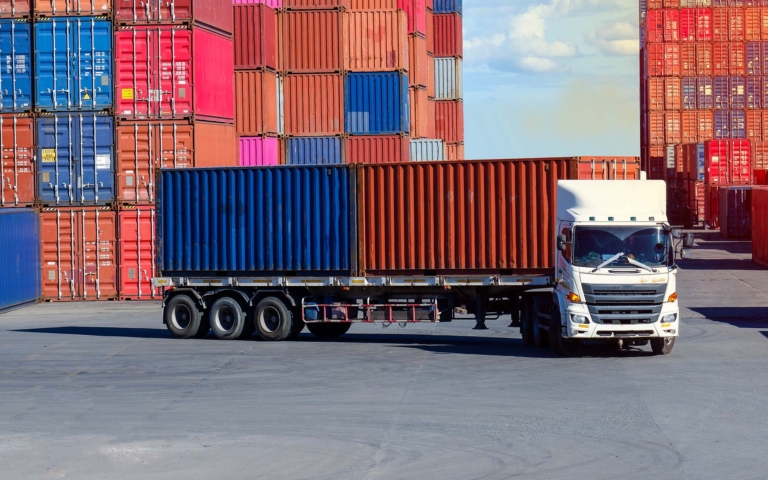
We strip ocean containers at port-adjacent docks, sort multi-vendor freight to the SKU, and reload onto domestic trailers so
your cargo keeps moving while the equipment cycles back and per diem stops running.
What Do Transload and Deconsolidation Services Do?
Transload moves cargo from one conveyance to another, most commonly stripping an inbound ocean container and reloading the freight onto domestic trailers so the box empties and returns before per diem accrues.
Deconsolidation breaks a mixed, multi-vendor container down to its individual purchase orders and SKUs, then re-sorts that freight to the right destinations, feeding it into your domestic transportation program as clean, routable loads.
Run at a port-adjacent dock, both handoffs turn a single 40-foot box into optimized domestic freight, ready to move by full truckload or LTL, in hours, cutting detention exposure and letting you postpone or skip the cost of long-term storage.
20–40%
More cube per trailer
24–48h
Box to reload
$150+
Per diem/day avoided
Free Feasibility Review
Talk to a Transload Planner
Quick 30-min call. Bring a lane, get a flow plan.
We reply within 1 business day · Your data stays private.
What We Handle
What Transload and Deconsolidation Cover
Six operations our dock teams run to convert ocean boxes into optimized domestic freight, fast.
01
Container Strip & Reload
We unload the ocean box and rebuild the freight onto domestic trailers.
Floor-loaded and palletized handling
Trailer cube optimization on reload
Same-day strip to cut per diem
Live or drop-and-hook receiving
02
Multi-Vendor Deconsolidation
One mixed container broken down to clean, PO-level freight.
PO and SKU-level sortation
Vendor-mixed cargo separation
Damage and count verification
03
Cross-Dock Flow-Through
Freight moves inbound dock to outbound trailer without touching a rack.
Inbound-to-outbound staging
No long-term storage cost
Appointment-driven outbound loads
04
Re-Palletization & Labeling
Floor-loaded ocean freight rebuilt into carrier-ready, retail-compliant pallets.
Rebuild to pallet standards
Retail-compliant labeling and marks
Shrink-wrap and load securement
05
Short-Term Buffer Storage
Hold freight briefly when the outbound trailer is not ready yet.
Staged holding, days not months
Inventory visibility while held
Release on your outbound schedule
06
Domestic Line-Haul Handoff
Reloaded freight tenders straight into the right outbound mode.
Why Choose CargoTrans for Transload and Deconsolidation?
Our docks sit close to the major gateways, so containers are stripped within the free-time window instead of racking up per diem waiting for an appointment.
We treat deconsolidation as a data event, not just a labor event, reconciling every PO and SKU against your file so counts and destinations are right before the freight leaves.
One team owns the box from the terminal through strip, sort, reload, and outbound tender, so nothing falls into the gap between the port move and the domestic carrier.
Transload plugs directly into truckload capacity and our warehousing footprint, so the outbound leg is planned before the container is even opened, and packing more cube into fewer trailers cuts truck trips and emissions, which supports your environmental sustainability and ESG initiatives.
Our Process
How Our Transload Process Works
01
Container Arrival & Pull
We coordinate the terminal pull to our port-adjacent dock.
02
Strip & Verify
Unload the box, verify counts, and flag damage.
03
Sort & Deconsolidate
Separate multi-vendor freight to PO and destination.
04
Reload & Optimize
Rebuild onto domestic trailers for maximum cube.
05
Tender Outbound
Hand off to the matched outbound carrier and mode.
Get Started with Transload and Deconsolidation Today
Every hour an ocean box sits full is an hour of detention risk and idle inventory. Stripping it at a port-adjacent dock turns that liability into moving domestic freight.
Bring us one inbound lane and we will map the flow.
Free feasibility review on one inbound container lane
Port-adjacent cross-dock capacity near major gateways
PO and SKU-level deconsolidation with count verification
Outbound line-haul planned before the box is opened
A CargoTrans planner will map your inbound lane from terminal pull to outbound tender.
Protected by reCAPTCHA. We respond within 1 business day. No spam, ever.
Control Tower
Every box tracked from terminal to outbound tender
Our Control Tower, built on supply chain visibility software, gives you real-time visibility of each inbound container's status through terminal pull, dock strip, sortation, and reload with advanced tracking systems, so you see cargo convert to domestic freight instead of guessing.
Milestone alerts fire when a box is available for pickup or a reload is tendered, which is exactly when your team needs to release the outbound appointment and keep the trailer moving.
Counts verified, exceptions documented at the dock
Every strip is a chance to catch problems early: we verify piece counts against the packing list, photograph damage, and note shortages before the freight leaves the dock, so claims are defensible.
That verified record follows the freight into your warehouse and distribution or outbound leg, giving receiving teams a clean, reconciled handoff instead of a surprise at the destination door.
What is the difference between transload and deconsolidation?
They are related but distinct operations. Transload is the physical transfer of cargo from one conveyance to another, most often stripping an ocean container and reloading the freight onto domestic trailers so the box can be returned and detention stops accruing. Deconsolidation is the sortation step: taking a single container that holds freight from several vendors or many purchase orders and breaking it down to its individual SKUs and destinations. In practice the two run together at a port-adjacent dock. You strip the box, deconsolidate the mixed freight to clean purchase-order loads, then reload those loads onto the right outbound trailers. One motion empties the container, the other makes the cargo routable.
How does transloading from an ocean container to a domestic trailer save money?
A 40-foot or 45-foot ocean container is a poor domestic shipping unit. Its dimensions, weight limits, and the cost of moving it inland by road all work against you, and every day the box sits full exposes you to per diem and detention charges that often run over 150 dollars a day. Transloading solves both problems at once. Stripping the box the same day returns the equipment inside its free-time window and kills the detention clock. Reloading onto 53-foot domestic trailers lets us optimize the cube, typically fitting 20% to 40% more freight per trailer than the ocean box held, which cuts the number of inland loads you pay for on the outbound leg.
When should I deconsolidate a multi-vendor container instead of shipping it whole?
Deconsolidate whenever a single container carries freight bound for more than one destination, more than one purchase order that needs separate handling, or vendors whose cargo must be counted and inspected independently. Shipping a mixed box whole to one location just to sort it later means paying to move freight in the wrong direction and delaying the orders that were ready to ship. Breaking the container down at a port-adjacent dock lets each purchase order route directly to its correct destination, gets fast-moving SKUs into your network sooner, and isolates any vendor with a count or damage problem before it contaminates the rest of the shipment. It also gives receiving teams clean, single-purpose loads instead of a puzzle to unpack.
How do I choose between cross-docking and short-term storage?
The deciding factor is whether the outbound trailer is ready when the freight comes off the container. Cross-docking, or flow-through, means the cargo moves from the inbound dock straight to an outbound trailer with no racking in between, which is the cheapest and fastest path when your outbound appointments are set and demand is firm. Short-term buffer storage makes sense when the outbound leg is not ready, when you are waiting on a full trailer to build a lane efficiently, or when you want to release inventory to match retail delivery windows. We default to flow-through wherever the schedule allows and hold freight only for the days it genuinely needs, never converting a fast handoff into an idle storage bill.
Why does transload site selection near the port matter so much?
Location drives the entire economics of the operation. A dock close to the terminal means the container can be pulled and returned inside its free-time window, so you avoid per diem and the terminal congestion charges that pile up when a box lingers. It also shortens the most expensive and least efficient move in the chain, the port drayage leg that hauls a full ocean container by road, which is priced at a premium and constrained by equipment. Once the freight is on domestic trailers at a port-adjacent facility, you have the whole national road network and full trailer cube working in your favor. Choosing a dock far from the gateway quietly erases most of the savings transload is supposed to create.
How fast can you strip a container and get my freight moving?
For standard palletized or cleanly floor-loaded freight, we target same-day strip and reload, with most boxes emptied within 24 to 48 hours of arriving at the dock. Same-day handling is the goal specifically because it returns the equipment inside the free-time window and stops detention before it starts. The timeline stretches when a container is tightly floor-loaded and needs full re-palletization, when deconsolidation requires detailed purchase-order sortation and count verification, or when outbound capacity has to be arranged first. We plan the outbound leg before the box is opened precisely so the reloaded freight tenders straight onto a trailer rather than sitting on the dock waiting for a truck.
Do transload and deconsolidation work for floor-loaded containers?
Yes, and floor-loaded freight is exactly where the service earns its keep. Many overseas shippers floor-load containers to maximize the cube they pay for on the ocean leg, which leaves the importer with a wall of loose cartons that no domestic carrier wants to handle as is. Our dock teams unload the loose cartons, verify the count against the packing list, and rebuild the freight onto standardized pallets that are labeled and secured to the requirements of your destination, whether that is a retail distribution center or another facility. The freight arrives palletized, scannable, and compliant, which turns a labor-intensive receiving headache at the destination into a clean, appointment-ready delivery.
How does transload connect to the rest of my domestic freight?
Transload is the front door to your domestic network, not a standalone stop. The whole point of stripping the container is to convert ocean cargo into freight that routes efficiently over the road, so we plan the outbound mode while the box is still on the water. Palletized, high-cube loads move as full trailers, smaller purchase orders consolidate into truckload or less-than-truckload lanes, and everything hands off with its documentation intact. Because one team owns the freight from the terminal through the outbound tender, there is no gap between the port move and the domestic carrier, which is usually where cargo stalls, counts drift, and accountability disappears.
What documentation and cargo checks happen during deconsolidation?
Every strip is treated as a verification event, not just a labor event. As the container is unloaded, our team counts pieces against the packing list and commercial invoice, records the tally by purchase order, and photographs any damage, shortage, or overage before the freight moves. Discrepancies are flagged immediately while the evidence is still on the dock, which is what makes a later cargo claim defensible rather than a guessing match. That reconciled record, counts, condition, and destination, travels with the freight into its outbound leg, so the receiving location gets a clean handoff. Catching a short shipment or damaged pallet at the port dock is far cheaper and faster to resolve than discovering it after the goods have already been distributed inland.
How is transload and deconsolidation priced, and how does it compare to the costs it removes?
Transload is generally priced per container stripped, often with a separate handling rate for deconsolidation sortation and for any short-term buffer days the freight sits before its outbound trailer is ready. Set against what it removes, the math usually favors transloading quickly. Emptying the box inside its free-time window avoids per diem and detention that commonly run over 150 dollars a day per container, and reloading onto high-cube domestic trailers cuts the number of inland loads you pay for on the outbound leg. Deconsolidating a mixed container also removes the cost of moving freight to the wrong destination just to sort it later. We quantify those avoided costs against the handling fee on your specific lane during the feasibility review, so you see the net before committing.
What happens if my container is held at the terminal or starts accruing per diem before you can strip it?
The whole operation is built to prevent that, which is why dock location and appointment timing matter so much. We coordinate the terminal pull against the container's last free day so the box moves to our port-adjacent dock inside its free-time window, and we plan the strip appointment before it arrives. When a terminal holds a container for congestion, a customs exam, or an equipment shortage, we track the availability daily and pull it the moment it releases, then prioritize the strip to stop the clock as fast as possible. If per diem has already begun for reasons outside the plan, emptying the box immediately still caps the exposure, because the charge stops the day the equipment is returned. Same-day strip is the single biggest lever for keeping those charges from compounding.
Should I transload the freight or just deliver the ocean container whole to my facility?
Delivering the container whole can make sense when the box is bound for a single destination, you have the equipment and dock capacity to unload it promptly, and you can return it inside the free-time window. It falls apart when any of those are untrue. Moving a full ocean container inland by road is the most expensive and equipment-constrained leg in the chain, and every day it sits at your dock waiting to be unloaded burns per diem. Transloading strips the box at a port-adjacent dock, returns the equipment fast, and rebuilds the freight onto domestic trailers that carry more cube per load. For multi-destination or multi-vendor freight, transload almost always wins, because it converts one awkward box into several clean, routable loads instead of forcing everything through one door.
What documents and data do you need to run a transload, and what paperwork moves with the freight?
To coordinate the move we need the container and booking details, the arrival notice and any terminal release information, the packing list and commercial invoice for count and SKU verification, and your outbound routing instructions or delivery appointments. From those we build the strip and reload plan. As the freight leaves our dock, a reconciled record travels with it: the verified piece count by purchase order, an exception log with photos of any damage or shortage, the reload manifest, and the bill of lading for the outbound carrier. That handoff packet is what lets your receiving location match what arrives against what shipped without guesswork. Because one team owns the box from pull through outbound tender, the documentation stays consistent instead of fragmenting across separate port and domestic providers.
Can you transload refrigerated, oversized, or hazardous freight, or only standard dry cargo?
Standard palletized and floor-loaded dry freight is the most common, but the service is not limited to it. Refrigerated ocean freight can be transloaded when the dock has the temperature-controlled handling and the reload trailer is a reefer staged to hold the cold chain, so the plan has to be built around minimal exposure at the dock. Oversized or heavy cargo depends on the equipment available for handling and on the outbound trailer type, whether that is a flatbed or step-deck, which we confirm on the feasibility review. Hazardous materials require proper documentation, placarding, and trained handling, and are staged and reloaded to the applicable regulations. The key is telling us the commodity, temperature, and dimensional profile up front so the dock, equipment, and outbound mode are matched to the freight before the container arrives.