FAS and FOB are the two Incoterms® 2020 rules built specifically for sea and inland waterway transport, and neither one is valid for air, rail, or road-only shipments. Under FAS, Free Alongside Ship, the seller delivers by placing the goods alongside the vessel at the named port of shipment; under FOB, Free on Board, delivery happens once the goods are actually loaded on board that vessel. Both transfer risk to the buyer before the main ocean voyage begins, which is a different logic from CPT or CIF, where the seller keeps paying for carriage well past the point risk has already passed.
This guide sets FAS and FOB terms Incoterms rules side by side, works through where risk transfers under each, and clarifies the mode restriction that gets ignored more often than any other rule in the Incoterms® 2020 set.
Quantify your exposure in 20 minutes
Our trade strategists run your last 90 days of entries through Captain to surface refund eligibility, Section 232 traps and PNTR risk.
FAS and FOB Apply Only to Sea and Inland Waterway Transport
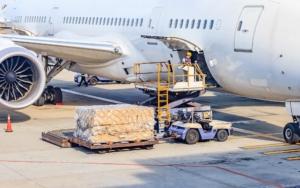
FAS and FOB are two of the four Incoterms® 2020 rules restricted to sea and inland waterway transport, alongside CFR and CIF. That restriction is not a technicality: both rules are built around a vessel-loading moment that simply does not exist for an air shipment, a rail move, or a truckload delivery, so using FOB on a bill for an air freight shipment does not just misname the term, it describes a delivery event that never happens.
This is the opposite scope from DAP and CPT, which work for any mode of transport specifically because they do not depend on a vessel. Anyone shipping by air or truck should be reaching for FCA, CPT, CIP, DAP, DPU, or DDP, never FAS or FOB, regardless of what a legacy contract template defaults to.
The distinction shows up constantly in freight forwarding paperwork that was copied from a prior deal without checking whether the mode still matches. A shipper that moved from ocean to air freight for a time-sensitive order, but left FOB terms on the purchase order, has created a contract that describes a delivery event, loading on board a vessel, that is never going to happen on that shipment. When a dispute arises over damage or a missed deadline, there is no vessel-loading moment to point to, and the parties are left arguing over what the term was supposed to mean instead of what it actually says.
FAS: Free Alongside Ship, Delivery Before Loading
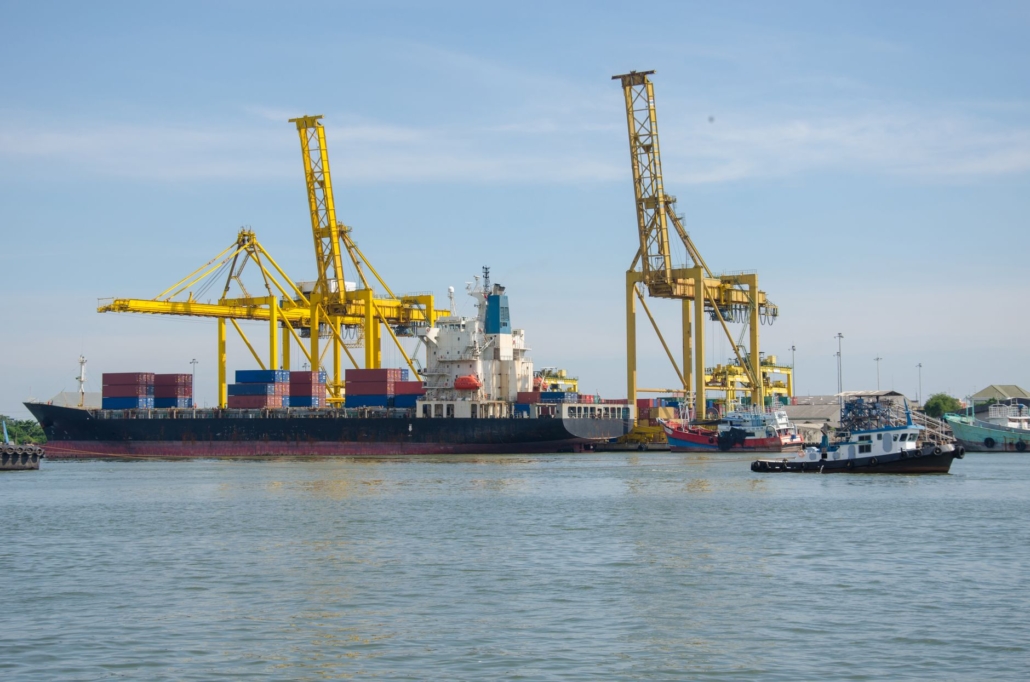
Under FAS, the seller delivers when the goods are placed alongside the vessel nominated by the buyer at the named port of shipment, on the quay or in a barge, whichever the port uses. Risk of loss or damage transfers to the buyer at that point, before the goods are ever loaded onto the ship.
From there, the buyer takes over: the buyer arranges and pays for loading the goods onto the vessel, the ocean freight itself, cargo insurance if it wants any, and customs clearance and duty at the destination. The seller’s job ends at the quay, which makes FAS a comparatively rare choice outside of specific commodity trades, bulk and break-bulk cargo where the seller has direct quay access and the buyer’s own vessel or charter is doing the loading.
FOB: Free on Board, Delivery Once Cargo Is Loaded
FOB moves the delivery point one step further than FAS: the seller delivers, and risk transfers, once the goods are placed on board the vessel nominated by the buyer at the named port of shipment. The seller is responsible for getting the cargo alongside and loaded; the buyer is responsible for everything from that point on, the ocean freight, insurance if desired, and import clearance and duty at destination.
Current Incoterms wording fixes the risk point at ‘on board,’ not at some earlier or vaguer marker. That precision replaced older language tied to the ship’s rail, a standard abandoned because it produced disputes over a moment, cargo swinging in mid-air on a crane, that was nearly impossible to pin down after the fact. ‘On board’ is unambiguous: the goods are physically on the vessel or they are not.
FOB also remains the most misused Incoterm in ordinary commercial speech, where ‘FOB’ gets used loosely to mean almost any origin-pricing arrangement, FOB factory, FOB warehouse, FOB origin. None of those are the Incoterms® 2020 rule. Under the actual ICC definition, FOB only ever means on board a vessel at a named seaport, and using the abbreviation for a domestic truck shipment or a factory pickup, while common in casual purchasing language, is not the Incoterms rule and will not be interpreted as one if a dispute over risk or cost ever reaches a court or arbitrator applying the ICC rules by name.
Why FOB Still Gets Confused With CFR and CIF
FOB, CFR, and CIF all use the same risk-transfer point, on board the vessel at the port of shipment, and that is exactly where the confusion starts. Because CFR and CIF have the seller paying for freight, and CIF has the seller paying for insurance too, buyers frequently assume the seller must also be carrying the risk for that same voyage. It is not. Under CFR and CIF the seller pays the freight bill, and where applicable the insurance premium, but risk passed to the buyer back at the load port, identically to FOB.
The pattern is the same one CPT buyers run into on the any-mode side of the rules: paying for carriage and carrying the risk of that carriage are two separate questions, and the ‘C’ rules, CFR and CIF, consistently answer them differently. FAS and FOB, the ‘F’ rules, avoid that confusion entirely by having the buyer pay for and arrange the ocean freight itself, which is one reason they read as simpler even though the underlying risk logic across all four sea rules is closely related.
Who Handles Export and Import Formalities Under FAS and FOB
The seller handles export clearance under both FAS and FOB, export declarations, licenses, and any export duties. The buyer handles import clearance at destination: entry filing, import duty, taxes, and any required import license. That split does not shift based on the risk-transfer point; export sits with the seller and import sits with the buyer under nearly every Incoterms® 2020 rule, FAS and FOB included.
Because the buyer is filing the import entry, the same practical requirement applies here as under any other buyer-clears rule: a customs bond and importer number need to be in place before the vessel arrives, or the cargo cannot be entered on schedule. A licensed customs brokerage confirming that groundwork ahead of departure, and walking a buyer through the clearance process before the ship is even loaded, is what keeps an FAS or FOB shipment moving instead of sitting at the terminal.
When to Use FAS or FOB Instead of an Any-Mode Rule
The FAS terms Incoterms rule, and FOB alongside it, still make sense for cargo that genuinely loads directly onto a vessel at a port: bulk commodities, break-bulk, project cargo, and similar trades where a clean ‘alongside’ or ‘on board’ moment actually exists. For that category of freight they remain the standard, and rewriting the contract around an any-mode rule would add complexity without adding clarity.
For containerized cargo, the calculus is different. A container typically moves to an inland terminal and sits there for days before it is ever loaded onto a vessel, which means the FOB delivery point does not line up with where the seller actually hands the goods off. The ICC’s own guidance in the Incoterms® 2020 introduction is explicit that FCA, along with CPT and CIP, is the better fit for containerized freight, precisely to avoid a mismatch between the contract’s risk point and the shipment’s actual physical handoff. Shippers weighing FAS or FOB against those alternatives can compare all 11 rules in the Incoterms 2020 chart, and confirm trade compliance readiness with an import/export partner before locking in the term.
Audit your derivative HTS exposure
Our brokers will review your top 50 derivative HTS lines and flag Section 232 valuation risk before CBP does.
Frequently Asked Questions
What does FAS mean in Incoterms?
FAS means Free Alongside Ship. Under this Incoterms® 2020 rule the seller delivers, and risk transfers to the buyer, once the goods are placed alongside the vessel nominated by the buyer at the named port of shipment, before the cargo is loaded on board.
What is the difference between FAS and FOB?
FAS transfers risk when the goods are alongside the vessel, before loading. FOB transfers risk once the goods are actually on board the vessel. Under FAS the buyer arranges and pays for loading; under FOB the seller is responsible for getting the cargo loaded before delivery is complete.
Do FAS and FOB apply to air or truck shipments?
No. FAS and FOB are restricted to sea and inland waterway transport only, along with CFR and CIF. For air, rail, or road-only shipments, the applicable Incoterms® 2020 rules are FCA, CPT, CIP, DAP, DPU, or DDP, all of which work for any mode of transport.
Who pays for insurance under FOB?
Neither party is required to insure the goods under FOB. Since risk passes to the buyer once the goods are on board, the buyer typically arranges its own cargo insurance for the ocean voyage if it wants coverage. A seller that wants to guarantee insurance is in place would need to negotiate CIF instead.
Why does the ICC recommend FCA over FOB for container shipments?
Because containerized cargo usually changes hands at an inland terminal well before it reaches the vessel, so the FOB risk point, on board the ship, does not match where the seller actually delivers the goods. The Incoterms® 2020 introduction recommends FCA, CPT, or CIP for container freight and reserves FOB, FAS, CFR, and CIF for cargo that loads directly onto a vessel.
What's the difference between FOB and CIF risk transfer?
There is no difference in where risk transfers, both FOB and CIF transfer risk when the goods are on board the vessel at the port of shipment. The difference is cost: under CIF the seller also pays the ocean freight to the named destination port and buys minimum cargo insurance, obligations FOB does not carry.