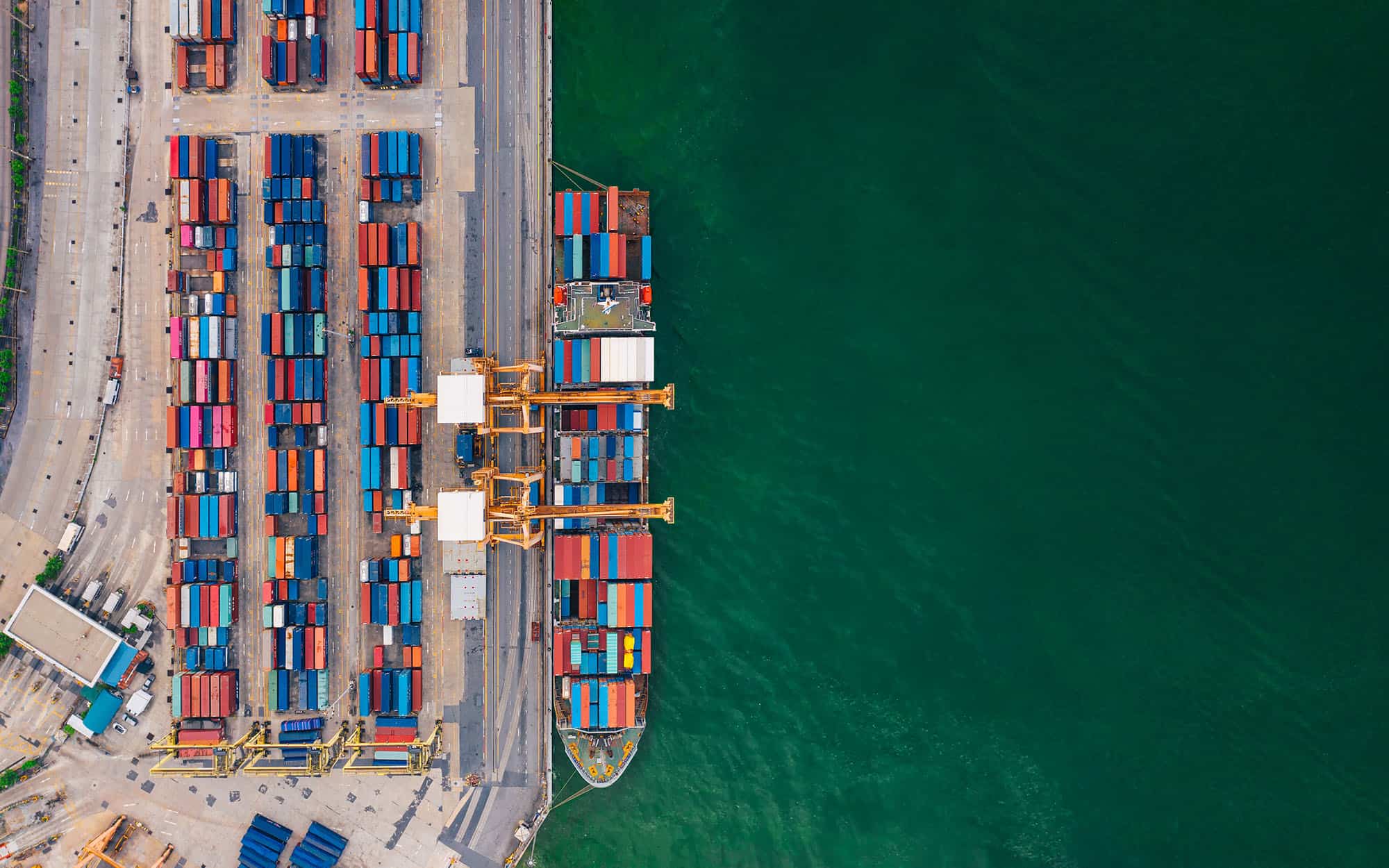
We file the paperwork that moves your goods across the US border in both directions, from ISF and entry on the way in to AES and destination control on the way out, so nothing sits at the dock waiting on a form.
An import export logistics provider prepares and files the documents that let cargo legally enter and leave a country, then coordinates the carriers, brokers, and agencies that touch each shipment so the freight and its paperwork arrive together. It is the documentation core of cross-border freight forwarding, focused on the border rather than the sailing.
On the inbound side we handle the ISF, entry, bond, and partner government agency review that get a container off the terminal; on the outbound side we produce the invoices, packing lists, and AES filings a destination customs authority expects.
Get Your Import and Export Documentation Under One Roof
Split paperwork across a broker, a forwarder, and an in-house export desk and something eventually falls through the crack, usually at the worst moment for your freight.
Put both directions on one desk and the border stops being a surprise.
Free 30-minute review of your inbound and outbound document flow
One team owning ISF, entry, AES, and agency filings
Licensed broker review before anything reaches customs
Full document retention ready for any future inquiry
A CargoTrans documentation lead will walk your entry and export flow and flag gaps before they become holds.
Protected by reCAPTCHA. We respond within 1 business day. No spam, ever.
Control Tower
Every filing and milestone in one live view
Our Captain Control Tower, the same Captain technology that runs our clearance work, pulls entry data straight from our customs clearance software and gives you real-time tracking of each shipment's document status next to its physical milestone, so you can see that the ISF is lodged, the entry is filed, and the container is released without emailing three parties.
Configurable alerts flag a missing certificate or an agency hold the moment it appears, which turns a five-day surprise at the port into a same-day fix while cargo is still in transit. Once freight clears the border, the same view extends into an Atlas TMS for domestic monitoring of the onward leg, and for oversized or multi-piece project logistics it holds every unit against its own milestone.
Reasonable care, documented on both sides of the border
Every entry and export filing is backed by the commercial invoice, license, and origin evidence that supports it, so your reasonable care file holds up whether the inquiry comes from CBP inbound or a foreign authority outbound.
What does an import export logistics provider actually do?
An import export logistics provider prepares the documents and coordinates the parties that let goods cross a border legally in either direction. On the inbound side that means filing the Importer Security Filing, preparing the customs entry, arranging any required bond, and clearing partner government agency review before the cargo leaves the terminal. On the outbound side it means producing the commercial invoice and packing list, filing Electronic Export Information in AES, and confirming any export license. A good provider also owns the physical movement, so the freight and its paperwork stay in sync. At CargoTrans both directions run inside one file, tied directly to our forwarding and brokerage teams, so a single group is accountable from booking through release and record close-out.
What documents do I need to import goods into the United States?
For a standard commercial import you need a commercial invoice, a packing list, a bill of lading or air waybill, and an arrival notice. Behind those, the entry itself requires the correct HS code, the declared customs value, and a customs bond, either single-transaction or continuous. If the goods fall under a partner government agency such as FDA, USDA, EPA, or FCC, you also need that agency's data set and any prior notice or permit. Missing or inconsistent paperwork is the single most common reason a container sits and racks up demurrage. We review the full document set against the commodity before the entry is filed, so a wrong value or a missing permit is caught at your desk rather than at the port.
What is an ISF and when must it be filed?
The Importer Security Filing, often called ten plus two, is an advance data set US Customs requires for ocean cargo before it is loaded at the foreign port. The importer supplies ten data elements, including manufacturer, seller, buyer, ship-to party, country of origin, and HS number, and the carrier supplies two. The filing must be lodged no later than 24 hours before the cargo is loaded onto the vessel. A late or inaccurate ISF can draw liquidated damages of up to 5,000 dollars per shipment and can flag the container for exam. We assemble the ten elements from your purchase order and supplier data and file well ahead of the loading cutoff, then amend if any element changes before arrival.
How does export filing through AES work?
The Automated Export System is the platform where you submit Electronic Export Information for most shipments leaving the United States. Filing is generally required when a single commodity line is valued over 2,500 dollars or when the item needs an export license, regardless of value. You report the Schedule B or HS number, value, weight, parties, and any license or exemption code. The system returns an Internal Transaction Number that must appear on the shipping documents before the goods leave the country. Filing late or with the wrong value or classification can hold the cargo and expose you to penalties. We file the EEI on your behalf, apply the correct license or exemption, and put the confirmed ITN on the paperwork so the departure is never held for a missing record.
Who is responsible for customs clearance under each Incoterm?
Incoterms set the point where cost, risk, and clearance responsibility pass from seller to buyer, but they do not move title. Under EXW the buyer handles almost everything, including export clearance from the origin country. Under FOB and CFR the seller clears export and the buyer clears import. Under DDP the seller is responsible for import clearance and duties in the destination country, which is a heavy obligation many exporters underestimate. The named place after the term matters as much as the term itself. We map each lane to the Incoterm that puts clearance and risk where you actually want them, and we flag DDP commitments early because they make you the importer of record in a country where you may have no standing.
Can one provider handle both my imports and my exports?
Yes, and keeping them together is usually the point. Many shippers split inbound work with a broker and run exports off a separate in-house desk, which means two groups touch the same suppliers, the same commodities, and often the same countries without sharing data. That split is where a wrong classification on the way in contradicts the one used on the way out, or where a license lapses because no one owned it. Running both directions under one provider means a single team keeps your HS codes, valuations, and party records consistent across the whole trade lane. At CargoTrans your import entry and your export AES filing sit in the same file, reviewed by the same licensed brokers, so both sides of the border tell the same story.
What is a customs bond and do I need one?
A customs bond is a financial guarantee that you will pay the duties, taxes, and fees owed on your imports and follow customs regulations. Any commercial import into the United States requires one. You can post a single-transaction bond covering one entry, or a continuous bond that covers all your entries for a year and is usually cheaper once you import more than a few times annually. The continuous bond also covers your ISF obligations. Bond amounts are set relative to your duty and fee exposure, so a high-duty product mix needs a larger bond. We arrange the bond that fits your volume, monitor whether your import activity has outgrown the current amount, and renew it before it lapses so an entry is never held for insufficient coverage.
How do partner government agencies affect my entry?
Roughly fifty US agencies besides Customs have a say over specific imports, and their requirements ride on top of the standard entry. FDA governs food, drugs, cosmetics, and medical devices; USDA governs many plant and animal products; EPA governs chemicals and engines; FCC governs radio-frequency devices. When your commodity falls under one of these, the entry has to carry that agency's data set, and some require advance prior notice or a permit before arrival. A missing agency filing is a hold even when Customs itself is satisfied. We identify which agencies touch each commodity during intake, file their data with the entry, and manage any prior notice so a regulated shipment clears on the same timeline as an unregulated one instead of sitting on a dock.
How long do I need to keep import and export records?
US Customs requires importers to keep records for five years from the date of entry, and export records generally must be kept for five years from the date of export as well. That covers invoices, entry documents, ISF and AES filings, bonds, licenses, permits, and any correspondence supporting the values and classifications you declared. The obligation is on you, the importer or exporter of record, even if a broker or forwarder did the filing. Scattered records across email and shared drives are what turns a routine inquiry into a scramble. We keep every document tied to its shipment in one repository against the five-year standard, so when a customs question arrives two or three years later the full trail is retrieved in an afternoon rather than reconstructed from memory.
How much do import export logistics services cost?
Pricing is built from a few predictable parts rather than a single flat fee. There is a document and entry preparation charge per shipment, the customs bond premium, any duties and taxes owed, and the physical freight and handling. Government filings like ISF and AES carry their own line items, and regulated commodities that need agency review add coordination time. Volume matters: a continuous bond and a steady flow of entries usually lower your per-shipment cost against one-off single-transaction work. Duties themselves depend on your product's classification and declared value, which is why getting those right up front protects your budget as much as it protects your compliance. We quote the full stack during a free review so you see true landed cost, not a teaser rate that grows at every step.
How long does it take to clear an import shipment through customs?
For a straightforward entry with clean paperwork, release often happens the same day the container is available, sometimes within hours, because we file the entry before arrival so Customs can review it in advance. The variables that stretch that timeline are documentation gaps, a valuation or classification question, a random exam, or a partner government agency review from FDA, USDA, or EPA that requires prior notice or a hold. A flagged exam can add several days depending on the port and exam type. The single biggest lever you control is document quality: an entry filed early with the right value, origin, and permits clears fast, while a missing certificate or an inconsistent invoice is what turns a same-day release into a week at the terminal. We pre-file and review everything to keep you on the fast path.
What happens if my import entry is selected for a customs exam?
An exam means Customs wants to verify the shipment before releasing it, and there are a few types. A VACIS or X-ray exam scans the container without opening it and is the quickest. A tailgate exam opens the doors for a visual check. A full intensive exam moves the box to a Centralized Examination Station where it is unloaded and inspected, which is the slowest and carries station and drayage fees you pay. Exams are triggered by risk targeting, random selection, or an agency interest in the commodity, and you cannot appeal being selected. What you can do is be ready: complete, consistent paperwork and correct classification mean the exam confirms what you declared and the box moves. We manage the exam process, coordinate the station and the return move, and keep you posted so the delay is as short as the exam type allows.
What is the difference between an import export logistics provider and a customs broker?
A customs broker is licensed to file entries and act as your agent before Customs, and that license is specifically about clearing goods through the border. An import export logistics provider is broader: it owns the documents and the movement on both sides of the border, coordinates the carriers and agencies, files ISF and AES, arranges bonds, and keeps the whole trade lane consistent, while using licensed brokers for the actual entry. Think of the broker as one specialized function inside the larger job of getting your freight documented, moved, cleared, and recorded in both directions. Many importers hire a broker for clearance and then discover no one owns the export side, the ISF timing, or the agency filings. At CargoTrans the brokerage sits inside the same file as the forwarding, so one team is accountable end to end rather than handing you between vendors.
Do I need a power of attorney for you to handle my import and export filings?
Yes. A customs power of attorney is the document that authorizes us to file entries, submit ISF, and act as your agent before Customs and other agencies on your behalf. Without it we cannot legally transmit your entry or export data. It is a standard one-time form that names you as the importer or exporter of record and grants specific authority; it does not give us control over your money or your goods beyond the filings you engage us for. We also collect basic company identifiers, your importer number, and details on your commodities and suppliers so the filings are accurate from the first shipment. Setting up the power of attorney and the bond together at the start is what lets us file the very first entry on time instead of scrambling for signatures while your container waits at the port.