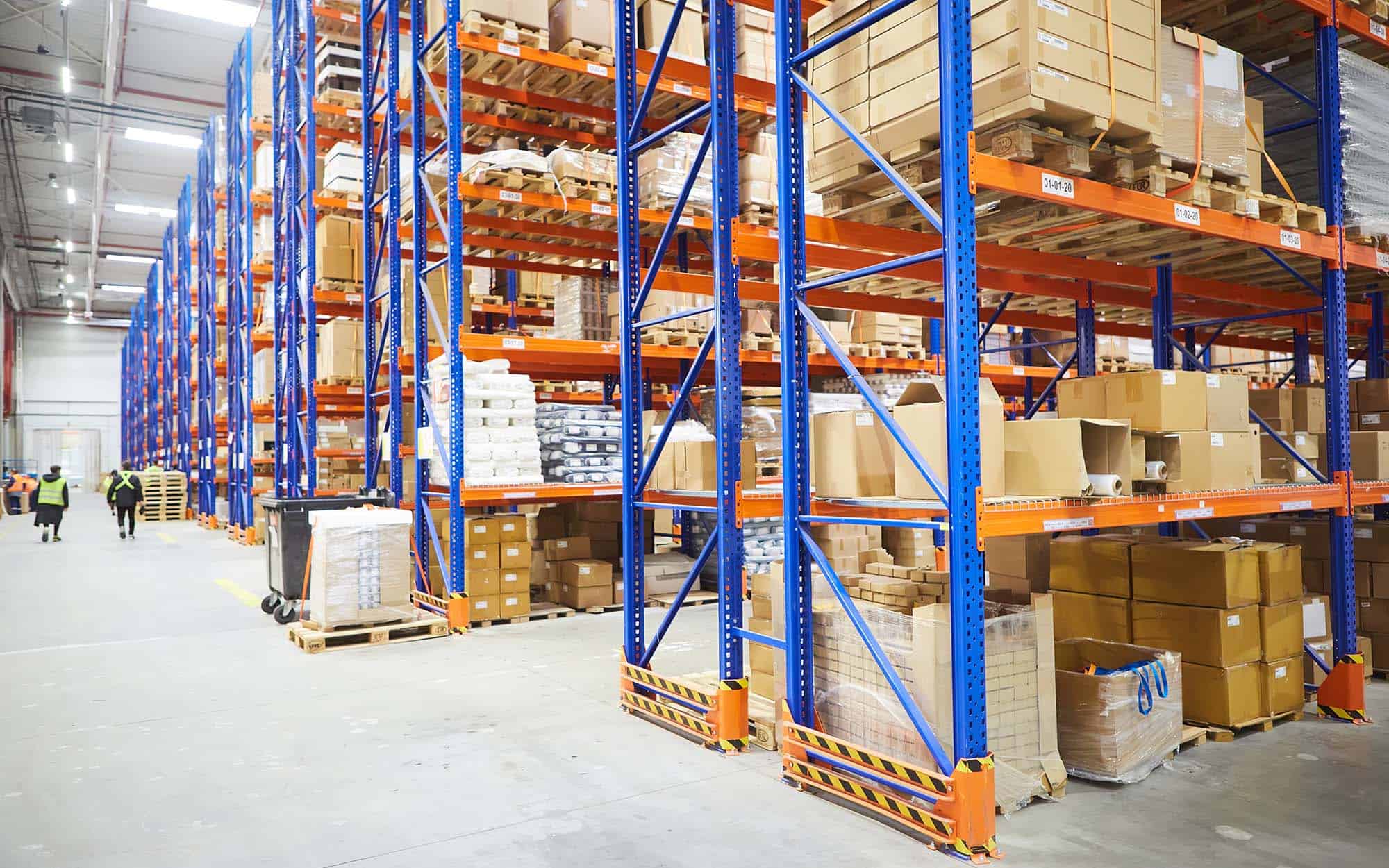
Captain runs receiving, inventory, pick and pack, cross-dock, and order fulfillment on one system, with
real-time inventory visibility across every site, so your stock levels and your floor never disagree.
What Does Warehouse Management Software Actually Do?
Warehouse management software is a licensed system that directs the work inside a building: it tells receivers where to put freight away, tells pickers which order to fill next, and keeps a live count of what is on hand so every SKU stays honest between physical counts.
The Captain platform gives you real-time inventory visibility, showing stock levels as available versus committed at the SKU level, order and fulfillment management with end-to-end order status tracking, and automated status updates that flow back to your systems the moment goods move.
The value is one system from dock to ship confirmation. A centralized dashboard with filters shows every location at once, feeding the live picture in control tower software and supply chain visibility software so on-hand stock and in-transit freight read from one record, multi-location warehouse management and 3PL provider support keep distributed sites on the same screen, and KPI performance monitoring turns floor activity into numbers your operations team can steer instead of guess at.
99.5%+
Inventory accuracy
< 1 min
Status update latency
Multi-site
Location coverage
Free Product Demo
See Captain WMS Live
A 30-minute walkthrough on your own SKU profile. No obligation.
We reply within 1 business day · Your data stays private.
Modules
Our Warehouse Management Software Modules
Six modules inside Captain that direct receiving, inventory, fulfillment, and reporting from one screen.
01
Receiving and Put-Away
Scan every inbound against the ASN and slot it to a defined location, not a guess.
Scan inbound against ASN and PO
Directed put-away by location and velocity
Exception flags on shorts and damage
Instant on-hand update at receipt
02
Real-Time Inventory Visibility
See stock the way it really is: available versus committed, down to the SKU and location.
Stock levels available vs committed
SKU-level tracking by location
Automated status updates to your systems
03
Pick, Pack and Order Fulfillment
Fill, pack, and stage orders inside the cutoff, with status tracked end to end.
Wave, batch, and zone picking
Order status tracking end to end
Carrier-compliant labeling
04
Cross-Dock and Cycle Counts
Flow fast-turn freight across the dock and keep on-hand honest with scheduled counts.
Cross-dock fast-turn freight
ABC cycle counting on a schedule
Perpetual on-hand reconciliation
05
EDI and Multi-Location Management
Trade EDI documents and run every site and 3PL partner from one configuration.
EDI trading-partner feeds
Multi-location warehouse management
3PL provider support
06
Dashboards and KPI Monitoring
A centralized view with filters and the metrics that show whether the floor is winning.
Real-time inventory visibility means your stock levels, available versus committed, update the moment goods move, so your ERP and your floor never drift apart.
One system covers receiving, picking, cross-dock, and order fulfillment, so your team stops stitching together separate tools that never quite agree.
Multi-location and 3PL support let you run every site and partner on the same dashboard, instead of one spreadsheet per building.
If you would rather not run the building at all, the same team also offers warehouse and distribution as a hands-on service, so you can license the software or hand off the whole operation.
Onboarding
How Warehouse Management Software Onboarding Works
01
Profile Your SKUs and Sites
Map your item master, locations, and order shapes to a Captain configuration.
02
Connect ERP, TMS and EDI
Integrate your systems of record so inventory and orders sync automatically.
03
Configure Receiving and Ship Rules
Set put-away logic, pick methods, and carrier rules per site.
04
Load Inventory and Baseline Counts
Import on-hand balances and reconcile the first cycle count.
05
Go Live and Monitor KPIs
Activate live operations and track throughput on the dashboard.
Get Started with Warehouse Management Software Today
Inventory should not be a black box you reconcile once a quarter. With real-time visibility, scanned receiving, and cycle counts, your on-hand number becomes one you can trust and act on.
CargoTrans gives your operation the system, and the option to hand off the floor entirely, on one license.
Free 30-minute product demo on your own SKU profile
No-obligation review of your current inventory workflow
ERP, TMS, and EDI integration support during onboarding
Option to license the software or outsource the full operation
A CargoTrans product specialist will map your SKU profile and quote a license for your sites.
Protected by reCAPTCHA. We respond within 1 business day. No spam, ever.
Integrations
Warehouse Management Software That Syncs With ERP and TMS
Captain connects to your ERP for item and order data and to your TMS for outbound freight, so a receipt, a pick, and a ship confirmation post to every system without anyone retyping a number.
The same events feed the control tower software, so inventory on the floor and shipments in transit sit on one timeline instead of two disconnected screens.
Warehouse Management Software Built on Audited Security
Inventory data, order details, and location maps sit behind role-based access and encrypted storage, so each user and 3PL partner sees only the sites and functions you grant them.
Every receipt, adjustment, and pick is timestamped and logged, so a count variance or a customer dispute is answered from an audit trail rather than reconstructed from memory.
Warehouse management software, or a WMS, is a system that directs and records the work inside a distribution building. It tells receivers where to put freight away, tells pickers which order to fill next and where each item lives, and keeps a running count of what is on hand so the number in the system matches the shelf. A good WMS replaces clipboards, spreadsheets, and memory with scanned, rules-driven operations. Captain's warehouse management module covers receiving, real-time inventory visibility, pick and pack, cross-dock, cycle counts, EDI, and order fulfillment, and it presents all of it on one centralized dashboard so an operator on the floor and a manager watching KPIs are looking at the same live picture of the operation.
What does real-time inventory visibility actually mean?
It means the count you see is the count that exists right now, not last night's batch report. Every time goods are received, moved, picked, or shipped, the scan updates the on-hand balance immediately, so the number never lags the physical reality on the floor. Captain shows stock levels as available versus committed, so you can tell at a glance how much of an item is truly free to sell versus already promised to open orders. Visibility runs to the SKU and location level, and automated status updates push those changes back to your ERP and store. The practical payoff is that you stop overselling stock you do not have and stop hoarding safety stock to cover a number you cannot trust.
Does it integrate with my ERP and TMS?
Yes. Captain connects to your ERP for item master and order data and to your TMS for outbound freight, so information flows automatically instead of being retyped between systems. When goods are received, the on-hand balance updates your ERP; when an order ships, the confirmation and tracking flow to your systems and to your customer. Because the same events also feed the wider Captain suite, inventory and transportation share one timeline rather than living in disconnected tools. Onboarding includes integration support, and EDI feeds cover retail trading partners that require electronic documents. Keeping the WMS on the same data as your systems of record is what makes the inventory number trustworthy enough to promise a ship date against.
Can it manage multiple warehouses and 3PL partners?
Yes. Multi-location warehouse management is built in, so you run every site from one configuration and see all of them on a single dashboard with filters rather than logging into a separate system per building. The software also supports 3PL providers, so a partner running one of your locations works in the same environment and reports against the same inventory record you see. That matters when your network grows: adding a site or a partner should not mean adding another spreadsheet or another reconciliation headache. With every location on one platform, a stockout in one building can be covered from another, and your total on-hand across the network is a single number you can actually trust and act on.
How does order and fulfillment management work?
Orders flow into Captain from your store, ERP, or EDI feed, and the system manages them from receipt to ship confirmation. It groups orders into waves, batches, or zones that fit your pick profile, directs pickers to the right locations, and tracks status end to end so you always know whether an order is released, picked, packed, or shipped. Every unit is scanned at pick and pack, so accuracy is verified before the label prints, and carrier-compliant labeling is applied for the destination. Automated status updates post back to your systems and to the customer, so tracking is not a phone call. The result is that fulfillment runs on rules and scans rather than tribal knowledge, which is what holds accuracy up as volume climbs.
Does the software support EDI trading partners?
Yes. Captain handles EDI trading-partner feeds, which matters most if you ship to retailers and distribution centers that require electronic documents and strict routing. The system can receive purchase orders, send advance ship notices, and exchange the other documents your partners mandate, so orders and shipments move without manual data entry and without the chargebacks that come from missing or late paperwork. Retail routing rules can be enforced during fulfillment so a shipment is not refused for non-compliance. Pairing EDI with the rest of the WMS means a retail order arrives, gets picked and packed under the partner's rules, and ships with the right documents attached, all inside one system rather than bolted-on tools that each need their own babysitting.
What is cross-docking and does the software handle it?
Cross-docking is moving inbound freight straight to an outbound door with little or no storage in between, used for fast-turn goods that do not need to sit in the racks. Captain supports it as a defined flow: the system recognizes freight destined to cross-dock at receiving, directs it to the staging or outbound area instead of a put-away location, and matches it to the outbound order or shipment. Done well, cross-docking cuts handling, speeds delivery, and frees rack space for inventory that actually needs it. The software keeps the inventory record accurate even for goods that only touch the building briefly, so a cross-docked unit still appears and clears correctly rather than falling through a gap between receiving and shipping.
How does cycle counting keep inventory accurate?
Cycle counting checks small slices of inventory on a rotating schedule instead of shutting the building for one big annual physical. Captain runs ABC cycle counting, counting your fastest-moving SKUs frequently and slower movers less often, so discrepancies surface within days rather than quarters. Because every receipt, move, and pick is scanned, a count variance comes with an audit trail the system can walk back to find the root cause, a mis-slot, a short receipt, or a mis-pick, rather than an unexplained adjustment. The perpetual on-hand balance reconciles continuously against these counts, which is how the platform sustains high inventory accuracy. Accuracy maintained this way is what lets you promise a ship date, because the number the system shows is the number on the shelf.
Is my inventory and order data secure?
Yes. Your item master, order details, customer data, and location maps sit behind role-based access and encrypted storage, so each user and 3PL partner sees only the sites and functions you grant them. A warehouse manager, a customer service rep, and an outside partner do not need the same view, and the permission model reflects that. Every receipt, adjustment, and pick is timestamped and logged, which protects you twice: it keeps sensitive data governed, and it gives you a clean audit trail when a count variance or a customer dispute needs an answer. Instead of reconstructing what happened from memory or scattered notes, you walk back a recorded sequence of scanned events tied to the users who performed them.
How is warehouse management software priced?
Captain's WMS is licensed as a subscription, and the price scales with the size and complexity of your operation rather than a flat figure. The main drivers are how many locations you run, order and transaction volume, the number of users, whether you need EDI and full ERP or TMS integration, and how much configuration your receiving and ship rules require. Because the value tracks your real flow, we start with a free demo that maps your SKU profile and workflow before quoting, so the license reflects your actual operation instead of a generic rate card. If you would rather not carry the software or the building at all, the same team can run the whole operation as a service, and we will be direct about which path fits your volume.
How long does onboarding take?
A single site with a clean item master and standard order flow can be live in a few weeks: profile your SKUs and locations, connect your ERP or store, configure receiving and ship rules, load on-hand balances, and reconcile the first cycle count. Multi-site rollouts, deep SKU counts, EDI trading partners, or heavy customization take longer because the integrations and rules carry more weight. We sequence it so receiving and inventory go live first and outbound fulfillment follows once the ship rules are tested against real orders. The usual gate is the cleanliness of your item and order data rather than the platform itself. Clean data on day one is the single biggest driver of a fast start with few exceptions.
Do I need warehouse management software or a warehouse service?
Those solve different problems. Licensing Captain's WMS is the right route when you already operate your own building, labor, and equipment and only need the system that directs put-away, picking, cross-dock, counts, and fulfillment. You keep the four walls and buy the screens that run them. If you do not want to sign a lease and hire a floor crew just to get inventory control, CargoTrans also offers warehouse and distribution as a hands-on service, where our team physically handles and counts your goods under one accountability line. Many importers want the outcome, not the operation, so they buy the service. If you run your own floor and just need the software directing it, license the WMS on this page.
What KPIs and dashboards does it provide?
Captain presents a centralized dashboard with filters so you can see the whole network or drill into one site, and it turns floor activity into KPI performance monitoring rather than gut feel. Typical metrics include inventory accuracy, dock-to-stock time, pick accuracy, order cycle time, same-day ship rate, and open-order aging, each visible live and exportable for reporting. Because the numbers come from the same scanned events that run the operation, the dashboard and the floor never tell different stories. Managers use it to spot a bottleneck before it becomes a missed cutoff, and operations leaders use the trend views to see whether a process change actually moved a metric. The point is to manage the warehouse by evidence rather than by anecdote.
Who is warehouse management software for?
It is built for companies that hold and ship physical goods and need their inventory to be accurate and their fulfillment to be fast, whether that is a brand running its own distribution center, an importer managing several sites, or a 3PL operating buildings for multiple clients. Operations teams use it to direct receiving, picking, and counts; customer service uses the order status and inventory views to answer questions without walking the floor; and leadership uses the KPI dashboards to manage throughput across locations. It suits both single-site operations that have outgrown spreadsheets and multi-location networks that need one system of truth. If your inventory count and your ship promises have to be trustworthy, the software exists to make them so.