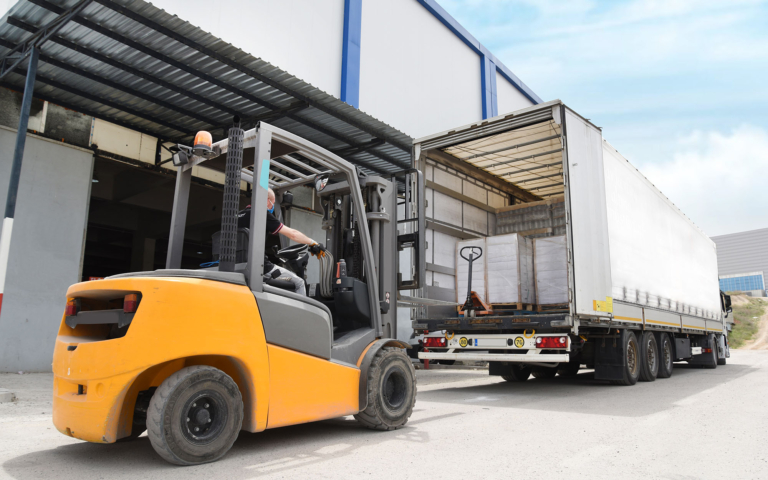
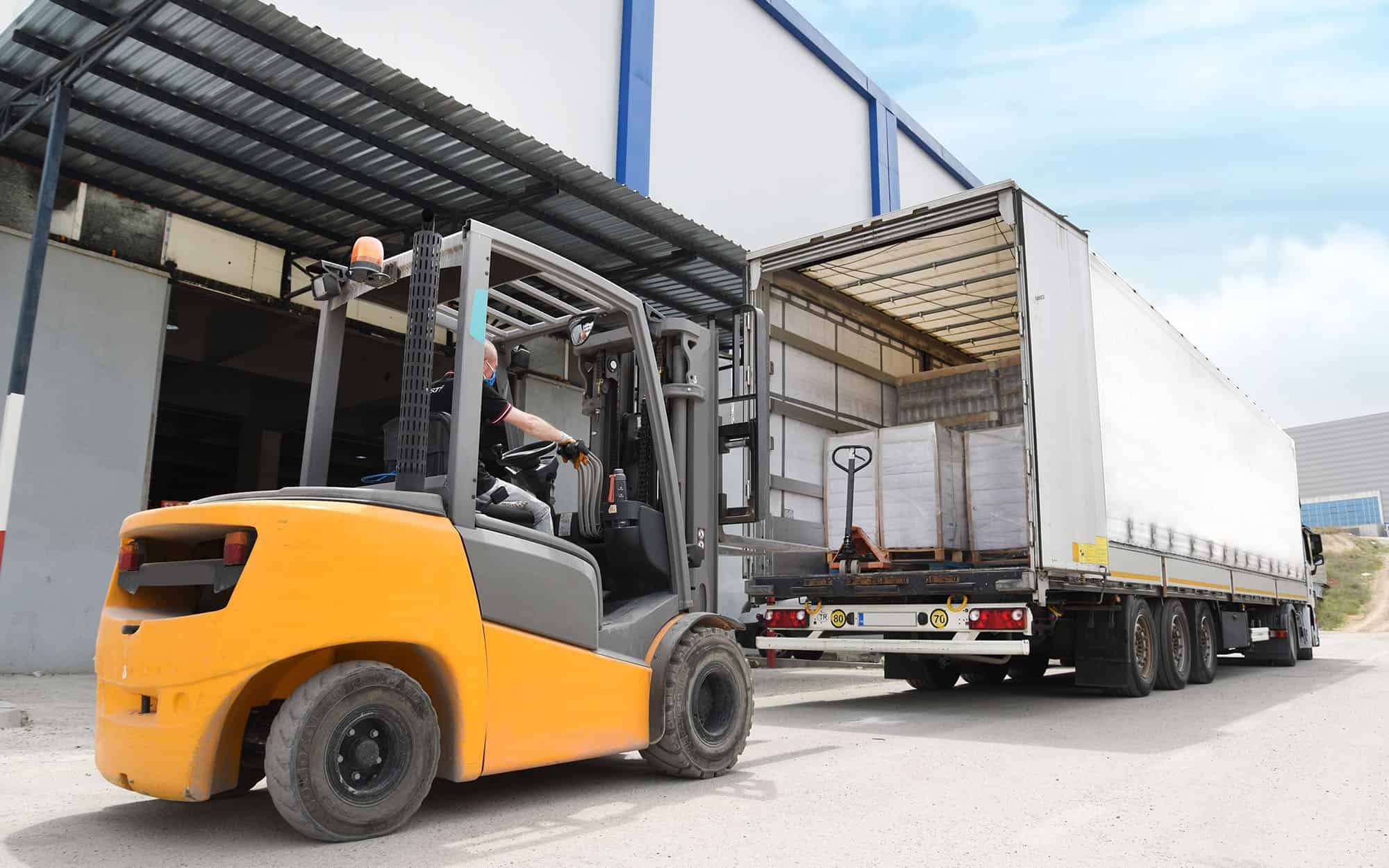
When your freight is too big to mail and too small to fill a trailer, CargoTrans books shared linehaul space and manages the class. You get national coverage, accurate class, and rates that match your density, not guesswork.
LTL freight shipping services move palletized shipments that share trailer space with other companies' freight, so you pay only for the room and weight your pallets take up. It fits freight roughly between 150 and 15,000 pounds that does not justify a whole trailer. Carriers use special loading equipment for tight space utilization, so every pallet earns its footprint on the trailer.
The math tips to LTL when you have one to six pallets and can accept a day or two of linehaul transit through the carrier's terminal network. Above that, a full truckload service is usually cheaper per unit; below it, small parcel shipping often wins.
The trap in this mode is freight class. A wrong class or a re-weigh at the terminal can rewrite your invoice after pickup, which is why our domestic freight transportation desk locks in class and density before the freight ships.
1-6
pallets typical LTL range
18
NMFC freight classes
1-5
days regional to national
Free Class Check
Talk to an LTL Specialist
Quick 30-min call to verify class and rate. No obligation.
We reply within 1 business day · Your data stays private.
Capabilities
Our LTL Freight Shipping Services Capabilities
Six capabilities our LTL team uses to classify freight correctly, control accessorials, and keep palletized shipments moving on schedule.
01
Freight Classification
We calculate density and assign the correct NMFC class so your rate holds after pickup.
Density and NMFC lookup
Correct class assignment
Re-class dispute support
Pre-ship class validation
02
Regional Linehaul
Next-day and two-day regional lanes for freight staying inside a carrier's home network.
Next-day regional delivery
Dense metro coverage
Lower-cost short haul
03
National Coverage
Interline national linehaul reaching nearly every commercial and residential ZIP code.
Coast-to-coast lanes
Interline carrier network
Residential delivery options
04
Guaranteed and Expedited
Time-definite and expedited LTL when a standard transit window is too loose.
AM and PM guarantees
Time-definite delivery
Expedited linehaul
05
Accessorial Management
We quote liftgate, appointment, and limited-access fees up front so bills hold no surprises.
Liftgate and residential
Appointment scheduling
Limited-access delivery
06
Protecting Coverage
We match carrier liability limits to cargo value and add coverage where limits fall short.
Why Choose CargoTrans for LTL Freight Shipping Services
We verify density and NMFC class before every shipment, so a re-weigh at the terminal does not quietly rewrite your invoice after pickup.
Our carrier mix spans regional and national linehaul, pairing optimized routing, load consolidation, and customized services so freight rides the fastest, lowest-cost network for each lane instead of one carrier's grid.
We quote liftgate, appointment, and limited-access fees up front, which stops the accessorial surprises that inflate a cheap-looking LTL rate.
We match carrier liability limits to your cargo value and document claims against the delivery record, so a damaged pallet is a process, not a loss.
Our Process
How LTL Freight Moves With CargoTrans
01
Classify and Measure
Calculate density and confirm the correct freight class.
02
Rate and Route
Price the lane and select the best carrier.
03
Book and Label
Generate the bill of lading and pallet labels.
04
Track to Delivery
Follow the shipment through the terminal network.
05
Audit and Resolve
Check the invoice, dispute re-class, close claims.
Most LTL overcharges trace back to one thing: freight that shipped on the wrong class or got re-weighed at the terminal. A quick density check before pickup usually locks in the rate and stops the after-the-fact adjustments.
CargoTrans verifies class up front and holds the rate.
Free 30-minute class and density check with an LTL specialist
Regional and national lane rate benchmarks
Accessorial and liability review before you book
Invoice audit and re-class dispute support on every shipment
A CargoTrans specialist will verify your freight class and flag where a re-class is costing you.
Protected by reCAPTCHA. We respond within 1 business day. No spam, ever.
Control Tower
LTL Freight Tracked Terminal to Terminal
Our Control Tower tracks each LTL shipment through the carrier's terminal network, showing pickup, interline transfers, and out-for-delivery status so a pallet never goes dark between hubs.
Configurable alerts flag a missed pickup or a shipment stalled at a terminal early enough to intervene, and you can also run every domestic mode through one transportation management system for consolidated tracking and billing.
We audit every LTL invoice against the bill of lading, so a carrier re-class or re-weigh adjustment is verified against your measured density and disputed when the correction is wrong.
When a pallet arrives damaged, we file the claim against the delivery receipt and photos and press it against the carrier's liability limit, so a short or broken shipment gets resolved instead of written off.
What are LTL freight shipping services and when should I use them?
LTL, or less-than-truckload, shipping services move palletized freight that shares a trailer with other companies' shipments, so you pay only for the space and weight your pallets occupy instead of the whole trailer. Use LTL when your shipment runs roughly between 150 and 15,000 pounds, sits on one to six pallets, and can accept a day or two of transit through the carrier's terminal network. Below that weight, freight often moves cheaper as small package; above it, a full trailer is usually lower cost per unit. CargoTrans classifies each shipment, benchmarks the lane across regional and national carriers, and manages accessorials and claims, so palletized freight lands on the right carrier at a rate that holds after pickup.
How is LTL freight class determined and why does it matter?
Freight class is set by the National Motor Freight Classification system, which sorts commodities into 18 classes from 50 to 500 based mainly on density, along with stowability, handling, and liability. Density is weight divided by cubic feet, so a heavy, compact pallet earns a low class and a low rate, while a light, bulky pallet earns a high class and a higher rate. Class matters because it is the single largest driver of your LTL rate, and a wrong class is the most common reason an invoice comes back higher than the quote. CargoTrans calculates density and confirms the correct NMFC class before the freight ships, so the rate you approve is the rate you pay rather than one the carrier rewrites at the terminal.
What is a re-weigh or re-class and how do I avoid surprise charges?
Carriers routinely run pallets across a certified scale and dimensioner at the terminal. If your declared weight or class does not match what they measure, they issue a re-weigh or re-class adjustment and bill the difference, often weeks after delivery. This is the leading source of surprise LTL charges. You avoid it by measuring and weighing every pallet accurately, calculating real density, and declaring the correct class up front instead of guessing or reusing an old number. CargoTrans validates class and density before pickup, so adjustments are rare, and when a carrier issues one anyway, we audit it against your measured figures and dispute the charge when the correction is wrong rather than letting it slide onto your bill.
What accessorial charges are common on LTL shipments?
LTL accessorials are fees for anything beyond a standard dock-to-dock move, and they add up fast on a mode that looks cheap on the base rate. The most common are liftgate service when a location has no dock, residential or limited-access delivery to homes, schools, and job sites, appointment scheduling, inside delivery, and notification-before-delivery. Storage and redelivery fees apply when a shipment cannot be delivered on the first attempt. Because these are billed per shipment and vary by carrier, a quote without them is misleading. CargoTrans asks the questions that surface accessorials at quote time and prices them in, so the rate you approve reflects the real delivery conditions instead of springing extra charges after the freight arrives.
How long does LTL transit take?
LTL transit depends on distance and how many terminals a shipment passes through. Regional lanes inside a single carrier's home network often deliver next day or in two days. National moves that interline between carriers or cross multiple hubs typically run three to five business days coast to coast, because the freight is sorted at each terminal along the way rather than driven straight through. Transit is measured in business days, so weekends and holidays extend the window. When a standard window is too loose, guaranteed and time-definite LTL locks in a specific delivery day or even an AM or PM window for an added fee. CargoTrans quotes a realistic transit at booking and can upgrade to guaranteed service when the delivery date is firm.
How should I package and palletize freight for LTL?
Good packaging protects your freight through the handling LTL involves at every terminal. Stack cartons squarely on a sturdy pallet, keep the load within the pallet footprint with nothing overhanging, and shrink-wrap the stack so it moves as one unit. Heavier items go on the bottom, and fragile freight should be boxed and cushioned, not shipped loose. Label every pallet clearly and attach the bill of lading. Tight, cube-efficient packaging also improves density, which can lower your freight class and your rate. CargoTrans backs secure handling during the class check with packaging advice, custom crating for fragile goods, and advanced loading, so a well-built pallet ships cheaper, arrives intact, and gives a carrier no room to re-class the freight.
What are LTL liability limits and do I need extra coverage?
Carrier liability on LTL is limited by law and by the carrier's tariff, and it is usually capped at a set dollar amount per pound that varies by freight class, not the full replacement value of your goods. Lower-class, higher-value freight like electronics is especially exposed, because the per-pound cap can fall far short of what the shipment is worth. If your cargo value exceeds the carrier's liability limit, you should declare a higher value or buy separate cargo coverage to close the gap. CargoTrans reviews each carrier's liability limit against your cargo value before booking and arranges declared-value or additional coverage where the limit falls short, so a damaged or lost pallet is reimbursed at what it is worth rather than a fraction of it.
How does CargoTrans keep LTL costs under control?
Control starts before the freight ships. We calculate real density and assign the correct NMFC class, which prevents the re-class adjustments that inflate most LTL bills. We benchmark each lane across regional and national carriers so the shipment rides the lowest-cost network rather than one carrier's grid. We surface accessorials at quote time so nothing springs onto the invoice later. After delivery, we audit every carrier invoice against the bill of lading and dispute wrong re-weighs and re-class charges. For shippers with steady volume, we also consolidate spend reporting so you can see class mix, accessorial patterns, and lane costs, then adjust packaging or routing where the data shows money leaking, the same discipline that powers broader supply chain optimization across your network.
Can CargoTrans manage LTL alongside my other freight modes?
Yes, and running LTL inside one domestic program is where the savings compound. When a shipment grows past a few pallets, we can shift it to a full trailer without you re-keying the order or calling a different broker; when it shrinks, it can move as small package instead. Everything lands on one freight-spend report, so you see class, accessorial, and lane patterns across modes rather than reading scattered invoices. For freight that starts or ends overseas, we tie the LTL leg to our international network so the shipment stays with one provider end to end. CargoTrans runs every domestic mode through one transportation platform, so booking, tracking, billing, and audit all live in a single place.
How is an LTL rate calculated and what is an FAK agreement?
An LTL rate starts from the carrier's base tariff, which is priced by weight, the NMFC class of the freight, and the distance between origin and destination ZIP codes. Carriers then apply a negotiated discount off that tariff, plus a fuel surcharge and any accessorials the shipment triggers. An FAK, or freight-all-kinds, agreement lets a shipper move a range of commodities at a single agreed class rather than rating each one separately, which simplifies billing and can lower cost when you routinely ship higher-class goods. The catch is that an FAK only helps if it is set up correctly for your actual product mix. CargoTrans reviews your commodity profile to see whether an FAK or a straight class-based rate produces the lower landed cost, then sets the account up accordingly.
What happens if no one is available to receive my LTL delivery?
If a delivery cannot be completed because no one is available to receive it, the location is closed, or an appointment was missed, the carrier attempts redelivery and bills a redelivery fee, and freight held at the terminal past the free window starts accruing storage charges. Repeated failed attempts can send the shipment back to the origin at your expense. The fix is to set up delivery correctly before the freight moves: confirm receiving hours, flag whether an appointment or notification is required, and add a liftgate if the site has no dock. CargoTrans surfaces these delivery conditions at quote time and schedules appointments where a location needs one, so the freight arrives on a slot the receiver can actually meet instead of bouncing on the first attempt.
When does LTL make more sense than a full truckload for the same freight?
LTL is the cheaper mode when your shipment occupies only part of a trailer, generally one to six pallets and under roughly 15,000 pounds, because you share the linehaul cost with other shippers instead of paying for a whole trailer. It stops making sense as the load grows: once freight fills six to ten pallets, or the class-driven rate on a shared trailer climbs past what a dedicated trailer would cost, moving it as a full trailer is usually cheaper and faster, since it skips terminal handling. Fragile freight can justify a full trailer earlier, because sharing space means more handling at each hub. CargoTrans sizes every shipment first and prices it both ways when it sits near the line, so the freight rides whichever mode actually costs less for that order.
What documents does an LTL shipment need and what goes on the bill of lading?
Every LTL shipment moves on a bill of lading, the legal contract between you and the carrier, and getting it right is what keeps the rate from changing after pickup. The bill of lading lists the shipper and consignee, the piece and pallet count, the commodity description, the declared weight, the NMFC class, and any special handling such as liftgate or appointment delivery. Accurate class and weight on the document are what prevent a reweigh or reclass adjustment later. Depending on the freight you may also need a packing list, and hazardous goods require shipping papers with the proper UN number and labels. CargoTrans generates the bill of lading and pallet labels from your verified class and density, so the paperwork matches the freight the carrier actually picks up.
Can I ship hazardous materials or freeze-sensitive freight by LTL?
LTL carriers do move hazardous materials and freeze-sensitive freight, but both require specific handling that has to be arranged before pickup. Hazmat shipments need the correct UN identification, proper packaging, labeling, and shipping papers, and only carriers certified for that hazard class can take them, so the rate and routing differ from standard freight. Protect-from-freezing service keeps temperature-sensitive liquids like paints, adhesives, and some chemicals from freezing in transit during winter, typically by keeping the freight off the trailer floor and out of unheated terminals; it is a paid accessorial with seasonal availability. CargoTrans confirms the commodity and its handling needs during the class check, matches the shipment to a carrier certified for it, and prices the hazmat or protect-from-freezing service into the quote so nothing is missed at the dock.