
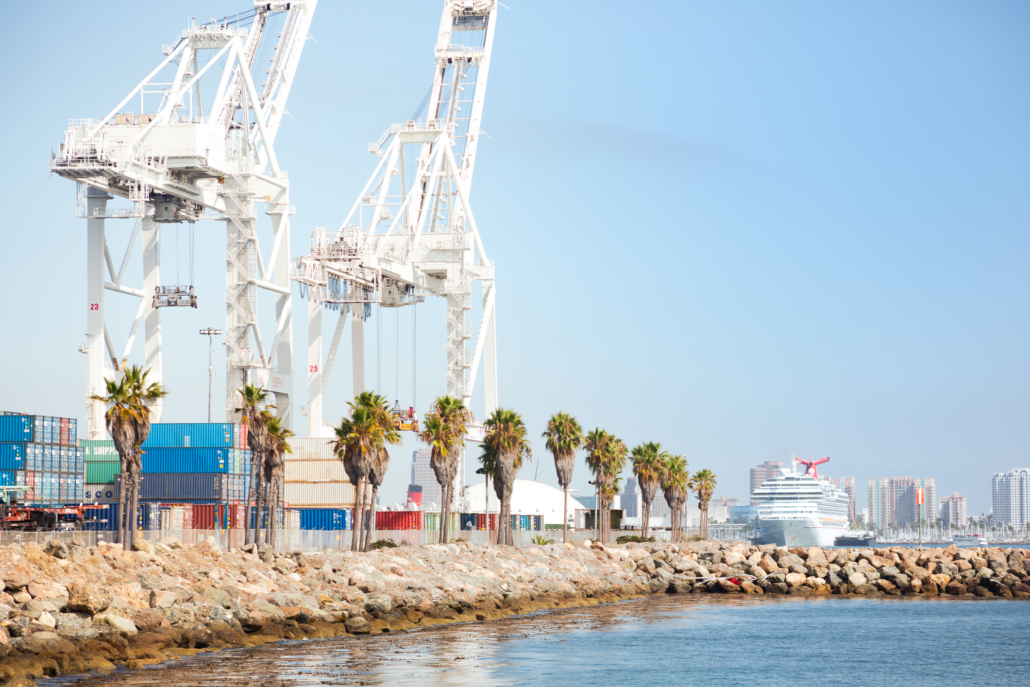
Sea freight rates from Asia to North America’s West Coast continued to decline in late July 2024, diverging sharply from East Coast rates that remained near their peak. A potential East Coast longshoremen’s strike, then scheduled for September 30, threatened to accelerate westward freight diversion. Meanwhile, the Panama Canal recovered from severe drought conditions, while Cape of Good Hope transits fell due to severe weather. Rates from India to North America surged on scarce space, and US export ocean rates continued to climb on global demand.
Quantify your exposure in 20 minutes
Our trade strategists run your last 90 days of entries through Captain to surface refund eligibility, Section 232 traps and PNTR risk.
Ocean Freight Market Overview
The mid-2024 freight market was defined by the divergence between West Coast and East Coast dynamics — a pattern driven by strike uncertainty and carrier capacity management. Understanding which routes are under pressure helps importers make proactive booking and routing decisions.
Asia to North America
West Coast rates continued to decline as extra loader vessels entered the market, expanding available capacity. East Coast rates, by contrast, remained near their peak due to continued capacity constraints and concerns over labor action. Key dynamics shaping the market at this time:
- Additional capacity entering West Coast lanes through extra loaders
- Shippers holding cargo in anticipation of further West Coast rate declines
- Strike risk on the East Coast (09/30 deadline) creating diversion pressure toward the West
- Bullish peak season predictions linked to tariff-front-loading activity
India to North America
Freight rates from the Indian Subcontinent continued to surge, outpacing rate movements from other Asian origins. No new capacity was expected to be deployed until mid-August, leaving the market tight with limited relief near-term. Shippers with India origin cargo were advised to book as far forward as schedules allowed.
US Exports
Ocean rates for Q3 US export cargo continued to increase, driven by a surge in global demand. Recommended booking lead time: 3-4 weeks in advance, with particular attention required for inland origin shipments where inland transport coordination adds time to the booking cycle.
Alternative Routing Conditions
With the Red Sea disruption continuing to affect capacity and transit times on major east-west trades, the condition of alternative routing corridors — the Panama Canal and the Cape of Good Hope — remained critical for shipper planning throughout this period.
Panama Canal
Healthy rainfall in recent months restored the Panama Canal to near-full operating depth following the severe drought that had restricted transits the previous year. Improved water levels allowed the Panama Canal Authority to increase draft allowances and daily vessel transits — a meaningful improvement for transpacific trade flows that depend on this route.
Cape of Good Hope
Transits around the Cape of Good Hope declined after severe weather battered the southern tip of Africa for the second consecutive time that month. The week commencing July 22 saw 597 transits versus 701 the previous week — a 14.8% reduction. Vessel bunching and schedule delays followed. Shippers routing cargo via this corridor should monitor ETAs closely during weather events, as delays can propagate across the global schedule for weeks.
Air Freight and Europe Update
Air freight and European container markets provided a counterpoint to the volatility in transpacific ocean lanes. Understanding both modes and all major trade corridors is essential for importers managing multi-modal supply chains.
Asia to Europe
European container markets took a bearish turn in the week ending July 26. Increased capacity and slightly softening demand led to rate declines and a growing emphasis on container equipment availability. Structural blank sailings from Cape of Good Hope routings and port congestion in Asia continued to shape the market. Extra loaders were injected into Far East-West Bound services in the second half of July to compensate for downsized vessels and extended transit times from COGH routings.
Air Freight
Global air freight tonnage and rates stabilized through late July. Q4 expectations remained strong, driven by anticipated e-commerce demand and electronics releases. Some shippers converted sea freight to air to avoid longer ocean transit times — a pattern that sustained air cargo demand even during the traditional off-season. The air market was positioning for what was expected to be a robust traditional peak season.
Audit your derivative HTS exposure
Our brokers will review your top 50 derivative HTS lines and flag Section 232 valuation risk before CBP does.
What This Means for Your Supply Chain
Markets in mid-2024 rewarded importers who maintained visibility across all active lanes and tracked carrier capacity signals in real time. The strike risk, rate divergence, and routing disruptions highlighted above created execution risks that reactive supply chains struggled to absorb. Proactive teams used real-time data to identify risk ahead of the event — not after the damage was done.
- Monitor West Coast vs. East Coast rate divergence and adjust routing accordingly
- Book India-origin cargo with maximum lead time during constrained periods
- Track Panama Canal and Cape of Good Hope conditions when planning ocean transit ETAs
- Evaluate air freight conversion when ocean delays threaten delivery commitments
- Use supply chain visibility software to track live vessel positions and ETA changes across all active lanes
CargoTrans’s Control Tower platform aggregates carrier data, route conditions, and shipment milestones in a single dashboard — giving your team the lead time needed to respond before delivery commitments are missed. For current market intelligence and routing guidance, our trade advisory services team monitors all major trade lanes in real time.
Questions? Contact us to speak with a logistics specialist about your specific trade lanes.