
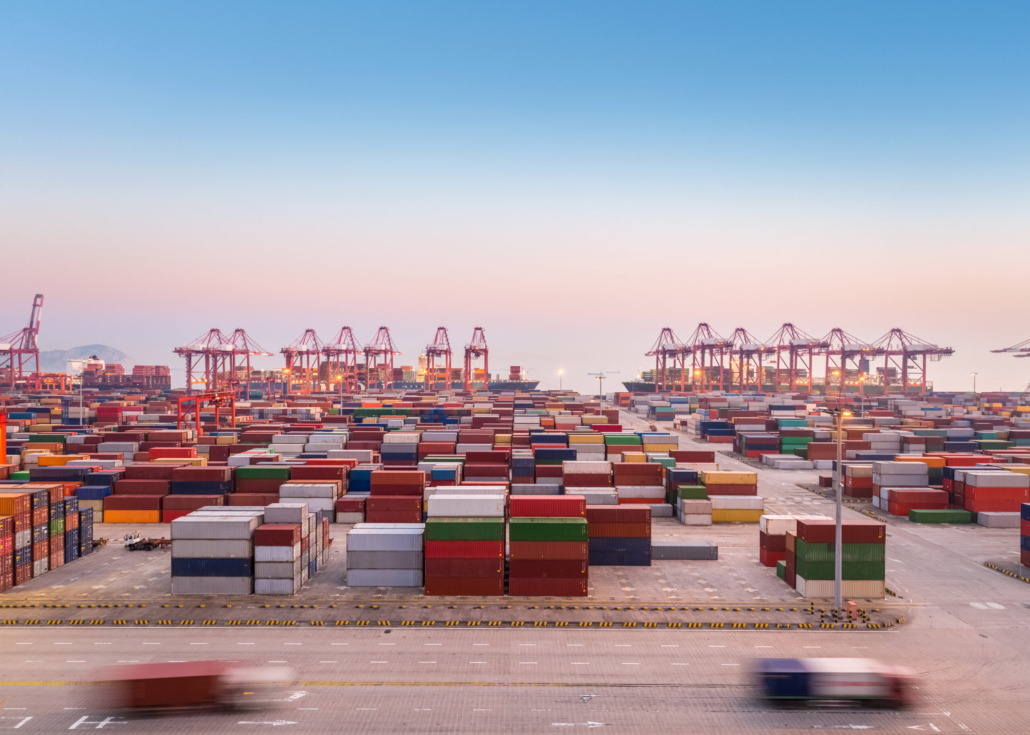
In this CargoTrans Market Watch, we cover the global logistics developments from May 2024. The ongoing Red Sea conflict continued to strain capacity and schedule reliability on the Asia to North America route. Strike threats loomed in Canada and on the US East and Gulf Coast as ILA-USMX contract negotiations approached a September deadline. Meanwhile, the Panama Canal recorded improved transits in April as water conditions recovered, and India-origin freight saw softening rates with new service introductions. Air freight remained robust, fueled by e-commerce growth.
Quantify your exposure in 20 minutes
Our trade strategists run your last 90 days of entries through Captain to surface refund eligibility, Section 232 traps and PNTR risk.
Ocean Freight Market Overview
May 2024 saw tightening conditions on Asia-North America lanes driven by the Red Sea crisis — now in its sixth month — compounded by the first signs of labor uncertainty on major US port gateways. Understanding how these pressures interacted helps importers make more informed booking and routing decisions.
Asia to North America
The Red Sea conflict continued to impact capacity and schedule reliability on the transpacific. Space was tightening at major origin ports in Asia, and equipment shortages at origin were being reported across multiple carriers. Key risk factors shaping the market:
- Ongoing Red Sea diversions reducing effective vessel capacity on Asia-North America lanes
- Premium surcharge options available for guaranteed space and more reliable transit times
- Additional blank sailings announced for June to manage capacity and sustain rate levels
- GRI announcements expected for June as carrier revenue management responded to demand signals
- Strike risk in Canada and on the US East and Gulf Coast creating potential for further rate pressure
India to North America
The India-North America lane saw a notable shift in mid-2024. With several new standalone carrier services introduced on this trade lane, available capacity increased and rates continued to soften. Importers with India-origin freight were in a favorable position relative to the prior quarter’s tight market — booking lead times normalized and space availability improved.
US Exports
Strong US consumer spending drove continued import upgrades from US retailers, with monthly import volumes on track to remain consistently above 2 million TEUs well into the traditional peak shipping season. Export demand was supported by global purchasing activity, though the primary market focus remained on import lane management given the Red Sea impact on inbound schedules.
Canal and Alternative Routing Updates
With Red Sea disruptions now well into their sixth month, the condition of the Panama Canal and Cape of Good Hope routing corridors remained critical variables in global schedule management. The improvement of one routing option had direct implications for the carrier community’s capacity deployment decisions.
Panama Canal
Oceangoing transits in April 2024 totaled 789 vessels — 42 higher than March, reflecting the continued recovery from the severe drought that had restricted operations the prior year. However, April 2024 transits were still 289 below April 2023 levels, confirming that full normalization remained in progress. The improving water conditions were welcome news for shippers who depend on the Canal route for transpacific and US Gulf Coast services.
- April 2024: 789 oceangoing transits (vs. 747 in March, vs. 1,078 in April 2023)
- Draft restrictions progressively eased as the Gatun Lake water level recovered
- Full normalization of daily transits was expected to take additional months
Europe and Asia-Pacific Freight Conditions
The Asia-Europe trade and the broader Asia-Pacific market presented a distinct set of dynamics in May 2024, shaped by both structural carrier capacity management and macro demand signals from European importers.
Asia to Europe
Container space availability on Far East to North Europe services was constricted for weeks ahead due to the combined effect of Red Sea diversions reducing effective capacity and restocking demand from European importers. Multiple carriers released premium rate tiers to manage remaining allocation — a pattern that signaled continued rate pressure on the lane through Q2. Blank sailings continued as carriers structured their schedules around the longer COGH routing.
Air Freight
Air freight remained robust through this period, with e-commerce demand the primary structural driver supporting year-on-year volume growth on both the Asia-Europe and Asia-North America lanes. Some shippers converted ocean freight to air to avoid the extended transit times caused by Red Sea and Cape routing. The expected Q4 peak season was adding to shipper interest in locking forward air capacity.
Audit your derivative HTS exposure
Our brokers will review your top 50 derivative HTS lines and flag Section 232 valuation risk before CBP does.
Trade Policy Context: De Minimis and Port Labor
Two significant regulatory developments shaped the trade compliance landscape during this period — developments that had direct implications for importers managing customs workflows and port scheduling.
The US Customs and Border Protection agency postponed a mandate for advance submission of shipment data on de minimis imports — providing a temporary reprieve for merchants and customs brokers handling low-value e-commerce inbound shipments. This postponement signaled that the regulatory framework around de minimis thresholds was continuing to evolve.
On the labor front, the ILA-USMX contract negotiations — covering port workers across the US East and Gulf Coast — were progressing toward a September 30 deadline. Both sides stated that local port negotiations were near completion, with coastwide talks expected to follow. The outcome of these negotiations had direct implications for East Coast port reliability through Q3 and Q4 2024.
Managing Market Volatility with Real-Time Data
The May 2024 freight environment — Red Sea disruptions, labor risk, canal recovery, and rate volatility across trade lanes — illustrated the value of centralized, real-time supply chain data. Importers who could monitor carrier capacity signals, track vessel ETAs, and evaluate alternative routing options in one platform were better positioned to protect delivery commitments.
CargoTrans’s supply chain visibility software provides live shipment tracking across ocean, air, and land from a single interface. The Control Tower platform surfaces exception alerts and carrier performance data so your logistics team can act on risks before they become delivery failures. For tariff impact analysis and sourcing guidance in a changing trade environment, our trade advisory services team is available to help.
Questions? Contact us to speak with a specialist about your current freight program.