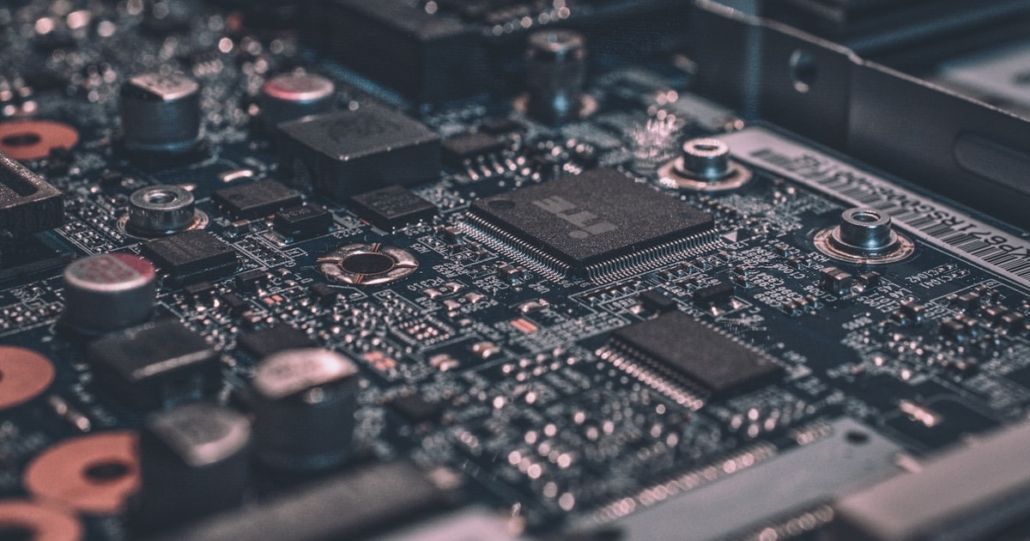
U.S. tariffs on Taiwan imports in 2026 combine the IEEPA Liberation Day reciprocal rate with a pending Section 232 semiconductor investigation that, if finalized, would add a 25%+ tariff layer to the most critical supply chain in the global technology sector. Taiwan supplies over 60% of the world’s logic semiconductors and nearly all of the most advanced chips below 5nm. The tariff and trade policy environment surrounding Taiwan-origin imports is therefore not just a cost question, it is a strategic technology supply chain question for the entire U.S. economy.
Quantify your exposure in 20 minutes
Our trade strategists run your last 90 days of entries through Captain to surface refund eligibility, Section 232 traps and PNTR risk.
U.S.-Taiwan Trade Snapshot in 2026
Taiwan’s role in U.S. trade is disproportionate to its size. A self-governing island with a population of 23 million exports more high-technology goods to the United States than any country except China, EU, and Japan, driven almost entirely by semiconductor production and electronic manufacturing services.
Taiwan as a U.S. Trading Partner
The U.S. imported approximately $113 billion in goods from Taiwan in 2024, the seventh-largest import source. Taiwan Semiconductor Manufacturing Company (TSMC) alone accounts for a meaningful fraction of this total through direct chip sales and embedded in finished electronics. Other major Taiwan exporters include Foxconn (electronics manufacturing), Delta Electronics (power systems), and HIWIN (linear motion components). Our current U.S. tariff rates by country page provides context on Taiwan’s rate profile relative to other Asian trading partners.
Key Import Categories from Taiwan
- Semiconductors and integrated circuits (HTS Chapter 85, subheadings 8541-8542): logic chips, memory, analog ICs.
- ICT equipment and computers (HTS Chapter 84-85): servers, network equipment, laptops.
- Machine tools and precision manufacturing equipment (HTS Chapter 84): machining centers, EDM machines.
- Plastics and plastic articles (HTS Chapter 39): engineering plastics, packaging.
- Bicycles and related components (HTS Chapter 87): high-end road and mountain bikes.
- Optical instruments and medical equipment (HTS Chapter 90): endoscopes, optical lenses.
Current U.S. Tariff Stack on Taiwan Imports
Taiwan’s tariff profile in 2026 is defined by IEEPA, and the pending Section 232 semiconductor investigation that could fundamentally change landed cost for the most important technology supply chain in the world.
Statutory Authorities in Play
IEEPA Liberation Day (Executive Order 14257, April 2025)
Announced a 32% reciprocal rate on Taiwanese goods. Under the 90-day pause, reduced to 10% baseline. Taiwan’s announced rate reflects its large bilateral trade surplus with the U.S. If the pause expires, 32% reinstates. Monitored via Federal Register.
Section 232 semiconductor investigation (Trade Expansion Act §232)
Initiated in 2025, the investigation covers HTS Chapter 85 subheadings 8541 (discrete semiconductors, diodes, transistors) and 8542 (integrated circuits). Proposed tariff rates of 25%+ would apply to Taiwan-origin semiconductors if the investigation concludes with a Presidential proclamation. The BIS administers Section 232 investigations. For TSMC and other Taiwan foundries, a 25% semiconductor Section 232 would represent the largest single tariff event in U.S. technology trade history.
Section 232 steel (25%) and aluminum (10%)
Applicable to Taiwan-origin steel and aluminum products stacked on MFN rates.
MFN/NTR base rates
Semiconductors (HTS 8541-8542) typically enter at 0% MFN. ICT equipment generally 0-3.5%. Machine tools 0-5%. Bicycles 5.5-11%.
How the Rates Layer on a Single Entry
A Taiwan-origin advanced processor (HTS 8542.31, MFN 0%) during the IEEPA pause:
- MFN base rate: 0%.
- IEEPA baseline (90-day pause): +10%.
- Effective rate (pause): 10%.
If the pause expires (32% reinstates): 0% + 32% = 32% on customs value. If Section 232 semiconductor tariff additionally applies (25%): 0% + 32% + 25% = 57% effective rate. A $1,000,000 shipment of advanced chips would carry $570,000 in duties at the combined rate, potentially doubling the cost of critical components used in U.S. AI infrastructure, defense systems, and consumer electronics. Our Captain tariff tracker monitors IEEPA and Section 232 semiconductor developments.
Top Affected HTS Chapters and Sectors
Taiwan’s tariff exposure concentrates overwhelmingly in semiconductors and electronics, the categories that define Taiwan’s entire export economy to the United States.
Semiconductors and Integrated Circuits (Ch 85, HTS 8541-8542)
Taiwan produces more than 60% of global logic semiconductor capacity and over 90% of the most advanced chips below 5nm (all through TSMC). Taiwan-origin chips flow into virtually every high-technology product sold in the U.S., from iPhones and servers to medical devices and automotive systems. IEEPA at 10-32% plus a potential Section 232 at 25% would represent an unprecedented cost shock to U.S. technology supply chains. No alternative supply exists at comparable scale or technology capability on a short timeline. The Section 232 semiconductor investigation outcome is the single most consequential pending tariff decision for U.S. technology importers. Our Section 232 tariffs guide covers the investigation framework and exclusion process.
ICT Equipment and Consumer Electronics (Ch 84-85)
Taiwan’s electronics manufacturing services sector, led by Foxconn, Pegatron, Quanta, and Compal, produces servers, laptops, and networking equipment for Apple, Dell, HP, Cisco, and others. ICT equipment faces 0-3.5% MFN plus IEEPA. Given the high per-unit values of servers ($5,000-$50,000+ per unit), even a 10% IEEPA rate creates significant cost pressure on data center procurement. The Reciprocal Tariff Act analysis covers IEEPA’s impact on technology imports.
Machine Tools and Precision Equipment (Ch 84)
Taiwan is a major producer of CNC machining centers, EDM wire-cut machines, and precision grinding equipment, particularly from the Taichung manufacturing cluster. Machine tool imports face 0-5% MFN plus IEEPA. For U.S. precision manufacturers investing in machining capacity, IEEPA adds to capital equipment costs for products that have no domestic equivalent at comparable price points.
Bicycles and Components (Ch 87)
Taiwan produces the majority of the world’s high-end road, mountain, and gravel bikes, brands including Giant, Merida, Trek-sourced, and Specialized-sourced frames. Bicycle frames face MFN rates of 11% plus IEEPA. Combined rates during the pause (11% + 10% = 21%) are among the highest for any Taiwan-origin product category outside steel. Our how to calculate U.S. tariffs guide covers compound tariff calculation.
Section 232 Semiconductor Investigation: What Taiwan Exporters Need to Know
The Section 232 semiconductor investigation represents the most significant pending tariff risk for Taiwan-origin imports. Understanding the investigation timeline and potential exclusion mechanisms is critical for importers of any Taiwan-origin technology product.
Investigation Scope and Timeline
The BIS investigation covers semiconductors broadly, including both discrete devices (HTS 8541) and integrated circuits (HTS 8542). The investigation analyzes whether U.S. semiconductor imports threaten national security under the Trade Expansion Act of 1962. A Presidential proclamation following the investigation could impose tariffs immediately or after a brief phase-in period. The BIS Section 232 page tracks investigation status and public comment periods. Our tariff and customs duty consulting team monitors investigation developments and advises on exclusion petition timing.
How Semiconductor Tariffs Would Stack
If Section 232 semiconductors are enacted at 25%, the combined tariff on Taiwan-origin chips would be: 0% MFN + 32% IEEPA (post-pause) + 25% Section 232 = 57% effective rate. For comparison, the current pause rate of 10% IEEPA + 0% Section 232 = 10%. The swing from 10% to 57% would fundamentally alter the economics of U.S. AI infrastructure buildout, defense electronics procurement, and consumer technology pricing. TSMC’s Arizona fab expansion (planned for 2nm production by 2028) is partly a hedge against this risk, U.S.-produced chips would not face Section 232.
How Importers Calculate Landed Cost on Taiwan-Origin Goods
Taiwan landed cost modeling requires running three scenarios: current IEEPA pause (10%), post-pause IEEPA (32%), and post-pause plus Section 232 semiconductor (57% for chips). For capital planning purposes, semiconductor importers should model all three.
Worked Example
A $5,000,000 CIF annual procurement of Taiwan-origin server processors (HTS 8542.31): IEEPA pause (10%) = $500,000 duty. Post-pause IEEPA (32%) = $1,600,000. Post-pause + Section 232 semiconductor (57%) = $2,850,000. Planning procurement inventory forward under the pause rate, and evaluating FTZ admission, can substantially reduce exposure during rate uncertainty periods. Our trade advisory services and tariff consulting firm teams provide Taiwan-specific scenario planning.
Common Landed-Cost Pitfalls
- Planning capital equipment budgets at 10% IEEPA pause rate without contingency for 32% post-pause.
- Ignoring Section 232 semiconductor investigation risk on chip procurement decisions made today.
- Missing that TSMC’s Arizona fabs produce U.S.-origin chips, sourcing from the Arizona fab avoids Taiwan-origin tariff exposure.
- Failing to check IEEPA exemption status for specific HTS subheadings, some technology products have received temporary exemptions.
Mitigation Strategies for Importers Sourcing from Taiwan
Taiwan-origin tariff mitigation is constrained by the lack of an FTA and the near-impossibility of immediately substituting Taiwan-origin semiconductor supply. However, several strategies reduce short-term exposure.
Section 232 Exclusion Petitions
If Section 232 semiconductors are enacted, the exclusion process will be critical for technology importers. Exclusions for products with no U.S.-available equivalent, which describes most advanced chips below 5nm, should be filed immediately upon proclamation. Our Section 232 tariffs guide covers the exclusion petition process. Our trade advisory services team prepares exclusion petitions.
FTZ Admission for High-Value Shipments
Foreign Trade Zones defer IEEPA and Section 232 duty payments on Taiwan-origin electronics and chips until withdrawal for U.S. consumption. For high-value semiconductor procurement, where per-shipment values may exceed $10-50 million, FTZ deferral represents meaningful cash flow optimization. Goods admitted before a rate increase and withdrawn after remain subject to the higher rate at withdrawal, so FTZ timing strategy requires monitoring rate change signals.
U.S. Fab Sourcing Strategy
TSMC’s Arizona fabs (currently producing 4nm, expanding to 2nm) produce U.S.-origin chips that are entirely exempt from Taiwan-origin tariffs. For procurement teams with multi-year horizons, qualifying supply transitions from TSMC Taiwan to TSMC Arizona provide permanent tariff exemption. Intel’s U.S. domestic foundry service offers a similar alternative for some product categories.
Importers managing multi-origin supply chains can benchmark landed costs across our full country tariff series: Thailand, Malaysia, Mexico, Indonesia, Brazil, South Korea, Vietnam, Canada, and India.
Audit your derivative HTS exposure
Our brokers will review your top 50 derivative HTS lines and flag Section 232 valuation risk before CBP does.
Frequently Asked Questions
What is the current U.S. tariff rate on Taiwan imports?
During the 90-day IEEPA pause: MFN base rate + 10%. Semiconductors (0% MFN) effectively face 10%. Taiwan’s announced Liberation Day rate of 32% applies if the pause expires. Section 232 semiconductor tariffs (25%+) would additionally apply if the ongoing BIS investigation results in a Presidential proclamation. Check the Captain tariff tracker for current rates by HTS code.
Are Taiwan tariffs still in effect in 2026?
Yes. IEEPA (10% pause baseline) applies to all Taiwan-origin goods. Section 232 steel (25%) and aluminum (10%) are active. The Section 232 semiconductor investigation is ongoing, a proclamation would impose additional tariffs on HTS 8541-8542 products. There is no U.S.-Taiwan FTA currently in force.
Which HTS chapters carry the highest U.S. tariff on Taiwan-origin goods?
Current highest effective rates: bicycles (Ch 87), 11% MFN + 10-32% IEEPA; steel (Ch 72-73), 25% Section 232 + IEEPA; machinery (Ch 84), 0-5% MFN + IEEPA. Semiconductors (Ch 85, HTS 8541-8542) currently face 0% MFN + 10% IEEPA during the pause, but face the highest potential exposure if Section 232 semiconductor tariffs are enacted (25% additional).
How does the tariff stack layer on a single entry?
MFN base rate + IEEPA reciprocal (10% pause / 32% post-pause) + Section 232 (25% steel; 10% aluminum; 25%+ semiconductors if enacted) = effective rate on customs value. Each layer applies additively to the same declared value. For semiconductors post-investigation, the maximum potential stack is 0% + 32% + 25% = 57%.
Can I use an FTZ to defer U.S. tariffs on Taiwan imports?
Yes. FTZs defer IEEPA and Section 232 duty payments until goods are withdrawn for U.S. consumption. For high-value semiconductor and electronics procurement, FTZ deferral provides significant cash flow benefits. Rate volatility risk (goods admitted at 10% IEEPA, withdrawn at 32%) means FTZ timing strategy must be actively managed with real-time rate monitoring via the Captain tariff tracker.
Are Taiwan tariffs eligible for drawback or refund?
IEEPA duties on Taiwan-origin goods qualify for manufacturing drawback (99% recovery under 19 USC 1313) when imported goods are incorporated into exported products. For U.S. technology companies that import Taiwan chips and export finished electronics globally, manufacturing drawback programs can recover substantial IEEPA costs on the re-exported portion of production. Our trade advisory services team structures drawback programs.
How often do U.S. tariff rates on Taiwan change?
IEEPA rates for Taiwan have changed multiple times since April 2025. The Section 232 semiconductor investigation outcome could impose a new tariff layer with as little as a few weeks of notice following Presidential proclamation. The Captain tariff tracker provides real-time Taiwan-specific monitoring for both IEEPA changes and Section 232 investigation developments.