U.S. tariffs on Malaysia imports in 2026 combine an IEEPA Liberation Day reciprocal rate with the looming risk of a Section 232 semiconductor tariff that would directly impact Malaysia’s dominant export sector, semiconductor packaging, testing, and assembly. Malaysia is the eighth-largest U.S. import source and hosts major operations for Intel, Infineon, Texas Instruments, and other semiconductor companies whose Malaysian facilities are at the center of global chip supply chains. This guide covers the complete Malaysia tariff picture and the strategies importers use to manage exposure across electronics, palm oil, rubber, and precision instruments.
Quantify your exposure in 20 minutes
Our trade strategists run your last 90 days of entries through Captain to surface refund eligibility, Section 232 traps and PNTR risk.
U.S.-Malaysia Trade Snapshot in 2026
Malaysia’s trade relationship with the United States is defined by semiconductors. The Penang manufacturing corridor is often called the “Silicon Valley of Asia” for its concentration of semiconductor back-end operations, packaging, assembly, and testing of chips designed by U.S. firms and fabricated in Taiwan, South Korea, or Europe. Any semiconductor-specific U.S. tariff action has disproportionate Malaysia impact.
Malaysia as a U.S. Trading Partner
The U.S. imported approximately $57 billion in goods from Malaysia in 2024, the eighth-largest import source. Semiconductor and electronic components dominate Malaysia’s U.S. export profile, accounting for approximately 55% of total export value. Intel’s Penang and Kulim assembly and test facilities, Infineon’s Kulim fab, and Texas Instruments’ Kuala Lumpur operations all export directly to U.S. buyers. Our current U.S. tariff rates by country page provides context on Malaysia’s rate profile.
Key Import Categories from Malaysia
- Semiconductors and electronic components (HTS Chapter 85): packaged ICs, diodes, transistors, power modules.
- Electrical machinery and equipment (HTS Chapter 85): transformers, switches, circuit breakers.
- Palm oil and oleochemicals (HTS Chapter 15): refined palm oil, fatty acids, biodiesel feedstock.
- Rubber and rubber products (HTS Chapter 40): medical gloves, technical rubber, natural rubber.
- Optical instruments and medical devices (HTS Chapter 90): endoscopes, lenses, precision instruments.
- Furniture and wood products (HTS Chapter 94): flat-pack furniture, wood flooring.
Current U.S. Tariff Stack on Malaysia Imports
Malaysia’s tariff profile is shaped by IEEPA and the pending Section 232 semiconductor investigation, the latter representing an existential risk to the cost structure of Malaysia’s dominant export sector.
Statutory Authorities in Play
IEEPA Liberation Day (Executive Order 14257, April 2025)
Announced a 24% reciprocal rate on Malaysian goods. Under the 90-day pause, reduced to 10% baseline. Malaysia’s announced rate of 24% is moderate relative to Vietnam (46%) and Thailand (36%). If the pause expires, 24% reinstates. Tracked via Federal Register.
Section 232 semiconductor investigation (Trade Expansion Act §232)
The BIS investigation covers HTS Chapter 85 subheadings 8541-8542 (discrete semiconductors and integrated circuits). Malaysia’s semiconductor sector, concentrated in back-end packaging, assembly, and test, would be directly affected by any 25%+ semiconductor Section 232 tariff. Unlike Taiwan (which makes chips) or South Korea (which makes memory), Malaysia primarily packages and tests chips designed and fabricated elsewhere. The BIS administers the Section 232 investigation framework.
Section 232 steel (25%) and aluminum (10%)
Malaysian steel and aluminum face Section 232 stacked on MFN rates.
MFN/NTR base rates
Semiconductors (HTS 8541-8542), 0% MFN. Palm oil, 0% (Ch 15). Rubber gloves (HTS 4015.12), 0% MFN. Optical instruments, 0-9%. Furniture, 0-7%.
How the Rates Layer on a Single Entry
A Malaysia-packaged Intel microprocessor (HTS 8542.31, MFN 0%) during the IEEPA pause:
- MFN base rate: 0%.
- IEEPA baseline (90-day pause): +10%.
- Section 232 semiconductor (if enacted at 25%): +25%.
- Effective rate during pause, pre-Section 232: 10%.
- Effective rate post-pause + Section 232: 49%.
Intel, which packages chips in Malaysia for sale to U.S. data centers and PC manufacturers, would face a 49% effective tariff on those chips if both IEEPA and Section 232 semiconductor tariffs fully apply. Our Captain tariff tracker monitors IEEPA and Section 232 semiconductor investigation developments in real time.
Top Affected HTS Chapters and Sectors
Malaysia’s tariff exposure is overwhelmingly concentrated in semiconductors and electronics, a sector that defines the country’s entire export relationship with the United States.
Semiconductors and Electrical Machinery (Ch 85)
Malaysia packages, assembles, and tests approximately 13% of global semiconductor output by volume, a position built over 50 years of manufacturing investment by U.S. and European chip companies. Intel’s Penang facilities package advanced processors; Infineon’s Kulim facility fabricates power semiconductors; Texas Instruments’ Kuala Lumpur plant packages analog ICs. IEEPA at 10-24% and Section 232 semiconductor at 25%+ would create combined tariff rates that could trigger major supply chain restructuring decisions by U.S. chip companies. However, there is no short-term alternative for Malaysia’s semiconductor back-end capacity, the infrastructure, workforce, and supply ecosystem built over decades cannot be replicated quickly elsewhere. Our Section 232 tariffs guide covers the investigation framework and exclusion process.
Palm Oil and Oleochemicals (Ch 15)
Malaysia is the world’s second-largest palm oil producer after Indonesia. Crude and refined palm oil enters the U.S. at 0% MFN; IEEPA adds 10%. Oleochemicals (fatty acids, fatty alcohols, glycerol) face MFN rates of 0-6.5% plus IEEPA. For U.S. food manufacturers, personal care product companies, and biofuel producers sourcing Malaysia-origin palm oil, IEEPA at 10% is the primary new cost, manageable relative to the overall commodity price.
Rubber Products, Medical Gloves (Ch 40)
Malaysia produces approximately 65% of the world’s natural rubber gloves, used in medical, dental, food processing, and industrial applications. Malaysia-origin medical gloves (HTS 4015.12) carry 0% MFN plus IEEPA baseline at 10%. Post-COVID supply chain focus on glove sourcing diversification has led some buyers to consider alternatives, but Malaysian glove manufacturers, Top Glove, Kossan, Hartalega, maintain dominant cost and scale advantages. Our trade advisory services team advises on glove tariff management programs.
Optical Instruments and Medical Devices (Ch 90)
Malaysia has developed a meaningful medical device manufacturing sector, exporting surgical instruments, medical disposables, and precision optical components. Medical devices typically enter at 0% MFN; IEEPA at 10% applies unless a medical device-specific exemption is issued. For high-value medical equipment (endoscopes, imaging components), even a 10% IEEPA levy represents a meaningful cost increase for U.S. hospital and clinic buyers.
Section 232 Semiconductor Risk: Malaysia’s Exposure
No country faces higher proportional tariff risk from a semiconductor Section 232 proclamation than Malaysia. Understanding the investigation scope and preparing for its potential impact is critical for any importer of Malaysia-origin electronic components.
Malaysia’s Role in Semiconductor Packaging and Assembly
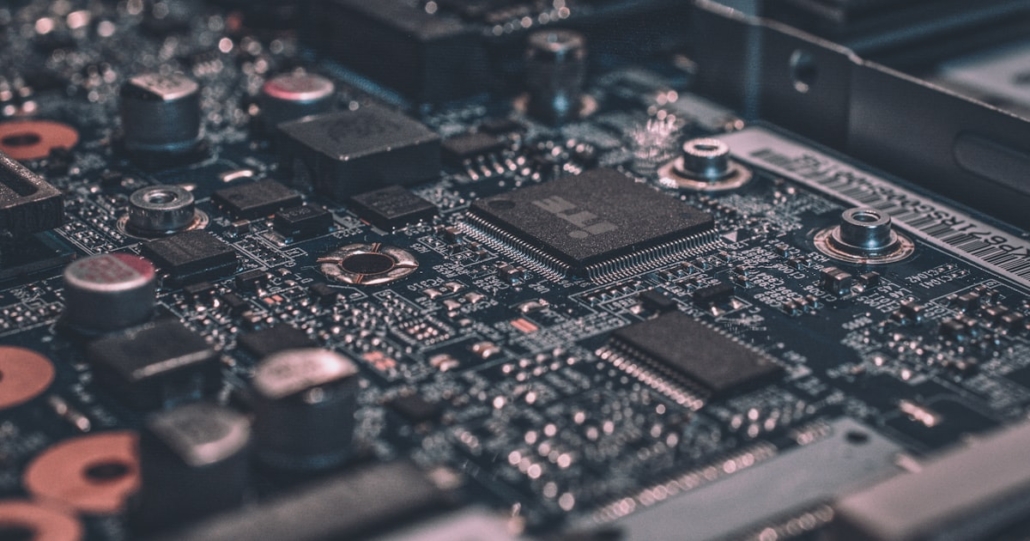
Semiconductor packaging and assembly transforms bare silicon wafers (fabricated in Taiwan, South Korea, or elsewhere) into finished packaged chips ready for integration into circuit boards. Malaysia’s role is in this back-end step, not in chip design or front-end fabrication. The question for country-of-origin purposes is whether packaging transforms the wafer sufficiently to constitute “substantial transformation” from the origin of the bare die (Taiwan/Korea) to Malaysia. CBP has historically treated packaging as a substantial transformation, making the packaged chip “Malaysia origin” even if the die was fabricated elsewhere. A Section 232 tariff on Malaysia-packaged semiconductors would therefore apply even to Intel and TI products whose core die is U.S.-designed and fabricated in advanced nodes overseas.
How a Semiconductor Tariff Would Apply to Malaysia-Origin Chips
If Section 232 semiconductors are enacted at 25%: Malaysia-packaged ICs (HTS 8542.31) = 0% MFN + 24% IEEPA (post-pause) + 25% Section 232 = 49% effective rate. The BIS Section 232 page tracks investigation status. Section 232 exclusion petitions will be the primary relief mechanism, filed on the basis that the specific product is not domestically available at comparable quality, cost, or volume. Our trade advisory services team prepares Section 232 exclusion petitions.
How Importers Calculate Landed Cost on Malaysia-Origin Goods
Malaysia landed cost modeling requires running three scenarios: current IEEPA pause (10%), post-pause IEEPA (24%), and post-pause IEEPA + Section 232 semiconductor (49% for chips). For all non-semiconductor categories, the analysis is simpler: MFN + IEEPA.
Worked Example
Annual procurement of $30M in Malaysia-origin packaged microcontrollers (HTS 8542.31, 0% MFN): IEEPA pause (10%) = $3M duty. Post-pause IEEPA (24%) = $7.2M. Post-pause IEEPA + Section 232 (49%) = $14.7M. The $11.7M variance between current pause rate and maximum exposure represents a fundamental input cost risk for any electronics manufacturer relying on Malaysian chip packaging supply. Our tariff consulting firm provides Malaysia-specific semiconductor tariff scenario planning.
Common Landed-Cost Pitfalls
- Assuming Malaysia-packaged chips are exempt from semiconductor Section 232 because the die was fabricated in Taiwan, country of packaging determines Malaysia origin for CBP purposes.
- Planning semiconductor procurement budgets at 10% IEEPA without contingency for 24% + Section 232.
- Missing Section 232 aluminum (10%) on Malaysian aluminum foil and extrusions used in electronics packaging.
- Overlooking IEEPA on palm oil and rubber categories that previously paid 0% total duty.
Mitigation Strategies for Importers Sourcing from Malaysia
Malaysia-origin tariff mitigation options are constrained by the lack of an FTA and the near-impossibility of immediately substituting Malaysian semiconductor packaging capacity. However, targeted strategies address the highest-exposure categories.
Section 232 Semiconductor Exclusion Petitions
If Section 232 semiconductors are enacted, U.S. importers of Malaysia-packaged chips must file product-specific exclusion petitions immediately upon proclamation. Exclusions are available for products not available from domestic sources in sufficient quantity or quality. For most Malaysia-packaged components (especially specialized power semiconductors and high-reliability ICs), no U.S. domestic equivalent exists at comparable cost and quality, making exclusion eligibility strong. Our trade advisory services team prepares Section 232 exclusion petitions for electronics importers.
First Sale for Export
For Malaysia-origin electronics transacting through trading companies or distributors, First Sale for Export reduces the customs value to the manufacturer’s factory price. For high-volume semiconductor procurement with significant distributor markups, First Sale can reduce the dutiable value by 10-20%, proportionally reducing all tariff layers applied as a percentage of value.
FTZ Admission for High-Value Semiconductor Procurement
Foreign Trade Zones defer IEEPA and Section 232 duty payments on Malaysia-origin semiconductors until withdrawal. For large semiconductor procurement programs, FTZ deferral represents significant cash flow optimization. Withdrawal timing can be managed around rate change signals, goods admitted under the IEEPA pause rate and withdrawn before Section 232 enactment avoid the Section 232 layer entirely at that withdrawal event.
Importers managing multi-origin supply chains can benchmark landed costs across our full country tariff series: European Union, Mexico, Brazil, Japan, Canada, India, and China.
Audit your derivative HTS exposure
Our brokers will review your top 50 derivative HTS lines and flag Section 232 valuation risk before CBP does.
Frequently Asked Questions
What is the current U.S. tariff rate on Malaysia imports?
During the 90-day IEEPA pause: MFN base rate + 10%. Semiconductors (0% MFN) face 10% IEEPA during the pause. Malaysia’s announced Liberation Day rate of 24% applies if the pause expires. A pending Section 232 semiconductor investigation could add 25%+ on HTS 8541-8542 chips. Palm oil and rubber carry 0% MFN + 10% IEEPA. Check the Captain tariff tracker for current HTS-level rates and Section 232 investigation status.
Are Malaysia tariffs still in effect in 2026?
Yes. IEEPA (10% pause baseline) applies to all Malaysia-origin goods unless specifically exempted. The Section 232 semiconductor investigation is ongoing and could impose additional tariffs on HTS 8541-8542 products. There is no U.S.-Malaysia FTA providing preferential duty rates.
Which HTS chapters carry the highest U.S. tariff on Malaysia-origin goods?
During the current pause, the highest effective rates are on: steel (Ch 72-73), 25% Section 232 + 10% IEEPA = 35%; aluminum (Ch 76), 10% Section 232 + 10% IEEPA = 20%. Semiconductors (Ch 85) currently face 0% MFN + 10% IEEPA = 10%, but face the highest potential post-pause + Section 232 combined rate of 49%.
How does the tariff stack layer on a single entry?
MFN base rate + IEEPA (10% pause / 24% post-pause) + Section 232 (25% for steel; 10% for aluminum; 25%+ for semiconductors if enacted) = effective rate on customs value. Each layer applies additively to the same declared customs value. For semiconductors, maximum potential stack is 0% MFN + 24% IEEPA + 25% Section 232 = 49%.
Can I use an FTZ to defer U.S. tariffs on Malaysia imports?
Yes, and FTZs are particularly valuable for Malaysia-origin semiconductor procurement given the Section 232 investigation risk. Goods admitted to a Foreign Trade Zone pay duty at the rate in effect at the time of withdrawal. Admission under the current 10% IEEPA pause rate and withdrawal before any Section 232 proclamation avoids the Section 232 layer at that withdrawal event. Our tariff and customs duty consulting team models FTZ strategy for Malaysia importers.
Are Malaysia tariffs eligible for drawback or refund?
IEEPA and Section 232 duties on Malaysia-origin goods qualify for manufacturing drawback (99% under 19 USC 1313) when incorporated into exported finished products. U.S. electronics manufacturers importing Malaysia-packaged chips and exporting finished electronic systems globally can recover IEEPA costs on the exported production portion through manufacturing drawback programs. Our trade advisory services team structures drawback programs.
How often do U.S. tariff rates on Malaysia change?
IEEPA rates have changed multiple times since April 2025 and are subject to bilateral negotiation outcomes. The Section 232 semiconductor investigation could impose a new tariff layer on relatively short notice following a Presidential proclamation. The Captain tariff tracker provides real-time Malaysia-specific rate monitoring including Section 232 semiconductor investigation updates.