A 510(k) exemption is the most misread status in device importing. It removes one requirement, the premarket notification under 21 CFR 807 subpart E, and leaves every other control in place. The foreign plant still has to be registered, the device still has to be listed, the carton still has to meet part 801 labeling, and the entry still has to carry three mandatory FDA Affirmation of Compliance codes. Importers who treat a 510k exempt product as a line with no FDA paperwork find out at the port, when the entry fails automated screening and goes to manual review.

This guide covers what the exemption removes and what it keeps, the limitations that quietly cancel it, how exempt status is transmitted in ACE, the rule behind each common hold on exempt lines, and the changes of the past year that affect them. Facts are taken from the eCFR, FDA’s March 2026 ACE Quick Reference Guide and FDA’s classification database as of September 2026.

CAPTAIN CONTROL TOWER

Quantify your exposure in 20 minutes

Our trade strategists run your last 90 days of entries through Captain to surface refund eligibility, Section 232 traps and PNTR risk.

EXPLORE CAPTAIN

What 510(k) Exemption Removes and What It Keeps

Exemption is decided device type by device type, in the classification regulation for that generic type. The elastic bandage regulation at 21 CFR 880.5075 is typical: Class I, general controls, exempt from the premarket notification procedures in subpart E of part 807, subject to the limitations in 880.9. That sentence is the whole exemption. It says nothing about registration, listing, labeling or adverse event reporting, and none of those are waived.

Class is not a shortcut. FDA states that approximately 572, or 74%, of Class I device types are exempt from 510(k), which leaves roughly a quarter that are not. The non-powdered surgeon’s glove at 21 CFR 878.4460 is Class I and carries no exemption language, so it needs a cleared 510(k). The reverse also happens. Surgical N95 respirators under 878.4040(b)(1) are Class II and exempt only if they are NIOSH-approved, biocompatibility is shown, and flammability and fluid resistance are characterized. They lose the exemption if they claim antimicrobial, antiviral or smoke filtration performance.

For the importer of record, the operative rule is 21 CFR 807.40(c): no device may be imported or offered for import unless it is listed and manufactured at a registered foreign establishment. The US side carries its own duties. An initial importer registers its own establishment and meets its listing obligation by identifying the foreign manufacturers under 21 CFR 807.20(a)(5), rather than listing devices, unless it also relabels or repacks. Those role duties are covered on our FDA initial importer page; the table below covers what attaches to the exempt device itself.

Controls that still apply to a 510(k)-exempt device
Requirement Still applies? Rule
Foreign establishment registration (manufacturer and exporter) Yes 21 CFR 807.40(c)
Device listing Yes, reviewed every year from 1 October to 31 December 21 CFR 807.40(c), 807.22(b)(3)
US Agent for the foreign establishment Yes, one agent, changes reported within 10 business days 21 CFR 807.40(b)
Labeling and misbranding rules Yes 21 CFR 801
UDI Usually, except Class I devices exempted by regulation from part 820 GMP 21 CFR 801.30(a)(2)
Quality system (QMSR) Yes, unless the classification regulation exempts it; 820.35 records often remain 21 CFR 820
MDR and corrections and removals Yes, no 510(k)-based exemption 21 CFR 803, 806

Limitations of Exemption Under 21 CFR 8xx.9

Every classification part from 862 to 892 contains a .9 section, and every exemption in that part is conditional on it. 21 CFR 880.9 is representative. The exemption holds only for a device that has the existing or reasonably foreseeable characteristics of commercially distributed devices within its generic type. Step outside that and a 510(k) is required, even though the product code still reads exempt in FDA’s database. The limitations of exemption fall into three groups:

The test runs against the carton, not the catalog

What decides the limitation is the product description, the labeling and the claims printed on the goods that actually ship. 21 CFR 880.5240 covers medical adhesive tape and adhesive bandages without a disinfectant. An adhesive bandage whose pad carries an antimicrobial sits outside that generic type and outside the exemption, and it may be regulated as a drug-device combination product. The same pattern catches private-label programs where the US brand adds a claim the original product never made.

Private label has one narrow relief. Under 21 CFR 807.85(b), a distributor or repackager that only adds its own name and changes nothing else is exempt from premarket notification when another person has already filed a 510(k) for the device. That relief applies where another firm filed the 510(k) or the device was marketed before 28 May 1976, and it does not touch the registration and listing checks at entry. A brand owner that writes the specifications for a contract-made device is a specification developer, which registers, lists and falls under the quality system rules in its own right.

  • Different intended use, 8xx.9(a): a new medical purpose, or a change from professional use to lay use, such as a clinic product repackaged and marketed to consumers.
  • Different fundamental scientific technology, 8xx.9(b): for example, a device that cuts with a laser where the generic type uses a blade.
  • High-risk in vitro diagnostic uses, 8xx.9(c): IVDs intended for cancer, genetic disorders, surrogate markers for HIV, hepatitis, tuberculosis or myocardial infarction, cardiovascular risk, diabetes management, direct identification of microorganisms, certain antibody assays, noninvasive testing or point-of-care use.

Warehouse worker wearing mask and gloves unloading cartons of medical supplies from a van
The exemption limits are tested against the labeling and claims on the cartons that actually ship.

How Exempt Status Is Declared at Entry

FDA data for a device line travel with the customs entry through ACE as the FDA PGA message set, and exempt status is expressed by what the filer transmits and what it leaves out. FDA’s Industry Quick Reference Guide to the ACE Supplemental Guide, dated 10 March 2026, sets the codes for a foreign-manufactured finished device under Intended Use Code 081.001, and for a foreign-made device imported to be refurbished in the United States under 081.002 (an already refurbished device stays under 081.001).

What the missing PM# tells FDA

FDA’s wording on PM# is that if the product requires premarket clearance, such as a 510(k), the premarket number must be provided. For an exempt device no PM# is sent, and that absence is how the entry says exempt. DEV, DFE and LST stay mandatory. Kits of foreign-made finished devices go under Intended Use Code 081.004, where DEV, DFE, KIT and LST are all mandatory. FDA also states that declaring a code not on its list results in an entry rejection.

The FDA product code on the line has to match the product code on the listing. Device product codes sit in industry codes 73 to 92, and a mismatch between the entry and the listing is one of the fastest ways to lose an automated release. The HTSUS number and the FDA product code are chosen under different rules, and both need to be right, so an HTS classification review on device lines should check the two side by side.

Numbers the broker needs before the goods ship

Section 801(o) of the FD&C Act gives the requirement its edge: if the device registration information is not submitted at entry, the article may be refused admission and held at the port. The foreign manufacturer already has to identify each known importer and each person who imports or offers devices for import, brokers included, under 21 CFR 807.41. A customs brokerage setup for devices therefore starts with the supplier’s registration and listing data rather than the commercial invoice.

Three FDA databases settle the question before filing. The Product Classification Database shows class, regulation number, and 510(k) and GMP exempt status for each product code. FDA’s list of Class I and Class II exemptions gives the same answer by device type, and FDA itself tells users to confirm exempt status and limitations against 21 CFR parts 862 to 892. The Registration and Listing database confirms that the foreign establishment and the listing are active.

Affirmation of Compliance codes for a finished device, IUC 081.001 (FDA Quick Reference Guide, March 2026)
Code Meaning Status
DEV Foreign manufacturer registration number Mandatory
DFE Foreign exporter registration number Mandatory
LST Device listing number Mandatory
PM# Premarket number (510(k), PMA, De Novo and others) Conditional, not sent for exempt devices
IRC Impact-resistant lens certification Conditional
LWC Electrode lead wire and patient cable compliance Conditional
DI Device Identifier from the UDI Optional

Why Exempt Devices Still Get Held

Exempt status removes a document; it does not lower the screening. FDA says entries transmitted with complete, accurate and valid data may receive a lower risk score and a May Proceed release. Anything else goes to manual review, which since 4 August 2025 has been handled centrally by the FDA ImportShield Program rather than port by port. The holds seen on exempt lines trace back to a short list of rules:

Preventable from the desk

Almost every one of these holds can be caught with data the importer can check before booking: registration status, listing product code, the three mandatory codes, the sterile flag and the carton claims. What happens once a Notice of FDA Action issues is a separate process. Device admissibility sits alongside the other agency controls covered in our guide to prohibited and restricted imports, and the same rule holds across all of them: the problem is cheaper to fix in the supplier file than at the terminal.

  • Inactive registration: the foreign establishment missed the annual 1 October to 31 December update or did not pay the establishment fee, and shows as failed to register under 807.22(c).
  • Missing or mismatched listing: the device is not listed, or is listed under a product code that differs from the entry line (807.40(c)).
  • Missing or wrong codes: DEV, DFE or LST was not transmitted, or the numbers do not match FDA records.
  • Outside the generic type: a new claim, lay use, a different technology or a .9(c) IVD use means the exemption never applied.
  • Sterile versions: the tongue depressor (880.6230) and absorbent tipped applicator (880.6025) are GMP exempt only when not labeled or otherwise represented as sterile. A sterile version booked as exempt breaks that condition.
  • Labeling under part 801: no English labeling, no name and place of business, or no adequate directions for use.
  • Import Alerts: a firm or product on an Import Alert is subject to detention without physical examination whatever its exempt status. Import Alert 89-08 covers devices without a required 510(k) or PMA, and 99-34 covers firms without valid registration or listing.
  • UDI gaps: a device that requires a UDI and lacks one, or lacks a matching GUDID record, falls under Import Alert 99-49.

Gloved inspector checking cartons of medical devices against shipping documents on a clipboard
Most holds on exempt devices come from registration, listing or code data that can be verified before booking.

What Changed in 2026 for Exempt Device Imports

The most material change for exempt lines sits inside the classification regulations rather than in the exemption itself. A technical amendments rule published on 4 December 2025 (90 FR 55978, FR Doc. 2025-21955), effective 2 February 2026, rewrote the GMP exemption wording across the classification parts to cite the Quality Management System Regulation. Devices that keep a recordkeeping duty now point to records and complaint files under 820.35.

The Quality Management System Regulation took effect on 2 February 2026. It rebuilt part 820 around ISO 13485:2016 and retired the old section numbers, including 820.198 for complaint files. The GMP exemptions did not become broader in the process. The elastic bandage remains GMP exempt except for 820.35, the adhesive bandage under 880.5240 has no GMP exemption, and the sterile condition on the tongue depressor and swab still applies, so a supplier quality file remains part of an exempt device program.

UDI enforcement reached the border. Import Alert 99-49, published 22 June 2026, provides for detention without physical examination of devices without a UDI or a matching GUDID record. Under 801.30(a)(2) the main relief is for Class I devices that FDA has exempted by regulation from part 820 GMP, so 510(k) exemption alone does not excuse a missing UDI. ACE carries the device identifier as the DI code, which is optional for Intended Use Code 081.001.

FDA’s entry review also changed platforms. The March 2026 Quick Reference Guide is now the current source for which codes are mandatory by commodity, and SERIO+, which brings PREDICT screening and FDA’s internal review tools into one system, was planned by FDA for full implementation in March 2026.

Registration renewal costs more. The annual device establishment registration fee for FY2027, covering payments from 1 October 2026 to 30 September 2027, is $13,785 under the notice published on 30 July 2026. The renewal window opens with that fee, and a foreign supplier that lets registration lapse drops to failed-to-register status, which stops its exempt devices at entry as surely as it stops cleared ones.

A Pre-Shipment Check for Exempt Device Lines

Run these checks per product code and per supplier, before the purchase order ships:

Exemption is not a duty status

Premarket exemption has no bearing on what the goods pay at entry. A 510(k)-exempt device from China or the EU still pays whatever chapter 99 duties apply, including the Section 301 forced labor tariffs, which carry no blanket device exemption.

The checks above only hold up if they are written down and repeated every renewal cycle. Folding them into a documented trade compliance management program keeps exempt device imports from depending on one person remembering the October window or the sterile flag on a single SKU.

  • Confirm exemption by product code in the Product Classification Database, then read the .9 section of that CFR part against the actual labeling and claims.
  • Check whether the device is sterile and whether its GMP exemption survives sterility.
  • Verify that the foreign manufacturer’s and exporter’s registrations are active for the current fiscal year, and that the listing uses the same product code as the entry line.
  • Collect DEV, DFE and LST numbers before departure, and decide whether the line is a kit under 081.004.
  • Confirm UDI and GUDID status unless the device is a Class I type exempted from part 820.
  • Screen the firm and the product against current device Import Alerts.
Tariff Response Unit

Audit your derivative HTS exposure

Our brokers will review your top 50 derivative HTS lines and flag Section 232 valuation risk before CBP does.

Frequently Asked Questions

Does a 510k exempt device need FDA registration to import?

Yes. The foreign manufacturer must be registered and the device listed under 21 CFR 807.40(c), and DEV, DFE and LST are mandatory Affirmation of Compliance codes at entry for a finished device under Intended Use Code 081.001. The exemption removes only the premarket notification.

Is a PM# transmitted for a 510(k)-exempt device?

No. PM# is conditional and is required only when the device needs premarket clearance or approval, such as a 510(k) or PMA. For an exempt device the filer sends DEV, DFE and LST and omits PM#.

Is every Class I device 510(k) exempt?

No. FDA states that approximately 74% of Class I device types are exempt. The non-powdered surgeon’s glove under 21 CFR 878.4460 is Class I and needs a 510(k). Confirm by product code in the Product Classification Database, then check the .9 limitations for that CFR part.

What cancels a 510(k) exemption?

The limitations in the .9 section of each classification part: a different intended use, including a move from professional to lay use, a different fundamental scientific technology, or, for IVDs, one of the listed high-risk uses. A new claim on the label, such as an antimicrobial pad on an adhesive bandage, can take the product outside its generic type.

Does a 510(k)-exempt device need a UDI?

Usually. Under 21 CFR 801.30(a)(2) the main exception is for Class I devices FDA has exempted by regulation from part 820 GMP. Devices without a required UDI or a matching GUDID record fall under Import Alert 99-49, published 22 June 2026.

Do MDR and recall reporting rules apply to exempt devices?

Yes. Parts 803 and 806 have no exemption tied to 510(k) status. An importer reports deaths and serious injuries within 30 calendar days of becoming aware, and reports corrections and removals initiated to reduce a risk to health within 10 working days.

Does FDA prior notice apply to medical devices?

No. Prior notice under 21 CFR part 1 subpart I covers food for humans and animals only. Device entries are screened through the registration, listing and Affirmation of Compliance data transmitted in ACE.


A container of room air conditioners can clear every tariff and classification check and still be refused admission, because nobody on the U.S. side certified the models to the Department of Energy before they were distributed. The DOE energy efficiency import rule sits in 19 CFR 12.50: CBP will refuse admission to any covered product or equipment found noncompliant with a DOE energy conservation standard or an FTC energy labeling standard. The part most importers get wrong is who owes the certification. Under the Energy Policy and Conservation Act, to manufacture includes to import, so the U.S. importer carries the manufacturer’s obligations, not the factory in Guangdong or Monterrey.

This guide is written for appliance, HVAC, motor, lighting and transformer importers. It covers what 19 CFR 12.50 authorizes at the border, how the certification duty lands on the importer, what a CCMS report must contain, how conditional release and redelivery work under the bond, and the errors that most often turn a routine entry into a refusal.

CAPTAIN CONTROL TOWER

Quantify your exposure in 20 minutes

Our trade strategists run your last 90 days of entries through Captain to surface refund eligibility, Section 232 traps and PNTR risk.

EXPLORE CAPTAIN

What 19 CFR 12.50 Authorizes CBP to Do

19 CFR 12.50 defines a covered import as a consumer product or industrial equipment that DOE classifies as covered by an energy conservation standard, or that the FTC classifies as covered by an energy labeling standard, under the Energy Policy and Conservation Act (42 U.S.C. 6291 to 6317), and for which an entry for consumption has been filed. The definition expressly includes goods withdrawn from a bonded warehouse for consumption and foreign merchandise entered for consumption from a foreign trade zone, so warehousing a shipment does not move it outside the rule.

The operative sentence is short: CBP will refuse admission into the customs territory of the United States to any covered import found noncompliant with applicable energy conservation or energy labeling standards. Refusal can follow a written or electronic notice from DOE or the FTC that identifies the importer and describes the merchandise. It can also start at CBP. The regulation states that CBP may make a noncompliance finding without having received a prior notice from DOE or the FTC, and will then confer with the relevant agency on disposition.

DOE’s own rule mirrors this from the other side. 10 CFR 429.5 states that any person importing a covered product or covered equipment must comply with parts 429, 430 and 431 and is subject to their remedies, and that covered goods offered for importation in violation of those parts shall be refused admission under CBP rules. Energy efficiency is therefore an admissibility requirement in the same family as the other restricted imports that partner government agencies police at entry, not a post-sale marketing question.

Why the Importer Is the Manufacturer Under DOE Rules

The definitions in 10 CFR 430.2 (consumer products) and 10 CFR 431.2 (commercial and industrial equipment) both say that manufacture means to manufacture, produce, assemble, or import. A manufacturer is any person who manufactures a covered product. The chain is direct: the company that imports is, for EPCA purposes, the manufacturer of what it imports.

DOE’s General Counsel states it in plain terms in its importer Q&As: under EPCA, an importer is a manufacturer, and the importer is responsible for ensuring the products are certified before importing them into the United States. That responsibility does not transfer because the overseas factory has a relationship with DOE. According to the same guidance, if the original equipment manufacturer submitted a certification report, the importer may still face penalties unless it authorized that submitter to file on its behalf and the submitter identified the importer on the report.

Private labelers add a second layer. 10 CFR 430.2 defines a private labeler as the owner of a brand or trademark on a product made by someone else, where the brand owner authorized the labeling and the manufacturer’s own brand does not appear. The certification report must list the private labeler’s name and address alongside the manufacturer’s. A retailer importing house-brand dehumidifiers is typically both importer and private labeler, and both roles show up in the filing.

The analysis is the same for a foreign seller acting as non-resident importer of record: it owns the certification, the test data and the penalty exposure.

Covered Products and the Annual Certification Calendar

10 CFR 429.12(a) requires each manufacturer, before distributing in commerce any basic model of a covered product or covered equipment subject to a standard, to submit a certification report showing the basic model meets the standard, and to recertify annually by a fixed date per product category. A basic model groups units of one type, made by one manufacturer, with the same primary energy source and essentially identical characteristics that affect energy or water use.

The annual dates matter for import planning because missing a category’s annual filing is itself a failure to certify under 10 CFR 429.102(a)(1), even for a model certified the year before. The calendar below is taken from Table 1 to paragraph (d) of 10 CFR 429.12 and shows the categories most often imported.

New models, re-rated models and discontinued models

Annual filing does not cover a new basic model. Under 10 CFR 429.12(e), any new basic model must be certified before distribution in commerce. A modification that increases energy or water consumption, or lowers efficiency enough to require a re-rating, must be certified as a new basic model. When a model is discontinued, the manufacturer reports that status in the next annual report, and 10 CFR 429.71 requires the records to be kept for two years after DOE is notified of the discontinuance.

Annual DOE certification deadlines, 10 CFR 429.12(d), selected categories
Deadline Product and equipment categories
February 1 Portable air conditioners
March 1 Fluorescent lamp ballasts, compact fluorescent lamps, general service fluorescent and incandescent lamps, incandescent reflector lamps, ceiling fans and light kits, showerheads, faucets, water closets, urinals
May 1 Water heaters, consumer furnaces, pool heaters, commercial water heating equipment and packaged boilers, commercial warm air furnaces, furnace fans
June 1 Dishwashers, commercial pre-rinse spray valves, exit signs, traffic signal modules, distribution transformers
July 1 Room air conditioners, central air conditioners and heat pumps, commercial HVAC equipment
August 1 Refrigerators, refrigerator-freezers and freezers, commercial refrigeration, automatic commercial ice makers, walk-in coolers and freezers
September 1 Dehumidifiers, metal halide lamp ballasts and fixtures, external power supplies, pumps, battery chargers
October 1 Residential clothes washers and dryers, direct heating equipment, cooking products, commercial clothes washers

What a CCMS Certification Report Must Contain

Reports go to DOE electronically through the Compliance Certification Management System (CCMS) using DOE’s product-specific templates, and 10 CFR 429.12(h) requires a registration form signed by a company officer before a manufacturer or third party submitter can access the system. The content is fixed by 10 CFR 429.12(b). For each basic model the report lists the product type and class, the manufacturer’s name and address, any private labeler, the brand, the basic model number and every individual model number under it, the filing type (new, discontinued, correction or carryover), the test sample size or the alternative method used, and any waiver or exception relief.

One line ties the filing directly to customs data. Paragraph (b)(9) requires the certifying party’s CBP importer identification number assigned under 19 CFR 24.5, where applicable. The importer number on the certification and the importer of record on the entry should match. When they do not, the file shows a certifier that is not the party bringing the goods in, which is the exact gap DOE’s importer guidance warns about.

The compliance statement is signed by a company official and certifies that the basic model meets the standard, that testing followed the DOE test procedures in parts 429, 430 and 431, that the report is true and complete, and that the manufacturer is aware of the penalties under the Act and 18 U.S.C. 1001 for false statements. That signature puts the importer’s name behind test data the importer usually did not generate, so the importer needs the underlying test reports on file before anyone signs.

Using the factory or a lab as third party submitter

10 CFR 429.12(g) allows a manufacturer to use a third party submitter, such as a trade association, an independent test lab or a private labeler, but the manufacturer remains responsible for the submission. Each manufacturer using a third party submitter must have an authorization form on file with DOE naming that submitter. For an importer relying on its supplier’s filing, that authorization form is the document that converts the factory’s report into the importer’s certification.

Conditional Release, the Bond and Redelivery

Refusal is not the only outcome. Under 19 CFR 12.50(d), CBP may, on a written or electronic recommendation from DOE or the FTC, release a noncompliant covered import to the importer of record for reconditioning, re-labeling or other modification instead of refusing it outright. The release is conditional, the goods fall under DOE or FTC jurisdiction while they are brought into compliance, and the release is subject to the basic importation bond conditions in 19 CFR 113.62.

The conditional release period ends at the earliest of three events: CBP issues a notice of refusal of admission, DOE or the FTC notifies CBP that the goods are compliant and may proceed, or 30 days pass from release. The importer may ask DOE or the FTC for an extension within the initial 30 days or within any authorized extension, and CBP may grant it on the agency’s recommendation.

If DOE or the FTC reports that the goods were not brought into compliance in time, CBP issues a refusal of admission and demands redelivery of the merchandise to CBP custody. Failure to redeliver results in liquidated damages equal to three times the value of the covered product, with value determined under 19 U.S.C. 1401a, the same basis used for customs value on the entry. On a container of commercial HVAC equipment, a missed redelivery can cost more than the goods.

This is why the bond matters on energy-regulated freight. Whether the importer runs a single or continuous bond, the 113.62 redelivery condition is what backs a conditional release, and a surety will look hard at an importer with repeated refusals.

Two warehouse managers in hard hats reviewing paperwork between racks of imported goods
Conditionally released goods stay under DOE or FTC jurisdiction until the agency confirms compliance or CBP demands redelivery.

Penalties Beyond the Border

Admissibility is one exposure. DOE enforcement is the other. 10 CFR 429.102 lists prohibited acts, including failure to certify under 10 CFR 429.12, failure to test under DOE procedures, distributing a noncompliant product, distributing a basic model after a notice of noncompliance, and knowingly certifying a rating not supported by test data. DOE may respond with a notice of noncompliance determination, additional certification testing, injunctive relief or civil penalties for knowing violations.

10 CFR 429.120 sets the maximum civil penalty for knowing violations at $575 per violation in the current eCFR text. The unit of count is what makes it expensive. For failure to certify, each unit distributed in violation is a separate violation. For failures to keep or produce records, each day of noncompliance counts separately for each basic model. An importer that knowingly brought in 10,000 uncertified units faces the per-unit arithmetic, not a single fine.

Common Errors That Stop Covered Imports

  • Relying on the factory’s CCMS listing without an authorization form on file with DOE naming the factory as third party submitter, and without the importer identified on the report.
  • Certifying the basic model but omitting individual model numbers that appear on the commercial invoice or the nameplate, so the shipped model cannot be matched to a certified one.
  • Importing a new or re-rated model on the strength of last year’s certification, when 10 CFR 429.12(e) requires certification before distribution.
  • Missing the annual recertification date for the product category, then shipping in the gap.
  • Holding no copy of the test data. 10 CFR 429.71 places the recordkeeping duty on the manufacturer, which for imports means the importer.
  • Leaving the CBP importer number off the report or filing under an entity that is not the importer of record on the entry.
  • Treating FTC EnergyGuide labeling as optional because the DOE certification is in place, when 19 CFR 12.50 applies to noncompliance with either standard.

Building DOE Checks Into the Entry Workflow

The practical fix is to treat DOE certification like any other partner agency requirement and verify it before the goods sail, not after a hold. For each new SKU in a covered category, the importer’s compliance file should hold the basic model and individual model numbers, the CCMS confirmation, the authorization form if a third party filed, the test report or AEDM basis, and the category’s annual deadline. The same discipline applies to the agency permits and licenses that other product lines need.

Classification is the natural trigger. When a new HTS number in chapters 84 or 85 is assigned to an appliance, motor, lamp, pump or transformer, the broker should ask whether the item is a DOE covered product before the first entry. A customs brokerage team that sees the commercial invoice before arrival can catch a model number that does not match the certification while the goods are still on the water.

Large importers with hundreds of covered models usually need this inside a broader trade compliance management program, where DOE status sits alongside tariff, origin and other agency data for each SKU. The review cost is small next to a refusal, a 30-day conditional release clock, or per-unit penalty exposure under 10 CFR 429.120.

Tariff Response Unit

Audit your derivative HTS exposure

Our brokers will review your top 50 derivative HTS lines and flag Section 232 valuation risk before CBP does.

Frequently Asked Questions

Does my foreign factory's DOE certification cover my imports?

Only if you authorized it. DOE’s importer guidance says that if the OEM filed a certification report, the importer may still be penalized unless it submitted an authorization for the OEM or another third party to file on its behalf and the submitter identified the importer on the report. Under EPCA the importer is the manufacturer and is responsible for certification before import.

What does 19 CFR 12.50 require?

It directs CBP to refuse admission to any covered consumer product or industrial equipment that does not comply with applicable DOE energy conservation standards or FTC energy labeling standards. CBP can act on a DOE or FTC notice, or on its own finding after conferring with the agency. It also allows conditional release for reconditioning or re-labeling under bond.

How long does a conditional release last?

The period ends at the earliest of a CBP refusal notice, a DOE or FTC notice that the goods comply, or 30 days after release. The importer can request an extension from DOE or the FTC within the initial 30 days or any authorized extension.

What happens if I do not redeliver goods CBP demands back?

Under 19 CFR 12.50(d)(4), failure to redeliver results in liquidated damages equal to three times the value of the covered product, with value determined under 19 U.S.C. 1401a.

What is the DOE civil penalty for failing to certify?

The current eCFR text of 10 CFR 429.120 sets a maximum of $575 per violation for knowing violations. For failure to certify, each unit distributed in violation counts as a separate violation, so exposure scales with volume.

Do I need to recertify every year?

Yes. 10 CFR 429.12 requires annual certification by a category-specific date, for example July 1 for room and central air conditioners and commercial HVAC equipment, and certification of any new basic model before distribution in commerce.

A frozen seafood container that cleared routinely in 2025 can sit on a CBP hold in 2026 even though the supplier, the species and the fishing method never changed. The reason is the MMPA seafood import rule that took effect on January 1, 2026. NOAA Fisheries published its comparability findings at 90 FR 42395 on September 2, 2025, denied findings for a long list of foreign fisheries, and from the first day of 2026 fish and fish products from those fisheries may not enter the United States.

The ban itself is not what catches most importers. What catches them is the second layer: any product harvested by the same nation and entered under an HTS code that NOAA lists for a banned fishery must travel with a Certification of Admissibility, signed by an official of the harvesting or exporting nation and tied to that single shipment. Importers who assume the rule only touches the named fishery discover the problem at the port. This guide explains how the prohibitions work, what the certificate has to do, how the Seafood Import Monitoring Program layers on top, and what the entry file needs before the vessel sails.

CAPTAIN CONTROL TOWER

Quantify your exposure in 20 minutes

Our trade strategists run your last 90 days of entries through Captain to surface refund eligibility, Section 232 traps and PNTR risk.

EXPLORE CAPTAIN

Comparability Findings and the Denied Fisheries List

The import provisions of the Marine Mammal Protection Act require foreign fisheries that export to the United States to hold a comparability finding from NOAA Fisheries. In plain terms, the exporting nation has to show that its regulatory program for marine mammal bycatch in that fishery is comparable in effectiveness to the US program. NOAA evaluates each fishery separately, so a single country can have some fisheries approved and others denied.

The 2025 determination at 90 FR 42395 is the first time this framework has turned into an actual border control on this scale. NMFS evaluated about 2,500 fisheries in 135 nations and denied findings for at least one fishery in 46 of them. The practical point for an importer is not the headline count. It is that a denial attaches to a fishery, which is defined by country, gear type, target species and area, while CBP enforces at the level of country and HTS code, and those two ways of describing the same fish do not line up neatly.

That mismatch is the reason the certificate regime exists. CBP cannot tell from a tariff line whether a carton of tuna loins came from an approved longline fishery or a denied gillnet fishery in the same country. The Certification of Admissibility closes that gap by putting the exporting government on record, shipment by shipment, that the product did not come from the banned fishery.

What Changed on January 1, 2026

Before 2026 the comparability process ran mostly in the background. Nations submitted applications, NOAA reviewed them, and apart from the Upper Gulf of California restrictions on Mexican fisheries, importers could buy from any fishery that was otherwise admissible. Since January 1, 2026 the result of that review is enforced at entry. Fish and fish products from a fishery with a denied comparability finding are prohibited, and no certificate, bond or post-entry correction makes a prohibited product admissible.

Two categories now exist for every seafood line an importer brings in. The first is product that comes from a denied fishery: it cannot enter. The second is product that comes from an approved fishery but shares its country and HTS code with a denied one: it can enter, but only with a Certification of Admissibility. Everything outside those two categories clears under the ordinary seafood rules. The compliance work is in sorting each purchase order into the right category before it ships, because the sorting is much harder to do once the container is sitting at the terminal.

The rule is also not frozen. NOAA published an advance notice of proposed rulemaking at 91 FR 47798, with comments due September 28, 2026. An advance notice changes nothing at the border today, but it signals that the framework is under review, and importers with exposure to affected countries should follow what comes out of it rather than treat the current list as permanent.

The list also moves between rulemakings. NMFS issued new comparability findings in 2026 for fisheries in New Zealand, New Caledonia, Grenada, Ireland, Suriname and for swimming crab from Vietnam, Indonesia, Sri Lanka and the Philippines, so screening has to run against NOAA’s current list, not the September 2025 notice alone.

How an MMPA seafood import line is treated at entry since January 1, 2026
Situation Admissible? What the entry needs
Fish from a fishery with a denied comparability finding No Nothing cures it; the product is prohibited
Fish from an approved fishery, same country and HTS code as a denied fishery Yes, conditionally Certification of Admissibility for that shipment, uploaded to DIS
Fish from a country and HTS code with no denied fishery Yes Ordinary seafood entry requirements
Any of the above in a SIMP species group Depends on row above SIMP harvest and landing data plus an IFTP

How the Certification of Admissibility Works

The Certification of Admissibility, usually shortened to COA, has three features that shape how importers have to manage it. It is signed by an authorized official of the harvesting or exporting nation, not by the exporter or the processor. It is specific to one shipment, so a certificate cannot be reused across bookings or issued once for a season. And it is filed by uploading it to CBP’s Document Imaging System (DIS) as part of the entry, which is how CBP and NOAA see it before release. CBP set out the filing mechanics in CSMS #67590021. The importer of record must also sign the final certification and submit it through DIS within 24 hours after release, if that was not done before release.

Each of those features moves work upstream. Because a government official has to sign, the supplier cannot produce the certificate on demand at the last minute; the request has to go through whatever channel the exporting nation uses, on that nation’s timeline. Because the certificate is shipment-specific, the details on it have to match the commercial invoice and the entry. Because it goes through DIS, the broker needs a legible copy in hand before the entry is transmitted, not a promise that the original is in the courier pouch.

The most common failure is not a fraudulent certificate. It is a missing one on a product the importer never realized was affected, because the buyer checked the fishery against the denied list, found it approved, and stopped there. An approved fishery is exactly the case where the COA is needed if another fishery in the same country, under the same HTS code, was denied.

Why a shared HTS code pulls in approved product

HTS codes for fish are built around species and product form, fresh, frozen, fillets, prepared or preserved, not around the gear that caught the fish. A single subheading for a frozen species can cover product from several fisheries in the same country. When one of them is denied, every entry under that country and subheading has to prove it is not from the denied one. That is why accurate HTS classification is the starting point for MMPA screening: a wrong subheading can either create a certificate requirement that did not exist or hide one that did.

Cargo ship berthed under gantry cranes at an industrial port
Seafood entries under an affected country and HTS code need the COA uploaded before release, not after arrival.

Screening Every Seafood Line Against the Denied List

The screening that works is done per SKU, not per supplier. For each item, the importer needs the country of harvest, the species, the gear type and the fishing area from the supplier, and the HTS code from the classification record. Those facts are then matched twice: once against the denied fisheries to rule out prohibited product, and once against the country and HTS combinations that carry a certificate requirement.

The output should be a simple status on the item master: prohibited, COA required, or clear. Buyers see it before a purchase order is placed, logistics sees it before a booking is confirmed, and the broker sees it before the entry is prepared. An item that changes supplier, gear type or processing country goes back through the screen, because any of those changes can move it between categories.

Supplier declarations matter here, but they are an input, not a defense. The legal consequence of a prohibited entry falls on the importer of record, and the importer is expected to know what it is buying. Build the screening into the same trade compliance management program that already handles other agency requirements, so MMPA status is reviewed on the same cycle as classification and origin rather than as a one-off exercise done in January.

  • Collect country of harvest, species, gear type and fishing area for every seafood SKU.
  • Confirm the HTS code at the 10-digit level before screening.
  • Match against denied fisheries first, then against country and HTS combinations that trigger a COA.
  • Record the result on the item master and re-screen whenever supplier, gear or processing country changes.

The SIMP Overlay on the Same Entry

The MMPA rules sit on top of the Seafood Import Monitoring Program, which has not changed in 2025 or 2026. SIMP covers 13 species groups and requires the importer of record to hold an International Fisheries Trade Permit (IFTP) and to report harvest and landing data at entry, with the supporting chain-of-custody records kept available for audit.

The two programs ask different questions. SIMP asks where and how the fish was harvested and whether the importer can trace it; the MMPA rules ask whether the fishery it came from is allowed to export to the United States at all. The data overlap, since both depend on species, area and gear, which is an argument for collecting it once and using it for both. A SIMP filing does not substitute for a COA, and a COA does not satisfy SIMP.

Importers who already run clean SIMP files have most of the information needed for MMPA screening. Importers who only file SIMP data because the broker asks for it at entry usually do not, and they are the ones most likely to be surprised by a certificate requirement.

Entry Data and Documents Your Broker Needs Before Arrival

A seafood entry in an affected country and HTS combination now depends on documents that originate with a foreign government, which means the broker’s cut-off has to move earlier. The file should be complete before the vessel sails or the flight departs, not when the arrival notice comes in.

The minimum set is the commercial invoice and packing list with species and product form, the confirmed HTS code, the MMPA screening status for each line, the Certification of Admissibility where required, and the SIMP data and IFTP number where the species group is covered. Where FDA requirements also apply, those run in parallel and are not affected by the MMPA rules. A licensed customs brokerage team handling the entry uploads the COA through DIS, checks that it matches the invoice line by line, and flags discrepancies before transmission, when the supplier can still correct them.

Discrepancies on the entry itself flow into the CBP Form 7501, and a mismatch between the summary and the certificate is the kind of inconsistency that turns a document review into a hold. Getting the description, quantity and HTS code aligned across invoice, certificate and entry summary is routine work, but it has to be done every time because each certificate covers only one shipment.

When a Seafood Shipment Is Held for a Missing COA

A hold on an MMPA seafood import line usually means one of three things: the certificate was required and not filed, it was filed but does not match the entry, or the product appears to come from a denied fishery. The first two are documentation problems that can often be fixed if the exporting government issues or corrects the certificate. The third is a prohibition, and the realistic options narrow to export or destruction under CBP supervision.

Time matters in every case because the product is perishable and storage charges accumulate. The response should start the day the hold is posted: confirm what CBP or NOAA is asking for, contact the supplier to start the government certificate process, and assess whether the product can be re-exported to another market if the certificate cannot be obtained. Terminal storage and reefer plug-in charges keep running while the certificate is sourced, so the decision to wait for a corrected COA or to re-export should be made on numbers, not hope.

The pattern across these cases is that the problem was visible before the shipment left. A certificate requirement is determined by country and HTS code, both of which are known at the purchase order stage. Treating MMPA status the way importers already treat other restricted imports, as a pre-shipment gate rather than a post-arrival surprise, removes most of the exposure.

What Large Seafood Importers Should Do Now

Start with a full screen of the current seafood catalog against the denied fisheries and the certificate-triggering country and HTS combinations. For each supplier in an affected country, confirm who in the exporting government issues the certificate and how long it takes, and write that lead time into the booking calendar.

Next, align the broker’s document cut-off with the certificate process, and make sure the COA, SIMP data and invoice are reconciled before the entry is filed. Finally, assign someone to follow the rulemaking that the July 2026 advance notice opened (comments closed September 28, 2026), because changes to the findings or the certificate process will change which lines need attention.

Importers moving product for retail and foodservice programs can see how these controls fit alongside the rest of their inbound flow on our food and beverage logistics page, and the customs compliance platform keeps item-level status such as MMPA screening visible to buyers and logistics teams before a purchase order turns into a booking.

Tariff Response Unit

Audit your derivative HTS exposure

Our brokers will review your top 50 derivative HTS lines and flag Section 232 valuation risk before CBP does.

Frequently Asked Questions

What is the MMPA seafood import ban?

Since January 1, 2026, fish and fish products from foreign fisheries that NOAA Fisheries denied a comparability finding under the Marine Mammal Protection Act may not enter the United States. The findings were published at 90 FR 42395 on September 2, 2025.

What is a Certification of Admissibility for seafood?

It is a form completed and signed by an authorized official of the harvesting or exporting nation, stating that a specific shipment did not come from a banned fishery. It is required when a product falls under a country and HTS code linked to a denied fishery, covers one shipment only, and is uploaded to CBP’s Document Imaging System (code NMF23) before release. The importer of record must also sign the final certification and submit it through DIS within 24 hours after release.

My supplier's fishery was approved. Do I still need a COA?

Possibly. If another fishery in the same country was denied and your product falls under the same HTS code, the certificate is required even though your fishery is approved. That is the most common reason approved product gets held.

Does SIMP compliance cover the MMPA requirements?

No. SIMP requires an International Fisheries Trade Permit and harvest and landing data for 13 species groups. The MMPA rules decide whether the fishery may export to the United States at all. The data overlap, but one filing does not satisfy the other.

Can a prohibited seafood shipment be cleared by filing a certificate later?

Not if the product came from a denied fishery. A prohibited product cannot be made admissible with a certificate or a bond. Where the problem is a missing or mismatched COA on otherwise admissible product, a corrected certificate from the exporting government may resolve the hold.

Is the MMPA import rule going to change?

NOAA published an advance notice of proposed rulemaking at 91 FR 47798 with comments due September 28, 2026. It does not change current requirements, but it opens the framework to revision, so the list of affected fisheries and the certificate process should be reviewed as that rulemaking develops.

An FDA hold is not a single event. It is a sequence with its own documents, its own clocks and, at the end, a statutory deadline that neither FDA nor the importer can extend. Most of the money lost on FDA-regulated shipments is lost in the gaps of that sequence: a respond-by date that passed while the file sat in someone’s inbox, goods moved to a warehouse and then demanded back, or a refused lot that was still sitting at the pier on day 91.

This guide follows an entry from the first automated screen to FDA detention, reconditioning, refusal and the CBP redelivery liability behind it, then covers detention without physical examination and how a firm gets itself removed from an Import Alert. It does not cover how to file the underlying FDA data; it starts at the point where FDA has the entry and has not released it. Requirements checked against 21 CFR 1.94 to 1.99, 19 CFR 141.113, section 801 of the FD&C Act and FDA’s import process pages as of September 23, 2026.

CAPTAIN CONTROL TOWER

Quantify your exposure in 20 minutes

Our trade strategists run your last 90 days of entries through Captain to surface refund eligibility, Section 232 traps and PNTR risk.

EXPLORE CAPTAIN

From May Proceed to Notice of FDA Action: How an Entry Moves

Every FDA-regulated line starts in the same place. The broker transmits the FDA PGA message set in ACE under the CBP entry number, and FDA’s automated screening scores it. That screening tool, PREDICT, is being integrated into SERIO+, FDA’s System for Entry Review and Import Operations, which FDA planned for full implementation in March 2026. In FDA’s words, products transmitted with complete, accurate and valid data may receive a lower risk score and may be eligible for release without further review. That release is a May Proceed, and FDA is explicit that it does not preclude future FDA action.

Lines that do not clear automatically go to people. Since August 4, 2025, manual entry review is handled centrally under the FDA ImportShield Program rather than port by port. An entry is routed there when it scores higher risk, carries incomplete data, appears subject to detention without physical examination, or is targeted for exam or sampling. From that point the entry can take one of several paths, and each one produces a status in ACE and, for the consequential ones, a Notice of FDA Action.

No statute or regulation sets a time limit on FDA’s admissibility review. FDA says so directly on its examination page, and commits only to acting as quickly as possible. That is why the importer’s own speed at each step matters more than any service-level promise from FDA.

FDA entry review stages and what each one asks of the importer
Stage What triggers it What the importer does
May Proceed Automated screening in SERIO+ finds complete, valid data and a lower risk score Nothing at this stage, but FDA can still act later
Documents Required Manual reviewer needs proof of what the line declares Upload to ITACS: BOL or AWB, invoice, PO, labels, CoA, manufacturer proof, intended use statement
Field exam, label exam or sample Reviewer targets the line for physical examination or collection Keep the goods available; a sample produces a Notice of Sampling
Detained Goods appear violative, fall under an Import Alert, or compliance cannot be verified Respond by the date on the Notice of Detention and Hearing
Refused FDA's final decision after the hearing opportunity Export or destroy under supervision within 90 days of the refusal notice

The Documents Stage Is Where Most Holds Get Longer

A Documents Required status is a request, not an accusation. FDA’s preferred channel is ITACS, and the documents it asks for are ordinary commercial records: bill of lading or air waybill, commercial invoice, purchase order, labels, certificates of analysis, proof of who manufactured the goods, and a statement of intended use. FDA states no fixed deadline for this step and warns only that failing to provide documents timely may result in a delay.

That open-endedness cuts against the importer. Demurrage and storage keep running while a request sits unanswered, and those charges fall on the importer, not on FDA or CBP. The same-day upload is the one lever the importer controls completely.

If the reviewer is not satisfied by paper, the next step is a field exam, a label exam or sample collection. A sample triggers a Notice of FDA Action in the form of a Notice of Sampling. Goods that have already left the port under conditional release are exposed at this stage, because FDA can have CBP demand their return for examination, a point covered in the redelivery section below. Companies that import under several FDA product areas usually centralise this document flow inside their trade compliance management programme rather than rebuilding the file entry by entry.

Detention Without Physical Examination and How Import Alerts Work

A detention is FDA’s formal statement that the goods appear not to be admissible. The legal test is the appearance standard in section 801(a) of the FD&C Act: an article is refused if it appears, from examination of samples or otherwise, to be adulterated, misbranded, an unapproved new drug, manufactured under insanitary conditions, or forbidden or restricted in sale in the country where it was produced or from which it was exported. FDA does not have to prove a violation to detain. It has to see the appearance of one, and the burden shifts to the importer to overcome it.

The “or otherwise” in that wording is what makes detention without physical examination possible. When FDA places a firm or a product on an Import Alert, shipments matching the alert can be detained on the basis of that record, without anyone opening a carton. Import Alerts carry lists: a red list and a yellow list identify firms or products subject to DWPE, and a green list identifies firms exempt from it. A shipment from a red-listed firm is detained on arrival, and the importer must overcome the appearance of a violation for every shipment, one entry at a time.

Detention can also follow from an inability to verify compliance. FDA’s entry review page gives the example of a drug product whose declared manufacturer cannot be found in FDA’s drug registration database. For medical devices, the same pattern applies when the manufacturer’s registration or listing data transmitted at entry does not match FDA records; the device-side obligations of the party bringing goods in are covered on our FDA initial importer page.

The practical consequence is that the Import Alert check belongs before the purchase order, not after arrival. A supplier on a red list turns every shipment into a detention case, and no quality of entry data changes that.

  • Red list: firms or products subject to DWPE under the alert
  • Yellow list: also subject to DWPE under the alert
  • Green list: firms or products exempt from DWPE under that alert
  • When to check: before the purchase order, by screening each supplier and product against active Import Alerts

Answering the Notice of Detention and Hearing

The detained status arrives as a Notice of FDA Action marked Detained, which is the Notice of Detention and Hearing. Under 21 CFR 1.94, the owner or consignee is entitled to written or electronic notice and an opportunity to present oral or written testimony before FDA makes a final decision.

The clock on that opportunity is short. FDA’s Regulatory Procedures Manual sets 10 business days to respond, and the notice usually prints a respond-by date 20 calendar days from the detention date. An extension is possible only if it is requested before that date and with a reasonable basis. A request made the day after has nothing to extend.

The response itself should address the specific charge on the notice, not the product in general. For a sampling-based detention, the usual evidence is private laboratory analysis under FDA’s Compliance Policy Guide Sec. 150.200, known as a PLAP. For a labeling charge, it is the corrected label and the reasoning for why the article is not misbranded. For a registration or listing charge, it is proof that the firm is registered and the product listed as declared. The response goes in with the documents, not as a narrative promising them later.

Many detained entries are released under bond pending FDA’s decision under section 801(b), which means the goods may physically sit in the importer’s facility while the hearing runs. That does not make them released in the admissibility sense. The bond terms, and the difference between a single-entry and continuous bond, decide how much exposure the importer carries if FDA ultimately refuses.

Importer representative handing entry documents to a warehouse worker beside a shipping container
The respond-by date on a Notice of Detention and Hearing can be extended only if the request comes before it.

Reconditioning Under Form FDA 766

When a violation can be fixed, the owner or consignee can apply to recondition the goods on Form FDA 766. Under 21 CFR 1.95 the application has to describe the method in detail and name the time and place where the work will happen and when it will be finished. FDA’s reconditioning guidance also asks for a copy of the new label when the fix is relabeling.

Approval comes with a bond. Section 801(b) requires one, and under 21 CFR 1.97 it must include a condition for redelivery of the goods. The importer also pays for FDA’s supervision under 21 CFR 1.99: the supervisor’s time is charged at 267% of the GS-11 step 4 hourly rate and an analyst’s at 267% of GS-12 step 4, with a one-hour minimum, plus travel and per diem.

FDA does not treat 766 applications as open-ended. A second application needs meaningful changes from the first, a third is generally not granted, and reconditioning is not available at all where the charge is an unapproved new drug. The result does not have to be all or nothing: FDA can release part of a lot and refuse the rest, which matters on mixed shipments where only some SKUs carry the defective label or failed the lab test.

Cost planning should include the time the goods wait. Storage during a hold, whether at the pier or in a customs bonded warehouse, is for the importer’s account.

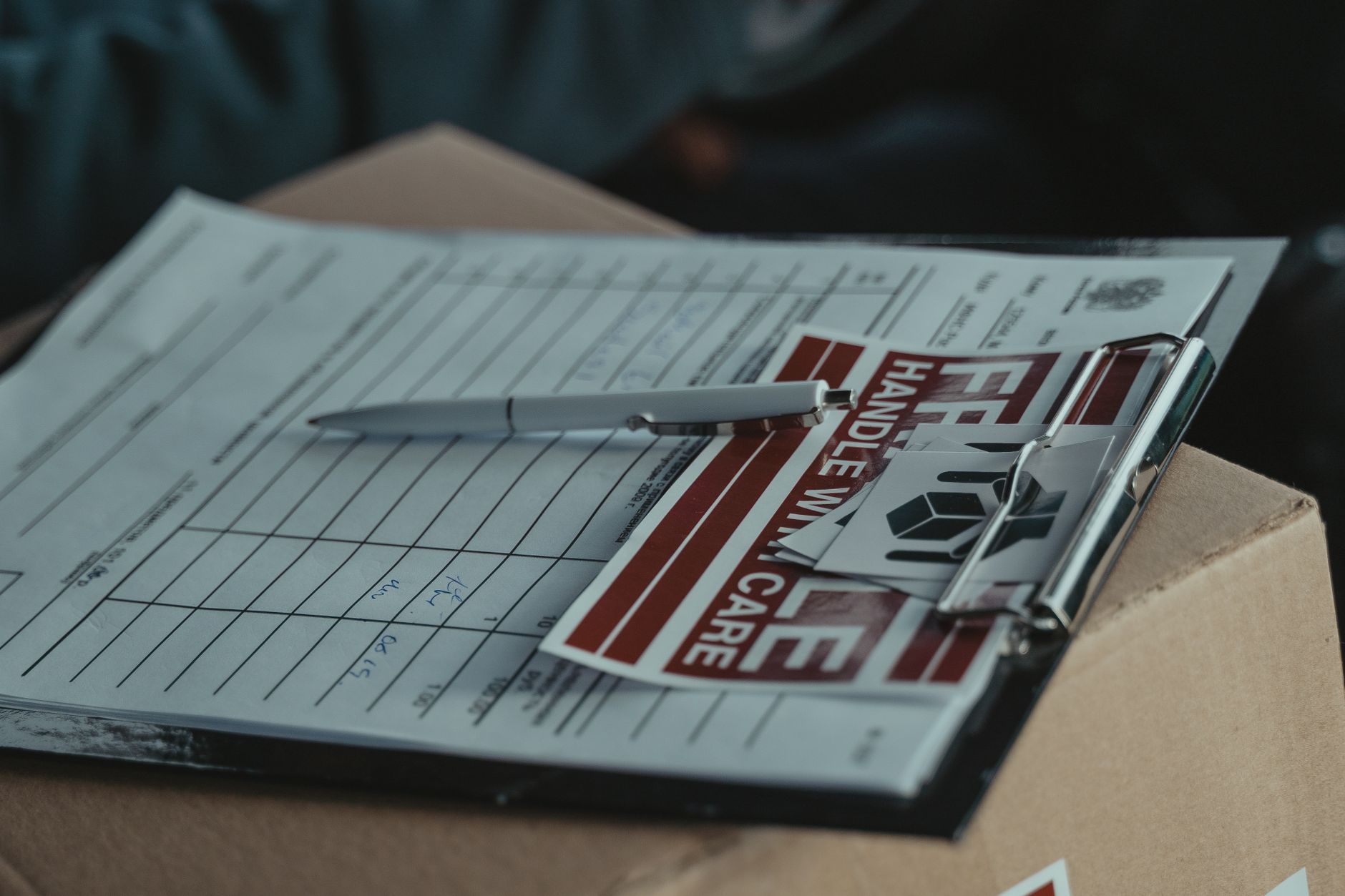
Shipment paperwork and pen on a clipboard resting on a carton marked fragile
A Form FDA 766 application must set out the method, time, place and any replacement labels before work starts.

Refusal, the 90-Day Clock and Redelivery Liability

A refusal is FDA’s final decision on admissibility. There is no appeal unless FDA issued it in error. The refused goods must be exported or destroyed under CBP and FDA supervision within 90 days of the notice of refusal, and that deadline comes from the statute itself, section 801(a) of the FD&C Act at 21 U.S.C. 381(a), not from a CBP regulation. FDA states it has no authority to grant extensions; any question about additional time goes to CBP.

Section 801(a) also lets FDA destroy refused drugs, devices and tobacco products valued at $2,500 or less without giving the owner an opportunity to export them. In practice this falls mainly on international mail shipments.

The larger financial exposure sits on the CBP side. Under 19 CFR 141.113(c), the release of FDA-regulated goods is conditional. The conditional period ends at the earliest of an FDA refusal, an FDA May Proceed, or 30 days after release, and FDA can extend it by issuing a notice of sampling or detention within those 30 days. If FDA refuses, CBP issues a redelivery notice within 30 days of the refusal. Failing to redeliver means liquidated damages equal to three times the value of the merchandise, unless the port director required a bond at domestic value under 19 CFR 12.3(b). Where the liquidated damages arise under the section 801(b) bond, CBP can cancel or reduce them only with the full agreement of the FDA division director (21 CFR 1.97(b)).

This is where distributed goods become a problem. An importer who sold the lot during the conditional period cannot redeliver it, and the claim lands on the bond. Holding FDA-regulated goods until the status is final is the only way to remove that risk entirely, and the refusal itself should be read alongside the broader rules on prohibited and restricted imports when deciding whether export or destruction is the cheaper exit.

  • Respond to a detention: 10 business days under the RPM, usually printed as 20 calendar days
  • Conditional release period: ends at refusal, May Proceed or 30 days after release, unless FDA extends it within those 30 days
  • CBP redelivery notice: within 30 days of the FDA refusal
  • Export or destruction: within 90 days of the notice of refusal, extendable only through CBP
  • Failure to redeliver: liquidated damages of three times the merchandise value

Getting a Firm Removed From an Import Alert

Detention without physical examination does not end by itself. A firm on a red or yellow list stays there until FDA grants a petition for removal, and every shipment until then carries the burden of overcoming the appearance of a violation. FDA’s governing policy is RPM 9-8.

A petition has to show that the problem behind the listing was investigated and fixed, not just that recent shipments passed. FDA asks for the root cause, the corrective and preventive actions taken, and evidence that they work. FDA’s own examples of that evidence are five clean shipments and a third-party audit. Petitions go to ImportAlerts2@fda.hhs.gov unless the specific alert’s guidance names another route.

The clean shipment record is built during the detention period itself, one shipment at a time, each released only after the importer overcomes the appearance of a violation, often with private laboratory results under PLAP. That makes consistent, documented entry handling part of the removal strategy rather than a separate task. Food importers carrying a firm on an alert usually coordinate this across supplier, lab and broker, and the same discipline applies to any food and beverage importer whose supplier appears on an alert.

Cutting Hold Time Before the Next Entry

FDA’s own guidance points to data quality as the main lever. Complete and valid ACE data is what earns a lower risk score and a possible automated release. In practice that means the correct FDA product code, the affirmations of compliance the commodity requires, and registration identifiers that match FDA’s records: DEV, DFE and LST for devices, the manufacturer’s food facility registration for food, and the FSVP importer’s identifier on each food line.

Three checks belong before booking rather than after arrival: the supplier’s registration status for the current cycle, the supplier and product against active Import Alerts, and whether labeling meets the part of 21 CFR that applies to the commodity. Each one removes a detention charge before it can be written.

Food importers with a qualifying history can also apply to VQIP, the Voluntary Qualified Importer Program, under which FDA will expedite entry for covered foods and limit exams to specific circumstances. Eligibility requires a three-year import history, facility certification by accredited third-party certifiers, FSVP compliance and a clean compliance record. The Notice of Intent window runs January 1 to September 1, and the FY2027 user fee is $9,994 for benefits from October 1, 2026 to September 30, 2027.

Once a hold starts, the work is tracking dates: the respond-by date, the 30-day conditional release window and the 90-day export or destruction deadline. A customs brokerage team that files the FDA data can also run those clocks, upload to ITACS the same day, coordinate PLAP sampling and 766 bonds, and deal with CBP on redelivery.

Tariff Response Unit

Audit your derivative HTS exposure

Our brokers will review your top 50 derivative HTS lines and flag Section 232 valuation risk before CBP does.

Frequently Asked Questions

What does May Proceed mean on an FDA entry?

It means FDA released the line for entry after automated or manual review. FDA states that May Proceed does not preclude future FDA action if a problem appears later.

How long do I have to respond to an FDA detention?

FDA’s Regulatory Procedures Manual sets 10 business days, and the Notice of Detention and Hearing usually shows a respond-by date 20 calendar days from detention. Extensions must be requested before that date, with a reasonable basis.

Can I appeal an FDA import refusal?

No. A refusal is FDA’s final decision unless FDA issued it in error. The goods must be exported or destroyed under supervision within 90 days of the refusal notice.

Can FDA extend the 90-day export or destruction deadline?

No. The 90 days come from section 801(a) of the FD&C Act, and FDA states it has no authority to extend them. Requests for additional time go to CBP.

What happens if refused goods were already sold and cannot be redelivered?

Under 19 CFR 141.113, failure to redeliver on CBP’s demand leads to liquidated damages equal to three times the value of the merchandise, unless a domestic-value bond was required. Where the claim arises under the section 801(b) bond, CBP can mitigate only with the FDA division director’s full agreement.

How does a company get removed from an FDA Import Alert?

By petition under RPM 9-8, showing the root cause, corrective and preventive actions, and evidence such as clean shipments or a third-party audit. Petitions go to ImportAlerts2@fda.hhs.gov unless the alert specifies otherwise.

Who pays for FDA supervision of reconditioning?

The importer, at 267% of the GS-11 step 4 hourly rate for a supervisor or GS-12 step 4 for an analyst, with a one-hour minimum plus travel and per diem, under 21 CFR 1.99.

A UV-C phone sanitizer, a room air purifier sold as “kills 99.9% of viruses” and a plug-in ultrasonic rodent repeller have something in common that most of their importers do not know: each one is a pesticide device under FIFRA, and each one needs an EPA filing before the container reaches a US port. None of them needs an EPA product registration. That distinction is where the confusion starts, because “not registered” is routinely read as “not regulated”.

Under 40 CFR 152.500 a pesticide device is exempt from product registration but remains subject to establishment registration, labeling rules and the import provisions of FIFRA section 17(c). In practice that means three things have to be right before arrival: the producing plant must hold an EPA establishment number that appears on the label, the label and the marketing claims must match what the product actually is, and the importer must submit a Notice of Arrival on EPA Form 3540-1. This guide covers each requirement, the product types that trigger it and what happens at the border when one is missing. Rules checked against the eCFR and EPA guidance as of September 2026.

CAPTAIN CONTROL TOWER

Quantify your exposure in 20 minutes

Our trade strategists run your last 90 days of entries through Captain to surface refund eligibility, Section 232 traps and PNTR risk.

EXPLORE CAPTAIN

What Makes a Product a Pesticide Device Under FIFRA

FIFRA splits the regulated universe into two groups. A pesticide is a substance or mixture that prevents, destroys, repels or mitigates a pest. A device is an instrument or contrivance that does the same job by physical or mechanical means, without a substance doing the work. The dividing line is the mode of action, not the product category, so two air purifiers that look identical on a shelf can land on different sides of it.

The trigger is the pest claim. A UV-C lamp sold to dry a nail polish is a lamp; the same lamp sold to sanitize a toothbrush against bacteria is a pesticide device. An air filter sold to capture dust is outside FIFRA; the same filter sold as removing or inactivating viruses is a device. If the product incorporates a substance that it releases to do the killing, such as silver ions from a silver electrode, it is a pesticide rather than a device and needs full product registration before it can be sold or distributed. EPA still classifies some equipment that makes an agent on site, such as ozone generators, as devices, so each product has to be checked on its own.

For importers this matters because the classification is driven by copy the supplier or the brand wrote, often without regulatory input. The HTS code on the entry does not change with the claim, which is why HTS classification alone never flags the requirement. EPA reads the label, the packaging, the insert and the online listing, and any of them can create a pest claim.

How FIFRA treats common product claims
Product and claim FIFRA status What is required at import
UV-C wand or box, claims to kill germs on surfaces Pesticide device EPA Est. No. on label, compliant label, Notice of Arrival
Air purifier with HEPA or UV stage, claims to kill or inactivate viruses Pesticide device EPA Est. No. on label, compliant label, Notice of Arrival
Ultrasonic or electromagnetic rodent or insect repeller Pesticide device EPA Est. No. on label, compliant label, Notice of Arrival
Product that releases a substance to kill or repel pests Pesticide EPA product registration plus Notice of Arrival
Treated article, claim limited to protecting the article itself Exempt treated article No FIFRA filing if the exemption conditions are met
Same air purifier sold only for dust and pollen Not a pesticide device No FIFRA filing

UV-C Sterilizers, Air Purifiers and Ultrasonic Repellers

Three product families generate most of the device shipments that importers get wrong, and each has a different failure pattern.

UV-C sterilizers cover phone and toothbrush sanitizers, handheld wands, cabinet sterilizers for salons and kitchens, and UV modules sold for HVAC ducts. The category grew fast, much of it through marketplace sellers sourcing directly from factories that have never exported a regulated product to the US. The typical gap is a label with no EPA Est. No. and marketing copy promising pathogen kill rates that the brand cannot substantiate.

Air purifiers are the trickiest group because the same model is often sold with and without germ claims depending on the retailer. An importer can bring in a clean, dust-only SKU for one customer and a “virus-killing” version for another, and only the second one needs EPA paperwork. HVAC indoor air quality components carrying antimicrobial claims fall into the same logic.

Ultrasonic and electromagnetic pest repellers are devices by definition, since repelling pests is the only thing they claim to do. These shipments are frequently declared as small electronics with no FIFRA flag at all, which is how they end up detained after arrival rather than screened before it.

Compliance team reviewing product labeling and marketing claims at laptops
The pest claim on the label, packaging or product listing decides whether a device needs EPA paperwork.

Establishment Registration and the EPA Est. No. on the Label

A device does not get an EPA registration number, but the plant that produces it must be registered with EPA as a pesticide-producing establishment, and the resulting EPA Est. No. has to appear on the label or the immediate container. For imported devices the establishment is the foreign factory. If the factory has never registered, the importer cannot fix the problem at the port: the number does not exist and the label cannot be corrected in a bonded warehouse without EPA agreeing to the route.

The verification step belongs before the purchase order, not after the booking. Ask the supplier for the Est. No., check that it corresponds to the plant that actually makes the goods rather than a trading company or a sister factory, and confirm the number printed on the artwork matches. Contract manufacturers that move production between plants create silent mismatches that only surface when EPA compares the label to the filing.

Labeling is the second half of the obligation. Device labels must not carry claims that are false or misleading, and a label that overstates what the device does makes the product misbranded under FIFRA. Efficacy percentages, claims about named viruses and “safe” or “non-toxic” language are the phrases that draw attention. A claims review of the label, the packaging and the listing copy is the cheapest control in the whole process, because every downstream filing repeats what the label says.

Notice of Arrival Timing and ACE Filing

19 CFR 12.112 requires the importer to submit a Notice of Arrival of Pesticides and Devices on EPA Form 3540-1 before the shipment arrives in the United States. EPA reviews the notice and indicates how the shipment is to be handled, and CBP will not release the goods without that determination. Filing at arrival, or after the goods are already at the terminal, means the shipment waits while EPA works through the notice.

Since the 2016 rule at 81 FR 67143, the NOA can be transmitted electronically through ACE as part of the entry rather than on paper. According to the CBP implementation guidance for the EPA pesticide message set, devices use program code PS2, while PS1 and PS3 cover pesticides, and an image of the label is uploaded to the Document Imaging System under tag EPA04. EPA still accepts paper NOAs by email under a temporary process and has said it will give at least seven days’ notice before ending it. It encourages electronic filing in ACE, so check the current EPA instructions for your port of entry.

The practical sequence for a licensed customs brokerage handling a device shipment looks like this: confirm the product is a device and not a pesticide, verify the Est. No. against the producing plant, obtain the final label image, transmit the NOA data with the entry before arrival, and hold the release until EPA’s determination posts. Each of those steps depends on the supplier sending documents early, which is why the timing problem is usually a purchasing problem.

  • Product identity: brand, model and a description that matches the label.
  • Producing establishment: the EPA Est. No. of the plant that made the goods.
  • Label image: the final artwork as it appears on the product or package.
  • Shipment data: quantity, port of entry and expected arrival date.
  • Importer data: the importer of record and a contact who can answer EPA questions.

Treated Articles and When the Exemption Fails

Many consumer goods contain an antimicrobial agent: cutting boards, textiles, phone cases, shower curtains, keyboard covers. These are treated articles, and 40 CFR 152.25(a) exempts them from FIFRA when two conditions are met. The substance used to treat the article must itself be registered for that use, and the claim must be limited to protecting the article itself, for example resisting odor-causing bacteria or mildew on the product.

EPA’s position, set out in PRN 2000-1, is that the exemption disappears the moment the claim reaches beyond the article to the user or the environment. “Protects you from germs”, “kills bacteria on contact” and “antiviral” are public-health claims, and a treated cutting board or face covering making them is a pesticide that needs registration. Importers of treated goods therefore face the same claims-review discipline as device importers, even though their products never get a Notice of Arrival when the copy stays within the exemption.

This exemption is often confused with the chemical reporting that applies to some imported articles under other statutes. That is a separate question with separate certifications, and it should not be answered from the FIFRA analysis.

Detentions, Refusals and Redelivery

When a device arrives without a Notice of Arrival, without an Est. No. on the label or with claims EPA considers misbranding, FIFRA section 17(c) allows the shipment to be refused admission. EPA communicates its decision on the notice, and CBP acts on it. A refusal can lead to a demand for redelivery of goods already conditionally released, followed by re-export or destruction under CBP supervision. Goods sitting under detention continue to incur storage and demurrage while the importer works the problem.

Some problems can be corrected, some cannot. A missing notice filed late can often be resolved, at the cost of delay. A label error may be correctable if EPA agrees to relabeling under an approved arrangement. A plant with no establishment registration, or a product that is actually an unregistered pesticide, usually leaves re-export or destruction as the only exits. The importer carries the outcome, which is why restricted imports of this kind should be screened at the product development stage.

Response speed matters more than eloquence. An importer who can produce the establishment record, the final label and a corrected claims set within days has options. One who has to start chasing a factory in another time zone after the refusal notice arrives usually does not. A non-resident importer faces the same exposure with less local capacity to respond, so the documentation file needs to exist before the first shipment.

Building a Device Screening Step Into the Import Process

EPA did not change the device rules in 2025 or 2026. The requirement has been stable for years, and what changed is the volume of products carrying germ-kill and pest claims, most of them sourced from factories unfamiliar with FIFRA. That makes this a process gap rather than a regulatory surprise, and it can be closed with a short, repeatable screen.

Put the screen where new SKUs are approved. Every new product with a pest, germ, virus, bacteria, mold or insect claim gets flagged, the claim gets reviewed, the mode of action gets confirmed as physical or chemical, and the Est. No. gets verified before the first order ships. The result feeds the entry: the broker knows in advance which lines need an NOA, and the label image is already on file. Many of the same product lines also carry consumer product safety obligations, which the CPSC compliance guide covers separately.

The screen also belongs in the trade compliance management program as a standing control, alongside US import licenses and permits held by other agencies. EPA filings are data elements on the entry, so errors show up on the same CBP Form 7501 review that catches classification and valuation mistakes, and they should be audited with the same frequency.

Tariff Response Unit

Audit your derivative HTS exposure

Our brokers will review your top 50 derivative HTS lines and flag Section 232 valuation risk before CBP does.

Frequently Asked Questions

Does a pesticide device need EPA registration?

No product registration is required for a device under 40 CFR 152.500. The device is still subject to establishment registration, so the producing plant must have an EPA Est. No. shown on the label, and it remains subject to FIFRA labeling rules and the import requirements of FIFRA section 17(c).

When must the EPA Notice of Arrival be filed?

Before the shipment arrives in the United States. 19 CFR 12.112 requires the importer to submit EPA Form 3540-1, or the equivalent electronic data in ACE, ahead of arrival so EPA can review it and CBP can act on the determination.

Is an air purifier a pesticide device?

Only if it makes a pest claim, such as killing or inactivating viruses, bacteria or mold, and does so by physical means. A purifier sold for dust and pollen is outside FIFRA. One that incorporates a substance and releases it to kill microorganisms, such as a silver-ion unit, is a pesticide, not a device, and needs product registration.

What ACE program code applies to pesticide devices?

CBP implementation guidance lists PS2 for devices and PS1 and PS3 for pesticides, with the label image uploaded to the Document Imaging System under tag EPA04. Check the current CBP guidance for your port before relying on paper filing.

Are antimicrobial treated articles exempt from EPA rules?

Only when the antimicrobial substance is registered for that use and the claim is limited to protecting the article itself. Under 40 CFR 152.25(a) and PRN 2000-1, any public-health claim aimed at the user, such as protecting against germs, removes the exemption.

What happens if a device arrives without an EPA Est. No.?

EPA can recommend refusal of admission under FIFRA section 17(c). Depending on the problem, the importer may be able to correct it, or may be required to re-export or destroy the goods under CBP supervision. A plant that has never registered cannot be fixed at the port.

Since 12:01 a.m. eastern time on July 24, 2026, goods that are products of 60 economies pay an additional Section 301 duty of 10% or 12.5% on top of the column 1 rate, unless an exemption heading applies. USTR imposed the action in a notice published on July 28, 2026 at 91 FR 47318. It had found on June 2, 2026 that 54 economies failed to impose and effectively enforce a prohibition on imports made with forced labor and 6 (Canada, Ecuador, the European Union, Indonesia, Mexico and Pakistan) failed to enforce one effectively.

The section 301 forced labor tariffs are not one rate. They are 65 Chapter 99 country headings, a combined-duty cap for five economies, a block of exemption headings from 9903.05.85 to 9903.06.21, and a stacking rule that reads cumulatively against most other additional duties. What follows covers the rates by economy, the cap mechanism, the exemptions that actually work, how the duty interacts with the legacy China lists, AD/CVD and Section 338, and the separate excess-capacity investigation still pending. Rates checked against the Federal Register and HTS Revision 19 as of September 23, 2026.

CAPTAIN CONTROL TOWER

Quantify your exposure in 20 minutes

Our trade strategists run your last 90 days of entries through Captain to surface refund eligibility, Section 232 traps and PNTR risk.

EXPLORE CAPTAIN

What the Forced Labor Action Covers and When It Started

The action rests on two dockets, USTR-2026-0265 and USTR-2026-0266. USTR initiated the investigations on March 12, 2026 (91 FR 12884), published actionability determinations and a proposed action on June 5, 2026 (91 FR 34272), received more than 1,600 comments and heard over 100 witnesses on July 7 to 9. A Presidential Memorandum of July 23, 2026 then directed the rates and the exemptions, and the duty took effect the next day.

Legally, the duty lives in a new U.S. note 52 to subchapter III of Chapter 99, with country headings 9903.05.20 to 9903.05.84 and exemption headings 9903.05.85 to 9903.06.21. The duty attaches to products of the listed economies, so the working question for every line is the same one that drives any country of origin determination, not where the goods were shipped from.

The duty applies to goods entered for consumption, or withdrawn from warehouse for consumption, on or after 12:01 a.m. ET on July 24, 2026. The in-transit relief under 9903.05.85 is narrow: goods must have been loaded onto a vessel at the port of loading and in transit on the final mode of transit before 12:01 a.m. ET on July 24, and entered or withdrawn before 12:01 a.m. ET on July 28, 2026. The text speaks only of a vessel, and none of the published guidance addresses air or land shipments, so do not assume they qualify. CBP set out the filing instructions in CSMS #69326983 on July 23, 2026.

Rates by Economy and the Chapter 99 Headings to Declare

Economies fall into four groups. Seventeen pay a flat additional 10%, thirty-eight pay a flat additional 12.5%, and five (the EU, Japan, South Korea, Switzerland and Taiwan) pay whatever tops the column 1 rate up to a fixed total. According to the notice, the 10% tier is for economies that have a forced-labor import ban, committed to one in an Agreement on Reciprocal Trade, or run a partial regime. Cambodia, Guatemala, Honduras, India, Sri Lanka and Trinidad and Tobago adopted bans, and Jordan made an Agreement on Reciprocal Trade commitment, after the June proposal.

The table lists each economy with the last two digits of its 9903.05 heading. The heading is declared alongside the Chapter 1 to 97 classification, which still carries the entered value, so a classification error flows straight into the wrong Chapter 99 treatment for the five capped economies.

Section 301 forced labor duty by economy, HTS Revision 19 (in force since September 15, 2026)
Treatment Economies (heading 9903.05.xx) Duty
Flat 10% (17 economies) Argentina (.22), Bangladesh (.26), Cambodia (.28), Canada (.29), Ecuador (.35), El Salvador (.37), Guatemala (.40), Honduras (.42), India (.44), Indonesia (.45), Jordan (.50), Malaysia (.54), Mexico (.55), Pakistan (.62), Sri Lanka (.72), Trinidad and Tobago (.78), United Kingdom (.81) +10% on top of column 1
Flat 12.5% (38 economies) Algeria (.20), Angola (.21), Australia (.23), The Bahamas (.24), Bahrain (.25), Brazil (.27), Chile (.30), China (.31), Colombia (.32), Costa Rica (.33), Dominican Republic (.34), Egypt (.36), Guyana (.41), Hong Kong, China (.43), Iraq (.46), Israel (.47), Kazakhstan (.51), Kuwait (.52), Libya (.53), Morocco (.56), New Zealand (.57), Nicaragua (.58), Nigeria (.59), Norway (.60), Oman (.61), Peru (.63), The Philippines (.64), Qatar (.65), Russia (.66), Saudi Arabia (.67), Singapore (.68), South Africa (.69), Thailand (.77), Türkiye (.79), United Arab Emirates (.80), Uruguay (.82), Venezuela (.83), Vietnam (.84) +12.5% on top of column 1
Capped at 10% total European Union: column 1 at or above 10% (.38), below 10% (.39). Taiwan: at or above 10% (.75), below 10% (.76) Zero if column 1 is 10% or more; otherwise tops up to 10% total
Capped at 12.5% total Japan (.48 / .49), South Korea (.70 / .71), Switzerland (.73 / .74) Zero if column 1 is 12.5% or more; otherwise tops up to 12.5% total
Stacked shipping containers at a port terminal awaiting customs entry
Each container's duty depends on the origin economy and its 9903.05 heading.

The Combined-Duty Cap for the EU, Japan, Korea, Switzerland and Taiwan

The Presidential Memorandum sets the rule in plain terms. For a product of the EU or Taiwan whose MFN tariff is below 10%, the Section 301 tariff is whatever makes the sum of the two equal 10%; where the MFN tariff is 10% or more, the Section 301 tariff is zero. Japan, Korea and Switzerland work the same way with a 12.5% ceiling. USTR describes the cap as consistent with the Agreements on Reciprocal Trade or similar arrangements with those partners.

Expressed as a formula, the Section 301 rate equals the cap minus the column 1 rate, never below zero, and the total duty equals the higher of the column 1 rate and the cap. A German good with a 2.5% MFN rate is declared under 9903.05.39 and pays 7.5% under Section 301, 10% in total. A Japanese good that is duty-free at column 1 pays the full 12.5%. A Swiss good with a 15% MFN rate goes under 9903.05.73 and pays no Section 301 duty at all, so its total stays at 15%. CBP confirmed the at-or-above and below split in CSMS #69326983.

Specific and compound rates need an extra step. Note 52(k) converts the column 1 duty into an ad valorem equivalent by dividing the duty payable by the customs value. The note’s own example is 50 cents per kilogram on 1 kilogram valued at $10, which is a 5% ad valorem equivalent; for an EU good that leaves a 5% Section 301 duty to reach the 10% total.

One point is open: note 52(k) adds a column 1-Special clause for South Korea only, and CBP has not said how KORUS-qualifying goods are measured against the cap. Get written confirmation before settling on a filing position.

Exemptions: USMCA, CAFTA-DR Textiles, Section 232 Goods and Chapter 98

Free trade agreements do not exempt goods by default. Note 52(a) keeps goods eligible for special tariff treatment under general note 3(c)(i) subject to the duty except as the note provides otherwise, so preference claims for Australia, Chile, Colombia, Peru or Korea reduce the column 1 duty but do not remove the forced labor duty. Only two agreement-based carve-outs exist.

USMCA is the first. Products of Canada entered free of duty under USMCA go under 9903.05.93 and products of Mexico under 9903.05.94, regardless of whether the S or S+ indicator appears. Non-qualifying Canadian and Mexican goods pay the 10%. The exemption therefore turns on a valid preference claim, which is a USMCA rules of origin question answered at the bill-of-materials level. CAFTA-DR is the second, and it is limited to textile and apparel goods of Costa Rica, the Dominican Republic, El Salvador, Guatemala, Honduras and Nicaragua entered free under the agreement (9903.05.95). El Salvador and Guatemala also have their own textile headings, and CBP allows a good that qualifies under more than one exemption to be entered under either. Non-originating apparel from those countries pays the full rate.

Section 232 goods are exempt through 9903.05.90. The list covers articles of aluminum, steel and copper and the derivative articles in 9903.82.02 and 9903.82.04 to .26, passenger vehicles and light trucks and their parts, wood products, medium and heavy-duty vehicles and buses and their parts, semiconductor articles under 9903.79.01, and, from July 31, 2026, patented pharmaceutical articles in 9903.04.60 to .66. A covered steel derivative therefore pays its sectoral rate under the steel and aluminum tariffs and not the forced labor rate on top.

Chapter 98 entries are exempt when properly claimed and accepted by CBP, with one important exception. Goods entered under 9802.00.40, 9802.00.50, 9802.00.60 or 9802.00.80 remain subject: the first three pay on the value of the repairs, alterations or processing performed abroad, and 9802.00.80 pays on the value of the assembled article less the cost or value of the US-origin components.

  • 9903.05.85: in-transit goods meeting the July 24 loading and July 28 entry deadlines.
  • 9903.05.86 and .87: a general list of HTS provisions plus 16 named articles, such as sowing seeds, açaí products and certain eucalyptus plywood.
  • 9903.05.88 and .89: civil aircraft and parts meeting general note 6, and articles for use in pharmaceutical applications in listed provisions.
  • 9903.05.91 and .92: humanitarian donations and informational materials. Personal-use goods in accompanied baggage are also outside the duty.
  • 9903.05.96 to 9903.06.21: country-specific lists for the UK, EU, Switzerland, Malaysia, Cambodia, Guatemala, El Salvador, Argentina, Bangladesh, Taiwan, Indonesia, Ecuador and Jordan. Check the tariff line against Annex II of the notice before filing.

How the Duty Stacks With China 301, AD/CVD and Section 338

Note 52(a) states that, except as provided in its own subdivisions, products subject to headings 9903.05.20 to 9903.05.84 are also subject to any additional duty provided for in subchapter III or subchapter IV of Chapter 99. That wording is the basis for every stacking question, and apart from AD/CVD, CBP has not yet published guidance on the specific combinations below.

Antidumping and countervailing duties stack without ambiguity. The note says covered products continue to be subject to antidumping, countervailing or other duties, taxes, fees, exactions and charges. A product inside an order pays the forced labor duty and its antidumping and countervailing duties as separate layers.

The legacy China lists sit in subchapter III as well, so on the note’s wording a Chinese good on Lists 1 to 4A would carry the 12.5% under 9903.05.31 in addition to its existing Section 301 tariffs. Brazil faces the same question, because a separate Brazil Section 301 action at 9903.05.01 (91 FR 45516, July 20, 2026) runs alongside the 12.5% under 9903.05.27. Section 338 on Canada, which added 50% under 9903.03.12 to .14 from 12:01 a.m. ET on August 22, 2026, is also in subchapter III, so a Canadian good on that list that does not enter duty-free under USMCA reads as subject to both. None of these combinations has been confirmed by CBP, and total-rate figures built on them should be treated as provisional until CBP confirms them.

CSMS #69326983 sets the reporting order: Chapter 98 where used, then Chapter 99 trade remedies with Section 301 first, then the Chapter 1 to 97 line carrying the entered value.

Drawback, FTZ Admission and the Absence of Exclusions

The duty is drawback eligible. CSMS #69567203 of August 18, 2026 states that 9903.05.01 and 9903.05.20 to 9903.05.84 are drawback eligible, correcting an August 12 ACE change to the FD07 edit that had wrongly blocked them. For importers that re-export, duty drawback is the main recovery route, and any claim blocked by that edit should be checked and resubmitted.

Foreign-trade zones do not defer the choice. Covered products admitted to a zone on or after the effective date may only be admitted in privileged foreign status under 19 CFR 146.41, unless they qualify for domestic status under 19 CFR 146.43. The duty is locked at admission, so a foreign-trade zone still helps with cash flow and with goods that are re-exported, but it cannot be used to wait for a lower rate.

There is no product exclusion process. USTR stated that an exclusion process lowering tariffs on additional products would be inconsistent with the President’s direction, and pointed to modification under Section 307 of the Trade Act (19 U.S.C. 2417) as the route for periodic review. Each economy’s action and each exemption is severable, so a court ruling against one would leave the others in force.

For Bangladesh, Cambodia, Indonesia and Malaysia, USTR said it would establish tariff-rate quotas when feasible, with an initial three-year term, allowing set volumes of textiles and apparel to enter free of the duty based on each country’s imports of US cotton or textile inputs. No Federal Register notice setting them up had been published as of September 23, 2026, so the 10% applies in full until one appears.

The Pending Excess-Capacity Investigation

A second set of Section 301 investigations, on structural excess capacity and production in manufacturing sectors, was initiated on March 11, 2026 and published at 91 FR 12886 on March 17, 2026 (dockets USTR-2026-0067 and USTR-2026-0068). It covers 16 economies: China, the EU, Singapore, Switzerland, Norway, Indonesia, Malaysia, Cambodia, Thailand, Korea, Vietnam, Taiwan, Bangladesh, Mexico, Japan and India. The Section 301 Committee held public hearings from May 5, 2026.

As of September 23, 2026, USTR has published no determination and no proposed action; its investigation page shows only the initiation notice and the hearing transcripts. Sourcing models for those origins should carry a scenario line for a further Section 301 duty rather than treat today’s rate as the settled one.

What Trade Teams Should Check Before the Next Entry

First, map every active supplier to its economy and heading, and for the five capped economies rerun the column 1 rate line by line, because the same supplier can land in both headings depending on the product.

Second, audit exemption claims. USMCA and CAFTA-DR relief depends on a preference claim that would survive a CBP request for information, and the Section 232 exemption depends on the good actually falling under one of the listed 232 headings. A 9903.05.90 claim on a good outside those headings is an underpayment.

Third, rebuild duty accruals for China, Brazil and Canadian goods under Section 338 with the stacking question flagged as open, and move drawback and FTZ status decisions into the landed-cost model instead of handling them after the fact. Where the exposure spans dozens of origins, managing it through a structured trade compliance management programme is cheaper than correcting entries one post-summary correction at a time.

Customs compliance staff walking between container stacks at a port
Exemption claims under USMCA, CAFTA-DR and 9903.05.90 need documentation that survives a CBP request.
Tariff Response Unit

Audit your derivative HTS exposure

Our brokers will review your top 50 derivative HTS lines and flag Section 232 valuation risk before CBP does.

Frequently Asked Questions

What are the Section 301 forced labor tariff rates?

Products of 17 economies pay an additional 10% and products of 38 economies pay an additional 12.5%, on top of the column 1 rate. Goods from the EU and Taiwan are topped up to a 10% total, and goods from Japan, South Korea and Switzerland to a 12.5% total, with no additional duty where the column 1 rate already meets that level.

When did the forced labor duty take effect?

For goods entered or withdrawn from warehouse for consumption on or after 12:01 a.m. ET on July 24, 2026. Goods loaded onto a vessel and in transit on the final mode before that time, and entered before 12:01 a.m. ET on July 28, 2026, are exempt under 9903.05.85.

Are goods subject to Section 232 also charged the forced labor duty?

No, for the Section 232 headings listed in note 52(f): articles of steel, aluminum and copper and the aluminum and steel derivatives in 9903.82.02 and 9903.82.04 to .26, autos and parts, wood products, medium and heavy-duty vehicles and parts, semiconductor articles and, from July 31, 2026, patented pharmaceutical articles. They are declared under 9903.05.90.

Is the forced labor duty eligible for drawback?

Yes. CBP confirmed in CSMS #69567203 of August 18, 2026 that 9903.05.20 to 9903.05.84 and 9903.05.01 are drawback eligible, correcting an ACE change made on August 12 that had blocked them.

Can I apply for an exclusion?

No. USTR declined to create an exclusion process, stating that one would be inconsistent with the President’s direction. Changes can come through modification under Section 307 of the Trade Act, and tariff-rate quotas for textiles from Bangladesh, Cambodia, Indonesia and Malaysia are promised but not yet published.

Does the duty stack with the China Section 301 lists?

Note 52(a) makes covered goods subject to any other additional duty in subchapters III and IV of Chapter 99, which on its wording includes the China lists. CBP has not published guidance on that combination, so confirm the filing position with CBP before relying on a total rate.

Every shipment of food bound for the United States has to be announced to FDA before it reaches the port, and the announcement has to be right. FDA prior notice is the advance electronic filing that tells the agency what the food is, who made it, who shipped it and when and where it will arrive. File it late, leave it out or get a required field wrong, and the food is subject to refusal under section 801(m) of the Federal Food, Drug, and Cosmetic Act, held at the port or a secure facility, and kept away from the importer until the problem is fixed.

The requirement dates from the Public Health Security and Bioterrorism Preparedness and Response Act of 2002, which added 801(m) to the statute, and the working rules sit in 21 CFR 1 subpart I (sections 1.276 to 1.285). What follows covers who must file and for which products, the minimum lead times by mode, the choice between FDA’s own portal and the customs system, the exemptions that actually apply, and the data errors that most often turn a routine food entry into a refusal. Regulatory text checked against the eCFR as of September 2026.

CAPTAIN CONTROL TOWER

Quantify your exposure in 20 minutes

Our trade strategists run your last 90 days of entries through Captain to surface refund eligibility, Section 232 traps and PNTR risk.

EXPLORE CAPTAIN

Who Must File Prior Notice and Which Foods It Covers

The trigger is the product, not the importer. Prior notice applies to food for humans and for animals as defined in FD&C 201(f), and the regulation spells out how wide that is: animal feed including pet food, dietary supplements and dietary ingredients, infant formula, and beverages including alcoholic beverages. Food contact substances and pesticides are excluded from the definition (21 CFR 1.276(b)(5)). A container of canned tuna, a pallet of whey protein, a load of dog treats and a shipment of wine all need a notice.

Scope also reaches shipments that many importers assume are outside it. Section 1.277(a) expressly includes gifts, quality assurance and quality control samples, food for transshipment through the United States, food imported for future export, and food admitted to a foreign-trade zone. A trade show sample carton and an in-bond load crossing from Canada to Mexico are both in.

Medical devices, drugs and cosmetics are not food and never need prior notice. Subpart I applies only to articles of food (1.277). Device entries clear through FDA admissibility review under 801(a) using device registration, establishment and listing data, which is the territory of the FDA initial importer role rather than a prior notice filing.

On who files, the regulation is flexible. Any person with knowledge of the required information can be the submitter, and the submitter may use a transmitter to send it, which in practice is usually the customs broker (1.278). The shipper, the importer or the broker can file. What does not change is that the food is refused if the notice is wrong, whoever typed it, so the allocation of that risk belongs in the contract between the parties.

Prior Notice Timing Windows by Mode of Transport

Section 1.279 sets minimum lead times before arrival at the port of arrival, and they differ by mode. The windows are short enough that a missed filing is usually discovered after the conveyance is already underway, which is why they belong in the booking workflow rather than the arrival workflow.

The clock does not start when the notice is transmitted. It starts when FDA confirms the notice for review (1.279(d)). A truck that reaches the border crossing before the 2 hour window has run from confirmation carries an untimely notice and the food is subject to refusal, unless FDA has already reviewed the notice and advised CBP (1.283(a)(1)(iii)). For road freight in particular, a notice sent while the driver is at the last warehouse before the border can leave no margin at all.

The maximum advance filing is 30 calendar days before arrival when the notice goes through ABI/ACE/ITDS, and 15 calendar days through FDA PNSI (1.279(b)). For ocean freight with long transit times, that ceiling matters: a notice cannot be filed at booking for a voyage that arrives more than 30 days later, so it has to be scheduled into the transit.

From October 1, 2026, a prior notice for food sent by international mail must also carry the name of the mail service and the mail tracking number (21 CFR 1.281(b)(10)).

FDA prior notice minimum lead times, 21 CFR 1.279
Mode of arrival Minimum before arrival at the port Maximum advance filing
Land, by road 2 hours 30 days (ACE) / 15 days (PNSI)
Land, by rail 4 hours 30 days (ACE) / 15 days (PNSI)
Air 4 hours 30 days (ACE) / 15 days (PNSI)
Water 8 hours 30 days (ACE) / 15 days (PNSI)
International mail Before the article is sent to the United States PN Confirmation Number must appear on the CN22 or CN23
Worker in gloves and mask loading a sealed carton into a delivery van
Courier, mail and sample shipments of food carry the same prior notice duty as a full container.

PNSI vs ACE Filing and the Prior Notice Confirmation Number

Filing is electronic only, through one of two channels (1.280). The first is ABI/ACE/ITDS, used by a licensed broker or a self-filing importer. The second is FDA’s Prior Notice System Interface, PNSI, reached through access.fda.gov. PNSI becomes mandatory when the broker’s or self-filer’s system, or ABI itself, is down. Either way, the notice must be in English, with personal, company and street names allowed in their original language, and every field must use the Latin alphabet.

Inside ACE there are two ways to send it. A stand-alone prior notice carries only the prior notice data. A combined entry sends the prior notice data together with the FDA 801(a) entry data under the same transmission. FDA’s Industry Quick Reference Guide to the ACE Supplemental Guide, dated March 10, 2026, keeps separate data tables for each, and a broker working a mixed book of food and non-food lines needs to know which one the entry is using.

For most commercial food entries handled through customs brokerage, ACE is the practical choice: it allows the longer 30 day window, sits inside the same workflow as the CBP entry and avoids retyping data. PNSI suits a shipper with no broker yet appointed, a one-off sample, or a system outage.

The PN Confirmation Number is FDA’s reply confirming the notice for review (1.279(d)). It is the proof that the clock has started. The regulation requires it to travel with the goods in three cases: food sent by international mail, where it goes on the customs declaration; food carried by or accompanying a traveler; and any food whose notice was filed in PNSI (1.279(e) to (g)). Keep the number on the shipping file for every food line, because it is the first thing anyone asks for when a shipment stops.

Prior Notice Exemptions and What Stays in Scope

The exemptions in 1.277(b) are narrow and specific. They do not follow value, quantity or commercial intent, which is where most wrong assumptions come from.

Two traps sit around these exemptions. The first is mixed jurisdiction: a product that contains meat or poultry but is not under exclusive USDA jurisdiction at the time of import still needs FDA prior notice, so each formulation needs a case-by-case check rather than a blanket rule for the category. The second is the port exemption, which covers only food that never leaves the port of arrival before export. Food moved in-bond to another port, or into a warehouse or zone, is back in scope.

Samples are not exempt. A small sample box of snack bars sent to a buyer for evaluation needs the same notice as a container, including manufacturer data, and a missed notice on a sample gets the same refusal treatment.

  • Food for personal use carried by or accompanying an individual.
  • Homemade food sent by an individual as a personal, non-business gift.
  • Food imported and then exported without leaving the port of arrival.
  • Meat food products, poultry products and egg products under the exclusive jurisdiction of USDA under the FMIA, PPIA or EPIA.
  • Items in a diplomatic bag under article 27(3) of the Vienna Convention on Diplomatic Relations.

Refusal Under 801(m) and the Filing Errors Behind It

Section 1.283 treats three failures the same way. Food with no prior notice, an inaccurate prior notice or an untimely prior notice is subject to refusal of admission under 801(m)(1). Unless it is immediately exported under CBP supervision, it must be held within the port of entry unless CBP or FDA directs otherwise, and if it goes to a secure facility outside the port, FDA must be told the location before it moves.

This is a harder track than the ordinary FDA review most importers know. The refused food becomes general order merchandise under 19 U.S.C. 1490, moves only under custodial bond, and may not be delivered to any importer, owner or ultimate consignee. Release under the importer’s bond is not available. Neither FDA nor CBP is liable for transportation or storage while it sits, so every day of the hold is charged to the cargo interests.

There is a way back. A post-refusal prior notice must be submitted within 10 calendar days of the refusal notice, both where no notice was filed and where an inaccurate notice has to be cancelled and resubmitted (1.283(c)). If the importer instead asks FDA to review whether the food is in scope or the notice was accurate, that request is due within 5 calendar days of the refusal (1.283(d)), and the 10 days then run from FDA’s response. Miss the deadline, and unless CBP and FDA agree otherwise, the goods move to general order procedures under 19 CFR part 127, where they may only be sold for export or destroyed. If a refused article is exported instead, the notice should be cancelled within 5 business days (1.283(a)(5)).

The exposure goes beyond the shipment. Importing food in violation of 801(m) is a prohibited act under 301(ee) of the FD&C Act, which opens the door to injunction under section 302, prosecution under section 303 and, for felony convictions or a pattern of importing adulterated food, debarment under section 306 (1.284). Food from a foreign facility that is not registered with FDA is held on a separate basis, under 801(l), even when the prior notice itself is perfect.

The data fields that cause most inaccurate notices

Section 1.281(a) lists the required data. The fields below are the ones that most need checking against the cartons, and each one is checkable before the goods move.

  • Manufacturer, for food no longer in its natural state: name plus food facility registration number, city and country, or the full address plus the reason no number is given. In ACE the number goes in the PFR affirmation of compliance, or FME with an exemption reason code.
  • Grower, for food in its natural state, where known; otherwise the consolidator.
  • Shipper, where it differs from the manufacturer.
  • The complete FDA product code, built with FDA’s Product Code Builder. A code that describes the wrong product form is an inaccurate notice.
  • Quantity described from the largest container down to the smallest package.
  • Lot or code numbers where the product rules require them, such as low-acid canned foods, acidified foods and infant formula.
  • Carrier SCAC or IATA code, bill of lading or air waybill number, and the anticipated port, date and time of arrival. An express courier tracking number may substitute.
  • Importer, owner and ultimate consignee, which are not required for transportation and exportation in-bond moves.
  • Any country to which the article has been refused entry.
Gloved hand checking a shipment record on a clipboard next to stacked cartons
Manufacturer, product code and quantity fields are checked against the cartons before the notice goes out.

Building Prior Notice Into the Food Import Workflow

The cleanest programs treat prior notice as a supplier data problem solved before the first order, not a filing problem solved at arrival. Collect the manufacturer’s registration number, full address, product codes and lot coding practice once per SKU, validate them, and store them where the filer can reach them. Registration data is not publicly searchable, so the number has to come from the supplier itself.

The FSVP line belongs in the same checklist. For each food line covered by the Foreign Supplier Verification Program (FSVP), the importer’s name, email and unique facility identifier must be transmitted at entry (21 CFR 1.509(a)); lines that qualify for an FSVP exemption declare it with an exemption code instead. It is a separate requirement from prior notice, but it is reviewed at the same time and a gap there stops the same entry.

Then tie the filing to the transport plan: trigger the notice from the booking confirmation for ocean, from the flight assignment for air, and from the dispatch for road, with the minimum window measured from FDA confirmation rather than transmission. Food is one of several categories of restricted imports into the US, and the same pre-shipment discipline applies to the other agencies that regulate them.

For importers moving food across several modes and origins, running prior notice as part of a wider trade compliance management program keeps supplier data, product codes and filing windows in one place. CargoTrans works with food and beverage importers on exactly this data set, and coordinating the notice with import and export freight means the filing and the transport plan come from the same file.

Tariff Response Unit

Audit your derivative HTS exposure

Our brokers will review your top 50 derivative HTS lines and flag Section 232 valuation risk before CBP does.

Frequently Asked Questions

Does FDA prior notice apply to dietary supplements and pet food?

Yes. Both are food under FD&C 201(f), and 21 CFR 1.276(b)(5) lists dietary supplements, dietary ingredients and animal feed including pet food. Beverages, including alcoholic beverages, and infant formula are also covered.

Do medical devices need FDA prior notice?

No. Prior notice applies only to articles of food (21 CFR 1.277). Medical devices, drugs and cosmetics clear through FDA admissibility review under section 801(a) with their own entry data, not through prior notice.

How early can prior notice be filed?

Up to 30 calendar days before arrival when filed through ABI/ACE/ITDS, and up to 15 calendar days when filed through FDA PNSI (21 CFR 1.279(b)). The minimum is 2 hours for road, 4 hours for rail and air, and 8 hours for water, counted from FDA confirmation.

What is a prior notice confirmation number?

It is FDA’s reply confirming the notice for review, and the minimum time window starts from that confirmation (21 CFR 1.279(d)). It must accompany food sent by international mail, food carried by travelers, and any food whose notice was filed in PNSI.

Do samples and trade show food need prior notice?

Yes. Quality assurance and quality control samples and gifts are expressly within scope under 21 CFR 1.277(a). The only gift exemption is for homemade food sent by an individual as a personal, non-business gift.

Does food moving in-bond through the US to Canada or Mexico need prior notice?

Yes. Food for transshipment is in scope. The importer, owner and ultimate consignee fields are not required for transportation and exportation in-bond moves, but the rest of the notice is (21 CFR 1.281(a)).

Can food refused for missing prior notice be released on bond?

No. A refusal under 801(m) requires the food to be held at the port or a secure facility under custodial bond, with no delivery to the importer, owner or consignee (21 CFR 1.283(a)(2)). A post-refusal prior notice, or a corrected resubmission, must be filed within 10 calendar days of the refusal notice or of FDA’s response to a request for review.

The line between general wellness vs medical device is not drawn by the hardware. Two identical massage guns can arrive in the same container, one marketed to relieve post-workout tightness and the other to treat back pain, and FDA will treat only the second as a regulated medical device. That difference decides whether the shipment needs a registered foreign manufacturer, a device listing and, for many product types, a premarket clearance number before it can clear.

FDA revised its guidance General Wellness: Policy for Low Risk Devices on January 6, 2026, replacing the 2019 version. The revision widens the wellness category for non-invasive sensors that report physiological values, and it keeps several product types firmly on the device side. This guide sets out the test FDA applies, the claims that flip a product, where common fitness and beauty-tech imports land, and what changes in the ACE entry once a product is treated as a device.

CAPTAIN CONTROL TOWER

Quantify your exposure in 20 minutes

Our trade strategists run your last 90 days of entries through Captain to surface refund eligibility, Section 232 traps and PNTR risk.

EXPLORE CAPTAIN

The Test FDA Applies Under the Revised Wellness Guidance

The statutory anchor is section 520(o)(1)(B) of the Federal Food, Drug, and Cosmetic Act, which removes certain software functions intended for a healthy lifestyle, and unrelated to the diagnosis, cure, mitigation, prevention or treatment of a disease or condition, from the device definition. For hardware, the general wellness guidance works as a compliance policy: FDA states it does not intend to examine low risk general wellness products to determine whether they are devices or whether they meet device requirements.

The guidance works as a two-part screen. First, the intended use has to be a general wellness use: maintaining or encouraging a healthy lifestyle, without reference to a specific disease or condition. Second, the product has to be low risk. A product that fails either part is assessed as a device under the normal classification rules, and the wellness policy offers no cover.

The January 6, 2026 revision changed the first part for wearables. Non-invasive sensing that outputs vital-sign values can now sit inside the wellness policy, provided the output is not diagnostic and does not prompt the user toward clinical action. A sleep band that reports overnight pulse trends for fitness purposes can fit that description. The same band marketed to flag an irregular rhythm for a doctor’s attention does not.

The revision also names exclusions. Products intended to measure physiologic values for medical or clinical purposes, such as blood pressure monitors, fingerstick glucose meters, continuous glucose monitors and ECG recording and analysis devices, are outside the wellness policy. A non-invasive wearable that estimates blood pressure or glucose for fitness use can still qualify, but only if its values are validated and nothing in its labeling or interface points to a disease, a clinical threshold or clinical action. On the risk side, products that use lasers, emit radiation or apply neurostimulation are not treated as low risk, so a wellness claim does not take them out of device regulation.

Claims That Turn a Wellness Product Into a Device

FDA determines intended use from the objective evidence of how the product is sold. For an importer, that evidence is the whole commercial footprint: the carton and insert, the Amazon or retailer listing, the brand website, paid ads and influencer copy. A clean retail box does not help if the marketplace listing for the same SKU promises pain relief.

The shift usually happens through a single verb. Words such as treat, relieve, cure, prevent, diagnose, heal or reduce symptoms, attached to a named disease or condition, move a product out of wellness and into device territory. Words such as relax, recover, energize, tone or track, attached to general fitness or lifestyle goals, keep it inside the policy, subject to the risk screen.

Where claims hide in an import program

Large importers rarely write every claim themselves. Foreign manufacturers print English-language inserts, marketplace sellers edit product titles, and affiliate content repeats whatever converts best. Because FDA reviews the product as marketed, a compliance review has to cover the listing and advertising that will run in the US, not only the physical label that crosses the border.

How the same hardware reads under the general wellness policy
Product Wellness-style claim Device-style claim
Percussion massager Helps muscles relax after training Relieves chronic back pain
Electrical stimulation unit Not available: neurostimulation is outside the low-risk policy Relieves pain, stimulates muscles
LED face mask Relaxation-only claims, subject to the risk screen Reduces wrinkles, treats acne
Wrist wearable Tracks resting pulse and sleep trends for fitness Detects arrhythmia, monitors hypertension
Posture trainer Reminds the wearer to sit upright Corrects spinal conditions

Where Massage Guns, TENS Units, LED Masks and Wearables Land

Once a product falls outside the wellness policy, FDA’s device classification regulations decide what it needs. The classifications below are the ones most often triggered by fitness and beauty-tech imports. Class I carries general controls; Class II adds special controls and, unless exempt, a 510(k) clearance before marketing.

The table is a starting point, not a ruling. Where a product’s classification is genuinely unclear, the manufacturer or US brand owner can ask FDA for a formal answer through a 513(g) request for information. Posture correctors are a common example: depending on design and claims they can be a wellness product or a Class I orthosis, so confirm the classification product by product before booking.

Why a massage gun and a TENS unit are treated differently

A percussion massager with a relaxation claim can sit inside the wellness policy, and with a claim to relieve minor muscle aches and pains it falls under 890.5660, a Class I type that is exempt from premarket notification subject to the limitations in 21 CFR 890.9. Claims that go beyond minor aches, such as treating a chronic condition, can cancel that exemption. A TENS or EMS unit applies electrical stimulation, which the guidance treats as outside the low-risk category, so it is regulated as a Class II device under 882.5890 or 890.5850 whatever the marketing says. FDA also maintains Import Alert 89-01 for powered muscle stimulators and iontophoresis devices, which allows detention without physical examination of listed firms’ products.

LED masks and light panels

Over-the-counter LED devices that claim to reduce wrinkles sit under 878.4810 with product code OHS and need 510(k) clearance. Light-based products also raise a separate question: whether they fall under an FDA radiation performance standard. Most LED masks and LED bulbs are not covered by one, which means no Form FDA 2877 declaration, but lasers are, and a laser-based beauty device has to meet both the device and the radiation data requirements at entry.

Device classifications for common wellness-adjacent imports (21 CFR)
Product type Regulation Class Premarket path
TENS for pain relief 882.5890 Class II 510(k)
Powered muscle stimulator (EMS) 890.5850 Class II 510(k)
Therapeutic massager 890.5660 Class I Exempt, subject to 890.9 limits
OTC LED device for wrinkles, product code OHS 878.4810 Class II 510(k)
Medical-purpose blood pressure monitors, CGMs, ECG devices Device regulations by type Excluded from wellness policy Depends on type

What Changes in the ACE Entry When the Product Is a Device

A wellness product that is not a device is not transmitted to FDA as a device. Once the product is a device, the broker files the FDA message set in ACE under the device program, with processing codes that distinguish non-electronic devices from radiation-emitting ones, and the entry has to carry specific Affirmation of Compliance codes that FDA’s systems match against its registration and listing databases.

For a finished device from a foreign manufacturer, FDA’s March 10, 2026 ACE guidance identifies DEV (foreign manufacturer registration number), DFE (foreign exporter registration number) and LST (device listing number) as the core codes, plus PM# carrying the 510(k) or other premarket number where the device has been cleared. The premarket number should match the one on the listing record. Declaring a code FDA does not recognize results in an entry rejection.

Device status does not change the duty side of the entry. HTS classification is a separate decision from the FDA product code, and device lines carry no blanket carve-out from additional duties: USTR’s Section 301 forced-labor tariffs include no general exemption for medical devices, so landed cost has to be modeled on both tracks.

  • Foreign manufacturer registered and device listed under 21 CFR 807.40. No device may be imported unless it is listed and made at a registered foreign establishment.
  • Premarket number available where the classification requires 510(k), and consistent with the listing.
  • US importer registration in place where the importer acts as FDA initial importer under 21 CFR 807.20(a)(5).
  • Correct FDA product code on the line, which identifies the device type to FDA’s screening system.
  • Device Identifier data ready where required, since Import Alert 99-49 covers devices without a UDI or a matching GUDID record.
Warehouse scanner reading carton labels on imported goods
FDA reads intended use from cartons, inserts and listings, so labeling checks start before the goods ship.

Import Consequences of Getting the Classification Wrong

The costly error is filing a device as a non-device consumer product, or importing a device from a foreign firm that never registered or listed because it assumed the product was wellness. FDA screens entries against its databases and its import alerts, and the gaps are visible. Import Alert 99-34 covers drugs and devices from firms without valid registration or listing. Import Alert 89-08 covers devices lacking a required 510(k) or PMA. Import Alert 80-06 covers devices with false or misleading labeling. Each allows detention without physical examination of the products it lists.

When FDA detains a device shipment, the importer gets a limited window to respond, and a refused shipment has to be exported or destroyed under supervision within 90 days of the refusal notice. Goods released to the importer under bond before FDA’s decision can be the subject of a redelivery demand, which is why the right customs bond and clean entry data matter on device lines. The hold also stalls every unit behind it, which for a seasonal launch can mean missing the selling window entirely.

Misclassification also reaches beyond the border. A US brand that sets the specifications for a private-label device made by a contract manufacturer is a specification developer under 21 CFR 807.20(a)(1): it registers, lists, pays the annual establishment fee ($13,785 for FY2027) and falls under the Quality Management System Regulation. The QMSR, which incorporates ISO 13485 by reference, has applied since February 2, 2026. An importer that relabels, repacks or assembles kits of devices also becomes subject to it.

A Pre-Shipment Claim Review for Import Teams

The review that prevents most holds takes place before the purchase order is finalized, not after the vessel sails. It compares the product and every channel of its marketing against the wellness policy and the device classifications, then fixes the entry data or the claims before either reaches FDA.

A practical sequence for compliance and trade teams runs in five steps:

Where a broker fits

A licensed broker cannot make a product a wellness product, but it can make sure the entry matches the regulatory position the importer has taken and that the data FDA screens is complete. CargoTrans handles device and non-device entries through its customs brokerage team and supports claim and classification reviews as part of trade compliance management. For products that are also restricted or prohibited on other grounds, see our guide to prohibited and restricted imports.

  • Collect every claim for the SKU: packaging, insert, marketplace listing, website and ad copy, in the versions that will run in the US.
  • Screen the product type first. Invasive or implanted products, lasers, radiation exposure risks and neurostimulation stay on the device side regardless of claims. Blood pressure, glucose and ECG functions stay on the device side unless the product is non-invasive, intended solely for wellness use and shows validated values.
  • Test the claims. Any disease or condition named alongside treat, relieve or diagnose points to a device.
  • If it is a device, confirm the classification regulation, the premarket path, the foreign manufacturer’s registration and listing, and the premarket number before booking.
  • Decide the entry profile with your broker: device program data and Affirmation of Compliance codes, or a non-device consumer product entry supported by a documented wellness assessment.
Tariff Response Unit

Audit your derivative HTS exposure

Our brokers will review your top 50 derivative HTS lines and flag Section 232 valuation risk before CBP does.

Frequently Asked Questions

Is a massage gun a medical device?

It depends on the claim. A percussion massager marketed for relaxation or post-exercise recovery can fall under FDA’s general wellness policy. Marketed with a medical claim such as relieving minor muscle aches and pains, it is a device, classified as a therapeutic massager under 21 CFR 890.5660, which is Class I and exempt from 510(k) subject to the limitations in 21 CFR 890.9. A claim to treat a chronic condition can cancel that exemption. Registration and listing duties then apply to the manufacturer.

Can a TENS unit be sold as a wellness product?

No. TENS and EMS units apply electrical stimulation, and the revised general wellness guidance treats neurostimulation as outside the low-risk category. TENS for pain is Class II under 882.5890 and powered muscle stimulators are Class II under 890.5850, both normally requiring 510(k) clearance.

What changed in the January 6, 2026 general wellness guidance?

The revision supersedes the 2019 version. It allows non-invasive sensing products that output vital-sign values to qualify as wellness products if the output is not diagnostic and does not prompt clinical action. It expressly excludes blood pressure monitors, continuous glucose monitors and ECG devices, and it keeps lasers, radiation and neurostimulation outside the low-risk category.

Do LED face masks need FDA clearance?

An over-the-counter LED device claiming to reduce wrinkles is classified under 21 CFR 878.4810, product code OHS, as Class II requiring 510(k) clearance. Most LED masks are not subject to a radiation performance standard, so Form FDA 2877 does not apply, but the device requirements do.

Does a wellness product need FDA registration to import?

For a product that genuinely fits the general wellness policy, FDA states it does not intend to enforce device requirements such as registration, listing and premarket notification, so the entry is not filed with device Affirmation of Compliance codes. This is an enforcement policy, not a statutory exemption, so the importer should keep a documented assessment of the claims and product type, because FDA judges intended use from the listing and advertising as well as the box.

Who decides if my product is a device?

FDA does, based on intended use. The manufacturer or US brand owner can request a formal classification opinion through a 513(g) request. Until then, the importer carries the risk that FDA reads the claims differently and holds the shipment under an import alert such as 89-08 or 99-34.

The BIS affiliates rule is not in force today, and that is exactly why export compliance teams need to look at it now. The Bureau of Industry and Security issued it on 29 September 2025, stayed it six weeks later, and wrote the stay so that it ends on its own. On 9 November 2026 BIS extended the stay until 10 January 2027 (91 FR 70789). Unless BIS extends it again, the rule comes back when that stay ends with no further notice, no new comment period and no transition license on the books.

Once it returns, the license question no longer stops at the name on the purchase order. It extends to who owns the buyer, the intermediate consignee and the end user, through every layer of the corporate chain. This guide covers what the rule does, the Federal Register record, what BIS has and has not done since the stay, and a due diligence workflow to have running before the reinstatement date. Status verified against the Federal Register and eCFR as of 23 September 2026.

CAPTAIN CONTROL TOWER

Quantify your exposure in 20 minutes

Our trade strategists run your last 90 days of entries through Captain to surface refund eligibility, Section 232 traps and PNTR risk.

EXPLORE CAPTAIN

What the 50% Ownership Extension Covers

The rule, formally titled Expansion of End-User Controls To Cover Affiliates of Certain Listed Entities, makes the license requirements and other restrictions of certain BIS lists apply to any foreign entity owned, directly or indirectly, individually or in aggregate, 50 percent or more by one or more listed parties. It also reaches entities owned by unlisted companies that are themselves restricted because of their ownership, so the restriction travels down the chain.

Before the rule, BIS applied a legally distinct standard: restrictions reached the listed entity and its non-distinct branches in the same country, but not a separately incorporated subsidiary. The Affiliates Rule closes that gap.

Three lists, aggregated

The rule draws on three sources, and ownership is added up across all of them. A company owned 30 percent by one listed party and 25 percent by another is covered, because the two holdings total 55 percent. The same logic applies if one owner is on the Entity List and the other is on a different covered list.

  • Entity List (Supplement No. 4 to Part 744), through 15 CFR 744.11(a)(1).
  • Military End-User List (Supplement No. 7 to Part 744), through 744.21(a)(3). Affiliates owned solely by unlisted military end users are not captured unless the affiliate itself meets the military end user definition.
  • SDNs designated under the OFAC programs listed in 15 CFR 744.8(a)(1), through 744.8(a)(2): the Russia, Belarus and Ukraine-related programs, the terrorism programs (FTO and SDGT), the WMD program (NPWMD) and the narcotics and criminal programs (ILLICIT DRUGS-EO14059, SDNT, SDNTK and TCO).

What the affiliate inherits

A covered affiliate is treated to the same degree as if the item were going to its listed owner. It inherits the owner’s license requirement, license exception eligibility and license review policy, which for many listed parties is a presumption of denial. Where several owners carry different requirements, the rule of most restrictiveness applies: the affiliate takes the strictest requirement of any of its owners regardless of how the percentages split. If only one owner qualifies for a license exception, the affiliate does not.

Foreign direct product rules follow the same path. The Entity List FDP rule at 734.9(e) and the Russia/Belarus military end user FDP rule at 734.9(g) extend to an affiliate when at least one owner carries the relevant footnote.

What it does not reach

The rule applies only to foreign entities, so a US subsidiary of a listed party is outside it. It runs downward to subsidiaries, not upward to a listed entity’s parent, although BIS flags parents as warranting diligence. It does not cover the Unverified List or Denied Persons. Affiliates of unnamed entities that merely operate at a listed address are excluded unless those entities are specifically named, and affiliates can request exclusion under 744.16(e) or 744.21(b)(2).

The test is ownership, not control. An entity that a listed party controls without owning 50 percent is not automatically captured, but significant minority ownership, overlapping board members or other indicia of control are red flags that call for extra diligence, and BIS can list such an entity in its own right.

The Federal Register Record Behind the Rule

Three documents define the rule’s legal status. The interim final rule appeared at 90 FR 47201, the one-year suspension at 90 FR 50857 and its extension at 91 FR 70789. Every date an exporter needs to plan around comes from those publications and the eCFR notes that implement them.

BIS affiliates rule timeline, verified as of 15 November 2026
Date Action Citation
29 Sept 2025 Interim final rule effective RIN 0694-AK11
30 Sept 2025 Interim final rule published 90 FR 47201-47214, FR Doc. 2025-19001
29 Oct 2025 Comment deadline and savings clause end date for shipments en route on 29 Sept 90 FR 47210
1 Nov 2025 White House announces a one-year suspension starting 10 Nov 2025 White House fact sheet
10 Nov 2025 Stay takes effect 90 FR 50857
12 Nov 2025 Suspension final rule published 90 FR 50857-50858, FR Doc. 2025-19846, RIN 0694-AK34
1 Dec 2025 Codified end date of the temporary general license (General Order No. 7); the IFR preamble gave 28 Nov 2025 Supp. No. 1 to Part 736, para. (g)(3)
9 Nov 2026 Original stay end date; BIS extends the stay until 10 Jan 2027 91 FR 70789, FR Doc. 2026-22793
10 Jan 2027 Extended stay ends; the rule returns, effective indefinitely, absent a further extension 91 FR 70789

Suspension and Automatic Reinstatement Date

The suspension followed the US-China arrangement announced on 1 November 2025, under which China suspended its 9 October 2025 export controls and issued general licenses for rare earths, gallium, germanium, antimony and graphite. The stay is not limited to Chinese companies: it suspends every amendment the interim final rule made to Parts 732, 734, 736, 744 and 748.

The reinstatement mechanism is written into the suspension rule, which set the return for 10 November 2026. On 9 November 2026 BIS further stayed the provisions until 10 January 2027 (91 FR 70789). Absent another extension, they return when that stay ends, effective indefinitely. BIS did not consider the comments filed on the interim final rule when it issued the stay and said they will be considered in future rulemakings. Nothing about the return depends on a new publication.

What switches back on automatically

The eCFR carries effective date notes on each stayed provision, citing 90 FR 50857, and 91 FR 70789 extends the stay until 10 January 2027. When the stay ends, these return:

  • Red Flag 29 in Supplement No. 3 to Part 732.
  • The ownership extensions in 744.8(a)(2), 744.11(a)(1) and 744.21(a)(3).
  • The exclusion request paths in 744.16(e) and 744.21(b)(2).
  • The revised introductory text of Supplements No. 4 and No. 7 to Part 744, and all of Supplement No. 8 to Part 744.
  • Paragraph (g) of Supplement No. 1 to Part 736, the temporary general license text, whose codified end date of 1 December 2025 has already passed.

What BIS has and has not done since

Between 13 November 2025 and 23 September 2026 BIS published 65 documents in the Federal Register, none of which extended, modified or finalised the Affiliates Rule. On 9 November 2026 BIS published the extension of the stay to 10 January 2027 (91 FR 70789, FR Doc. 2026-22793), without changing the substance of the rule. BIS has not published a replacement for the lapsed temporary general license.

A further extension could arrive before 10 January 2027, by Federal Register notice or as the outcome of a trade negotiation, as the first one did. Planning for reinstatement is still the only position the published record supports.

What applies during the stay

Until 10 January 2027 the pre-rule legally distinct standard governs Entity List, MEU and 744.8 scope. That is not a free pass. An agent, front company or shell acting for a listed entity can still create a violation under General Prohibition 10 and 15 CFR 764.2(b), and the OFAC 50% rule is untouched because the stay covers only EAR amendments.

Ownership Due Diligence Steps for Exporters

BIS stated in the interim final rule that exporters have an affirmative duty to determine the ownership of other parties to the transaction and must adopt a risk-based compliance program. The rule is strict liability: knowledge is not required to trigger the license requirement, although it weighs in penalty calculations. A workable program answers five questions for every foreign party.

1. Identify every party, not just the buyer

The rule applies to purchasers, intermediate consignees, ultimate consignees and end users as defined in 748.5(c) through (f). A restricted affiliate acting as your foreign freight forwarder or purchasing agent makes a license necessary even if the end user is clean.

2. Screen, then screen for ownership separately

BIS states that the Consolidated Screening List is no longer exhaustive for these purposes. A name match against the CSL answers whether a party is listed. It does not answer whether a party is 50 percent owned by listed parties. Tooling built for restricted party screening handles the first question; the second requires ownership data that traces shareholders through each layer and adds up holdings across the Entity List, MEU List and covered SDN programs.

3. Resolve Red Flag 29

Red Flag 29 applies when an exporter knows that a foreign party has owners on the Entity List or MEU List, or owners restricted through their own ownership. The exporter must determine the percentage those entities own; if that is not possible, it must obtain a BIS license unless a license exception is available.

4. Make the license determination on the owner's terms

Apply the owner’s license requirement, exception eligibility and review policy, using the rule of most restrictiveness where there are several owners, and check FDP footnotes. On a BIS-748P, Block 9 (Special Purpose) must carry the regulation’s wording, Affiliates rule, and name the listed owners, their percentages and the method used to determine them, or explain the diligence performed and why it failed.

5. Document it and carry it into the export filing

Keep ownership analyses and screening records under Part 762. The EEI must show the correct license authority (license number, exception symbol or NLR) and is mandatory for any EAR export requiring a license application, regardless of value or destination. A false statement on the EEI can itself violate 764.2(g). A documented trade compliance management process that ties the ownership file to the filing is what holds up under review.

Compliance team reviewing counterparty ownership documents for an export license determination
Ownership tracing adds a second review on top of list screening for every foreign party.

Most Exposed Industries and Red Flags

Exposure under the rule depends on ownership, not on sector or product, and no primary source ranks industries. The product classification decides whether an item is subject to the EAR and what license requirement attaches. The Affiliates Rule adds a second question: who owns the party receiving it. For exporters of controlled technology, machinery, electronics or chemicals, that question now applies to every foreign counterparty in any country.

The published record does point to where ownership problems cluster. The stay followed the US-China arrangement. The 744.8 programs bring in Russia, Belarus and Ukraine-related SDNs, and the Russia/Belarus MEU FDP rule extends to affiliates. The same section covers terrorism and narcotics programs, including the TCO and ILLICIT DRUGS-EO14059 designations, which brings counterparties in Mexico and Latin America into scope where ownership links exist. BIS also names logistics companies associated with high volumes of diversion among the high-risk addresses on the Entity List. The July 2026 move of the UAE to Country Group A:5 at 91 FR 43034 does not change any of this, because the rule has no country carve-out.

  • A counterparty that will not disclose its shareholders or ultimate beneficial owners.
  • A listed party holding a significant minority stake, even below 50 percent.
  • Board members or officers shared with a listed entity.
  • A proposed foreign forwarder, distributor or purchasing agent with any ownership link to a listed party.
  • A newly formed entity or recent ownership change shortly before an order.
  • Several listed shareholders whose individual stakes look small but add up.

Interaction With the OFAC 50% Rule

BIS modelled the rule on Treasury practice. Both regimes aggregate holdings across multiple listed owners, count indirect ownership and look at ownership rather than control. The effects differ, and a program built only around OFAC will miss parts of the BIS rule. One overlap removes duplicate work: for SDN-owned affiliates captured through 744.8, an OFAC general or specific license or exemption satisfies the EAR requirement.

OFAC 50% rule compared with the BIS affiliates rule
Point OFAC 50% rule BIS Affiliates Rule
Effect Entity is blocked; US persons may not deal in its property License requirement for items subject to the EAR, including reexports and transfers by non-US persons
Lists SDN List, all programs Entity List, MEU List and SDNs under the 744.8(a)(1) programs, aggregated across lists
Several owners Blocked status Most restrictive owner's requirement, exception eligibility and review policy
Unknown ownership No codified default Red Flag 29: resolve, or obtain a license
US subsidiaries Blocked if 50% or more owned Outside the rule, which covers foreign entities only
Status, 15 Nov 2026 In force Stayed until 10 Jan 2027

Penalties and Who Carries the Liability

Violations are enforced under the Export Control Reform Act at 50 U.S.C. 4819. Criminal penalties reach a fine of up to $1,000,000 and, for individuals, up to 20 years in prison, or both. The civil penalty is the greater of the statutory amount or twice the value of the transaction; the inflation-adjusted maximum in the current eCFR at 15 CFR 6.3(c)(6) is $374,474 per violation. Because the rule is strict liability, the absence of knowledge does not prevent a violation, but knowledge does factor into how BIS calculates the penalty.

Liability is not confined to the exporter of record. BIS stated in the interim final rule that freight forwarders and financial institutions may also have compliance obligations, and 15 CFR 758.3 provides that all parties must comply and that using an agent does not in itself relieve anyone of responsibility. In a routed transaction the US principal party in interest remains the exporter unless the foreign principal party in interest assumes licensing responsibility in writing.

This is a licensing question, not a cost allocation, and it does not follow the commercial terms that decide who pays export duties on a shipment. Exporters working with a forwarder on import and export logistics should agree who screens which parties and who holds the ownership file. The inbound regimes, customs brokerage and the rules on prohibited and restricted imports, are separate; the Affiliates Rule sits entirely on the export side.

Freight worker checking shipment paperwork at a container yard
Under 15 CFR 758.3, using a forwarder or agent does not by itself shift export compliance responsibility.

Pre-Reinstatement Checklist for Export Compliance Teams

Eight weeks separate mid-November 2026 from the end of the extended stay. The table below orders the work so that the highest-risk counterparties are cleared first. It is a planning framework, not legal advice; for specific transactions, particularly license applications or voluntary disclosures, consult export control counsel.

Teams that want a second set of eyes on their counterparty list or their screening workflow can work through it with our trade advisory team before November.

Work to complete before 10 January 2027
Step Action Rule reference
1 List every active foreign purchaser, intermediate consignee, ultimate consignee and end user 748.5(c)-(f)
2 Screen all parties against the Consolidated Screening List Supp. 3 to Part 732
3 Collect ownership data and trace each party through every layer, aggregating across the three covered lists 744.8(a)(2), 744.11(a)(1), 744.21(a)(3)
4 Flag minority stakes, shared directors and undisclosed owners for enhanced review Supp. No. 8(c) to Part 744
5 For any party with a known listed owner and unknown percentage, resolve, apply for a license or confirm a license exception Red Flag 29, Supp. No. 3 to Part 732
6 Re-run license determinations using the most restrictive owner's terms and FDP footnotes Supp. No. 8 to Part 744; 734.9(e), (g)
7 Prepare Block 9 disclosures for pending or planned BIS-748P applications Supp. No. 2 to Part 748, para. (cc)
8 Confirm EEI license authority coding and agree screening responsibilities with forwarders 758.1(g), 758.3
9 File ownership analyses under the Part 762 retention rules Part 762
10 Check the Federal Register for any further extension before 10 January 2027 90 FR 50857
Tariff Response Unit

Audit your derivative HTS exposure

Our brokers will review your top 50 derivative HTS lines and flag Section 232 valuation risk before CBP does.

Frequently Asked Questions

Is the BIS affiliates rule in force right now?

No. It was effective from 29 September 2025 and stayed from 10 November 2025 by 90 FR 50857, and the stay was extended until 10 January 2027 by 91 FR 70789. During the stay the older legally distinct standard applies, although diversion through agents or front companies can still violate General Prohibition 10.

Does the rule come back automatically?

Yes, unless BIS extends the stay again. On 9 November 2026 BIS extended the stay until 10 January 2027 (91 FR 70789). Absent a further extension, the stayed provisions return when that stay ends, effective indefinitely, with no new comment period.

Two listed parties own 30% and 25% of my customer. Is the customer covered?

Once the rule is back in force, yes. Ownership aggregates across listed owners and across the Entity List, MEU List and covered SDN programs, so the combined 55 percent meets the threshold, and the more restrictive owner’s license requirement and review policy apply.

Does control without 50% ownership count?

Not automatically. The rule is based on ownership. Significant minority ownership, overlapping board members or other indicia of control are red flags that call for additional diligence, and BIS can add such an entity to a list in its own right.

What if the customer will not disclose its ownership?

If you know the party has a listed owner, Red Flag 29 requires you to determine the ownership percentage. If you cannot, you need a BIS license before shipping unless a license exception is available, and the license application must explain the diligence you performed.

FDA does not register products at the border. It registers the places where products are made, packed or held, and it checks that registration against every FDA-regulated entry line. When a foreign supplier’s registration is missing, lapsed or tied to the wrong address, the shipment stops at the port regardless of how clean the goods are. For food, the law does not even allow release under bond until the facility registers.

FDA registration for foreign manufacturers is not one system. Food facilities, device establishments, drug establishments, cosmetic facilities and makers of radiation-emitting electronics each sit under a different part of the FD&C Act, with different renewal windows, different fees and different consequences when something is missed. What follows maps each regime, explains what the US Agent actually carries, sets out the food facility renewal window that opens on October 1, 2026, and covers what happens at the port when the registration is not there. Rules checked against eCFR text, fda.gov and the Federal Register as of September 23, 2026.

CAPTAIN CONTROL TOWER

Quantify your exposure in 20 minutes

Our trade strategists run your last 90 days of entries through Captain to surface refund eligibility, Section 232 traps and PNTR risk.

EXPLORE CAPTAIN

Which Registration Applies: Food, Device, Drug, Cosmetic or Electronic Product

The product decides the regime, and some products trigger two. A laser used in surgery is both a medical device and an electronic product subject to a radiation performance standard, so its maker registers and lists as a device establishment and also files a product report with FDA’s radiological health program. Classify the product under FDA’s rules first, then check which facility obligations follow from it.

Food facilities

Every foreign facility that manufactures, processes, packs or holds food for US consumption registers under FD&C Act section 415 and 21 CFR 1 subpart H. The one exemption specific to foreign facilities covers a facility whose food is further processed or packaged by another foreign facility before export, and it does not apply when the second facility only labels or performs a similar de minimis activity (21 CFR 1.226(a)). A plant in Thailand whose product is relabeled in Singapore still registers. Farms, retail food establishments, restaurants, nonprofit food establishments, most fishing vessels and facilities regulated exclusively by USDA under the meat, poultry and egg products acts are exempt, wherever they are located. Importers building a food supply chain can see how this fits with the rest of entry compliance on our food and beverage import page.

Medical device establishments

Foreign manufacturers and foreign exporters of devices register and list electronically through FURLS under 21 CFR 807.40, in English, and name a single US Agent. The foreign firm must also identify each known importer and each person who imports or offers the device for import, which includes brokers (807.41). A US brand owner that has a foreign contract manufacturer build a private-label device to its specifications is a specification developer and registers and lists in its own right. The US importer that only furthers marketing without relabeling or repacking registers as an initial importer and identifies its foreign manufacturers under 21 CFR 807.20(a)(5); that role is covered on our FDA initial importer page.

Drug establishments

A foreign drug establishment must be registered before a drug it makes is imported (21 CFR 207.21(b)), and it lists the drugs it makes under the same part. FDA uses the DUNS number as the Unique Facility Identifier for drug registration. The registrant reviews and updates the record every year between October 1 and December 31, certifies when nothing has changed, and reports a change of US Agent or official contact within 30 calendar days (207.29). Registration itself carries no fee; GDUFA and OMUFA facility fees and PDUFA application and program fees are separate obligations.

Cosmetic facilities under MoCRA

MoCRA added FD&C section 607. Facilities operating on December 29, 2022 had to register by December 29, 2023, new facilities register within 60 days of starting operations, and changes are reported within 60 days. FDA began enforcing registration and listing on July 1, 2024. Registration renews every 2 years from the facility’s own initial registration date, not in a fixed national window, and product listings are updated annually, with new products listed within 120 days of marketing. Filing runs through Cosmetics Direct.

Small businesses with average US cosmetic sales under $1,000,000 over the prior 3 years (inflation-adjusted) are exempt, except for eye-area, injected, internal-use and long-wear appearance-altering products. FDA can suspend a facility registration when a product has a reasonable probability of causing serious adverse health consequences. Distributors sourcing from multiple contract fillers should hold every filler’s registration number on file, a point covered for importers on our cosmetics and chemical distributors page.

Radiation-emitting electronic products

Manufacturers of electronic products subject to a performance standard submit a product report before the product enters commerce (21 CFR 1002.10) and receive an accession number, transmitted at entry as the ACC Affirmation of Compliance (ANC for an annual report). The importer declares compliance on Form FDA 2877, sent electronically as the RA, RB, RC and RD codes. Every foreign manufacturer must designate a permanent US resident as agent for service of process before offering product for import (21 CFR 1005.25).

FDA registration regimes for foreign facilities, as of September 23, 2026
Product Legal basis Cycle US Agent FDA registration fee
Food, dietary supplements, animal food FD&C 415; 21 CFR 1 subpart H Biennial, Oct 1 to Dec 31 of even years Required None
Medical devices FD&C 510; 21 CFR 807 Annual, Oct 1 to Dec 31 Required, one only $13,785 per establishment (FY2027)
Drugs and APIs FD&C 510; 21 CFR 207 Before first import, then annual review Oct 1 to Dec 31 Required, one only None for registration; user fee programs are separate
Cosmetics FD&C 607 (MoCRA) Every 2 years from the initial registration date Required None
Radiation-emitting electronics 21 CFR 1002 and 1005 Product report before entering commerce Agent for service of process None

The US Agent: Role, Limits and Liability

Every foreign regime above requires a US-based representative, and most foreign suppliers treat the appointment as paperwork. It is more than that. For food and drugs, the US Agent must be physically present in the United States; a mailbox, answering service or virtual office does not qualify (21 CFR 1.227; 207.69(b)). The agent is FDA’s contact for routine and emergency communications, and FDA treats representations by the US Agent as those of the foreign facility. Documents delivered to the agent count as delivered to the facility.

Device rules (807.40(b)) and drug rules (207.69(b)) set the same core duties: assist FDA with communications, answer questions about the imported products, and help schedule inspections. Each device or drug establishment may name only one US Agent, and a change of device US Agent is reported within 10 business days. For cosmetics, FDA describes the role as limited to communications, product questions and inspection scheduling, again with delivery to the agent treated as delivery to the facility.

What the US Agent is not: it is not the importer of record, it does not file entries, and for devices it carries no registration or adverse-event reporting duty of its own while 21 CFR 803.58 remains stayed. The practical risk runs the other way. An agent who misses an FDA inspection request or records request leaves the foreign firm exposed, and FDA will not accept that the message never reached the plant. A foreign exporter without a US entity faces a related but separate question on the customs side, covered in our guide for the non-resident importer.

  • Confirm the agent has a physical US address and a named person who answers FDA calls.
  • Check that the agent named in the registration matches the one the supplier says it uses.
  • Put response times for FDA requests in the agency agreement, not just the appointment.

The 2026 Food Facility Biennial Renewal Window

Food facility registrations renew every other year, from October 1 to December 31 of each even-numbered year (21 CFR 1.230(b)). FDA’s user guide confirms the 2026 window runs from October 1, 2026 at 12:01 a.m. to December 31, 2026 at 11:59 p.m. A registration not renewed by that deadline is considered expired and removed from the account, and FDA treats an expired registration as a failure to register, which is a prohibited act under FD&C section 301(dd) (21 CFR 1.241).

Two data checks now decide whether a renewal goes through. A Unique Facility Identifier has been mandatory since October 1, 2020 (1.232(a)(2)), and FDA accepts the DUNS number as that UFI. FDA verifies the UFI and checks that the address tied to the DUNS number matches the facility address in the registration; it will not confirm a new registration, or a renewal that updates the UFI, until the two agree (21 CFR 1.231(a)(3)). A plant that moved, merged or registered its DUNS under a head-office address will not clear until the records agree, and fixing a DUNS record takes time the supplier should not spend in the last week of December.

If nothing has changed since the last cycle, the facility can file an abbreviated renewal (1.230(c)). Registration data is exempt from public disclosure (1.243), so there is no public database where an importer can look up a supplier’s number. The importer has to ask for it, and after January 1, 2027 has to ask again to confirm it was renewed.

  • October 2026: request each food supplier’s renewal plan and DUNS details.
  • November 2026: confirm renewals filed; chase any address mismatch.
  • Before the first sailing that arrives after January 1, 2027: collect written confirmation of the renewed registration.

Fees and the Annual Device Registration Cycle

Food, cosmetic and electronic product registrations carry no FDA registration fee, and drug registration itself has none. Medical devices are the exception. Under FR Doc. 2026-15335, published July 30, 2026, the FY2027 establishment registration fee is $13,785 per establishment, covering payments from October 1, 2026 to September 30, 2027. The fee is paid first, since FDA will not accept the registration until the payment is processed (FD&C section 738(f)(2)), and the annual registration itself falls between October 1 and December 31, 2026 (21 CFR 807.22(b)).

There is no small-business discount on the establishment fee. FDA may, but is not required to, waive the annual fee (not the initial one) for a qualifying small business. The fee applies per establishment, so a foreign group with three plants shipping devices to the US pays for each registered site, and the same applies to US specification developers and initial importers that must register.

Missing the annual cycle puts the establishment in failed-to-register status, and it is not considered active (807.22(c)). Listing carries no separate fee, but the listing must match what is declared at entry: the foreign manufacturer’s registration number goes out as the DEV Affirmation of Compliance, the foreign exporter’s as DFE, and the listing number as LST. FDA says entries with complete, accurate and valid data may receive a lower risk score and release without further review, so codes that do not match the FURLS record work directly against the shipment.

Warehouse worker in mask and gloves unloading cartons of medical supplies from a van
Device shipments clear only when the foreign establishment's registration and listing are active for the current fiscal year.

What Happens at the Port When Registration Is Missing

Since August 4, 2025, FDA reviews entries that do not clear automatically through the national FDA ImportShield Program rather than port by port. Registration data is part of that screen, and the consequences of a gap differ sharply by product.

Food: held at the port, no bond release

Under FD&C section 801(l), food from an unregistered or suspended foreign facility is held at the port of entry and may not be delivered to the importer, owner or consignee until the facility registers. Release under bond is not available. Under 21 CFR 1.285 the goods become general order merchandise, stay within the port unless CBP or FDA directs otherwise, and move only under custodial bond to a location FDA has been notified of, at the port or at a secure facility. The foreign facility has 30 calendar days from the hold notice to register and send the number to FDA; after that, the goods are handled under 19 CFR part 127 and may only be sold for export or destroyed. Neither FDA nor CBP pays for storage (1.285(e)), so every day of the 30 lands on the importer.

Devices: no listing, no import

21 CFR 807.40(c) bars import of any device that is not listed or not made at a registered foreign establishment, with an exception for investigational devices under part 812. Section 801(o) allows FDA to refuse admission when the entry does not identify the registration of each establishment required to register. Firms without valid drug or device registration or listing are also placed on Import Alert 99-34, which subjects their shipments to detention without physical examination.

Drugs and cosmetics

For drugs, FDA states that a detention can follow when the declared manufacturer cannot be found in its drug registration database. FDA’s March 10, 2026 Quick Reference Guide makes the REG and DLS codes mandatory for over-the-counter drugs and for APIs intended for further processing, and the DA code mandatory for prescription products under an NDA, ANDA or BLA. For cosmetics, the same guide still lists the COS registration number as optional at entry. MoCRA registration is a legal obligation, but not yet a mandatory ACE data element; sending it anyway helps FDA match the firm.

Port compliance officer checking container data on a handheld device beside a shipping container
Registration numbers transmitted in the FDA message set are matched against FDA records before release.

A Registration Check Before the Purchase Order Ships

Registration failures are cheap to prevent and expensive to fix after arrival, because the clock and the storage bill both start at the port. The check belongs at supplier onboarding and again before each renewal window, not when the arrival notice comes in. It sits alongside the other admissibility screens covered in our overview of restricted imports into the US.

A broker cannot pull a food registration from a public source, so the check depends on documents the supplier provides and on the data sent to FDA matching them. Our customs brokerage team transmits the FDA message set with the registration, listing and identifier codes each product requires. Registration status also belongs in the supplier file of any trade compliance management program, with renewal dates attached, so a lapse shows up as a task in October rather than a hold notice in January.

  • Food: registration number, DUNS number and the address tied to it, US Agent name and physical address, renewal confirmation for the 2026 cycle.
  • Devices: foreign manufacturer and exporter registration numbers, listing number, premarket number where one applies, FY2027 fee paid and registration active after December 31, 2026.
  • Drugs: registration and listing in FDA’s database under the exact manufacturer name and address on the invoice.
  • Cosmetics: facility registration number and the date its 2-year cycle renews, plus product listing for every SKU.
  • Electronics: accession number for each product report and the name of the agent for service of process.
Tariff Response Unit

Audit your derivative HTS exposure

Our brokers will review your top 50 derivative HTS lines and flag Section 232 valuation risk before CBP does.

Frequently Asked Questions

Is 2026 a food facility registration renewal year?

Yes. Food facilities renew in even-numbered years, and FDA’s user guide sets the 2026 window from October 1, 2026 at 12:01 a.m. to December 31, 2026 at 11:59 p.m. A registration not renewed by then is considered expired and removed.

Does FDA charge a fee for food facility registration?

No. 21 CFR 1 subpart H sets no registration fee. Of the regimes covered here, only medical device establishments pay an annual registration fee, which is $13,785 per establishment for FY2027.

Is a DUNS number required for FDA food facility registration?

A Unique Facility Identifier has been mandatory since October 1, 2020, and FDA accepts the DUNS number as that identifier. FDA checks that the DUNS address matches the facility address before it confirms a renewal.

Can a customs broker act as the FDA US Agent?

The rules require a person who resides or keeps a place of business in the United States and, for food and drugs, is physically present there. Whether a broker takes the role is a commercial decision, and the agent receives FDA communications that bind the foreign firm.

Our supplier relabels in a third country. Does the original plant still need to register?

Yes. The foreign facility exemption applies only when another foreign facility further processes or packages the food, and it does not cover labeling or similar de minimis activity (21 CFR 1.226(a)).

What happens if a supplier's food registration lapses?

Its shipments are held at the port under FD&C section 801(l) with no bond release. The facility has 30 calendar days from the hold notice to register and send the number to FDA, and the importer bears storage costs in the meantime.

Do cosmetic facilities renew on a fixed date like food facilities?

No. Under MoCRA a cosmetic facility renews every 2 years from its own initial registration date, while product listings are updated annually.