The Flammable Fabrics Act makes it unlawful to import, sell or offer for sale any product, fabric or related material that fails an applicable flammability standard (15 U.S.C. 1192(a)), and the Consumer Product Safety Commission enforces those standards at the border. For apparel importers that means three things: every clothing textile must meet the 16 CFR part 1610 test unless an exception or exemption applies, children’s sleepwear must meet the far stricter standards in 16 CFR parts 1615 and 1616, and since July 8, 2026 the certificate supporting compliance has to be filed electronically with the entry.
This guide covers what the Act reaches, how the clothing standard classifies fabrics, the sleepwear rules and the tight-fitting alternative, the exemptions and guaranties that reduce testing, and how certificates and CPSC eFiling work at import. Labeling obligations for the same garments, fiber content, origin and care, are covered in our guide to textile labeling requirements.
Quantify your exposure in 20 minutes
Our trade strategists run your last 90 days of entries through Captain to surface refund eligibility, Section 232 traps and PNTR risk.
What the Flammable Fabrics Act Covers
The Flammable Fabrics Act, first enacted in 1953 (its original text is preserved at 16 CFR part 1609) and administered by the CPSC, reaches products, fabrics and related materials for which a flammability standard has been issued. The standards in force for consumer textiles are 16 CFR part 1610 for clothing textiles, part 1611 for vinyl plastic film in apparel, parts 1615 and 1616 for children’s sleepwear, parts 1630 and 1631 for carpets and rugs, parts 1632 and 1633 for mattresses, and part 1640 for upholstered furniture.
Importation is itself a prohibited act. Section 3 of the Act, 15 U.S.C. 1192(a), lists the importation into the United States of a nonconforming product alongside its manufacture and sale, so an importer cannot rely on a downstream retailer’s testing. Knowing and willful violations are punishable by up to five years in prison, a fine under 18 U.S.C. 3571, or both (15 U.S.C. 1196), and knowing violations of a flammability standard carry civil penalties of up to $100,000 per violation and $15,000,000 for a related series, before inflation adjustment (15 U.S.C. 1194(e)), and nonconforming goods are also exposed to refusal of admission, seizure and recall.
This guide focuses on apparel. Rug standards and the small-rug labeling option are covered in rug flammability under 16 CFR 1630, and upholstered furniture, which needs a label rather than a certificate when 1640 is the only rule, is handled by our furniture customs broker team.
Clothing Textiles: 16 CFR 1610 Flammability Classes
16 CFR part 1610 applies to clothing and to textiles intended for clothing, in a form ready for use in wearing apparel, including finished garments and costumes (1610.1(e)). Each specimen is mounted at a 45-degree angle, a standardized flame is applied to its surface for 1 second, and the time the flame takes to travel 127 mm (5 inches) up the fabric is measured, with testing done both before and after refurbishing by drycleaning and laundering (1610.3).
The result places the fabric in one of three classes (1610.4):
- Class 1, normal flammability: acceptable for clothing. A plain-surface fabric qualifies with a burn time of 3.5 seconds or more; a raised-surface fabric (fleece, velour, brushed or napped goods) qualifies with a burn time over 7.0 seconds, or with a faster surface flash that does not ignite or fuse the base fabric.
- Class 2, intermediate flammability: applies only to raised-surface fabrics, with a burn time of 4.0 to 7.0 seconds and a base burn. These may still be used in clothing.
- Class 3, rapid and intense burning: dangerously flammable and may not be used in clothing. A plain-surface fabric is Class 3 when the flame spreads in less than 3.5 seconds.
Where Class 3 results come from
The exemptions in the next section decide which fabrics need this test at all: a sheer rayon under 2.6 ounces per square yard or a brushed cotton blend falls outside both exemptions and must be tested, while a 100% polyester fleece is exempt from testing at any weight. A fabric that rates Class 3 in its original state is not refurbished or retested; it is out (1610.6(b)). The standard also reaches multi-layer fabrics, so the test applies to the textile as it is used in the garment (1610.3).
Children's Sleepwear Rules (16 CFR 1615 and 1616)
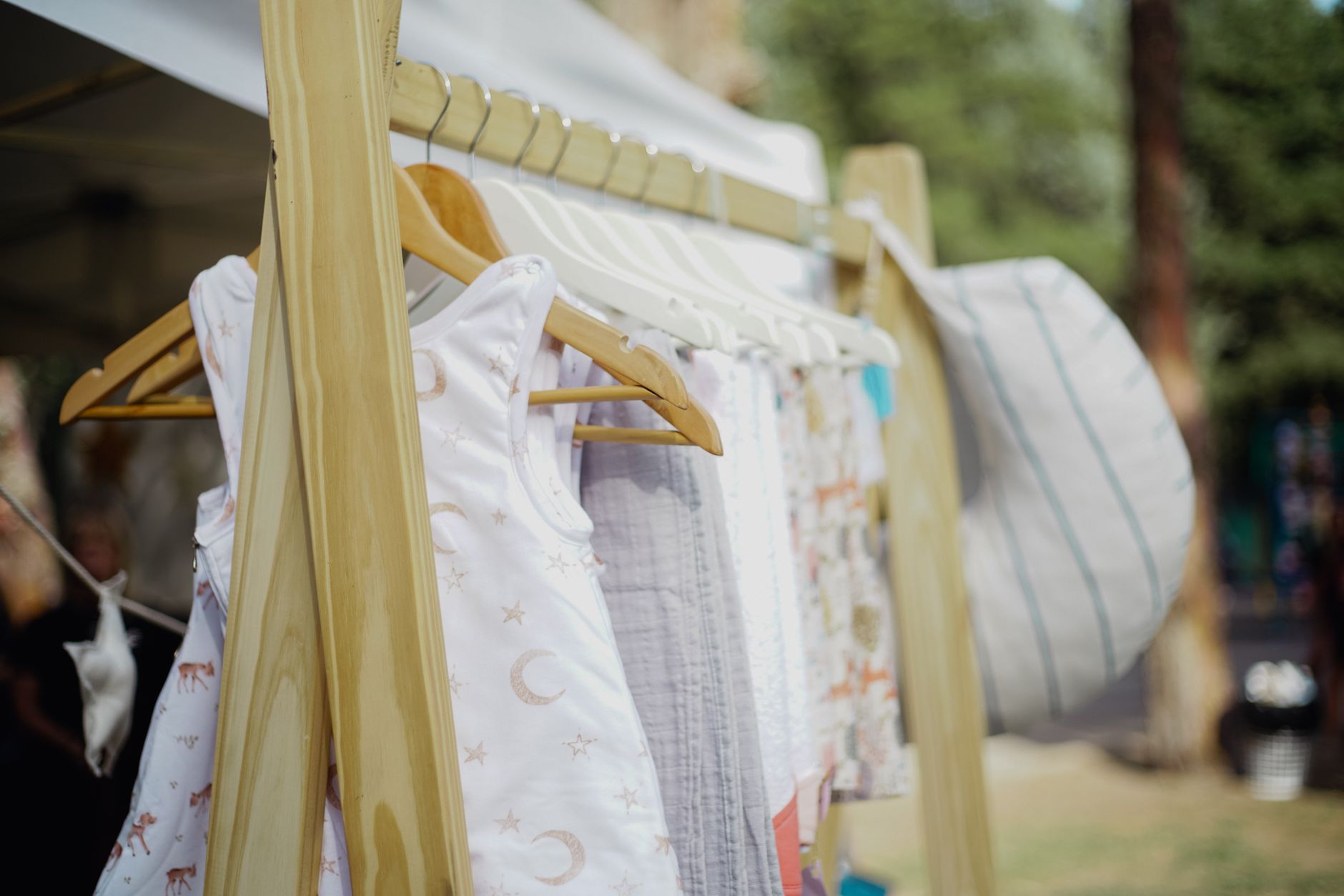
Children’s sleepwear is held to a vertical flame test that ordinary clothing never faces. Part 1615 covers sizes up to and including 6X and part 1616 covers sizes 7 through 14, and both define sleepwear as apparel such as nightgowns, pajamas and robes intended to be worn primarily for sleeping or related activities (1615.1(a), 1616.2(a)). Specimens are hung vertically and exposed to a flame along the bottom edge; to pass, the average char length of five specimens may not exceed 7.0 inches (17.8 cm) and no single specimen may burn the full 10-inch (25.4 cm) length (1615.3(b), 1616.3(b)). Testing follows a sampling plan by production unit, up to 500 dozen garments per garment production unit (1616.2(j)).
Three categories fall outside the definition. Diapers and underwear are excluded in both parts. Infant garments, sized 9 months or smaller, with one-piece garments no longer than 25.75 inches or two-piece garments with no piece over 15.75 inches, are excluded from part 1615 if they meet parts 1610 and 1611 and carry a size label in months (1615.1(c)). Tight-fitting garments that do not exceed the chest, waist, seat, arm, thigh, wrist and ankle dimensions tabulated for each size are excluded from both parts (1615.1(o), 1616.2(m)).
The tight-fitting route has its own labeling. The garment must carry a yellow hangtag, 1.5 by 6.25 inches, stating “For child’s safety, garment should fit snugly. This garment is not flame resistant. Loose-fitting garment is more likely to catch fire.”, and a permanent label reading “Wear Snug-fitting, Not Flame Resistant” on the front of the center-back size label, directly below the size, in at least 5-point sans serif capitals inside a border. Sleepwear that is subject to the standard must carry permanent precautionary care instructions protecting its flame resistance from agents or treatments known to degrade it (1615.5(a), 1615.31(b)). A loose-fitting pajama that has not passed the vertical test cannot be imported as sleepwear, whatever its hangtag says.
Exemptions and Guaranties
Part 1610 does not apply at all to hats that do not cover the neck, face or shoulders, gloves 14 inches long or shorter that are not attached to a garment, footwear other than hosiery, and interlining fabrics (1610.1(c)). Separately, two groups of fabrics are exempt from testing because decades of results show they consistently pass: plain-surface fabrics of any fiber weighing 2.6 ounces per square yard or more, and any fabric, plain or raised, made entirely of acrylic, modacrylic, nylon, olefin, polyester or wool, or combinations of them (1610.1(d)). A blend with a single non-listed fiber, such as 95% polyester and 5% spandex, does not fit the fiber exemption; a lightweight blend has to rely on weight or on testing.
Guaranties are how the Act allocates proof along the supply chain. Under 15 U.S.C. 1197(a), a person who receives in good faith a signed guaranty, naming the manufacturer or supplier and stating that reasonable and representative tests show conformance, and who does not further process the goods in a way that affects flammability, is protected from criminal prosecution. The guaranty can be separate (it may appear on the invoice), a continuing guaranty from seller to buyer, or a continuing guaranty filed with the Commission. It does not bar civil enforcement, seizure or an order to stop selling. Furnishing a false guaranty is itself unlawful (1197(b)).
An initial guaranty must rest on a program of reasonable and representative tests: at least one test showing conformance, which may be run outside the United States and may use a fabric of the same class, with the number and frequency left to the guarantor (1610.37). The guarantor must keep records of the tests relied on, including the style, fiber composition, construction and finish of each fabric covered (1610.38). An importer accepting a mill’s guaranty should hold a copy of the underlying test report and match the fabric description to the production fabric, because a guaranty for a different construction protects nothing.
| Product | Standard | Certificate | Notes |
|---|---|---|---|
| Adult garment of exempt fabric (e.g., 100% polyester) | 1610, exempt from testing | None enforced (81 FR 12587); optional disclaim | 1610.1(d) |
| Adult garment of non-exempt fabric (e.g., light rayon) | 1610 | GCC citing 1610 | Test before and after refurbishing |
| Children's day apparel | 1610, plus other children's rules | CPC, third-party lab | Exempt fabrics claimed as testing exclusions |
| Children's sleepwear sizes up to 6X | 1615 | CPC | Vertical test, 7.0 in average char |
| Children's sleepwear sizes 7 to 14 | 1616 | CPC | Same criteria as 1615 |
| Tight-fitting sleepwear or infant garment | 1610 and 1611 instead of 1615/1616 | CPC | Yellow hangtag and snug-fit label for tight-fitting |
| Hats, short gloves, footwear, interlinings | Outside 1610 | None | 1610.1(c) |
Certificates and CPSC Enforcement at Import
A garment subject to a Flammable Fabrics Act standard is a product that must be certified, because 16 CFR 1110.3 extends the certificate requirement to rules under any law the CPSC enforces. Adult apparel is certified on a General Certificate of Conformity; anything that is a children’s product, including all children’s sleepwear, needs a Children’s Product Certificate based on testing by a CPSC-accepted third-party lab. The CPSC’s 2016 policy statement (81 FR 12587) applies enforcement discretion to the certificate requirement for adult apparel made only of fabrics exempt from testing under 1610.1(d); that discretion does not extend to children’s apparel, where the exemption is claimed as a testing exclusion on the certificate.
Since July 8, 2026, the importer must file certificate data electronically in ACE through CPSC’s PGA Message Set at the time of entry for finished products made abroad, including goods entered for consumption from a foreign-trade zone, with an applicability date of January 8, 2027 for FTZ entries (16 CFR 1110.13(a)(1); 90 FR 1800 as corrected by 90 FR 45917). The certificate must identify each product, list every applicable rule separately, name the certifier and a records contact, and state the date and place of manufacture and of testing (1110.11), and it must be producible within 24 hours on request from CPSC or CBP (1110.13(c)). Exempt adult apparel can be declared with a disclaim message instead of a certificate, as explained in our guide to the CPSC disclaim.
Our CPSC eFiling service builds those messages from the importer’s certificates, and the broader border process, holds, sampling and refusal, is covered in our CPSC import compliance guide. CargoTrans has been a licensed customs broker since 1989, and its apparel customs brokerage team checks fabric content against the 1610 exemptions, flags sleepwear styles that need 1615 or 1616 testing, and confirms the certificate on file matches the factory and production dates on the invoice before the entry is transmitted.
Frequently Asked Questions
What does the Flammable Fabrics Act regulate?
The Flammable Fabrics Act regulates the flammability of clothing textiles, children’s sleepwear, carpets and rugs, mattresses and upholstered furniture through standards in 16 CFR parts 1610 to 1640. It makes it unlawful to import, make for sale or sell a product that fails an applicable standard (15 U.S.C. 1192(a)), and the CPSC enforces it.
Does all imported clothing have to be flammability tested?
No. Hats, gloves up to 14 inches, footwear and interlinings are outside 16 CFR 1610, and fabrics of 2.6 oz per square yard or more with a plain surface, or made entirely of acrylic, modacrylic, nylon, olefin, polyester or wool, are exempt from testing (1610.1(c) and (d)). Other clothing fabrics must be tested to support a guaranty and certificate.
What is a Class 3 fabric under 16 CFR 1610?
A Class 3 fabric burns rapidly and intensely and cannot be used in clothing. For a plain-surface fabric, that means the flame travels 5 inches up the specimen in less than 3.5 seconds in the 45-degree test, before or after refurbishing (16 CFR 1610.4).
What are the flammability requirements for children's pajamas?
Children’s sleepwear in sizes up to 14 must pass the vertical flame tests in 16 CFR 1615 (up to 6X) or 1616 (7 to 14): average char length of 7.0 inches or less and no full 10-inch burn. Tight-fitting garments within the size tables, and infant garments 9 months and under for part 1615, are excluded but must meet 1610 and 1611 and carry required labels.
Do I need a GCC for adult apparel?
Usually yes, if the fabric is subject to 16 CFR 1610 testing. The CPSC does not enforce the GCC requirement for adult apparel made only of fabrics exempt from testing under 1610.1(d) (81 FR 12587, 2016), and those goods may be declared with a disclaim in the eFiling message. Children’s apparel always needs a Children’s Product Certificate.
Does a supplier's guaranty protect the importer?
Partly. A good-faith guaranty under 15 U.S.C. 1197(a), based on reasonable and representative tests, protects the holder from criminal prosecution if the goods are not further processed, but it does not stop civil enforcement, seizure or recall. The importer still needs certificate data for eFiling and test records that match the actual fabric.