Importing LED lights into the United States involves four agencies before duty is even calculated: CBP decides whether the product is a lamp, a module or a luminaire, FDA expects entry data on LED products used for illumination, DOE and the FTC set efficacy and labeling rules for general service lamps, and the FCC governs the radio noise from the driver. The duty itself swings from 0% to more than 45% depending on that classification and on the country of origin.
This guide is for importers of LED bulbs, tubes, modules, fixtures and lighting sets for retail, commercial projects and OEM assembly. It covers how the 2022 HTS changes and CBP rulings split LED products between headings 8539 and 9405, what FDA actually requires at entry, where the DOE and FTC rules apply, how UL listing fits in, and what three common LED lines pay from China, Vietnam and Mexico.
Quantify your exposure in 20 minutes
Our trade strategists run your last 90 days of entries through Captain to surface refund eligibility, Section 232 traps and PNTR risk.
Classification of LED Lamps, Modules and Fixtures
Heading 8539 now has separate subheadings for LED modules (8539.51.00, free) and LED lamps (8539.52.00, 2%), while finished luminaires designed only for LED light sources sit in heading 9405, where the lines covered below carry rates of 3.9% to 7.6%. The split matters because a fixture, a retrofit kit and the light engine inside it can each land on a different line, and only some of those lines are on the China Section 301 lists.
CBP’s rulings draw the line by function. In HQ H298322 (January 2, 2020), CBP affirmed that packaged LEDs with multiple emitters and control circuitry, designed as a direct source of illumination for automotive lighting, were LED lamps of heading 8539, and distinguished them from bare LED packages mounted on a board, which stay in heading 8541 (light-emitting diodes, 8541.41.00, free). In NY N311719 (June 9, 2020), LED modules with a printed circuit board, connector, capacitors and a heatsink were classified as unfinished LED lamps under GRI 1 and GRI 2(a), because they had the essential character of the finished lamp. Both rulings predate the 2022 split of 8539.50 into modules and lamps, so the heading reasoning still holds but the subheading must be re-checked against the current text. The General Rules of Interpretation are the method for that re-check.
- Bare LED chips and packages, with no driver or control circuitry: 8541.41.00.
- LED modules (light engines, boards with LEDs and passive components meant to be built into a fixture): 8539.51.00.
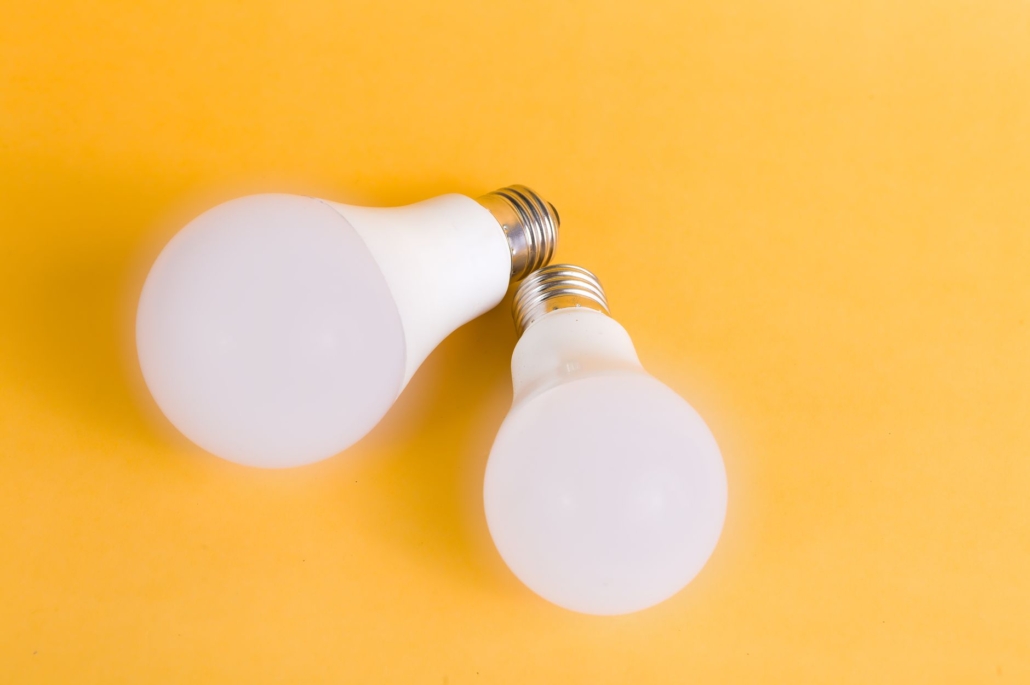
- LED lamps (bulbs, tubes and other self-contained light sources with a base or connector): 8539.52.00, with statistical suffixes for the lamp types in chapter 85 statistical note 8 and for linear and U-shaped tubes.
- Ceiling and wall fixtures designed solely for LED sources: 9405.11, split by brass, other base metal (7.6%) and other materials (3.9%).
- Other LED-only luminaires and lighting sets: 9405.42, including 9405.42.84 (3.9%) for non-metal fixtures and sets.
FDA Reporting for LED Lighting at Entry
FDA treats LEDs as radiation-emitting electronic products because they emit visible optical radiation, and CBP’s CSMS #17-000330 (June 6, 2017) told filers that LED products used for general or local area illumination, such as lamps and lightbulbs, must be submitted to FDA for review at import. The same message said FDA does not expect submission for finished goods that only use LEDs as indicator lights, such as toys, tablets, phones, shoes, household appliances, entertainment systems and remote controls, unless FDA regulates them for another reason.
The 2017 message set an FD2 flag on HTS 8541.40.2000, a line that no longer exists after the 2022 revision. The practical rule for current entries is to check the flag on the line actually used and, for illumination products, to transmit the entry to FDA with the manufacturer and product description. FDA’s import page states that products not subject to a federal performance standard do not require a Form FDA 2877, and general LED lighting has no such standard. FDA still screens every radiation-emitting product against its import alert database, so a manufacturer on an alert can hold an LED shipment even without a form requirement.
Energy Rules: DOE Efficacy and FTC Lighting Facts Labels
Since July 25, 2022, the sale of any general service lamp that does not reach 45 lumens per watt is prohibited under 10 CFR 430.32(dd), and general service LED lamps are covered products under the federal energy conservation program. The importer is treated as the manufacturer for DOE purposes, which means certification has to be in place before the product is distributed; the certification process, CCMS reporting and CBP’s power to refuse admission are covered in our guide to DOE energy efficiency rules.
The FTC adds a packaging requirement. Under 16 CFR 305.23(b), every general service lamp package, which by definition in 305.5(c) includes general service LED lamps, must show “Brightness” in lumens (rounded to the nearest five) and “Estimated Energy Cost” (based on 3 hours a day and $0.11 per kWh) on the principal display panel. A Lighting Facts label on a side or rear panel must list brightness, energy cost, life in years at 3 hours a day, light appearance on a scale from 2,600 K to 6,600 K, wattage, and the design voltage if it is not 120 volts. No other marks may appear inside the Lighting Facts box, and the ENERGY STAR logo may be added only by companies that have signed an agreement with DOE or EPA.
Both rules attach to the retail package, which is printed at the factory. Packaging artwork should be approved against 16 CFR 305 and the DOE certification data before mass production, because a package that fails 16 CFR 305 has to be relabeled before it can be sold.
Radio Interference From LED Drivers
An LED driver that switches power at high frequency is an unintentional radiator under 47 CFR 15.3(z), a device that generates radio frequency energy for use within the device without intending to radiate it, so LED lamps, drivers and fixtures fall under FCC Part 15. A smart fixture with Wi-Fi, Bluetooth or another radio adds an intentional radiator on top. The authorization route, labeling and the import conditions CBP sees are explained in our guide to FCC equipment authorization; for LED buyers the practical point is to obtain the supplier’s FCC test report for the exact driver and model being shipped, since a driver substitution at the factory changes the emissions profile.
Safety Listing Expectations: UL 8750 and UL 1598
No federal import rule requires an LED lamp or fixture to carry a UL or other safety listing, but the US market behaves as if one does. For workplaces, OSHA’s electrical rules at 29 CFR 1910.303(a) accept electrical equipment only if it is approved, and 29 CFR 1910.399 defines acceptable equipment primarily as equipment accepted, certified, listed or labeled by a nationally recognized testing laboratory (NRTL). That obligation falls on the employer that installs the fixture, which is why commercial buyers, electrical inspectors and project specifications ask for a listing mark before the product is ever imported.
In LED lighting, the standards most often cited by buyers are UL 8750 for LED equipment used in lighting products and UL 1598 for luminaires, and a listing from any OSHA-recognized NRTL can serve. None of this is checked by CBP at entry, but an unlisted fixture can be unsellable to the commercial channel it was bought for.
Duty Layers on LED Lighting by Origin
LED lighting pays the general (MFN) rate plus additional duties that depend on origin: the Section 301 China list duty of 25% under heading 9903.88.03 applies to the 9405 luminaire lines on List 3 but not to 8539.52.00 LED lamps, and the Section 301 forced-labor duty in effect since July 24, 2026 adds 12.5% for China and Vietnam and 10% for Mexico. Mexican goods entered free under USMCA are exempt from the forced-labor duty under heading 9903.05.94. None of these lines is on the Section 232 steel and aluminum derivative lists in HTS chapter 99 note 16.
| HTS line | Product | MFN | China | Vietnam | Mexico (non-USMCA) | Mexico (USMCA) |
|---|---|---|---|---|---|---|
| 8539.52.00.91 | LED lamps, other | 2% | 14.5% (MFN + 12.5% forced labor) | 14.5% (MFN + 12.5%) | 12% (MFN + 10%) | Free |
| 9405.11.60.10 | LED-only ceiling or wall fixtures, base metal other than brass, household | 7.6% | 45.1% (MFN + 25% List 3 + 12.5%) | 20.1% (MFN + 12.5%) | 17.6% (MFN + 10%) | Free |
| 9405.42.84.40 | Other LED-only luminaires, not of base metal | 3.9% | 41.4% (MFN + 25% List 3 + 12.5%) | 16.4% (MFN + 12.5%) | 13.9% (MFN + 10%) | Free |
What moves the number
The largest swing is classification. A metal-bodied LED fixture from China in 9405.11.60 pays 45.1%, while the LED lamps it uses pay 14.5% if imported separately, so kits and retrofit assemblies need a documented GRI analysis. Origin is the second lever: final assembly in Vietnam or Mexico changes the duty only if the work is a substantial transformation, and the USMCA exemption requires a valid preference claim under the USMCA rules of origin. The forced-labor duty itself is explained in our article on Section 301 forced labor tariffs. Importers running mixed lighting programs across several origins usually work these lines with a consumer products customs broker before the first purchase order.
Frequently Asked Questions
Do I need FDA approval to import LED lights?
No, LED lighting does not need FDA approval or a Form FDA 2877, because there is no federal performance standard for it. FDA does expect entry data for LED products used for illumination, such as lamps and bulbs, under CBP CSMS #17-000330, and it screens shipments against its import alerts.
What is the HTS code for LED light bulbs?
LED lamps are classified in 8539.52.00 at a 2% general rate, with statistical suffixes for lamp type. LED modules without a lamp base go to 8539.51.00 (free), and finished LED fixtures go to heading 9405.
What is the tariff on LED lights from China?
It depends on the line. LED lamps in 8539.52.00 pay 14.5% (2% MFN plus the 12.5% forced-labor duty). LED fixtures in 9405.11.60 and 9405.42.84 are on Section 301 List 3, which adds 25%, for totals of 45.1% and 41.4% as of November 2026.
Do imported LED bulbs need a Lighting Facts label?
Yes, general service LED lamps need the FTC label under 16 CFR 305.23(b). The package front must show brightness in lumens and estimated yearly energy cost, and a Lighting Facts panel must show brightness, energy cost, life, light appearance and wattage.
Is UL listing required to import LED fixtures?
No federal import rule requires it, and CBP does not check it at entry. Listing by an OSHA-recognized NRTL is required for equipment used in workplaces under 29 CFR 1910.303 and 1910.399, and commercial buyers and project specifications commonly ask for it.
Do LED lights need FCC authorization?
Yes, LED lamps, drivers and fixtures with switching electronics are unintentional radiators under FCC Part 15, and fixtures with Wi-Fi or Bluetooth are also intentional radiators. The authorization route depends on the device type.
Are LED lights from Mexico duty-free?
Yes, if they qualify for USMCA and are entered free under that agreement, which also exempts them from the 10% forced-labor duty under heading 9903.05.94. Non-qualifying Mexican LED products pay MFN plus 10%.