Apparel carries some of the highest MFN rates in the tariff, and since July 24, 2026 a Section 301 duty on top. We file the classification, the labeling review, and the forced-labor evidence for apparel, fashion, textiles, footwear, technical apparel and luggage.
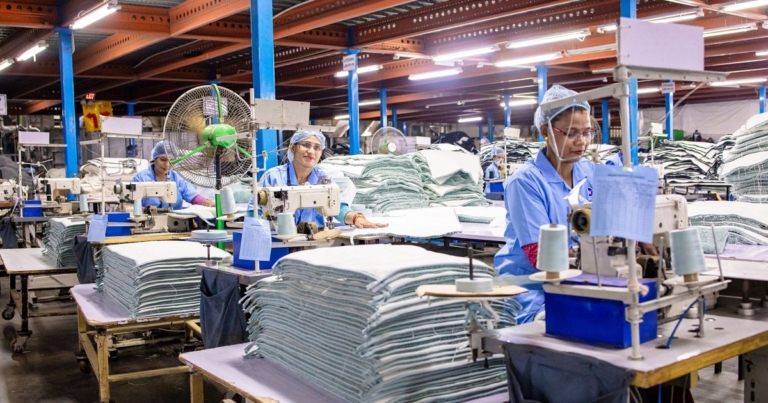
CargoTrans Inc. is a licensed US customs broker (Manhasset, NY) that clears apparel and textile imports for brands, retailers and private-label programs: handbags and luggage in HTS Chapter 42, fibers, yarns and fabrics in Chapters 50 to 60, apparel in Chapters 61 and 62, home and made-up textiles in Chapter 63, and footwear in Chapter 64.
Apparel duty starts high and stacks. A cotton knit sweater pays 16.5% MFN before anything is added, and since July 24, 2026 products of most of 60 economies add a Section 301 forced-labor duty of 10% or 12.5%. Our apparel and footwear tariff guide walks through the rates by chapter.
Then come the rules that decide whether goods can be sold: fiber content labels, flammability, and forced-labor evidence under UFLPA. Store replenishment and e-commerce fulfillment sit with our retail and consumer goods logistics team; this page covers the entry.
16.5%
MFN rate on cotton knit sweaters before Section 301
10% / 12.5%
Section 301 forced-labor duty by origin since Jul 24, 2026
Jun 21, 2022
UFLPA rebuttable presumption in force
Free Entry Review
Talk to a Licensed Broker
Quick 30-min review of your styles, HTS lines, origins, and labels. No obligation.
We reply within 1 business day · Your data stays private.
Capabilities
Our Apparel Customs Broker Capabilities
Six functions that take a style from tech pack to release, with the classification, the label and the supply chain evidence settled before the goods sail.
01
Knit, Woven and Fiber Classification
Each style classified from fabric construction and fiber content, not the product name.
Chapter 61 knit vs. Chapter 62 woven
Chief weight fiber and blends
Gender and construction for statistical suffixes
Footwear upper and outer sole materials
02
Section 301 and Origin Planning
Forced-labor duty, China list duty and exemptions modeled by origin.
10% or 12.5% by origin economy
CAFTA-DR textile exemption, 9903.05.95
China List 4A and Lists 1 to 3 per line
03
Textile Labeling Review
Labels checked against the Textile Act rules before production.
Fiber content by percentage, 16 CFR 303
Country of origin and English language
Company name or RN under 16 CFR 303.20
04
Flammability Compliance
Fabrics and garments matched to the flammability standard that applies.
16 CFR 1610 Class 1, 2 or 3
Raised-surface and sheer fabric testing
Certificates eFiled with the entry
05
UFLPA and Forced-Labor Evidence
Cotton and fiber supply chains traced before CBP asks.
Bale-to-garment traceability files
Entity List screening of suppliers
Detention and exception responses
06
Valuation and First Sale
Customs value built correctly, and lowered where the law allows.
We classify from fabric construction and fiber content, because the knit or woven decision and the chief weight fiber set the rate before any Chapter 99 duty is added.
Labels are checked against 16 CFR 303 at the sample stage, when fixing fiber content or origin wording costs a reprint, not a relabeling at the port.
Supply chain maps for cotton and synthetic fibers are built per supplier before the first shipment, so a UFLPA detention is answered with documents already on file.
Valuation is reviewed for assists and first sale, so the value that carries every duty layer is no higher than the law requires.
Our Process
How Our Apparel Customs Broker Process Works
01
Style and Fabric Intake
Collect tech packs, fiber content and fabric construction.
02
Classify and Price Duty
Assign HTS lines and model MFN plus Section 301.
03
Labels and Evidence
Review labels and build the supply chain file.
04
File the Entry
Transmit entry, textile data and certificates in ACE.
05
Release and Respond
Answer CBP requests and detentions with records on file.
A cotton knit sweater from Vietnam pays 29% today, the same sweater from China 36.5%, and a UFLPA detention can hold either one until the supply chain is proven.
We settle classification and evidence before the order ships.
A CargoTrans licensed broker will review your styles, labels and supply chain files and flag what puts your next entry at risk.
Protected by reCAPTCHA. We respond within 1 business day. No spam, ever.
Control Tower
Apparel Customs Broker Entries, Live in the Control Tower
The Captain Control Tower shows each apparel entry beside its HTS lines, Chapter 99 headings and open requests, so a CBP Form 28, a detention notice or an exam is visible as soon as it posts in ACE.
It runs on our customs clearance software, which keeps duty by style, by origin and by season in one view, useful when a line is sourced from four countries at once.
Tech packs, fiber content tests, label artwork, flammability reports and supply chain maps are stored with each entry, so a CBP request or a detention is answered from one file.
Do I need a customs broker to import clothing from Vietnam?
No law requires one, but commercial apparel importers almost always use a licensed broker because the classification alone decides most of the duty. A cotton knit sweater under 6110.20.20 from Vietnam pays 16.5% MFN plus the 12.5% Section 301 forced-labor duty under 9903.05.84, or 29% in total. The same garment classified as woven, or as a different fiber, can land on a different rate. You also need labels that meet 16 CFR 303, fabrics that pass 16 CFR 1610, and supply chain evidence that holds up under UFLPA if cotton is involved. Our Vietnam to US tariff calculator shows the stack for any line; you remain the importer of record either way.
What is the difference between knit and woven apparel for customs?
Knit or crocheted apparel is classified in HTS Chapter 61, and apparel that is not knitted or crocheted, which in practice means woven, is classified in Chapter 62. The two chapters have separate headings, notes and rates, so the same style of shirt can carry a different duty depending on how the fabric was made. Within each chapter, the next questions are the garment type, the chief weight fiber (cotton, wool, man-made fibers), and features that move it between headings, such as garment length or the type of front opening. The determination comes from the fabric, not the product name on the invoice, so we classify from the tech pack, the fabric specification and, when needed, a physical swatch.
What labels does imported clothing need?
Imported apparel needs a label that meets the Textile Fiber Products Identification Act rules in 16 CFR part 303: the generic fiber names and percentages by weight, the country of origin, and the identity of the manufacturer or of a US company that markets the product. That identity can be the company name or a registered identification number (RN), which the FTC issues under 16 CFR 303.20 to qualified US businesses. All required information must be in English. Wool products follow 16 CFR part 300 in addition, and apparel also needs care instructions under the FTC care labeling rule in 16 CFR part 423. Labels that are wrong at entry can lead to relabeling under CBP supervision. We review label artwork against the fiber test and the actual origin before production.
Does the Section 301 forced-labor duty apply to apparel?
Yes, unless an exemption covers the goods. Since July 24, 2026, products of 60 economies pay an additional 10% or 12.5% under headings 9903.05.20 to 9903.05.84 on top of the MFN rate (for the EU, Japan, South Korea, Switzerland and Taiwan, only the amount needed to bring the total to 10% or 12.5%), and apparel is not excluded. Bangladesh, Cambodia, India, Indonesia and Pakistan are in the 10% group; China and Vietnam pay 12.5%. Textile and apparel goods of the CAFTA-DR countries entered duty-free under that agreement are exempt under 9903.05.95. USTR also stated it will establish, when feasible, tariff-rate quotas for Bangladesh, Cambodia, Indonesia and Malaysia tied to their imports of US cotton and textile inputs; no Federal Register notice creating them had been published as of October 27, 2026, so the full rate applies today.
How does UFLPA affect apparel and textile imports?
Under the Uyghur Forced Labor Prevention Act, CBP applies a rebuttable presumption, in force since June 21, 2022, that goods mined, produced or manufactured wholly or in part in the Xinjiang Uyghur Autonomous Region, or by an entity on the UFLPA Entity List, are prohibited under 19 U.S.C. 1307. Cotton is a central target, so apparel made anywhere can be detained if its yarn or fabric traces back to the region. To obtain release, an importer must show that the goods have no connection to the region or listed entities, or meet the strict standard for an exception. That means traceability documents from the bale through spinning, weaving or knitting, dyeing and sewing. We build that file per supplier before the first shipment and respond to detentions from it.
What flammability rules apply to imported apparel?
Clothing textiles sold in the United States must meet the Flammable Fabrics Act standard in 16 CFR part 1610. The test classifies fabrics as Class 1 (normal flammability, acceptable for clothing), Class 2 (intermediate flammability, which applies only to raised-surface textiles) or Class 3 (rapid and intense burning, not permitted in clothing). Plain-surface cotton and synthetic fabrics usually reach Class 1, while brushed, napped or very sheer fabrics need testing. Children's sleepwear falls under separate, stricter standards. Garments that must be certified to these standards need a certificate, which since July 8, 2026 is eFiled with the entry. We match each fabric to the rule that applies and confirm the test report before shipment.
Can first sale valuation lower duty on apparel?
It can, when the supply chain has a qualifying sale before the one to the US importer. Customs value is normally the transaction value of the sale for export to the United States under 19 U.S.C. 1401a. In a multi-tier chain, where a trading company buys from the factory and resells to the importer, the earlier factory sale can serve as the basis of value if it was a bona fide sale, at arm's length, and clearly destined for the United States when it was made. Because every ad valorem layer, including MFN and Section 301, is charged on that value, a lower first sale price lowers all of them. It requires documents from the middleman that many vendors resist sharing. Our first sale for export team reviews eligibility before you restructure.
Why was my apparel shipment held by CBP?
Apparel holds usually come from one of five causes. A UFLPA detention, where CBP presumes cotton or other inputs came from the Xinjiang region or a listed entity. A request for information on CBP Form 28 about fiber content, construction or origin, often on a style whose classification sets a high rate. A country of origin question, because apparel origin follows specific textile rules and a garment cut in one country and sewn in another needs a careful answer. A label that does not meet 16 CFR 303. Or a flammability or certificate issue on regulated garments. We read the notice, respond with the tech packs, tests and supply chain records already in the file, and track every response deadline. Storage and demurrage during a hold are for the importer's account.