Shippers with exposure to international trade need more than headlines—they need to know which countries are actively negotiating tariffs and how those changes affect specific HS codes, shipments, and landed costs. The current trade environment is defined by rapid policy shifts, with dozens of countries simultaneously engaged in tariff negotiations with the United States. For importers and exporters, the pace of change has made reactive management obsolete.
CargoTrans’ Control Tower platform with integrated tariff tracking delivers this operational intelligence in real time—turning headline trade news into actionable shipment-level data that your operations, finance, and procurement teams can act on immediately.
Quantify your exposure in 20 minutes
Our trade strategists run your last 90 days of entries through Captain to surface refund eligibility, Section 232 traps and PNTR risk.
Tariff Negotiations: From Headlines to Shipment Impact
The challenge with tariff negotiations is not a lack of information—it is the gap between macro-level trade policy announcements and the micro-level question that actually matters to shippers: how does this specific negotiation affect my specific shipments, purchase orders, and landed costs?
The Current Negotiation Landscape
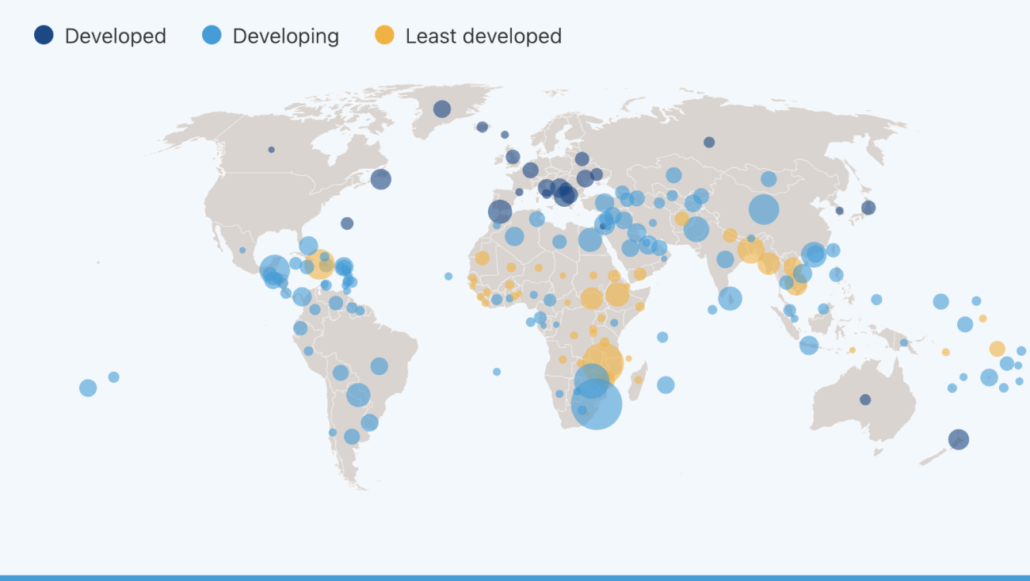
Over 50 countries have reached out to engage in tariff discussions, creating a dynamic and fast-moving regulatory environment. Recent developments include significant attention on European trading partners—including Denmark, Norway, Sweden, France, Germany, the UK, the Netherlands, and Finland—where tariff rates tied to geopolitical disputes have created new cost exposure for shippers with European supply chains.
Simultaneously, major Asian trading partners including Vietnam, Indonesia, Japan, and India are engaged in active negotiations seeking to reduce rates that currently range from 20% to 50% down to reciprocal levels or structured exemptions. The outcome of each negotiation—and the timing of when rates formally change—directly impacts the landed cost of goods moving from those origins.
Understanding retaliatory tariffs is essential context here: many of the current elevated tariff rates on goods from specific countries are punitive in nature, imposed in response to trade disputes rather than as standard commercial policy. This means they can change more rapidly—both up and down—than standard MFN rates, and shippers need tools capable of tracking those changes at speed.
Why Standard Tracking Tools Are Not Enough
Most freight tracking platforms tell you where your shipment is. Very few tell you what that shipment will cost in total once duties are applied at destination. In an environment where tariff rates on goods from a given country can change with 24-48 hours notice, the cost calculation for in-transit shipments can shift materially between the time a purchase order is placed and the time the goods clear customs.
This gap between logistics visibility and tariff cost visibility is exactly what the Captain Control Tower was designed to close. Our supply chain visibility software integrates shipment tracking with tariff intelligence, so you always know both where your goods are and what they will cost to import.
Which Countries Are Negotiating Tariffs Right Now?
Active negotiations are underway with dozens of trading partners, creating both risk and opportunity for shippers depending on their current sourcing strategy. The key challenge is that negotiations move at their own pace—deals can close rapidly, deadlines can be missed, and interim arrangements can shift the effective rate applied to specific HS codes without advance notice.
Categories of Current Negotiation Status
From a shipper’s planning perspective, countries involved in tariff discussions generally fall into several categories that carry different risk profiles:
- Active negotiations with near-term deal potential: Countries where framework agreements are in advanced stages, making a rate reduction likely in the near term. For goods from these countries, shippers may want to delay purchase decisions pending deal closure or build rate-uncertainty buffers into their landed cost models.
- Negotiations in early stages with uncertain timelines: Countries where discussions have begun but no framework exists, meaning current elevated rates are likely to persist for a significant period. Sourcing from these countries requires pricing current tariff rates into all cost projections.
- Countries where rates have been locked via deal closure: Once a deal closes—whether a reduction, exemption, or structured phase-down—shippers can plan with certainty. Trade advisory services help ensure you are meeting the certificate of origin and documentation requirements to qualify for negotiated rates.
- Countries facing escalating tariffs amid failed negotiations: When negotiations break down, rates can move upward. Shippers with concentration in a single high-tariff origin country face the most exposure when this occurs.
Effective supply chain risk management requires mapping your active purchase orders and supplier relationships against each of these categories continuously—not just at the time of sourcing decisions.
Tariff Tracker: Real-Time Visibility Into Negotiation Outcomes
Tariff rates can change overnight as deals close, deadlines are reached, or executive actions take effect. A tool that was accurate yesterday may be materially wrong today when it comes to duty cost projections on active shipments.
How the Captain Tariff Tracker Turns News Into Action
CargoTrans’ tariff tracking capability within the Captain Control Tower platform provides several interconnected functions that transform tariff intelligence from background noise into operational data:
- Live tariff schedule synchronization: Rates are synced from authoritative trade authorities as changes are published, so your cost models always reflect the current regulatory reality rather than outdated data.
- Automatic HS code and origin mapping: New rates are automatically mapped to your specific HS codes and declared origin countries—so when a rate changes for a particular commodity from a particular country, you immediately see which of your active shipments are affected, not which abstract tariff line items changed.
- Shipment-level impact alerts: Proactive notifications when an in-transit shipment’s origin country is involved in a rate change. If your Denmark-origin cargo is affected by a tariff shift, you receive an alert with the specific shipment, the new applicable rate, and the estimated change in duty liability—before the goods arrive at the U.S. port of entry.
- Landed cost scenario modeling: Finance teams can model the impact of different tariff rate scenarios on their cost structure before committing to new purchase orders. Running a 10% vs. 25% tariff scenario on a specific HS code takes minutes, not days.
This goes far beyond news summaries. Your team sees exactly which shipments, purchase orders, and supplier relationships are exposed—and when rates shift, the financial impact is calculated automatically rather than requiring manual analysis.
Using the Tariff Calculator for Pre-Purchase Decision Support
One of the most valuable applications of tariff intelligence is in the pre-purchase phase, before goods are ordered. Our tariff calculator allows procurement teams to model total landed cost by origin country before committing to a supplier, making the cost implications of different sourcing strategies quantifiable and comparable.
This capability is particularly powerful during active negotiation periods, when the risk-adjusted cost of sourcing from a country under negotiation may be significantly different from the face-value tariff rate. A de minimis rule analysis may also be relevant for certain product categories and shipment sizes, and our tariff team incorporates this into landed cost calculations.
Audit your derivative HTS exposure
Our brokers will review your top 50 derivative HTS lines and flag Section 232 valuation risk before CBP does.
Operational Steps for Shippers During Active Tariff Negotiations
While countries negotiate, your supply chain cannot wait in a holding pattern. The appropriate response is not to pause purchasing decisions until negotiations conclude—it is to build tariff intelligence into your operational decision-making framework so you can move with confidence despite policy uncertainty.
A Practical Operational Framework for Tariff Uncertainty
Use Captain Control Tower intelligence to take these operational steps while negotiations are ongoing:
- Identify and prioritize at-risk shipments: Use exception-based alerts tied to tariff-exposed origin countries to immediately surface which active shipments carry the most financial exposure. Not all shipments from a country in negotiation carry equal risk—high-value, high-volume shipments warrant the most attention.
- Evaluate proactive re-routing opportunities: When a primary sourcing country faces elevated and potentially increasing tariffs, assess whether alternative suppliers in deal-closed or lower-tariff countries can fulfill the same product requirements. This analysis must weigh tariff cost differentials against supplier capability, lead time, and quality considerations.
- Stress-test your cost models: Run landed cost scenarios across multiple tariff rate assumptions—both the current rate and potential escalation scenarios—so that finance has a range of outcomes to plan around rather than a single point estimate that may prove incorrect.
- Prepare documentation for negotiated rate qualification: If a deal closes and your goods qualify for a reduced rate, you must have the correct documentation—certificates of origin, supplier declarations, and supporting evidence—ready to submit at customs. Our customs clearance support and customs consulting services ensure you capture every available rate reduction.
- Coordinate cross-functionally using shared dashboards: Share tariff-impacted shipment dashboards with procurement, finance, and carriers so that all stakeholders are working from the same data. Misalignment between teams on tariff cost projections creates confusion, delays, and suboptimal decisions.
Small and mid-sized shippers gain enterprise-level tariff visibility through this approach—without building their own compliance team or investing in standalone trade intelligence software.
Building a Tariff-Resilient Supply Chain
The current period of intensive tariff negotiations is not a temporary disruption to be weathered passively. It represents a structural shift in how global trade costs are determined—one where the ability to monitor, model, and respond to tariff changes is becoming a core logistics competency rather than a specialized legal or compliance function.
Businesses that build tariff intelligence into their standard operational workflows—through tools like the Captain Control Tower and access to expert trade advisory services—emerge from periods of tariff uncertainty with stronger supply chains. They have diversified their supplier base, optimized their country-of-origin strategy, and built the organizational capabilities to respond quickly when policies shift.
Key dimensions of tariff resilience include:
- Supplier diversification across multiple origin countries with different tariff risk profiles
- Real-time tariff monitoring integrated into standard logistics operations, not treated as a separate compliance function
- Pre-built scenario models that allow rapid financial assessment when rate changes occur
- Expert advisory access for complex classification, origin, and FTA qualification questions
- Documentation readiness to immediately claim reduced rates when negotiated deals take effect
The supply chain challenges created by tariff volatility are real and significant—but so are the opportunities for shippers who invest in the right visibility and intelligence tools.
Stay Ahead of Tariff Negotiations with the Captain Control Tower
Countries wanting to negotiate tariffs are reshaping global trade daily—sometimes hourly. The rules governing what your shipments cost to import are no longer stable enough to evaluate once at sourcing and forget until delivery. They require continuous monitoring and the operational capability to respond when they change.
CargoTrans combines end-to-end shipment visibility with integrated tariff tracking to help you navigate this uncertainty with confidence. You monitor negotiations, protect your margins, and optimize your routing—all from one platform designed specifically for U.S. shippers managing global supply chains.
Our team is ready to walk you through how the Captain Control Tower can be integrated into your current operations, and how our trade advisory team can provide the expert guidance needed to turn tariff uncertainty into competitive advantage.