
The Poison Prevention Packaging Act of 1970 (PPPA, 15 U.S.C. 1471-1476) requires certain household substances to be sold in special packaging: packaging that children under five find significantly difficult to open within a reasonable time and that normal adults can still use properly. The list of substances sits in 16 CFR 1700.14, the performance standard in 1700.15 and the test protocol in 1700.20. CPSC administers it, but it reaches well beyond CPSC’s usual consumer products, into drugs, cosmetics and dietary supplements regulated by FDA.
For importers of bottles and closures, cosmetics, supplements and household chemicals, the hard part is not the closure. It is knowing whether a formula triggers the rule at all, which test data proves the package works, and who has to sign the certificate when the bottle comes from one country, the cap from another and the product is filled somewhere else.
Quantify your exposure in 20 minutes
Our trade strategists run your last 90 days of entries through Captain to surface refund eligibility, Section 232 traps and PNTR risk.
Which Substances Require Special Packaging Under 16 CFR 1700.14
PPPA applies to a household substance, defined in 16 CFR 1700.1(b)(2) as something customarily sold for use or stored in or around the household that is a hazardous substance under the Federal Hazardous Substances Act, a food, drug or cosmetic under the FFDCA, or a portable household fuel. The obligation attaches to the package, meaning the immediate container, and to any outer retail display wrapping; bulk containers shipped to packers or distributors are excluded.
Section 1700.14(a) then lists more than 30 categories, most of them defined by a concentration or an amount per retail package. That structure is the first screening question for any importer: the same ingredient can be in scope at one fill size and out of scope at another.
- Drugs by active ingredient and amount: aspirin, acetaminophen over one gram per package, ibuprofen of one gram or more, naproxen of 250 mg or more, diphenhydramine over 66 mg, loperamide over 0.045 mg, lidocaine over 5.0 mg, dibucaine over 0.5 mg, minoxidil over 14 mg, imidazolines of 0.08 mg or more, prescription oral drugs, and OTC drugs whose active ingredient was previously prescription-only.
- Iron: dietary supplements and drugs with 250 mg or more of elemental iron per package, at 0.025 percent or more for liquids and 0.05 percent or more for nonliquids.
- Personal care: mouthwash with 3 g or more of ethanol per package, fluoride products over 50 mg of elemental fluoride and 0.5 percent concentration, permanent wave neutralizers with sodium or potassium bromate above set amounts, and liquid household products over 5 percent methacrylic acid.
- Household chemicals: sodium or potassium hydroxide (10 percent dry forms, 2 percent other forms), turpentine, methanol at 4 percent, sulfuric acid, ethylene glycol, paint solvents, glue removers with acetonitrile, lighter and lamp fuels, and liquid furniture polish with petroleum distillates.
- Low-viscosity hydrocarbons: nonemulsion liquids with 10 percent or more hydrocarbons and viscosity under 100 SUS at 100 degrees F, in two parallel entries, one for FHSA hazardous substances (1700.14(a)(31)) and one for drugs and cosmetics (1700.14(a)(32)), with exemptions for spray-only access and products that cannot flow freely.
Child-Resistant and Senior-Friendly Testing Under 16 CFR 1700.20
Section 1700.15(b) sets the pass marks. Child-resistant effectiveness must be at least 85 percent without a demonstration and at least 80 percent after one (80 percent for unit packaging). Adult ease of use is measured as senior adult use effectiveness, which must be at least 90 percent. Some categories add restricted flow under 1700.15(d): no more than 2 milliliters released per activation, as with liquid furniture polish.
Section 1700.20 prescribes how those numbers are produced, and the details shape what a valid test report looks like.
- Child panel: groups of 50 children aged 42 to 51 months, tested in pairs, up to 200 children in a sequential test, with no more than 20 percent from one site. Children get five minutes, a demonstration, then five more minutes.
- Senior-adult panel: 100 adults aged 50 to 70, 70 percent women, no more than 24 percent from one site. Each participant gets five minutes to open and close the package, then a one-minute test on a second package.
- Younger-adult panel: 100 adults aged 18 to 45, used instead of the senior panel only for aerosols and for products that genuinely require a metal package with a reclosable metal closure.
- Sample conditioning: reclosable packages assembled by the lab are secured at least 72 hours before testing, and torque-dependent closures are applied at the same torque as the packaging line, recorded in the report.
Why ISO 8317 Data Does Not Close the File
Closure suppliers in Asia and Europe often hand over ISO 8317 or EN 862 reports. CPSC staff stated in a March 21, 2024 webinar that equivalent ISO, EN or CSA standards cannot be used to certify PPPA compliance, because the protocols and pass criteria differ. CPSC did accept those reports temporarily during the pandemic, under an enforcement discretion letter that expired on December 25, 2020. For U.S. sale, the protocol data has to follow 16 CFR 1700.20.
Who Certifies: The GCC for PPPA Products and CPSC's Position
CPSC lists special packaging under 16 CFR part 1700, and liquid nicotine packaging under the Child Nicotine Poisoning Prevention Act, among the rules that require a General Certificate of Conformity. Its 2020 enforcement letter states that the importer or the domestic party that packages a PPPA-regulated substance in special packaging must issue the GCC, supported by protocol data obtained under 1700.20. Testing does not have to come from a CPSC-accepted third-party laboratory, which separates PPPA from the children’s product certificate regime for toys.
The certificate is for the finished product: the filled, closed retail package. CPSC staff guidance allows the finisher to rely on a closure or bottle supplier’s test report under 16 CFR part 1109, but it must still issue its own GCC. Since July 8, 2026, imported finished products that require a certificate carry its data into ACE at entry through the CPSC PGA Message Set (16 CFR 1110.13), so a PPPA product imported already filled needs that data ready before the entry is filed. As a licensed customs broker, CargoTrans transmits the CPSC PGA Message Set with the entry through our CPSC eFiling service; the certificate data itself comes from the certifier.
When a Test Report Stops Covering the Product
A protocol test covers a specific closure on a specific container. CPSC staff guidance says retesting is needed when the plastic changes (HDPE to PP is the agency’s own example), and that the same cap on a different bottle may need new data, because a glass bottle’s lower thread friction can make a closure easier to open. Changes in resin source, molding process, package size or shape, and incoming complaints are all retest triggers. An old report remains valid only if nothing material has changed, which an importer should be able to show through change control at the converter.
Imported Bottles, Closures and Finished Goods: Who Is Responsible
Under CPSC’s reading of PPPA, the entity that fills the package with the regulated substance is the manufacturer, and the manufacturer of an empty package is not the manufacturer of the end product. That one rule sorts most import scenarios.
An importer of empty child-resistant closures and bottles for a U.S. filler is supplying components. Component part certificates are voluntary and are not eFiled when the component is imported (16 CFR 1110.19), but the closure importer’s commercial value depends on handing the filler a usable 1700.20 report for the exact closure and container pairing, with the application torque. A U.S. brand that has product filled abroad and imports it finished is the certifier as importer of record and has to hold the protocol data and issue the GCC before entry.
Two exceptions matter commercially. A manufacturer may sell one size in conventional packaging if it also supplies popular sizes in special packaging, labeled “This Package for Households Without Young Children” (or “Package Not Child-Resistant” on small panels), under 16 CFR 1700.5; prescription drugs follow a separate rule under 15 U.S.C. 1473(b), which allows conventional packaging only when the prescriber orders it or the purchaser requests it, and CPSC can order a product into special packaging only under 1473(c). And there is no institutional-use exception: CPSC’s February 2022 guidance says labeling a product “For Institutional Use Only” does not remove it from PPPA when it can reach households.
Noncompliance has more than one enforcement channel. A PPPA violation makes a drug misbranded under 21 U.S.C. 352(p), a cosmetic under 362(f), a food such as a dietary supplement under 343(n), and a hazardous substance under 15 U.S.C. 1261(p). For consumer products in CPSC’s jurisdiction, a product without a required certificate can be refused admission under 15 U.S.C. 2066(a)(2).
Cosmetics, Supplements, E-Liquids and Household Chemicals: Worked Examples
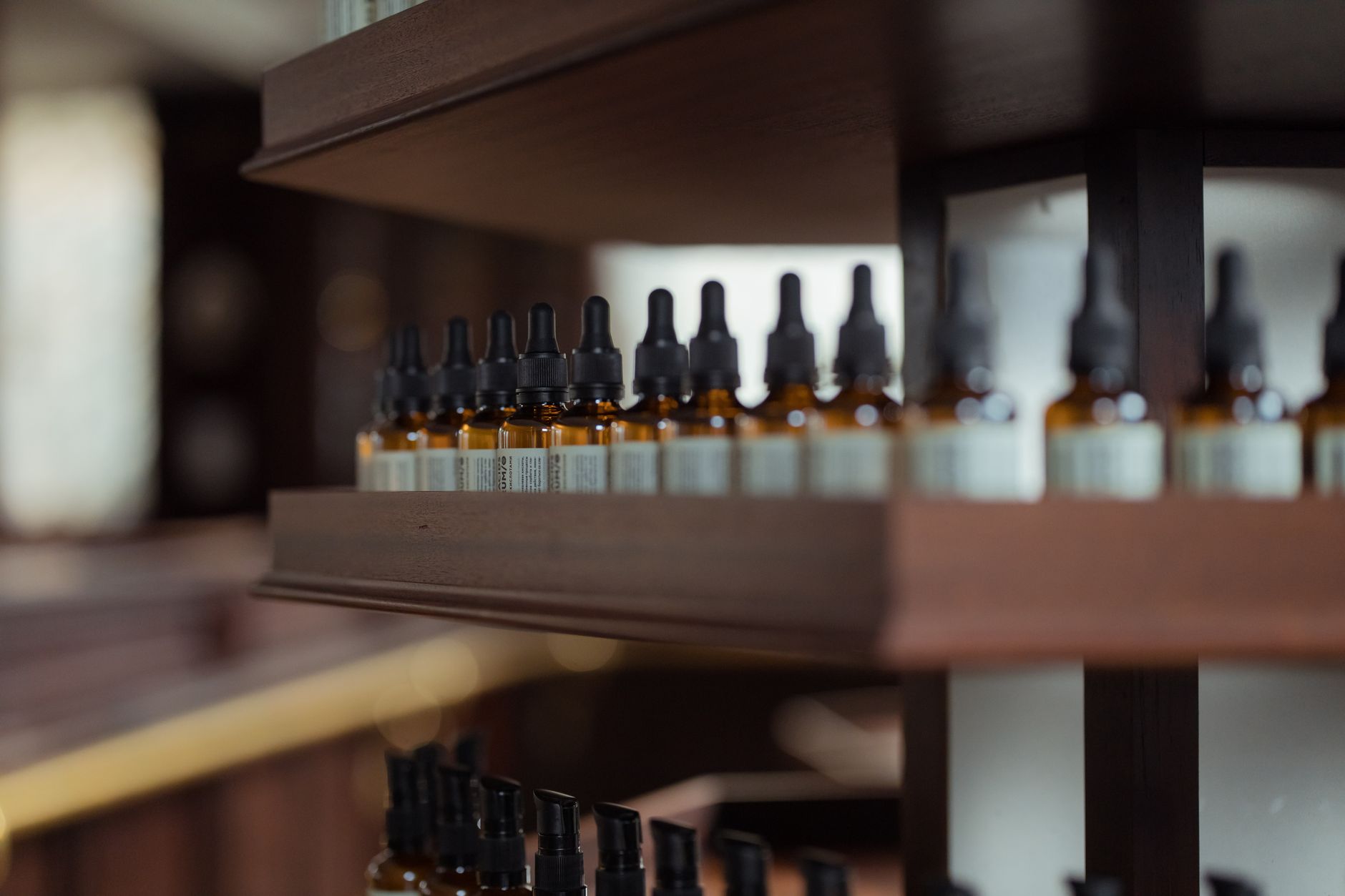
Cosmetics: a nonemulsion liquid such as a cleansing or massage oil with 10 percent or more hydrocarbons and viscosity under 100 SUS falls under 1700.14(a)(32); a cream emulsion does not. Liquid nail products over 5 percent methacrylic acid fall under (a)(29). Formulas that also make drug claims add the drug entries, which is why the cosmetic vs OTC drug call should come first, and cosmetics also carry the registration and listing duties covered under MoCRA requirements.
Supplements: the iron threshold is per package, so a 30-count bottle of a high-iron multivitamin can be out of scope while the 120-count bottle of the same tablet is in scope. Importers should calculate elemental iron per SKU, not per formula.
E-liquids: liquid nicotine containers have required special packaging since July 26, 2016 under the Child Nicotine Poisoning Prevention Act, including the 2 mL restricted-flow requirement. Sealed, pre-filled disposable cartridges where the nicotine is inaccessible are exempt, and repackagers count as manufacturers for the GCC.
Household chemicals: drain openers with sodium hydroxide, methanol-based windshield or fuel products, paint thinners and lamp oils are typical. These sit in CPSC’s jurisdiction as FHSA hazardous substances, so FHSA labeling applies alongside PPPA. Importers distributing these lines through cosmetics and chemical logistics channels should screen each formula against 1700.14 at onboarding, not after the first retail audit.
Duty on Child-Resistant Closures, Bottles and Filled Products
Packaging components and filled products classify separately, and both carry the China tariff stack. The table shows candidate lines with MFN and additional duties for China and South Korea as of October 28, 2026. All seven 8-digit lines are on Section 301 List 3 at 25 percent for China, plus the 12.5 percent forced labor duty. For Korea, the forced labor duty tops MFN up to 12.5 percent, so every line totals 12.5 percent.
| HTS | Product | MFN | China additional | China total | Korea total |
|---|---|---|---|---|---|
| 3923.50.0000 | Plastic caps, lids and closures, including child-resistant closures | 5.3% | 37.5% (List 3 + forced labor) | 42.8% | 12.5% |
| 3923.30.0090 | Plastic bottles over 50 ml | 3% | 37.5% | 40.5% | 12.5% |
| 7010.90.50 | Glass bottles and jars, other containers, with or without closures (depends on capacity) | Free | 37.5% | 37.5% | 12.5% |
| 3304.99.5000 | Skin care and beauty preparations, other (cosmetic oils) | Free | 37.5% | 37.5% | 12.5% |
| 3306.90.0000 | Oral hygiene preparations, other (mouthwash) | Free | 37.5% | 37.5% | 12.5% |
| 3405.20.0000 | Polishes for wooden furniture and floors | Free | 37.5% | 37.5% | 12.5% |
| 3814.00.5090 | Organic composite solvents, thinners and paint removers, other | 6% | 37.5% | 43.5% | 12.5% |
Notes on the Table
Totals are ad valorem on customs value and do not include antidumping or countervailing duties or Section 301 product exclusions. None of the seven lines appears on the current Section 232 derivative lists in U.S. note 16 to chapter 99, so no 232 duty applies to them; the older note 19 aluminum derivative list was terminated on April 6, 2026. The Korea column is the same whether or not a KORUS preference is claimed, because the forced labor duty tops the combined rate up to 12.5 percent. Run specific codes in the China to US tariff calculator or the Korea to US tariff calculator.
Frequently Asked Questions
What is the Poison Prevention Packaging Act?
The Poison Prevention Packaging Act of 1970 is the federal law that requires listed household substances to be sold in child-resistant, adult-friendly special packaging. CPSC enforces it through 16 CFR part 1700, which lists the substances in 1700.14, the performance standard in 1700.15 and the test protocol in 1700.20.
Does a PPPA product need a certificate?
Yes. CPSC lists 16 CFR part 1700 among the rules requiring a General Certificate of Conformity. The importer or the domestic party that fills the package issues it, based on protocol data from 16 CFR 1700.20, and imported finished products have their certificate data eFiled in ACE at entry since July 8, 2026.
Does PPPA testing have to be done by a CPSC-accepted lab?
No. Unlike children’s products, PPPA protocol testing does not need a CPSC-accepted third-party laboratory. The test must still follow the child and senior-adult procedures in 16 CFR 1700.20, and ISO 8317 or EN 862 data is not accepted as a substitute.
Who is responsible for PPPA compliance, the closure maker or the brand?
The entity that fills the package with the regulated substance. CPSC treats the filler as the manufacturer of the end product and says the maker of an empty package is not. A closure or bottle supplier’s test report can support the filler’s certificate, but the filler or importer must issue its own GCC.
Do I need to retest if I change the bottle but keep the same child-resistant cap?
Usually yes. CPSC staff guidance says testing must reflect the final package, and a different bottle material, size or shape can change how easily the closure opens. Switching resin, for example from HDPE to PP, requires retesting.
Are cosmetics subject to the Poison Prevention Packaging Act?
Some are. Nonemulsion liquid cosmetics with 10 percent or more hydrocarbons and viscosity under 100 SUS at 100 degrees F, liquid products over 5 percent methacrylic acid, and certain permanent wave neutralizers require special packaging under 16 CFR 1700.14. Emulsions such as creams and lotions are generally outside the hydrocarbon entry.
What duty applies to child-resistant closures from China?
As of October 28, 2026, plastic closures under HTS 3923.50.0000 pay 5.3% MFN, 25% under Section 301 List 3 and 12.5% under the Section 301 forced labor action, for 42.8% on customs value. From South Korea the total is 12.5%.