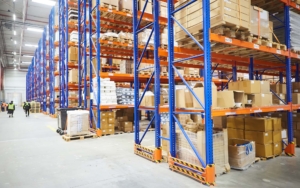
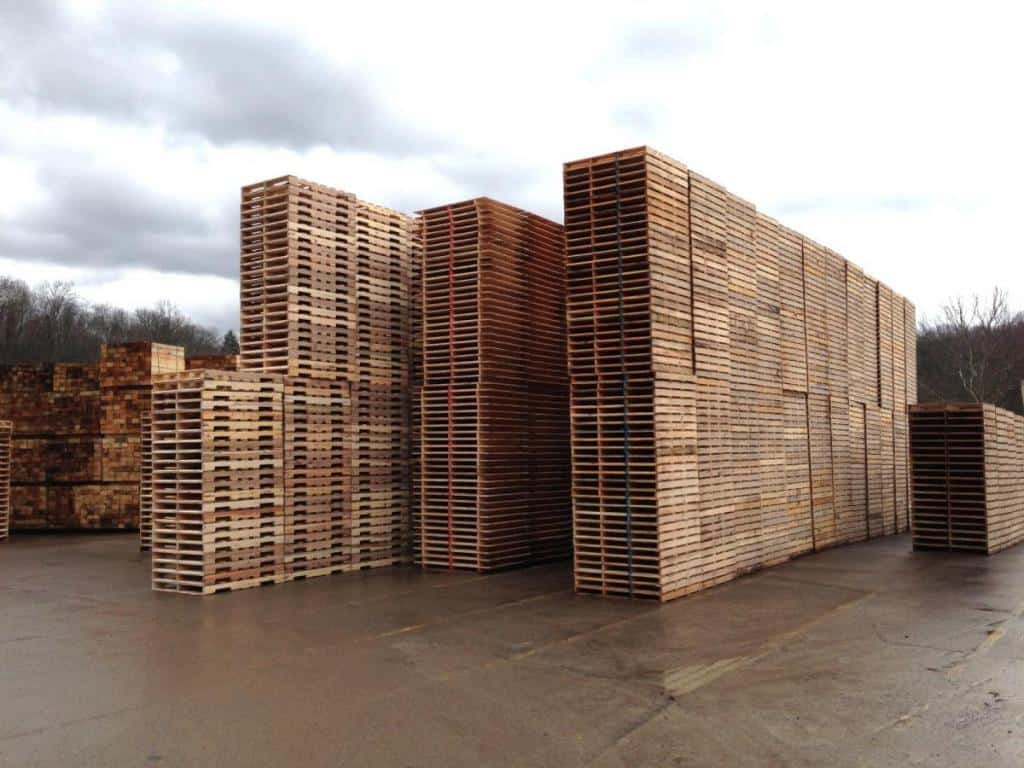
ISPM 15 is the international standard that decides whether the crate around a machine or a container load of furniture can enter the United States. The goods inside can be perfectly classified, valued and paid for; if the pallet, skid, crate or bracing they sit on is unmarked, illegibly marked or shows live pests, CBP can order that wood packaging out of the country, and the importer pays for unloading, separation, storage and re-export. On top of that, CBP can issue a penalty at the domestic value of the whole shipment.
This guide is for machinery, equipment and furniture importers whose goods ship crated or palletized. It covers what the standard requires, the U.S. rule at 7 CFR 319.40-3 and how CBP applies it at the port, what happens when the packaging fails, which materials are exempt, and a supplier checklist you can put in a purchase order. Regulatory text verified against the eCFR and CBP guidance as of October 27, 2026.
Quantify your exposure in 20 minutes
Our trade strategists run your last 90 days of entries through Captain to surface refund eligibility, Section 232 traps and PNTR risk.
What ISPM 15 Requires: HT or MB Treatment and the IPPC Mark
ISPM 15, Regulation of wood packaging material in international trade, was first adopted by the Interim Commission on Phytosanitary Measures in March 2002 and revised in 2009, with annex updates in 2013 and 2018. It requires wood packaging made from raw wood to be built from debarked wood, treated by an approved method and marked. The standard covers crates, boxes, packing cases, dunnage, pallets, cable drums and spools.
The treatments are set in Annex 1. Heat treatment (HT) in a conventional or kiln chamber must hold at least 56 C for 30 continuous minutes throughout the entire profile of the wood, including the core. Dielectric heating (DH), by microwave or radio frequency, must reach 60 C for one continuous minute throughout the profile, including the surface. Methyl bromide fumigation (MB) is allowed but cannot be used on wood with a piece over 20 cm in cross-section at its smallest dimension. CBP’s wood packaging page lists HT, MB and DH as the treatments it accepts. ISPM 15 also lists sulphuryl fluoride (SF), which does not appear on the CBP list, so U.S. purchase orders should specify HT and treat anything else as an exception to clear with APHIS first.
Bark must be removed before treatment, with a small tolerance: visually separate pieces less than 3 cm wide of any length, or wider pieces with an individual surface area under 50 square centimeters.
Reading the Stamp
Annex 2 defines the IPPC mark. It sits in a rectangular or square border with the IPPC symbol on the left and, to the right, the ISO two-letter country code, a hyphen, the producer or treatment provider code assigned by that country’s national plant protection organization, and the treatment code (HT, DH, MB or SF) on a separate line or after a hyphen. It must be legible without a visual aid. The U.S. rule adds that the mark must appear on each article, preferably on at least two opposite sides. Treatment is needed only once: a properly treated and marked pallet keeps its compliance for life, unless it is repaired or remanufactured with untreated wood.
7 CFR 319.40-3 and How CBP Enforces It at the Port
USDA’s Animal and Plant Health Inspection Service wrote ISPM 15 into U.S. law at 7 CFR 319.40-3(b). Regulated wood packaging material, whether it is packing for other goods or imported as cargo itself, enters under a general permit only if it was treated under 7 CFR part 305 and carries the IPPC mark with the four required elements. Section 319.40-3(b)(3) lets an inspector at the port of first arrival order the immediate re-export of regulated wood packaging that arrives without the mark. The rule applies to softwood and hardwood alike.
CBP agriculture specialists do the inspecting, and enforcement has been in full effect since July 5, 2006. CBP sorts violations into three categories: unmarked; inappropriately or illegibly marked, which it treats as untreated; and infested, meaning live pests found in packaging that may be properly marked. A valid stamp does not save infested wood. When CBP finds a violation, it issues an Emergency Action Notification (EAN) to the party whose bond is obligated at the time of discovery, and Block 17 of the EAN sets the deadline for the required action.
No paper treatment certificate is required or accepted for the United States; the mark is the proof. Unmarked wood that stays on board a vessel is not a violation, but once it is unloaded and found non-compliant, the responsible party gets an EAN. For the entry steps around an agricultural hold, see our walkthrough of the customs clearance process.

Non-Compliant WPM: Re-Export, Penalties and Who Pays
The U.S. remedy is export. CBP’s guidance states that the regulation does not allow fumigation as remediation for non-compliant wood packaging; it must leave the country. If the cargo can be separated from the violative wood, the importer may ask CBP for separation by filing CBP Form 3499 with evidence of a commitment to export the wood. Separation is at CBP’s discretion, not a right. In a consolidated container, any affected importer can apply. When separation is refused or impractical, the whole shipment is denied entry and re-exported. Since November 1, 2016, APHIS has allowed secure disposal of violative maritime dunnage in limited cases where pest risk is not excessively high and compliance agreements are in place.
CBP’s guidance assigns cost plainly: the importer of record, carrier or bonded custodian pays all charges for movement, inspection, separation, safeguarding, storage and final disposition. Under most sales contracts, the importer recovers those costs, if at all, from the shipper afterward. That is why the packaging specification belongs in the purchase order, and why the importer of record should be the one holding the supplier to it.
Liquidated Damages and Penalties
CBP’s July 2018 guidelines separate two actions. Liquidated damages are claimed against the bond when a party fails to carry out the EAN: for a consumption entry with conditional release, three times the entered value of the merchandise under 19 CFR 113.62(e), capped at the bond amount; where the goods were not released, the cost of export or remediation under 113.62(g), also capped at the bond. A penalty under 19 U.S.C. 1595a(b) can be issued for the violation itself, assessed at the domestic value of the merchandise, even if the EAN was complied with and without a pre-penalty notice. Since November 1, 2017, a single documented violation is enough; the old five-violation threshold is gone.
For both, CBP values the merchandise as the wood packaging plus the commodity on the entry. On a crated machine, the exposure is measured against the machine, not the crate. Check that your customs bond amount reflects that risk on high-value crated entries.
Exempt Packaging: Processed Wood, Plywood and Small Pieces
The U.S. definition of regulated wood packaging material in 7 CFR 319.40-1 excludes three groups: manufactured wood materials, loose wood packing materials (excelsior, sawdust and wood shavings), and wood pieces less than 6 mm thick in any dimension. CBP’s guidelines give fiberboard, plywood, whisky and wine barrels and veneer as examples of manufactured wood. ISPM 15 section 2.1 adds wood components permanently attached to freight vehicles and containers, and gift boxes made from processed wood.
The exemption follows the material, not the crate. A plywood box with solid-wood skids is not exempt; the skids need the mark. An OSB-sided crate with lumber framing needs every lumber member marked. CBP’s own checklist asks whether the same wood is used throughout or whether each different part is marked, and that question decides most mixed-construction cases. Moving to an all-plywood or OSB crate removes the treatment requirement, but the crate then needs to carry the machine’s weight without solid-wood runners, which is an engineering question for the supplier.
Plant declarations are a separate regime with their own packaging rules; see our guide to the Lacey Act declaration. Wood packaging is also excluded from the TSCA Title VI composite wood rules under 40 CFR 770.1(c)(10).
Supplier Checklist for Crated Machinery and Furniture
The checklist below turns 7 CFR 319.40-3, ISPM 15 and CBP’s rapid visual checklist into purchase-order language. It suits machine builders shipping on skids, furniture factories using crates and corner blocks, and any supplier that braces cargo with lumber inside the container.
- Treatment: all solid-wood packaging and dunnage heat treated (HT) by an NPPO-registered provider; MB only if no piece exceeds 20 cm in its smallest cross-section; no SF without written confirmation.
- Mark: IPPC mark on each piece of solid-wood packaging, on at least two opposite sides, stamped or branded, legible without magnification, with country code, provider code and treatment code.
- Bracing and blocking: every loose board, wedge and block used to secure cargo in the container is marked, or replaced with plywood, OSB or non-wood bracing.
- Debarking: no bark beyond the ISPM 15 tolerance; reject wood with holes, tunnels or fresh sawdust.
- Repairs: repaired pallets use only treated and marked components; remanufactured pallets have old marks removed and are re-treated and re-marked.
- Photos before loading: the supplier sends photos of marks on representative crates and of the loaded container, kept in the entry file.
- Cost allocation: the contract states that the seller bears inspection, separation, storage and re-export charges caused by non-compliant packaging.
Canadian Packaging and Mixed Loads
Regulated articles from Canada, including wood packaging made from Canadian-harvested wood, move under a separate general permit in 7 CFR 319.40-3(a), backed by an importer document stating Canadian harvest for commercial shipments. CBP notes that non-Canadian goods shipped from Canada on Canadian-origin packaging clear faster when the entry documents state the packaging’s origin. For anything else, apply the checklist. Our industrial manufacturing logistics team reviews packaging specifications for new machinery suppliers before the first shipment.
What the Goods Inside the Crate Pay at Entry
ISPM 15 decides whether the shipment can enter; the tariff decides what it costs. The table shows typical crated machinery and furniture lines from China and the European Union. EU-origin goods under the forced-labor Section 301 action pay a combined 10% where the Column 1 rate is below 10%, under heading 9903.05.39. Upholstered wood seating from the EU pays a flat 15% under the Section 232 timber heading 9903.76.22 instead.
| HTS line | Product | MFN | China additional / total | EU total |
|---|---|---|---|---|
| 8479.89.9597 | Machines with individual functions, not elsewhere specified | 2.5% | 301 List 3 25% + forced-labor 12.5% / 40% | 10% (9903.05.39) |
| 8422.30.91 | Filling, sealing and packaging machinery | Free | 301 List 1 25% + forced-labor 12.5% / 37.5% | 10% (9903.05.39) |
| 8465.91.0036 | Woodworking table saws | 3% | 301 List 3 25% + forced-labor 12.5% / 40.5% | 10% (9903.05.39) |
| 9401.61.6031 | Upholstered wood-frame seats, non-household | Free | 232 25% + 301 List 3 25% / 50% | 15% (9903.76.22) |
| 9403.60.8093 | Other wooden furniture, not a cabinet or vanity | Free | 301 List 3 25% + forced-labor 12.5% / 37.5% | 10% (9903.05.39) |
| 9403.50.9080 | Wooden bedroom casegoods | Free | 37.5% plus AD order (China-wide rate 216.01%) | 10% (9903.05.39) |
Reading the Table
Totals are MFN plus additional duties; AD/CVD, other than the bedroom furniture note, and Section 301 exclusions are not included. Some machinery lines, such as injection molding machines and conveyors, are Section 232 derivative industrial equipment with their own rates and are not shown. Check your own lines with the China to US tariff calculator or the EU to US tariff calculator.
Frequently Asked Questions
What is ISPM 15?
ISPM 15 is the International Plant Protection Convention standard for wood packaging in international trade. It requires pallets, crates, dunnage and other packaging made from raw wood to be debarked, treated by an approved method such as heat treatment or methyl bromide, and marked with the IPPC stamp. The United States enforces it through 7 CFR 319.40-3.
What does an ISPM 15 stamp have to show?
The IPPC symbol, the ISO two-letter code of the country where the packaging was produced, the producer or treatment provider code assigned by that country’s plant protection organization, and the treatment code, such as HT for heat treatment, MB for methyl bromide or DH for dielectric heating. U.S. rules ask for the mark on each article, preferably on two opposite sides.
Are heat-treated pallets required for imports into the United States?
Solid-wood pallets must be treated and marked, and heat treatment is the most common method. Heat treatment means at least 56 C for 30 continuous minutes through the full profile of the wood. Methyl bromide and dielectric heating are also accepted by CBP. Plywood, OSB and other manufactured wood pallets do not need treatment.
What happens if wood packaging arrives without an ISPM 15 mark?
CBP issues an Emergency Action Notification and the packaging must be re-exported; U.S. rules do not allow fumigation as a fix. The importer may request separation of cargo from the wood on CBP Form 3499, at CBP’s discretion. All costs fall on the importer, carrier or bonded custodian, and CBP may also assess a penalty at the domestic value of the merchandise.
Who pays when CBP rejects non-compliant wood packaging?
The importer of record, carrier or bonded custodian responsible for the cargo pays for movement, inspection, separation, storage and re-export. Failing to follow the EAN can trigger liquidated damages of up to three times the entered value, capped at the bond amount. Recovering those costs from the supplier depends on the purchase contract.
Is plywood packaging exempt from ISPM 15?
Yes. Manufactured wood materials such as plywood, particle board, OSB, fiberboard and veneer are excluded, as are wood pieces under 6 mm thick, sawdust, wood shavings and excelsior. Any solid-wood skid, runner or block attached to a plywood crate still needs treatment and the mark.
Does a properly stamped pallet ever fail inspection?
Yes. If CBP finds live pests, the wood is treated as untreated regardless of the stamp, and the same re-export and penalty rules apply. Illegible or incorrectly formatted marks are also treated as untreated, which is why stamp quality and debarking matter as much as the treatment itself.