A US lumber mill, soybean crusher or coffee roaster selling into Europe is not the party the EU Deforestation Regulation names as responsible. The EUDR puts the due diligence obligation on the operator that first places the product on the EU market, which for imported goods is generally the EU importer. That does not keep the rule away from US exporters. From December 30, 2026, large and medium EU operators cannot place covered products on the market without a due diligence statement, and the geolocation and legality evidence behind that statement has to come from the supply chain, which means from the US seller.
This guide is written for US exporters of wood, pulp and paper products, soy, beef, cocoa, coffee, rubber and palm oil derivatives, and for the logistics and compliance teams that support them. It covers the commodity scope, the application dates as amended in December 2025, who files what, the data EU buyers will request, what the US low-risk classification does and does not change, and a checklist to work through before the deadline.
Quantify your exposure in 20 minutes
Our trade strategists run your last 90 days of entries through Captain to surface refund eligibility, Section 232 traps and PNTR risk.
Why the EUDR Reaches US Sellers Who Are Not the Operator
Regulation (EU) 2023/1115 prohibits placing on the EU market, making available or exporting from the EU any covered commodity or product unless three conditions are met: it is deforestation-free, it was produced in accordance with the relevant legislation of the country of production, and it is covered by a due diligence statement. Deforestation-free means produced on land that was not subject to deforestation after the cut-off date of December 31, 2020, and, for wood, harvested without inducing forest degradation after that date. The regulation also repeals the EU Timber Regulation, so US wood exporters used to EUTR paperwork face a broader regime.
The Commission’s guidance defines the operator for goods produced outside the EU as, generally, the person acting as importer when the goods are declared for release for free circulation, identified from the importer field of the EU customs declaration. The test turns on who is named as importer in the customs declaration, so the Incoterm matters only insofar as it decides who clears the goods. A US exporter shipping FCA or FOB to an EU buyer who clears customs is therefore a supplier to the operator, not the operator.
In practice, the operator can only certify what its suppliers can document. The EU importer needs plot-level geolocation, production dates and legality evidence for every commodity in the product, and it cannot generate that data itself. The practical route for an EU buyer is to make that data a condition of purchase, and a US supplier that cannot provide it gives the buyer a reason to source elsewhere.
Scope and Commodities Covered by the EUDR
The EUDR covers seven commodities: cattle, wood, cocoa, soya, oil palm, coffee and rubber. Annex I to the regulation lists the covered products by Combined Nomenclature code, which include derived products such as chocolate, tyres, furniture and paper. Composite products are covered through the commodity listed for their Annex I heading. The Commission’s guidance uses a chocolate bar under HS 1806 as the example: due diligence extends to the cocoa powder and cocoa butter it contains, not to the palm oil, because cocoa is the commodity linked to heading 1806.
Scope has moved several times. At the end of 2025 the co-legislators removed HS chapter 49, books and printed material, from Annex I. Commission Delegated Regulation (EU) 2026/2102 of July 13, 2026, in force since September 18, 2026, removes cattle hides and leather and certain rubber articles, and adds soluble coffee, certain palm oil derivatives and frozen cattle tongues, which become subject to the regulation from December 30, 2027. A US exporter needs to check its CN codes against the current Annex I, not a 2023 summary of it.
Packaging and pallets
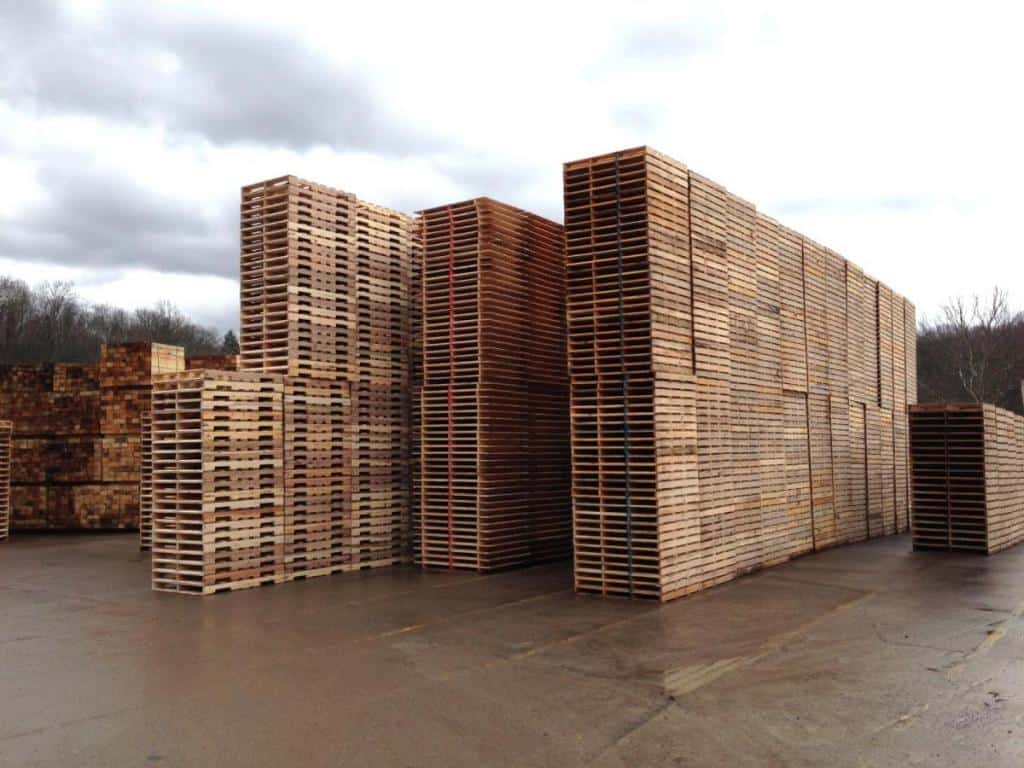
Wood packaging is a frequent question for exporters of any product. The guidance states that items under HS 4415, such as pallets, crates and cable drums, and paper packaging under HS 4819 are covered when placed on the market as products in their own right. When they are used only to support, protect or carry another product, they are outside the EUDR. A pallet carrying machinery to Rotterdam does not trigger due diligence. A shipment of new pallets sold to an EU distributor does.
Application Dates: December 30, 2026 and June 30, 2027
The EUDR was amended twice before it applied. The December 2024 amendment added a year. On December 19, 2025 the European Parliament and the Council adopted Regulation (EU) 2025/2650, which added another year and changed the substance of the due diligence model. The application dates now in force are below.
Which date applies to a US exporter's buyer
The date follows the EU operator’s size, not the exporter’s. A US exporter selling to a large EU importer is working to December 30, 2026, even if the US company is small. A US exporter selling to a micro or small EU importer that was established as such by December 31, 2024 and buys products outside the EUTR annex has until June 30, 2027 on that customer’s account. Most US exporters with several EU customers should plan to the earlier date.
| Date | Who or what it applies to |
|---|---|
| December 30, 2026 | Large and medium operators, downstream operators and traders |
| December 30, 2026 | Micro and small operators placing products listed in the EU Timber Regulation annex |
| June 30, 2027 | Micro and small operators established as such by December 31, 2024, for products outside the EU Timber Regulation annex |
| December 30, 2027 | Products added by Delegated Regulation (EU) 2026/2102: soluble coffee, certain palm oil derivatives, frozen cattle tongues |
Who Files: Operators, Downstream Operators and the Non-EU Seller
Regulation (EU) 2025/2650 moved the filing burden to the first operator. Under the revised text, the obligation to submit the due diligence statement lies with the operator who first places the product on the market or exports it. Downstream operators and traders no longer submit their own statements or routinely verify due diligence across the chain; non-SME downstream operators and traders must still verify it when they hold substantiated concerns. Non-SME downstream operators and non-SME traders must register in the EUDR Information System, and those placed directly after the operator collect and keep the due diligence statement reference numbers they receive. According to the Commission’s EUDR FAQ (version 5, April 2026), that collection duty is passive: unless the downstream actor knows its supplier is an operator, it does not have to ask for the number.
Operators, downstream operators and traders of every size must keep records for at least five years of who supplied them with relevant products and to whom they supplied them.
When the US exporter becomes the operator
Delivery terms can change the answer. If a US company acts as importer in the EU customs declaration, for example under DDP terms, it is the operator. Where that importer is not established in the EU, the guidance adds that the first person established in the Union to make the products available on the market is also deemed an operator under Article 7, on top of the non-EU operator’s own obligation. The purpose is to ensure there is always a responsible party inside the EU. A US exporter that takes on EU clearance takes on EUDR operator duties with it, and should settle that allocation when it agrees who pays export duties and import charges under the Incoterm.
Due Diligence Statement Data EU Buyers Will Request
The due diligence statement rests on the information requirements of Article 9 of the regulation. The elements EU importers most often cannot source themselves are the ones tied to land. The Commission’s guidance states that, to meet the geolocation requirement, operators must include the geolocation of all plots of land where the relevant commodity in the product was produced, and the date or time range of production. Where a product contains a commodity from several plots, every plot must be listed. For products made from cattle, geolocation covers all premises associated with raising the animal, from birthplace to the farms where it was kept until slaughter.
The same logic applies to composite and processed products. The guidance singles out reconstituted products such as paper, fibreboard and particleboard, and highly processed foods containing cocoa, as cases where identifying species, origin and geolocation is complex but still required before the product can be placed on the market.
Legality is the second data stream. Products must be produced in accordance with the relevant legislation of the country of production, which the regulation lists in Article 2(40) and with land use rights and environmental protection among the examples the Commission’s guidance gives. The Commission plans to publish a repository of relevant legislation by December 2026 that operators may rely on.
- Geolocation of every plot of land where the commodity was grown, harvested or raised.
- Date or time range of production for each lot.
- Identification of every covered commodity inside a composite product, with its own origin data.
- Evidence that the land was not deforested after December 31, 2020 and, for wood, that the harvest did not induce forest degradation after that date.
- Evidence of compliance with the relevant legislation of the country of production.
- Supplier and customer records the operator must retain for five years.
Low-Risk Status for the United States and Its Limits
The Commission’s country benchmarking, adopted in Implementing Regulation (EU) 2025/1093 in May 2025, classifies each country as low, standard or high risk. The United States is in the low risk category. Countries not listed are treated as standard risk. Among common origins in US supply chains, Brazil, Argentina, Colombia and Côte d’Ivoire are classified as standard risk, while Canada, Viet Nam and China are low risk.
Low-risk status matters because of Article 13. Operators sourcing entirely from low-risk countries still collect the Article 9 information, still file the due diligence statement and still maintain a due diligence system, but are not required to carry out risk assessment and risk mitigation under Articles 10 and 11. That relief applies only after the operator has assessed the complexity of the supply chain and the risk of circumvention or of mixing with products from standard or high-risk countries, and it falls away if the operator learns of information pointing to non-compliance.
Two limits follow for US exporters. First, geolocation is still required, so a US soybean or timber exporter must still supply plot data to its EU buyer. The exception is a US micro or small producer that is itself the operator for goods it grew or harvested: as a micro or small primary operator in a low-risk country it files a one-time simplified declaration and may give the postal address of its plots instead of geolocation. Second, the relevant country is the country of production of the commodity, not the country of export. A US roaster exporting coffee grown in Brazil or Colombia, or a US chocolate maker using cocoa from Côte d’Ivoire, ships product whose commodity comes from a standard-risk country, and the EU operator’s full due diligence applies. The rules on country of origin determination used for US customs do not answer that question.
US Exporter Checklist Before December 30, 2026
The export file is where this data meets the shipment. The documents that support import and export freight to the EU should carry the same product codes and lot references as the geolocation data, so the EU operator can link each consignment to its due diligence statement. For wood products, keep the EUDR file separate from US-side import obligations such as lumber tariffs on inbound timber, which are unrelated to the EU rule but often handled by the same team. A single trade compliance management record per SKU, covering EU deforestation data alongside export classification, makes the buyer’s due diligence easier and the supplier harder to replace. EU buyers now weigh the cost of that due diligence in their landed cost calculation, and a supplier with complete data lowers it.
- Map every EU-bound SKU to its CN code and check it against the current Annex I, including the July 2026 removals and the December 30, 2027 additions.
- Identify, per customer, who is the EUDR operator on the EU side, and whether any DDP sales make your company the operator.
- Confirm each EU buyer’s size category, since that sets whether December 30, 2026 or June 30, 2027 applies to its account.
- Build plot-level geolocation files for your own production, and require them contractually from your upstream growers, foresters and ranchers.
- For imported inputs such as coffee, cocoa or palm oil, trace the country of production and flag any standard-risk origins to your EU buyer.
- Assemble legality evidence under Article 2(40) for each production area.
- Segregate low-risk-origin material from standard-risk material, or document why mixing does not occur.
- Keep supplier and customer records for five years and tie each EU shipment to the lots it contains.
Frequently Asked Questions
Do US exporters have to file an EUDR due diligence statement?
Not usually. The statement is filed by the operator who first places the product on the EU market, which for imports is generally the EU importer. A US company becomes the operator if it acts as importer in the EU customs declaration, for example under DDP terms, and in that case the first EU-established person making the product available is also deemed an operator.
When does the EUDR apply?
From December 30, 2026 for large and medium operators, downstream operators and traders, and for micro and small operators placing products listed in the EU Timber Regulation annex. Micro and small operators established as such by December 31, 2024 apply from June 30, 2027, except for products covered by the EU Timber Regulation. Products added by Delegated Regulation (EU) 2026/2102 are covered from December 30, 2027.
Does US low-risk status exempt US products from the EUDR?
No. Low-risk classification under Implementing Regulation (EU) 2025/1093 removes the risk assessment and mitigation steps for operators sourcing only from low-risk countries, but geolocation, legality information and the due diligence statement are still required.
What is the EUDR cut-off date?
December 31, 2020. A product is deforestation-free only if the commodities in it were produced on land that was not subject to deforestation after that date, and any wood in them was harvested without inducing forest degradation after that date.
Are wooden pallets covered by the EUDR?
Pallets and crates under HS 4415 are covered when sold as products in their own right. When used only to support, protect or carry another product, they are outside the regulation.
Does the EUDR still cover leather and printed books?
Books and printed material under HS chapter 49 were removed from Annex I at the end of 2025. Delegated Regulation (EU) 2026/2102 of July 13, 2026 removes cattle hides, skins and leather and certain rubber articles. Exporters should confirm their CN codes against the current Annex I.
How long must EUDR records be kept?
At least five years. Operators, downstream operators and traders of every size must keep records of the suppliers that provided relevant products and of the downstream operators or traders they supplied.