EPA Form 3520-1 is the declaration a US importer gives Customs and Border Protection for a motor vehicle or motor vehicle engine subject to Clean Air Act emission rules. Under 19 CFR 12.73(i)(3) and the form’s own instructions, it is filed at the time of entry for cars, light trucks, highway motorcycles, kit cars, disassembled vehicles and loose engines for those vehicles, while heavy-duty highway engines and every nonroad or stationary engine use its sibling, Form 3520-21. The declaration tells CBP on what legal basis the engine is entering: it is certified, it is exempt, or it is excluded.
For importers of auto parts, crate engines, portable generators, motorcycles or race cars, this guide covers which form applies, which import code fits, what ACE expects, what happens when an EPA approval letter is missing, and what the product pays in duty. Rules are checked against the eCFR as of October 26, 2026, the August 2024 EPA forms and HTS Revision 21.
Quantify your exposure in 20 minutes
Our trade strategists run your last 90 days of entries through Captain to surface refund eligibility, Section 232 traps and PNTR risk.
What EPA Form 3520-1 Declares and When It Is Filed
The EPA declaration is a release document. 19 CFR 12.73(i)(2) states that CBP will not release a motor vehicle unless the importer has submitted every document needed to show compliance, and paragraph (i)(4) allows the declaration to be transmitted electronically in ACE or filed on paper, at the time of entry (or at entry summary for a weekly entry from a foreign-trade zone). The importer must keep the documents that support it for at least five years and produce them on request.
The 2024 version of Form 3520-1 lists what it captures for each vehicle or engine: port code, entry date and entry number, the VIN or engine serial number or the engine family or test group name, manufacture date, make and model, the EPA exemption number where a code requires one, and the importer, owner and storage contact.
Who does not file it
The form is not required when the original manufacturer imports new vehicles covered by its own EPA certificate of conformity and bearing the EPA emission control label (19 CFR 12.73(i)(1)). Everyone else files: distributors of certified vehicles bought from the manufacturer, independent importers, collectors and motorsport teams. Auto parts with no engine are not subject to the declaration; a loose engine is, and the form depends on what the engine is for. The 2024 form lists light-duty vehicle and motorcycle engines among the items it covers, and code W exists for a loose engine destined for a certified light-duty vehicle, light-duty truck or motorcycle.
The DOT declaration is separate
Form 3520-1 covers emissions only. A vehicle built for public roads also needs the NHTSA declaration covering Federal Motor Vehicle Safety Standards, which our guide to the HS-7 declaration covers in detail.
Import Codes for Vehicles and Engines Under 85.1511 and Part 1068
The import code is the single most consequential field on the form, because it determines whether CBP needs an EPA approval letter, a bond or nothing at all. The August 2024 Form 3520-1 groups the codes into five families.
- Conforming and identical vehicles: code B for an unmodified US-certified vehicle with the EPA label in English; code F for a certified vehicle whose catalyst, oxygen sensors or filler neck restrictor will be restored after import; code EE for a vehicle identical in all material respects to a US-certified version (with proof, not for resale); code FF for Canadian identical models imported for resale.
- Exempted vehicles: code E for a vehicle at least 21 years old in its original configuration, and code M for specific miscellaneous cases such as an EPA hardship letter.
- Excluded vehicles and engines: code L for a racing vehicle with an EPA approval letter; code U for 2005 and older motorcycles, scooters or mopeds under 50 cc with rated speed above 5,000 rpm; code W for a non-chassis-mounted engine for a light-duty vehicle, light-duty truck or motorcycle that is covered, or will be covered before sale, by an EPA certificate; code Y for certain unregulated fuels on vehicles older than model year 2004.
- Temporary imports: code G (repair or alteration), code I (testing), code K (display), code N (diplomatic or military) and code O (nonresident personal use up to one year).
- Independent commercial importer and OEM codes: A, C, J and Z for vehicles an ICI will modify or test into compliance; H and Q for OEM research and pending certificates.
Codes that need an EPA letter before the entry
The form states that codes G, I, K, L, M-3 and O require specific written authorization from EPA, and the exemption number goes in field 9. For the temporary exemptions, 40 CFR 85.1511(b) requires prior written approval and conditional admission under bond. A nonconforming vehicle that fits no exemption can only come in through an independent commercial importer under codes A, C, J or Z, and for those codes EPA does not authorize release to the owner. By age, 19 CFR 12.73(e) excludes gasoline light-duty vehicles made before January 1, 1968 and highway motorcycles made before January 1, 1978, counting calendar year of production, not model year.
Model year rules for engines that sat in a warehouse
40 CFR 1068.360(b) closes a common gap in engine sourcing. A new engine or piece of equipment that has never been placed into service and is imported more than one year after its named model year, when the standards have changed, is treated as having a model year no more than one year earlier than the calendar year of import. Old stock built to superseded standards is therefore not importable as new just because it was manufactured before the change.
Form 3520-21 for Nonroad Engines, Generators and Equipment
Generators, lawn and garden equipment, ATVs, off-highway motorcycles, outboard motors, construction machinery and heavy-duty truck engines are declared on Form 3520-21, not 3520-1. 19 CFR 12.74(b)(3) requires it at the time of entry for nonroad and stationary engines, including engines already installed in vehicles and equipment, with the same exception for a manufacturer importing its own certified, labeled engines. The form first asks for the product category (A to J), then the import code (1 to 25).
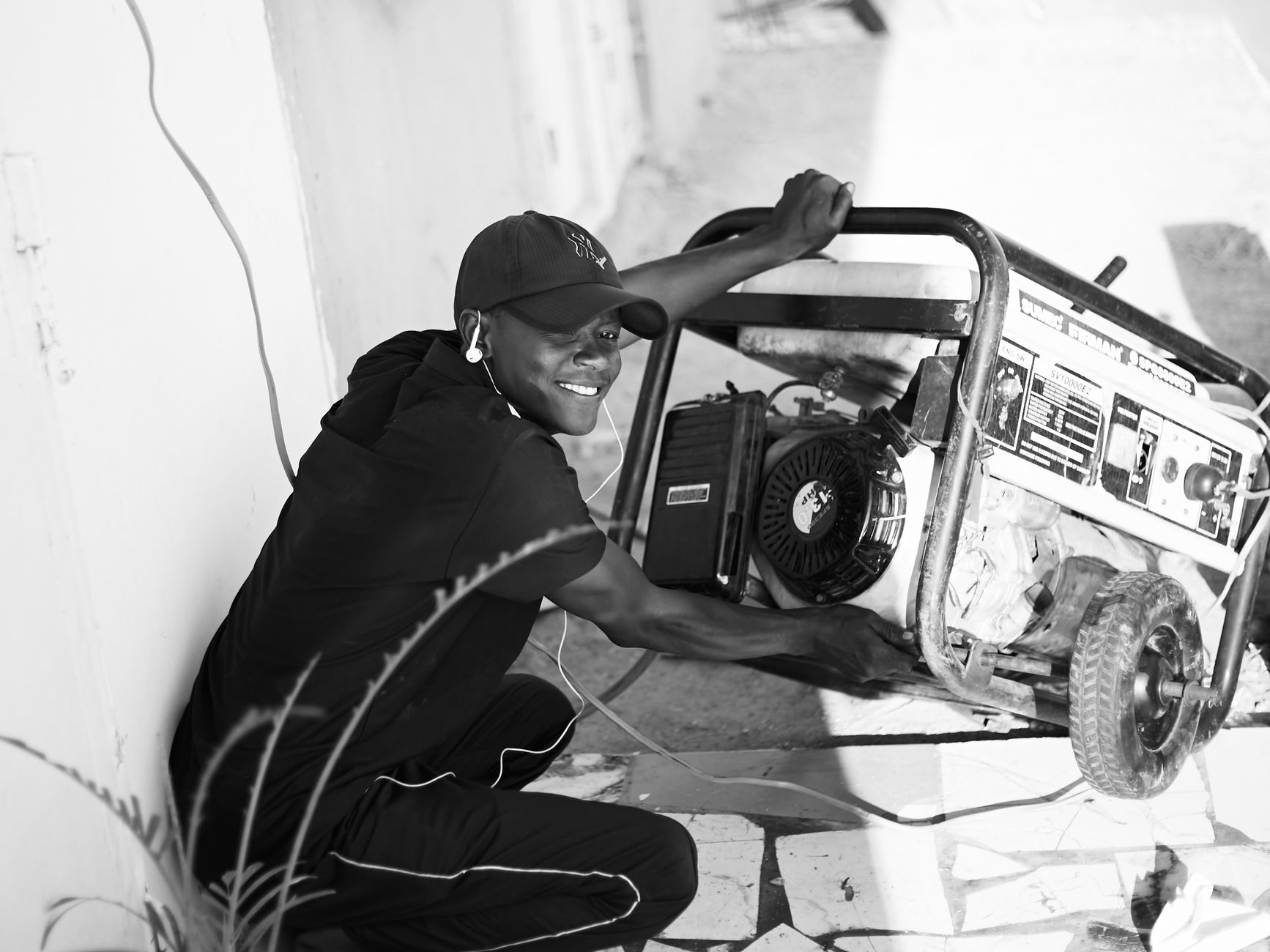
For a portable generator importer the category is usually G, nonroad spark-ignition engines at or below 19 kW (or at or below 30 kW where total displacement is 1,000 cc or less), regulated under 40 CFR part 1054. The import code for a certified engine is 1, and for category G the form also asks whether the engine is exempt from bond or, if not, the surety’s NAIC number, policy number and state of issue. That field reflects 40 CFR 1054.690: an importer reselling engines certified by someone else shares responsibility with the certificate holder, needs no bond of its own if either party satisfies the bond requirement, and CBP may deny entry to engines lacking the necessary bond.
The codes generator and equipment importers use most
Code 1 covers certified engines with an EPA label in English. Code 8, identical configuration, requires that the importer has owned the engine for at least six months and will not sell it for five years (40 CFR 1068.315(h)). Code 17 covers engines built before standards started to apply, which for category G is model year 1997, and it is subject to the model year rule above. Code 23 is a personal-use exemption for three or fewer small spark-ignition engines not for resale, usable once in five years. Codes 10, 11, 12 and 18 (repair, testing, display, competition) need an EPA letter and exemption number. Products already moving on a industrial manufacturing logistics program should carry the engine family name in the purchase order, because it is the key data element in the ACE filing.
ACE PGA Data for EPA and What Triggers a Hold
When an HTS line is flagged for EPA vehicles and engines, ACE expects either the PGA message set or a disclaim. CBP’s filing tips list four disclaim codes: A when the product is not regulated by EPA, B when the data is not required under agency guidance (for example certain OEM cases), C when the declaration was uploaded to the Document Imaging System, and D when it was filed on paper. An auto parts entry on a flagged line, where the article contains no engine, is resolved with disclaim code A rather than a declaration.
Where the message set is filed, the test group or engine family name from the emission label is the key data element, required for 3520-1 codes B and F and 3520-21 codes 1 and 22. CBP warns that one misplaced period or character sends the filing to review. Form 3520-1 entries under codes A, C, U, Y or Z also need a PG10 record with the model year (qualifier V06), and code U adds engine power (V03).
Detention, bond and penalties
If the only obstacle to release is a missing declaration, 19 CFR 12.73(k) and 12.74(d) allow the port director to hold the goods in detention for up to 30 days after entry filing, at the importer’s risk and expense, with one 30-day extension for good cause and a hard stop at 60 days, after which CBP issues a notice of inadmissibility. For temporary-exemption codes the entry needs a bond under 19 CFR 113.62; if EPA’s approval is not delivered and the goods are not redelivered within five days after the exemption expires, CBP assesses liquidated damages for the full bond amount. A vehicle conditionally admitted and not finally admitted within 120 days is deemed unlawfully imported (40 CFR 85.1513(c)), and the civil penalty under 42 U.S.C. 7524(a), as adjusted in 40 CFR 19.4 for penalties assessed since January 8, 2025, reaches $59,114 per vehicle or engine. Choosing between a single transaction and a continuous customs bond matters here, because liquidated damages on a continuous bond are calculated as if a single-entry bond had been posted.
Racing, Display and Temporary Imports
Motorsport importers meet two different rules depending on the vehicle. A car imported for racing is declared under code L of Form 3520-1 with an EPA approval letter, and 40 CFR 85.1511(e) allows import by any person only if the vehicle meets one of the criteria in 85.1703 and is never registered or driven on public roads. Under 85.1703(a), a vehicle is not a motor vehicle if it cannot exceed 25 mph, lacks features customarily associated with safe street use such as a reverse gear or a differential, or has features that make street use unsafe or impractical.
Nonroad competition machines, such as off-highway motorcycles and ATVs built for racing, use Form 3520-21 code 18. 40 CFR 1068.310(a) excludes them only if EPA approves before import and the machine is properly labeled, and 1068.101(b)(4) prohibits any later non-competition use.
Display, testing and repair
Display (code K or 12), testing (code I or 11) and repair (code G or 10) all require EPA’s advance approval under 40 CFR 1068.325(j), identifying importer, owner, model, serial number, production year and the regulatory basis. The testing and display exemptions expire one year after import unless EPA extends them; display units must be exported or destroyed when the display ends or the year runs out, whichever comes first, and motor vehicles under these codes may not be sold or registered while in the US, and nonroad engines under the testing exemption may be sold only as 40 CFR 1068.210 allows. A trade show machine moving under an ATA carnet still needs the EPA approval: the carnet secures duties and taxes, not emission admissibility.
Duty on Vehicles, Engines and Generators by HTS Line
Clearing the EPA declaration is only half of the landed cost. Engines and vehicles now sit in the most layered part of the tariff schedule: Section 232 tariffs on autos and auto parts, China Section 301 lists, and the Section 301 forced labor duty that applies since July 24, 2026 to goods not covered by Section 232. The table uses China and Japan as origins, because Japan has a negotiated 15% all-in rate for autos and auto parts under HTS note 33 (headings 9903.94.41 and 9903.94.43).
| HTS | Product | MFN | China additional | China total | Japan additional | Japan total |
|---|---|---|---|---|---|---|
| 8703.23.0190 | Used passenger vehicles, spark-ignition, 1,500 to 3,000 cc | 2.5% | 50% (25% Sec. 232 + 25% List 1) | 52.5% | 12.5% (15% all-in, note 33) | 15% |
| 8407.34.4800 | Spark-ignition engines over 2,000 cc for motor vehicles, new | 2.5% | 50% (25% Sec. 232 parts + 25% List 3) | 52.5% | 12.5% (15% all-in, note 33) | 15% |
| 8409.91.9990 | Parts of spark-ignition engines, other | 2.5% | 37.5% (25% List 3 + 12.5% forced labor) | 40% | 10% (forced labor top-up to 12.5%) | 12.5% |
| 8711.20.0060 | Motorcycles, 90 to 190 cc | Free | 20% (7.5% List 4A + 12.5%) | 20% | 12.5% | 12.5% |
| 8711.50.0060 | Motorcycles over 970 cc | 2.4% | 37.5% (25% List 1 + 12.5%) | 39.9% | 10.1% (top-up to 12.5%) | 12.5% |
| 8502.11.0000 | Diesel generating sets, up to 75 kVA | 2.5% | 37.5% (25% List 1 + 12.5%) | 40% | 10% (top-up to 12.5%) | 12.5% |
What the table does not include
Antidumping and countervailing duties, product exclusions, USMCA treatment and the merchandise processing fee are not included. Two common generator and small-engine lines are left out on purpose: gasoline generating sets (8502.20.00) and other spark-ignition engines (8407.90.90) sit on Section 232 derivative metal lists that apply only when steel or aluminum is at least 15% of the article’s weight, so the rate depends on the product. Run the 10-digit line through the China to US tariff calculator and read the Japan guide before quoting a landed price, and have a licensed customs brokerage team confirm the classification before the first container ships.
Frequently Asked Questions
What is EPA Form 3520-1 used for?
EPA Form 3520-1 is the declaration filed with CBP at entry for imported motor vehicles and their engines, including cars, light trucks, highway motorcycles, kit cars and disassembled vehicles. It states the legal basis for admission through an import code. Heavy-duty highway engines and nonroad or stationary engines use Form 3520-21 instead.
What is the difference between EPA Form 3520-1 and 3520-21?
Form 3520-1 covers light-duty vehicles, light-duty trucks, highway motorcycles and their engines. Form 3520-21 covers heavy-duty highway engines and all nonroad and stationary engines, including engines already installed in generators, ATVs, boats and equipment. Both are filed with CBP at the time of entry under 19 CFR 12.73 and 12.74.
Do I need to file an EPA form for auto parts?
Not for parts without an engine. If an HTS line flagged for EPA in ACE covers your parts, file disclaim code A (not regulated by this agency). Loose engines are different: they need a declaration or an EPA-recognized basis, depending on the engine and its intended vehicle.
Can I import a race car without EPA certification?
Yes, if it meets the criteria in 40 CFR 85.1703 and is never registered or driven on public roads. Declare it under code L of Form 3520-1 with an EPA approval letter attached. A car clearly intended for highway use remains a motor vehicle and cannot use the racing exclusion.
What happens if the EPA declaration is missing at entry?
CBP will not release the goods. The port director may hold them in detention for up to 30 days after entry filing at the importer’s expense, extendable once by 30 days for good cause. If the declaration is still not filed within 60 days, CBP issues a notice of inadmissibility.
What is the tariff on engines from China in 2026?
It depends on the engine. A new spark-ignition engine over 2,000 cc for motor vehicles (8407.34.48) pays 2.5% MFN plus 25% Section 232 auto parts duty plus 25% Section 301 List 3, or 52.5% in total. Engine parts under 8409.91.99 pay 40%. AD/CVD and exclusions are not included.