
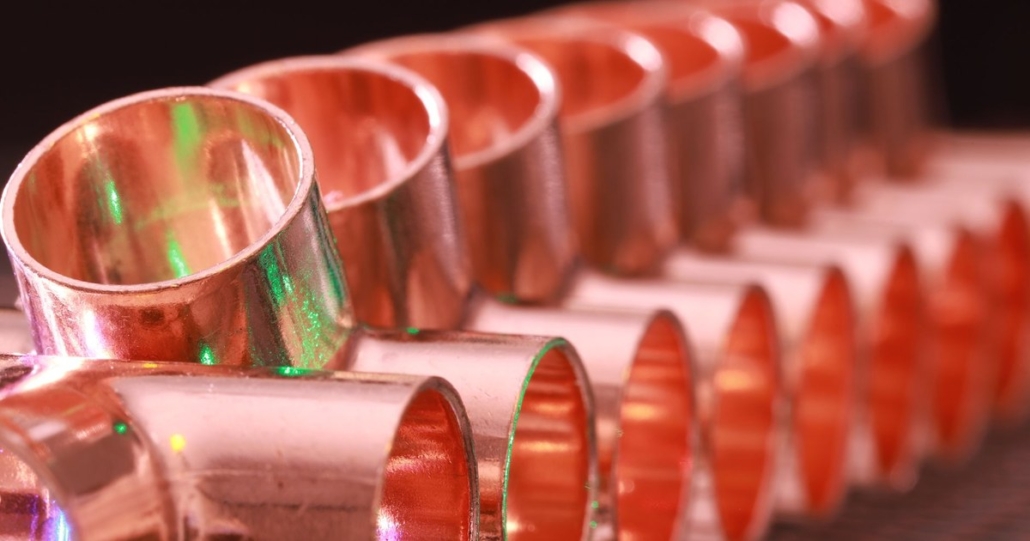
The copper tariff has a shape that surprises people who only read the headline. Refined copper, the cathodes and anodes that dominate the tonnage moving into the United States, carries no Section 232 duty at all. Semi-finished products made from that same copper, the pipe, tube, rod, wire, sheet, plate and fittings, carry 50%. The duty attaches at the point where metal becomes a product, and the entire compliance question is knowing which side of that line a shipment sits on.
Proclamation 10962 established the programme on 30 July 2025, and Proclamation 11021 changed how it is assessed on 6 April 2026 by moving from copper content to full customs value. This guide covers what falls inside the programme, what sits outside it, and the refined-copper phase-in that circulates as a published schedule and has not in fact been triggered. Rates current to August 2026.
Quantify your exposure in 20 minutes
Our trade strategists run your last 90 days of entries through Captain to surface refund eligibility, Section 232 traps and PNTR risk.
What the Duty Covers and What It Leaves Alone
Proclamation 10962, published at 90 FR 37727, took effect on 1 August 2025. It targets copper in product form rather than copper as a raw commodity, which is a deliberate design choice aimed at supporting domestic fabrication rather than domestic mining.
Semi-finished copper products sit in Annex I-A and carry 50%. This is the core of Chapter 74 and covers pipe and tube, rod and bar, wire, sheet and plate, and pipe fittings. Copper-intensive derivative products sit in Annex I-B at 25%, and these reach outside Chapter 74 into Chapters 84, 85 and 87, with insulated wire and cable under heading 8544 among the most commercially significant.
Refined copper is not covered by this action. Cathodes, anodes, ores, concentrates, mattes and copper scrap are absent from every covered list, so no Section 232 copper duty applies to them. That is not the same as saying they enter free of all duty: the ordinary Column 1 rate and any other applicable measure still stand. An importer bringing in cathode to feed a domestic fabricator carries no charge under this programme; an importer bringing in the fabricated tube pays half the value of the goods.
| Product class | Rate | Assessed on |
|---|---|---|
| Semi-finished, Annex I-A: pipe, tube, rod, wire, sheet, plate, fittings | 50% | Full customs value |
| Copper-intensive derivatives, Annex I-B | 25% | Full customs value |
| Derivatives with 85% or more US-origin metal | 10% | Full customs value |
| Refined copper: cathode, anode, ores, concentrates, mattes, scrap | No Section 232 duty | Not covered |
The Assessment Basis Changed in April and the Bill Moved With It
The split between 50% and 25% is newer than the programme. As originally issued, Proclamation 10962 applied 50% to both semi-finished copper and copper-intensive derivatives. The two-tier structure only came in on 6 April 2026 with Proclamation 11021, which also replaced copper content with full customs value as the basis of assessment across the steel, aluminum and copper programmes at once.
For a copper-intensive derivative this is the difference between paying 25% on the copper inside a wiring harness and paying 25% on the whole harness. The rate is unchanged and the invoice doubled, which is why importers who track only the percentage missed the change entirely.
Chapter 99 reporting moved with it. Copper articles are filed in the 9903.82 series shared with steel and aluminum, and subheadings 9903.82.20 through 9903.82.26 apply to goods entered on or after 8 June 2026 and before 1 January 2028, per CBP guidance CSMS #68855869 of 5 June 2026. Those subheadings are not copper-specific: they implement the Annex I-C provisions covering agricultural, fixed and mobile industrial equipment across the metals, so filing them as though they were a copper heading is a misreading rather than a shortcut.
The Refined Copper Phase-In Has Not Been Triggered
Proclamation 10962 directed the Secretary of Commerce to report by 30 June 2026 on domestic copper markets and refining capacity, so the President could decide whether to impose a phased duty on refined copper of 15% from 1 January 2027 rising to 30% from 1 January 2028.
Those figures have circulated widely as though they were a published schedule. They are not. As of 26 August 2026 no proclamation or Federal Register notice has imposed them, and refined copper continues to enter free of Section 232 duty. The correct description is recommended and contingent, not scheduled.
The distinction matters commercially because it changes how a buyer should treat 2027 supply. Contracting on the assumption that cathode will carry 15% in January is a decision to pay a risk premium for something that may not happen; contracting with a duty-change clause costs nothing and covers the same risk. Anyone modelling 2027 copper landed cost should be tracking the announcement rather than assuming it, and the Captain tariff tracker exists to catch that kind of change on the day it publishes.
Classification Decides Everything on a Copper Entry
Because the duty turns on product form rather than on metal, the classification decision carries the whole outcome. The gap between a covered semi-finished article at 50% and an uncovered refined product at zero is larger than any classification gap importers were used to before 2025.
The pressure that creates is obvious and it is where enforcement attention goes. Describing a fabricated article in terms that suggest raw material, or entering a fitting as scrap, is not aggressive classification but misdeclaration. The line between legitimate product design decisions and misdescription is documentary, and it is the reason mill and process records now belong in the entry file.
Where a product genuinely sits near the boundary, the sound route is to fix the answer in advance. A determination from CBP binds every port and turns an arguable position into a settled one, and obtaining a binding ruling takes weeks rather than months. Against a 50% rate, a year spent wrong is not recoverable through hindsight.
Classification is also where the underlying reasoning has to hold up. A copper article that could plausibly fall in two headings is resolved through the General Rules of Interpretation in strict order, not by picking the more favourable code and defending it afterwards.
What Stacks and What Does Not
Copper does not stack with the other metals. Where an article is listed as a derivative of more than one metal, Proclamation 11021 applies the duty once at the applicable rate. A brass fitting containing both copper and zinc does not pay twice.
The Section 301 forced-labor tariffs that took effect on 24 July 2026 do not apply to goods already subject to Section 232, so a covered copper article pays its sectoral rate instead of the 10% or 12.5% forced-labor rate. The legacy China Section 301 lists are separate and do continue to apply to Chinese-origin copper goods alongside Section 232.
The IEEPA reciprocal and fentanyl duties that stacked on copper entries through 2025 no longer exist. The Supreme Court held in February 2026 that IEEPA does not authorise tariffs, and collection ended within days. Importers who paid them on copper entries during the collection window have a refund claim, and the mechanics of the IEEPA refund program are worth working through before the liquidation clock closes the door.
Where the Duty Actually Lands in a Supply Chain
The programme pushes cost onto anyone importing fabricated copper and leaves anyone importing metal untouched, which changes the arithmetic of where fabrication should happen. A US manufacturer that imports cathode and draws its own wire faces no Section 232 exposure on the input. The same manufacturer buying finished wire abroad pays 50%.
That is the intended effect, and it makes the buy-versus-fabricate decision a customs question rather than purely an operations one. It also raises the value of duty deferral for anyone holding fabricated copper inventory, because a customs bonded warehouse or a zone admission defers the charge until the goods are actually needed.
For manufacturers who import fabricated copper, process it and re-export, the recovery route is drawback. Section 232 duties are generally eligible under 19 U.S.C. 1313, and at a 50% rate the recovery on a re-exported line is the difference between a viable export programme and an uncompetitive one. Whether a given entry qualifies is a documentation question, and duty drawback filings live or die on the manufacturing and export records rather than on the claim itself.
Audit your derivative HTS exposure
Our brokers will review your top 50 derivative HTS lines and flag Section 232 valuation risk before CBP does.
Frequently Asked Questions
What is the current copper tariff rate?
Semi-finished copper articles carry 50% ad valorem and copper-intensive derivative products carry 25%. Derivatives containing 85% or more US-origin metal drop to 10%. All are assessed on the full customs value for goods entered on or after 6 April 2026. Before that date both categories were at 50% and the basis was copper content rather than full value.
Is refined copper subject to the Section 232 tariff?
No. Refined copper in the form of cathodes, anodes, ores, concentrates, mattes and scrap is absent from every covered list, so no Section 232 copper duty applies. The ordinary Column 1 rate and any other applicable measure still stand. The programme targets copper in product form rather than copper as a raw commodity.
Is the 15% and 30% duty on refined copper scheduled?
No. Proclamation 10962 directed Commerce to report by 30 June 2026 so the President could decide whether to impose a phased duty of 15% from January 2027 and 30% from January 2028. As of 26 August 2026 no proclamation has imposed it. Those figures are a recommendation contingent on a decision that has not been announced.
Which HTS chapters does the copper tariff reach?
Chapter 74 covers the semi-finished articles at the core of the programme. Copper-intensive derivatives reach beyond it into Chapters 84, 85 and 87, with insulated wire and cable under heading 8544 among the most significant. Chapter 99 reporting uses the 9903.82 series, with subheadings 9903.82.20 through 9903.82.26 for goods entered on or after 8 June 2026.
Does the copper tariff stack with steel and aluminum duties?
No. An article listed as a derivative of more than one metal is subject to the duty once at the applicable rate rather than cumulatively. Copper duties do stack with antidumping and countervailing duties and with the legacy China Section 301 lists, which are separate mechanisms with separate legal bases.
Can copper duties be recovered on re-exported goods?
Generally yes. Section 232 duties are eligible for drawback under 19 U.S.C. 1313, so an importer who brings in fabricated copper, uses it in production and exports the finished article can recover up to 99% of the duty paid. Eligibility turns on the manufacturing and export documentation rather than on the duty itself.