First Sale for Export: Reduce Tariffs and Landed Costs
Import tariffs continue to pressure global supply chains, especially for U.S. importers sourcing from Asia and other manufacturing hubs.


First Sale for Export (FSFE) is a proven tariff mitigation strategy that allows companies to calculate duties based on the first transaction value in a multi-tier supply chain, rather than the higher final sale price.
When implemented correctly, First Sale can significantly reduce duty payments, improve landed cost accuracy, and strengthen supply chain financial planning.
At CargoTrans, we help importers identify First Sale eligibility, structure compliant supply chains, and implement documentation processes that support long-term customs compliance.
Typical Supply Chain Structure
| Transaction | Description |
|---|---|
| Manufacturer → Trading Company | First sale |
| Trading Company → U.S. Importer | Second sale |
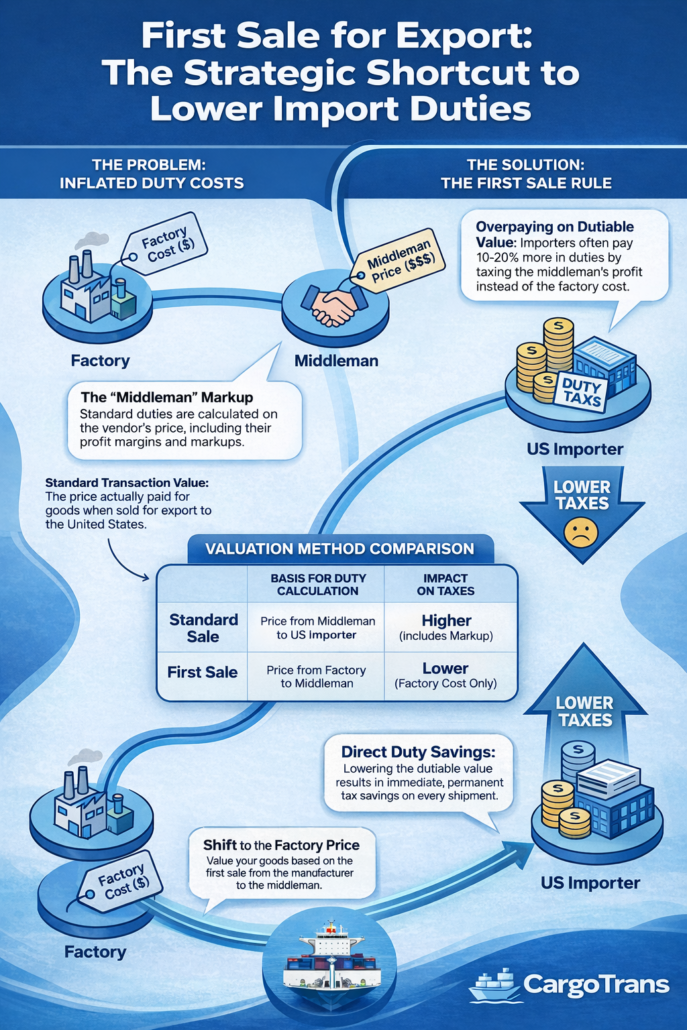
Tariffs, Section 301 duties, and fluctuating trade policies have dramatically increased import costs.
For many companies, duties are now one of the largest components of landed cost.
Implementing a First Sale strategy can provide:
First Sale works best for companies with multi-tier sourcing structures.
Typical candidates include:
To qualify for First Sale under U.S. Customs regulations, several criteria must be met.
While First Sale offers substantial benefits, implementation can be complex.
Common obstacles include:
Implementing First Sale successfully requires visibility across every transaction and shipment stage.
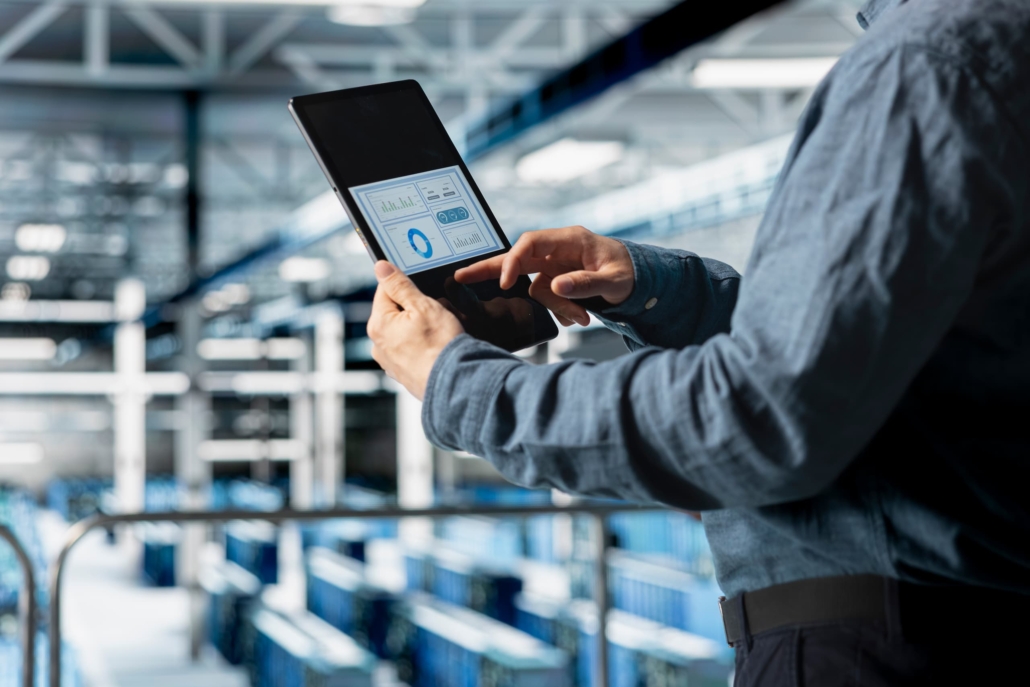
A logistics Control Tower dashboard enables companies to centralize shipment data, documentation, and tariff insights in one place.
Key capabilities include:
Track all international shipments across ocean, air, and land.
Maintain accessible documentation such as:
Real-time tariff insights help companies track:
Monitor landed costs and supplier performance across global shipments.
These tools allow importers to support First Sale documentation requirements and maintain long-term compliance.
Companies that implement a structured First Sale strategy often achieve measurable financial impact.
CargoTrans supports importers through the entire First Sale implementation process.
If your supply chain includes manufacturers, trading companies, or sourcing intermediaries, First Sale for Export may unlock significant duty savings.
CargoTrans helps companies:

Optimizing global trade for your business through Captain’s Trade Advisory, integrated seamlessly into the dashboard for faster, smarter decisions.

Ensure Seamless Compliance Across Your Global Supply Chain.
Receive tax refunds on exports & imports with Captain’s Duty Drawback experts.
Deliver freshness with our experts. Our food and beverage logistics solutions maintain optimal conditions.

Accelerate your customs clearance with Captain’s software

Ensure the safe and efficient transport of cosmetics and chemicals, maintaining compliance with industry regulations.

Achieve full customs and product compliance with ease using Captain’s Trade Compliance software.

Revolutionizing Supply Chain Operations with Captain’s real-time tracking and milestone updates directly on the dashboard for optimized decision-making.
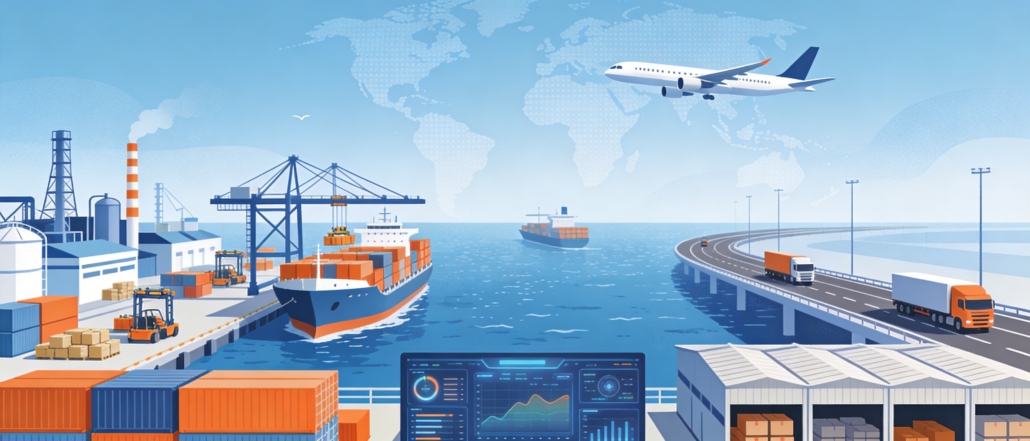
Proactive, Predictive, and Visible — Every Step of the Way.

The ultimate solution for global tariff management.

Accurately calculate duties and tariffs for goods entering the United States.
Frequently asked questions
Is the Tariff Response Unit only for U.S. imports?
No. While much of the focus is on U.S. tariffs, the framework can be adapted to other jurisdictions where you have meaningful volume and tariff exposure.
Do we need to move our freight to CargoTrans to use the Tariff Response Unit?
In many cases, you can start with customs and trade advisory services without changing freight forwarders, then decide later whether to consolidate logistics as well.
How long does it take to see measurable duty savings?
Most clients begin to identify savings opportunities within the first 60–90 days once data is consolidated and the initial HTS and tariff review is complete.
Can the Tariff Response Unit integrate with our ERP or TMS?
Yes, data from your ERP or TMS can usually be mapped into the Control Tower to enrich analytics and link tariff exposure to orders, SKUs, and customers.
What internal team members should be involved in implementation?
A Leading Freight Forwarder and Supply Chain Partner for Domestic and International Transportation.